Apple’s done much to improve its ranking in Greenpeace’s rankings of the most green-friendly tech companies in the world thanks to radical design decisions (like switching from plastic to aluminum for its Macs) and embracing smart, minimalistic packaging. In fact, after a few years, they’d managed to crawl pretty high on the list.
Apple’s physical products remain pretty green friendly, but in a new report presented by Greenpeace, Apple ranks at the very bottom of a list of ten Internet companies whose data facilities are dirtiest. And it’s all because of their new North Carolina data super-center.
Right now, there are effectively two iPhone 4s: the CDMA version and the GSM version. From an American viewpoint, one runs on Verizon, the other runs on AT&T, but are otherwise identical handsets… yet because of the vagaries of cellular communication technologies, these handsets are actually tangibly different phones.
This isn’t the sort of situation Apple likes. They avoid forking hardware as much as possible, and if they are forced to fork a product — as they did with iOS when the original iPad was released — they converge those tines into a single product as quickly possible (in this example, iOS 4.1).
So we know that eventually, Apple just wants to make one iPhone that they can sell on both CDMA and GSM networks. And according to Verizon Chief Financial Officer Fran Shammo speaking at their quarterly earnings conference call, that iPhone will be the iPhone 5, a truly “global device.”
Verizon CFO Fran Shammo, asked about the sluggishness of the company’s ARPU growth in Q1, when the iPhone was introduced – growth was just 2.2%, compared to 2.5% in Q4, remarked:
“The fluctuation, I believe, will come when a new device from Apple is launched, whenever that may be, and that we will be, on the first time, on equal footing with our competitors on a new phone hitting the market, which will also be a global device.”
The technology’s already there, of course. Inside the Verizon iPhone 4 is a Qualcomm chipset that would technically allow the CDMA iPhone to run on any GSM or CDMA network around the world, but it’s not a chipset design issue alone: there’s also the antenna to consider.
If Shammo’s right, expect the tines to converge again in September, when Apple releases the iPhone 5. And expect the iPhone 5 to have a very different antenna design at that.
I know I’m late to the party, but I recently bought myself a Pogo Stylus for my iPad, envisioning a mid-life career change to an illustrator of Jack Kirby style acidless psychedelia. Wow, do these things suck or what? I never expected anything as good as a Wacom tablet, you understand, but I was expecting a little more than what appears to be an irregular shaped cube of asbestos glued to the tip of some aluminum…. especially from the only stylus sold at the Apple Store. Not only are they not pressure-sensitive (which I understand), but they don’t even have precise tips!
You’d surely think that Wacom’s official entry into the iPad stylus market would be better, and in fact it is… but don’t expect pressure sensitivity. It’s just your standard rubber-tipped pen. Sure, that tip is tapered for precision, but couldn’t Wacom — kings of the pressure sensitive tablet on the PC side of things — have maybe figured out some sort of Bluetooth-powered approach to communicating sensitivity to a custom app, then given that API to the Brushes and Paintmaker Pro devs of the world? Perchance to dream.
How well did the expansion to two U.S. carriers work for iPhone sales? Thursday, Verizon Wireless reported activating 2.2 million iPhone 4 handsets during just part of the fiscal first quarter of 2011. In February, Apple expanded its U.S. iPhone carrier partnership to Verizon. The news comes just a day after AT&T announced 3.6 million iPhone activations during the three month period, bringing Apple’s estimated U.S. total iPhone sales for the first quarter to 5.8 million iPhones.
Wednesday, Apple reported U.S. iPhone sales rose 155 percent during the last three months, just part of the the backdrop to a $5.99 billion quarterly profit Wall Street observers described as “monster” and “magical.”
Not that I would know first hand, but there’s this wonderful sense of serendipity that occurs at the eureka moment of invention. Imagine the sensation Jonny Ive must have felt when he invented the Smart Cover for iPad 2: I imagine the moment of serendipity came when he stripped naked and lifted the lid to the Japanese style on-campus communal bath that he shared with Steve Jobs, Tim Cook and Phil Schiller and suddenly paused and said to himself, “You know, this bath lid would make a great tablet stand.” And as absurd as that sounds, it’s true… a Japanese folding bath lid does make a wonderful tablet stand!
Somehow, I doubt copycat creators get that same sense of serendipity when they just rip something off. Take Aviiq’s Quick Stand, a laptop stand for your MacBook that “borrows” inspiration from Apple’s Smart Cover, except without any of the magnets or functionality that afford the “smart.”
Not that they’re charging any less for it: the Aviiq Quick Stand will run you $40. As Wired’s resident gadget blogger and secret gerontophile Charlie Sorrel notes, that’s an awful lot of money to spend on something to prop your computer up a couple inches when any old piece of junk would do.
They say that the definition of insanity is to expect the same action to result in two different outcomes. If so, those jolly fellows over at M.I.C. Gadget have a past-time of plunging marshmallow-covered fingers into their own self-administered trepanation holes, because just a couple months after they got C&Ded by Apple over their Steve Jobs Ninja Action figure, they were back at it again with the iHub: a USB hub actually featuring Apple’s iconic logo.
Can anyone guess what happened? We certainlyt did, but now, Apple Bitch confirms it: Apple’s lawyers were just all over the iHub from mother day frackin’ one.
Quit your worrying. That seemed to be the message from Apple CEO-in-Waiting (AKA Chief Operating Officer) Tim Cook Wednesday. Cook tried to dispel talk that the tech giant’s gargantuan profits would be hurt as Japan-based suppliers recovered from last month’s devastating quake and tsunami.
Although acknowledging dozens of items used to build Apple products originate from Japan, Cook stressed Apple employees have “literally been working around the clock with our supplier partners in Japan and have been able to implement a number of contingency plans.”
Apple could be planning an event to commemorate the 10th anniversary of its retail stores, after the company told its retail employees this week that they could not request vacation days in late May.
An AppleInsider report reveals an email was sent to Apple retail employees informing them that they could not request days off between May 20th and May 22nd. Store managers are apparently “very excited” about these dates, but it seems no further information is currently available.
Gary Allen of ifoAppleStore.com – a website dedicated to news and information about Apple’s retail stores – said that Apple may hold an event to “attract a crowd” for a few days as a way of celebrating the 10-year milestone.
It’s unlikely, however, that the event will see a new product launch. Though Apple is expected to update its iMac lineup to introduce the latest Sandy Bridge processors, this isn’t usually an occasion that would prevent retail employees from taking vacation.
The last time Apple enforced this rule was earlier this year for two major product launches: the Verizon iPhone 4 and the iPad 2. Don’t bother getting your hopes up for the iPhone 5, though – recent reports don’t expect that until at least September.
Update: MacRumorshave since received some information that suggests this may well be due to internal training, rather than an event.
The iCade by ThinkGeek is an iPad accessory that turns your device into the ultimate retro games machine. It looks just like a tabletop arcade cabinet straight out of the 80s, and boasts a joystick with an 8-button control pad.
The iCade began as an April Fools’ Day spoof back in 2010 that became an incredibly popular story. ThinkGeek obviously saw how successful the device could be thanks to all the hype, and got to work on making the dream a reality. Now the iCade is available to pre-order.
They have worked closely with Atari to make the iCade fully compatible with Atari’s Greatest Hits – the recently released iOS app that features a library of classic arcade titles such as Asteroids, Missile Command and Pong. The control API will also be released soon, and will allow other developers to create games that are compatible with the iCade accessory.
You can pre-order the iCade from ThinkGeek now for $99.99, with shipping due to start on May 20th. Unfortunately it’s only available to residents of the U.S.
The second in a series of five Back to the Future games for the iPad has finally hit the App Store today. This touch-based puzzle adventure from Telltale Games delivers a mesmerising experience that remains true to the original trilogy, with innovative touch controls and impressive visuals.
This episode is called “Get Tannen,” and its App Store description reads:
Marty is keeping an eye on Doc Brown’s proverbial date with scientific destiny when he and 1980s Doc must prevent gang boss Kid Tannen from wreaking havoc on Marty’s family and erasing his girlfriend from the future!
Just like the first episode, this one is $6.99 and compatible with the iPad only. If you’re a fan of this movie and a lover of adventure games, this title is guaranteed to please.
Apple seems to be catching up with the demand of the iPad 2 after shipping times for orders from the Apple online store dropped to just 1-2 weeks last night. Those in the U.S. noticed the change first, but it slowly spread to every country in which the device is currently available.
Shortly after its launch, shipping times for the iPad 2 hit 4-5 weeks, but as Apple deals with demand and orders begin to tail off a little, shipping times have continued to slowly drop.
Reports yesterday revealed that your iPhone and iPad 3G have been secretly logging the date, time, latitude and longitude of every place you have ever been, then storing this information in an unencrypted file on your computer when you sync your device with iTunes.
Untrackerd is a new jaibreak utility that promises to stamp out this invasion of your privacy:
This package installs a daemon (process that can run in the background) to clean consolidated.db file) No new icons are added to your homescreen. There are no options to configure.
The iPhone tracking issue that’s causing a big privacy stink isn’t new and isn’t really tracking users, says an iOS forensics researcher.
It’s actually a data file that is used internally by the iPhone to do things like geo-tag photos, and it’s been in iOS for a long time (in a different form).
Senator Al Franken (D-MN) wants answers about the iPhone’s undisclosed tracking features.
As reported, the iPhone and 3G iPad secretly record your location as you travel around and sync it with your computer. It appears to be a serious violation of privacy. It was first disclosed by security researchers Alasdair Allan and Pete Warren at O’Reilly’s Where 2.0 conference.
Apple hasn’t yet explained the matter, prompting Sen. Franken to publish an open letter to Steve Jobs demanding answers.
Sen Franken wants to know why Apple is collecting the data; how it is collected; what it is used for; why it isn’t encrypted; if the data is shared; and why consumers aren’t asked before the data is collected.
Here’s the full text of Sen. Franken’s letter to Jobs:
Is Apple Chief Operating Officer Headed for HP CEO Chair?
Apple Chief Operating Officer, Tim Cook.
From today’s Q2 analyst conference call:
On Steve Jobs: “He is still on medical leave, but we do see him on a regular basis. And as we previously said, he continues to be involved in major strategic decisions. I know he wants to be back full-time as soon as he can.”
On iPad 2: “Demand on iPad 2 has been staggering.”
On Android: “We continue to believe—and even more and more every day—that iPhone’s integrated approach is materially better than Android’s fragmented approach, where you have multiple OSes on multiple devices with different screen resolutions and multiple app stores with different rules, payment methods, and update strategies.”
On Samsung: “We are Samsung’s largest customer. And Samsung is a very valued component supplier to us, and I expect that strong relationship will continue. Separately from this, we felt the mobile communication division of Samsung had crossed the line.”
On Japan: “… there’s aftershocks, there’s still uncertainty about the nuclear plant, there’s power interruptions. If that stays at the level that it is today, I’m not as worried. I would worry if something happened and took a turn for the worst.”
On iPad in education: “… last quarter, we were about a 1:1 ratio of iPads to Macs, which is, I think, amazing given the short life of the iPad. And really demonstrates what kind of opportunity there probably is there.”
And one from Apple’s chief financial officer, Peter Oppenheimer, on iPhone: “We saw stunning iPhone sales.”
Apple has just posted their Q2 2011 financial results and, hey, surprise! Record numbers all around despite some lower-than-expected sales numbers, with all-around profit sitting pretty at $5.99 billion. Read on for more details.
The guys at Tap Tap Tap wanted to show off the new Clarity feature in their photography app Camera+, so they came up with a clever idea: run a photo contest.
This is the winning entry, snapped by Nick Wood, and it’s a pretty good showcase for what Clarity can do. What’s it supposed to do? Its makers call it “one tap to awesomeness”. It brings out details, colors and contrasts in otherwise dull photos.
Perhaps you caught our recent review for the killer iOS photo app, FX Photo Studio. If you didn’t rush out and buy it right away based on the stunning (cough, cough) examples in the accompanying gallery, or – heaven forfend – on the basis of its five stars, then here’s your chance to get it on your device for FREE.
Just go to Cult of Mac’s Facebook page and like us before midnight Friday PST (that’s about 36 hours from the time of this post) and you’ll be entered into a drawing for one of six free download codes for FX Photo Studio for iPhone and iPad.
That’s it. If you already like us on Facebook (yay!) you’re already entered, so don’t feel the need to “unlike” and then “Like” again to get in on this awesome opportunity.
Winners will be notified of their bounty and good fortune during the day on Friday.
The big news today is all about how Apple has apparently been busy secretly squirreling away data about your movements on your iPhone 4 or GPS-equipped iPad, and storing it in a file on your computer via syncing. Is this a big deal, or business as usual, just a giant tech company doing its thing?
Needless to say, the iPad is utterly dominating the still nascent tablet market… but the extent of its domination might surprise you: according to New York based ABI Research, Apple controls eighty-five percent of the tablet market.
If you travel around with an iPhone in your pocket or an iPad 3G in your bag, Apple knows everywhere you’ve ever been since the moment you started using your device. Even worse, it stores that information in a non-encrypted file structure that is synced with your computer every time you plug your device into iTunes.
If the iPad “owns” the tablet category, Amazon’s Kindle device arguably controls the e-reader sector. In a move that may both aid the Kindle brand as well as e-reading in general, the Seattle-based online bookseller Wednesday announced an agreement with 11,000 U.S. libraries. The lending library service permits owners of either the Kindle device or a Kindle e-reader application to also access their notes, highlights and bookmarks.
“Normally, making margin notes in library books is a big no-no,” Amazon announced. However, if you check the book out again, or purchase the title, all annotations are preserved. Your notes won’t be available to other library patrons who check out the library e-book, though.
Apple could announce higher sales, but a lower profit margin due to increased supply costs, analysts warned ahead of Wednesday’s scheduled quarterly financial report. Profit margins for the tech giant may slip to 35 percent, down from 38.5 percent in December, one San Francisco expert projects.
A 13 percent jump in the cost of 64GB flash memory is just one area of concern for Apple watchers. The tech giant is widely viewed as the world’s largest consumer of flash memory with its iPad, iPhone, MacBook Air and iPod all relying on Japanese memory suppliers.
Do you love Apple? No, really. I mean, do you looooooooooooooooove Apple? A new documentary traveling across Europe and the United States this summer wants to interview you.
According to producer Dimitri Kourtchine, the documentary film will be 52 minutes long, and examine Apple’s “brand, its fans, the enthusiasm and the criticism that it provokes around the word.” Fifty-two minutes doesn’t seem long enough to even begin to cover it, does it?
None the less, Dimitri and his crew will be traveling across Europe in May and America in June, looking to interview people who love Apple so much they want to get married in an Apple Store, or hate Apple so much they can’t even hear Steve Jobs’ name without punching something, or have created works of art on their iOS devices, or fired a Mac Pro into space.
Basically, if you are foam-at-the-mouth passionate about the subject of Apple — hate or love, it doesn’t matter — they want to talk to you and get you on film.
If you think you’re that kind of guy, you can email DImitri and his crew at appledocfilm at gmail dot com. Can’t wait to see some of you weirdos on screen when the documentary debuts later this year.
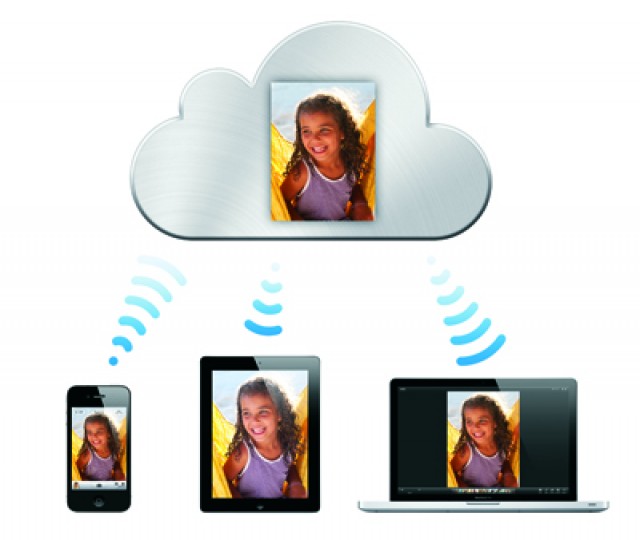
Between services like Dropbox and Amazon’s new Cloud Locker, not to mention Apple’s presumed imminent entry into the market, cloud storage is pretty hot right now, and it’s all done in software. That inevitably means that cloud storage will start creeping out to markets oversaturated with competitors boasting pretty much identical hardware… markets like USB hard drives.
As far as I know, Hitachi’s new Touro Pro line of USB hard drives now come with up to 3GB of free online cloud storage, which is upgradeable to 250GB for $49.99 per year.
That’s actually a pretty fantastic deal, considering 100GB of Dropbox storage costs $19.99 per month. On the other hand, while Hitachi is delivering native applications to allow users to access the data they’re storing in the cloud on their iPads and iPhones, but given that Dropbox is the de facto iOS standard for cloud storage, Dropbox will still have the advantage of cross-app compatibility.
Otherwise, Hitachi’s line-up of Touro Pro hard drives are pretty standard 7200 RPM drives. The desktop models come with storage capacities between 1TB and 3TB, and are priced between $130 and $230. The Mobile Pro drives, on the other hand, come in 500GB and 750GB capacities, and are priced at $110 and $130 respectively.