Apple appears ready to make a serious push into the smart home market with a new screen-equipped hub reportedly coming at a product launch event as soon as October 13.
The device is for those who want to put the new Siri AI at the center of their home, as well as those who are serious about Apple’s HomeKit smart home accessories. Or both.
Here’s everything we know about Apple’s smart home hub in the days before it is expected to launch.
Apple smart home hub: The next big thing?
Apple has a long history of not being first to market. It did not make the original MP3 player, smartphone or wireless headphones, but these were all niche products before Apple took the iPod, iPhone and AirPods mainstream. That appears to be the plan with the smart home hub.
The rival Google Nest Hub offers the Google Assistant and control of compatible smart-home devices. And Amazon Echo Show devices take a similar approach, combining Alexa with smart-home controls.
These competing hubs have been on the market for years, but neither is as popular as smartphones, tablets or even basic smart speakers. Apple’s offering might be the breakthrough product the category is missing.
Siri AI will be the star
Every new product category needs an easy-to-understand selling point. And for Apple’s smart home hub, that’s apparently Siri AI. This digital assistant is available on the iPhone and other devices, but the goal of the new device seems to be: make Siri ubiquitous.
Someone can interact with a hub sitting on a countertop or hanging on a wall simply by talking without needing to grab another device. The user could, for example, ask Siri to display their calendar, then add an event without ever touching the hub. Or look up a recipe.
With Siri AI, the hub can answer questions, play music and control compatible HomeKit and Matter accessories. With its new artificial intelligence upgrade, Siri can understand follow-up requests and context, allowing conversations that feel more natural than issuing a series of rigid voice commands.
The device reportedly runs a new operating system that combines elements of iPadOS, watchOS and tvOS, with the design of the OS putting an emphasis on Siri AI. There’s also support for apps and widgets.
A small screen for the kitchen, bedroom, etc.
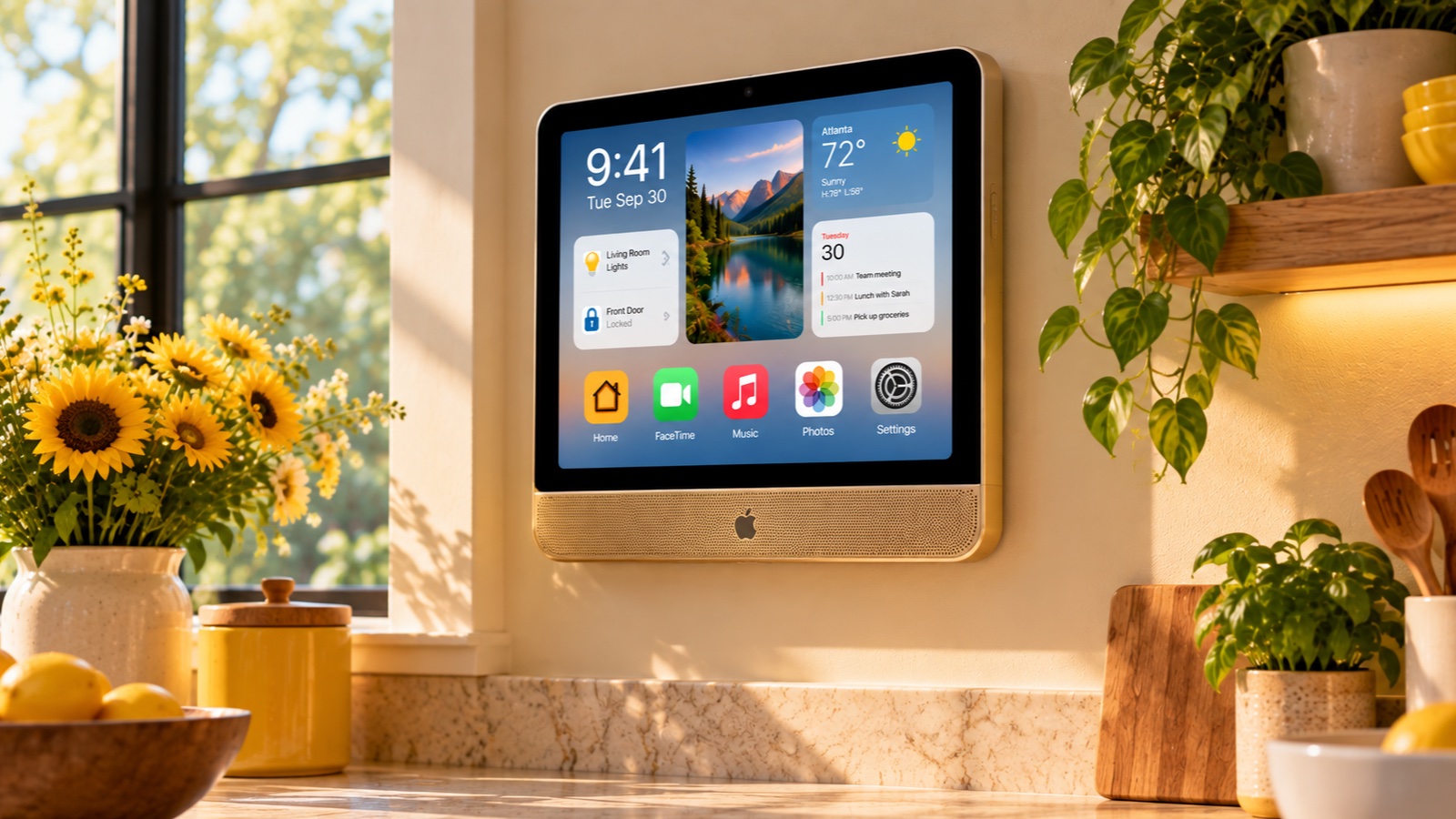
Concept art: Cult of Mac
According to details that leaked out before the big reveal, Apple’s smart home hub includes a roughly 6-inch square touchscreen. The device is said to be about as thick as an iPhone, with rounded corners and narrow black bezels.
A smaller display will make the device easier to position on a kitchen counter or nightstand. Plus, it’s supposed to quickly show who’s at the front door, what’s on the family calendar, etc., not show movies.
That said, it’ll supposedly act as a digital photo frame when not in use.
The small screen size could also help keep the price down. Even so, Apple’s home hub is likely to cost more than Amazon’s or Google’s versions of a similar size.
Tabletop Apple home hub could be the standout
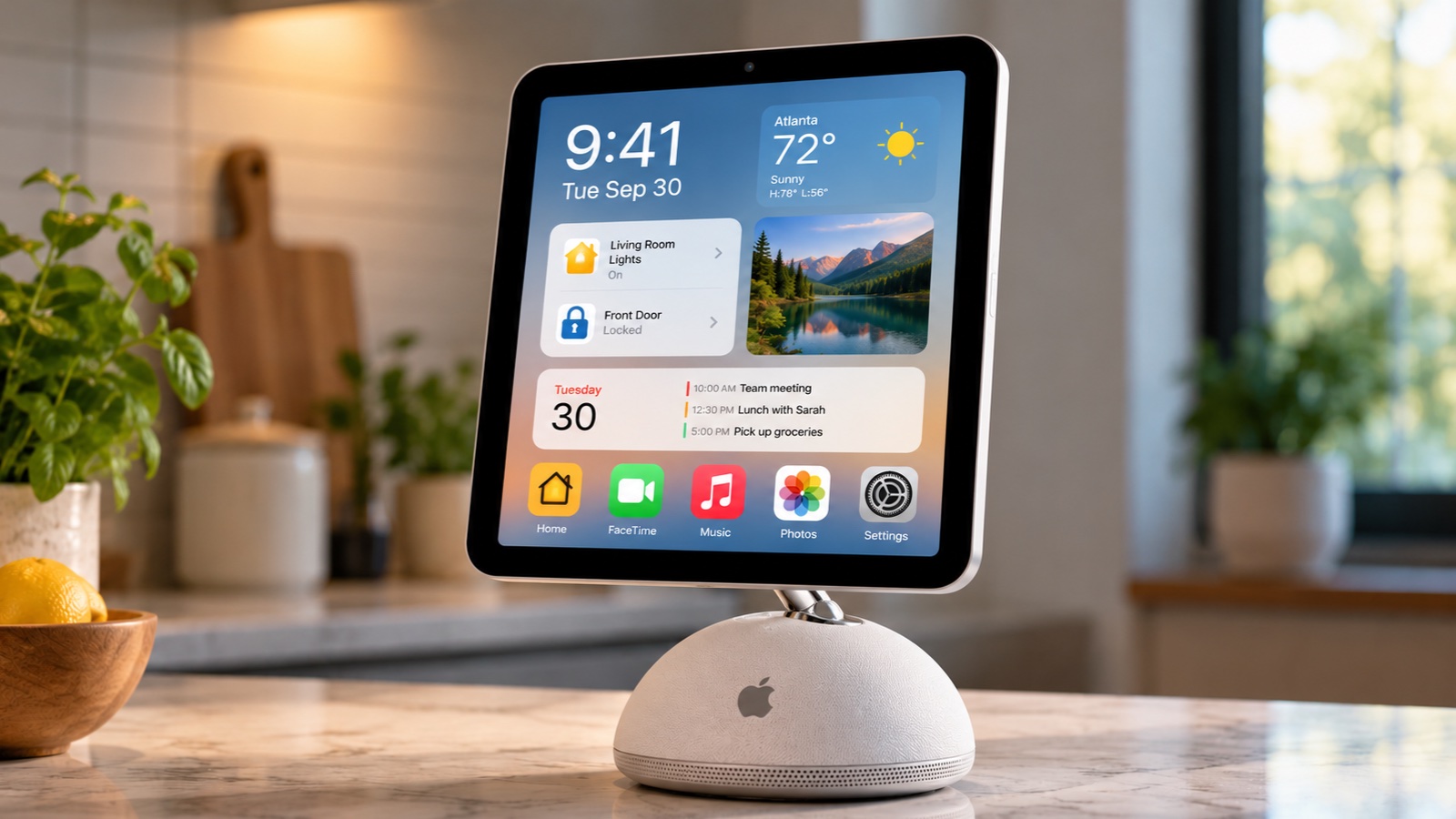
Concept art: Cult of Mac
Both a tabletop version and one designed to hang on a wall are on the way.
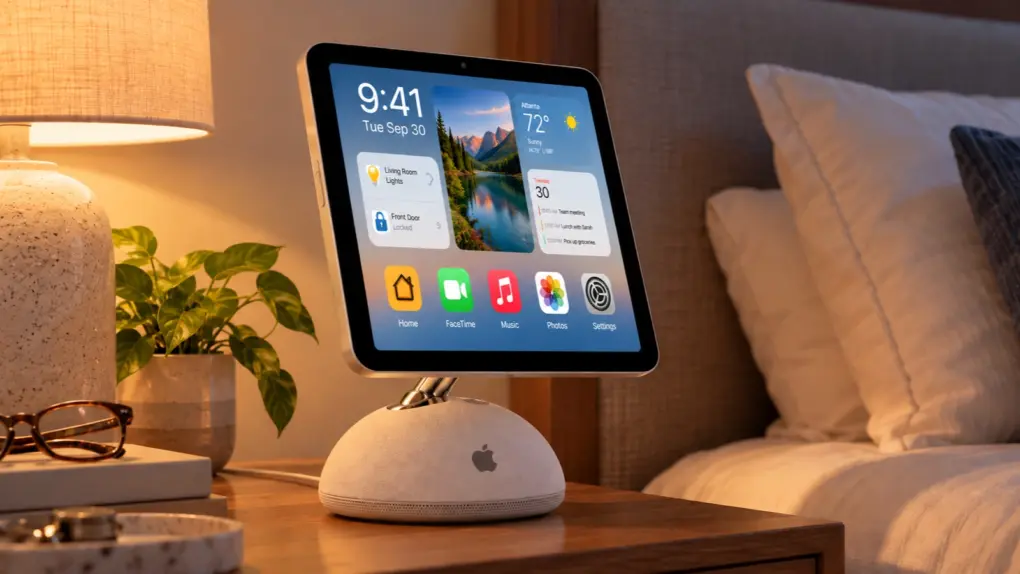
The tabletop version sounds particularly distinctive. It supposedly uses a round metal base containing speakers and microphones, with a polished metal arm supporting the display. The design reportedly takes inspiration from the iconic iMac G4.
Apple is allegedly considering silver, space gray, starlight and rose pink finishes for the smart home hub. Those four colors were found in Apple’s software code by leaker pdfu. But a rival report points to just a standard gray aluminum finish.
The wall-mounted version will allegedly use a thinner base that nevertheless includes speakers and microphones.
For in-home use only
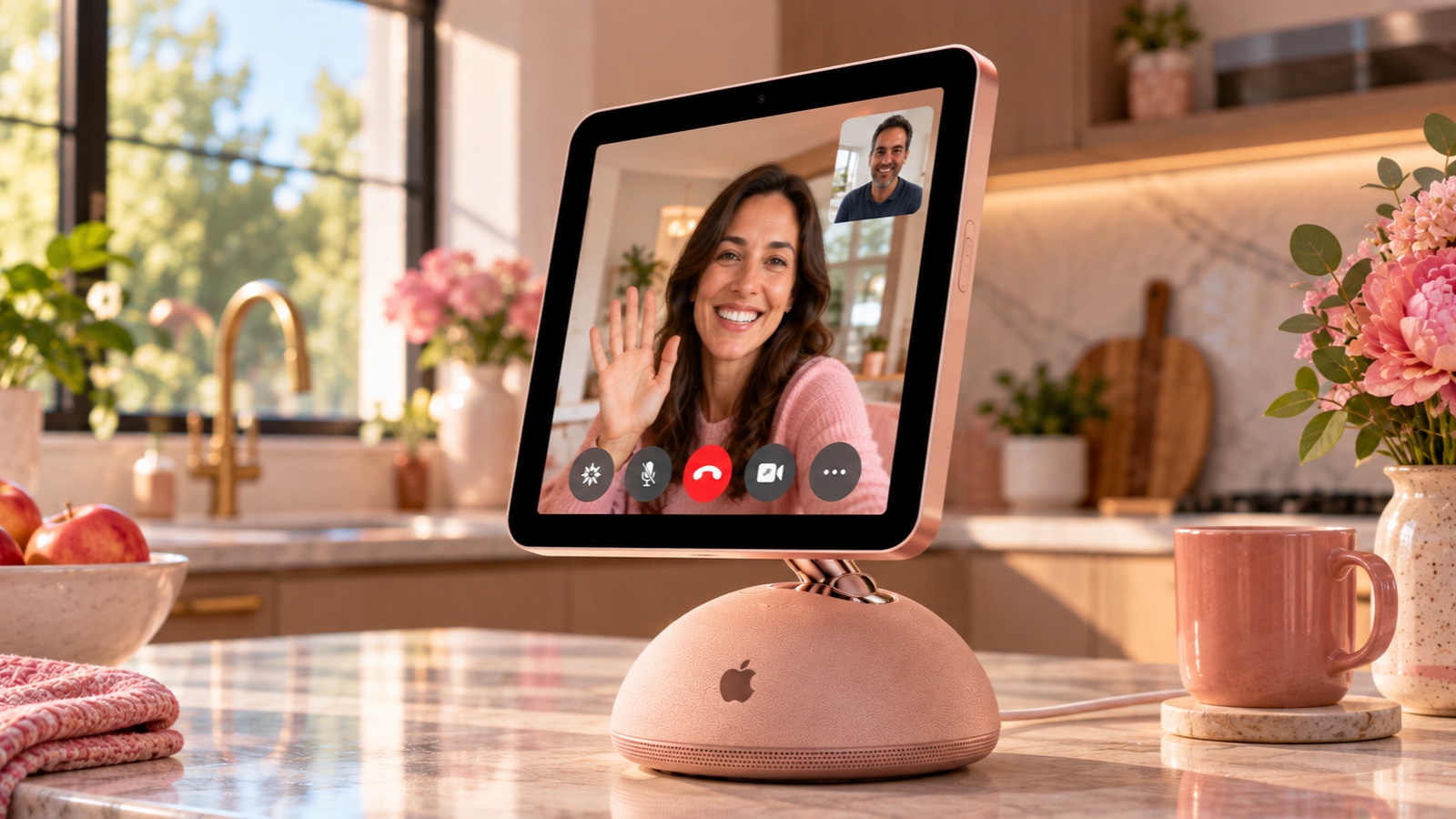
Concept art: Cult of Mac
Despite the resemblance to an iPad, the hub reportedly won’t have a battery. It will need to remain connected to power via USB-C, making it more of a permanent fixture in the home.
And that will allow Apple to cut back a bit on the security. The smart home hub will supposedly employ facial recognition to recognize members of the household, allowing the hub to display different information depending on who is using it, but this won’t be Face ID. It seems a lower level of security is all that’s needed for a device that won’t be used in public, and fewer sensors will help reduce the cost.
The front-facing camera is also expected to support FaceTime video calls.
A non-camera AI-enabled camera?
A remote camera will apparently act as an unusual accessory for the Apple home hub.
“It’s a sensor that cannot actually pull in real video footage. It’s analyzing your environment in your home and around your home, simply using AI,” said Mark Gurman during his most recent podcast.
The sensor will reportedly be about the size of a lipstick, and should be less of a privacy risk than a standard camera.
Future version could go robotic
The first-generation hub reportedly won’t have a robotic arm. But Bloomberg reports that Apple is working on a more ambitious follow-up device, code-named J595, that could add one.
Reports that it is developing a smart home hub that’s essentially an iPad on a robot arm date back to 2024. That would allow the screen to rotate and tilt to keep facing the user as they move around.
It seems Cupertino is planning a line of products in this category. Perhaps the robotic version will be dubbed the Home Hub Pro.
Apple home hub coming on October 13
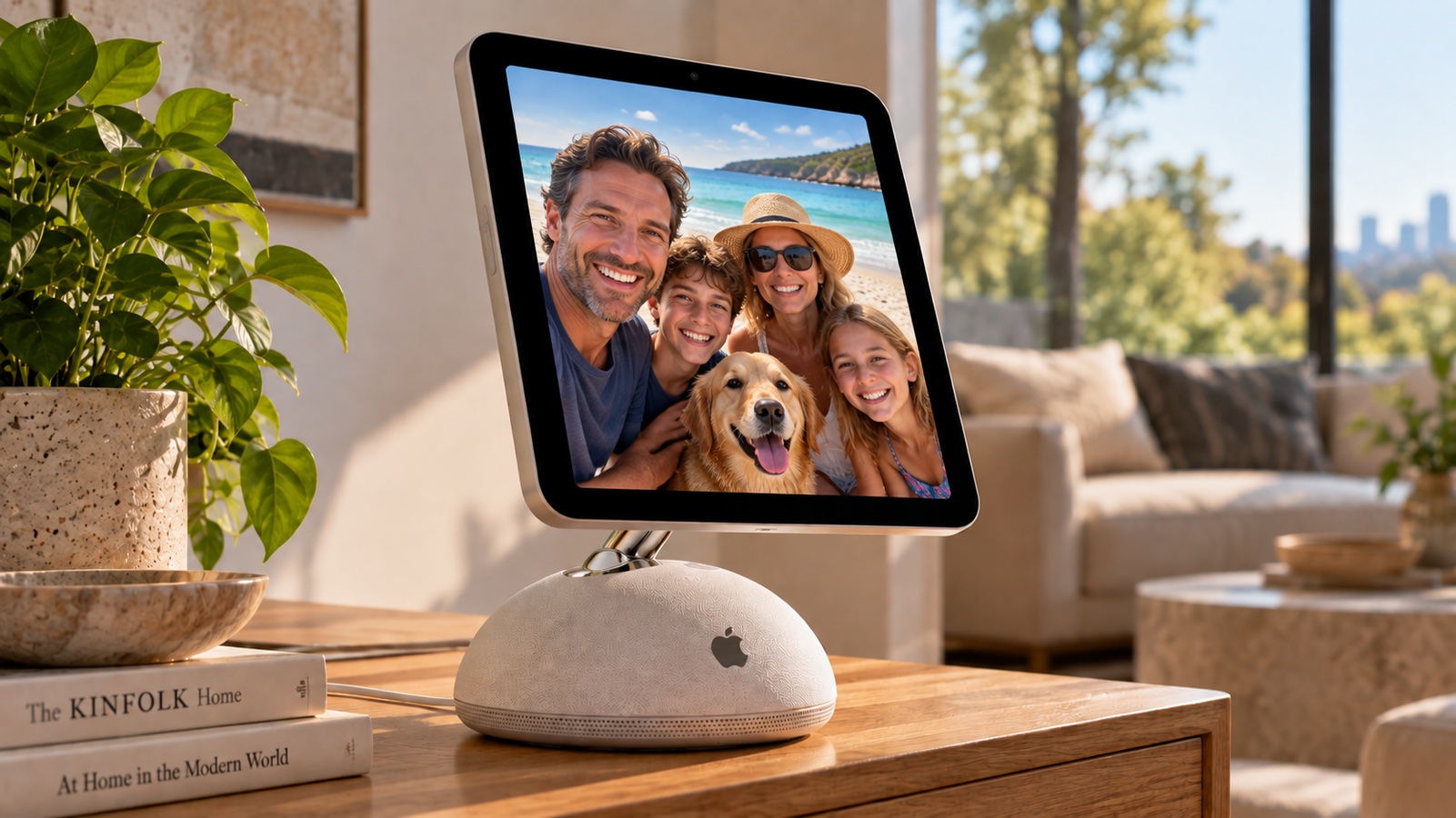
Concept art: Cult of Mac
Bloomberg‘s Mark Gurman reported on Sunday that, “Apple is planning to hold an event on Oct. 13 to unveil its long-awaited smart home hub with a screen, the new HomePod mini and an updated Apple TV.”
But to be clear, Apple hasn’t announced an event for that day. It hasn’t sent invitations or published an official event announcement, so we don’t know whether this will be a conventional streamed Apple Event, a shorter prerecorded presentation or simply a series of announcements.
If it’s going to be an in-person event, invitations need to go out very soon, though.

Ed Hardy has been writing full-time about tech for 26 years, and using it for much longer than that. His intro to Apple was a Macintosh SE/30 (which he still has), but now he uses a 13-inch iPad Pro as his primary computer.
That’s because he’s a “tablet first” type of guy. Rather than use a Macbook, he connects a keyboard case to the iPad. And instead of a desktop Mac, he connects his tablet to a 27-inch display and full-size keyboard. (So don’t try to tell him that everyone has to use a Mac to be productive.)
Before coming to Cult of Mac, Ed wrote for NotebookReview, TabletPCReview and Brighthand, as well as other sites.