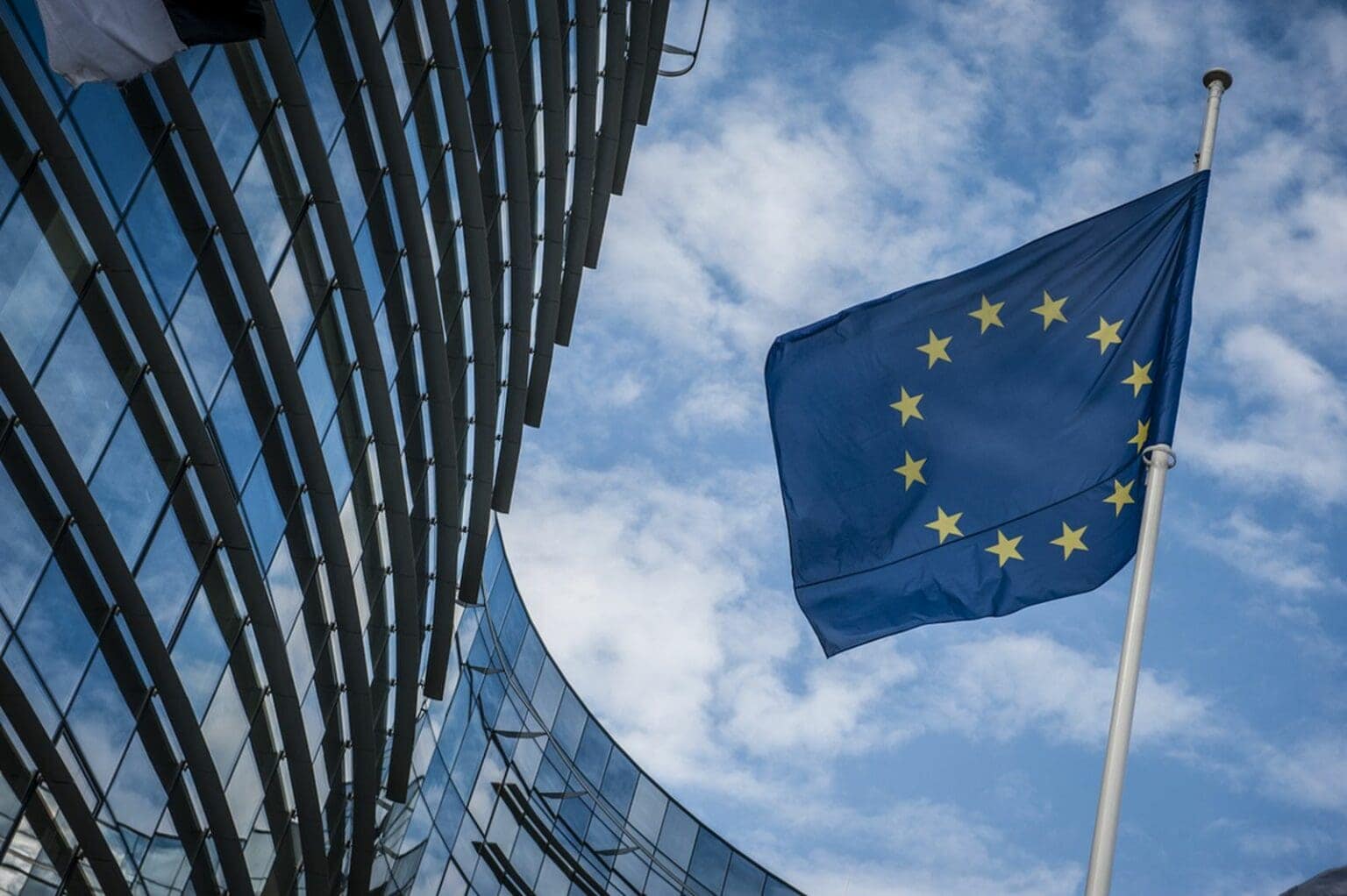
The European Union pushed back Thursday after Apple said the Digital Markets Act — antitrust legislation aimed at broadening competition among tech companies — is backfiring on consumers and forcing Apple to delay key features for European users.
In a detailed statement submitted during the EU’s review process, Apple claimed the DMA is achieving the opposite of its stated goals. Apple’s statement, issued Wednesday, was the company’s strongest criticism of the law to date, and EU leaders did not care for it. But European Commission spokesman Thomas Regnier said the lawmakers were “not surprised” by Apple’s stance.
“Apple has simply contested every little bit of the DMA since its entry into application,” said Regnier in a Politico article, adding that Apple has snubbed EU efforts to have positive talks on the matter. “This undermines the company’s narrative of wanting to be fully cooperative with the Commission.”
In addition to the European Commission, some users took issue with Apple’s statement slamming the DMA.
Apple criticizes EU DMA: Key features remain unavailable in Europe
The DMA attempts to force Apple into what the European Union sees as fairer competitive practices, like allowing sideloading, and it has resulted in penalties against the tech giant. Apple’s statement leveled criticism that the DMA denies European users access to key features that others enjoy and rely on.
Several major Apple features are currently unavailable to EU users due to DMA compliance challenges, Apple said. iPhone Mirroring, which allows users to view and control their iPhone from a Mac, remains blocked in Europe because Apple says it cannot extend the feature to non-Apple devices without compromising users’ data security.
“Our teams still have not found a secure way to bring this feature to non-Apple devices without putting all the data on a user’s iPhone at risk,” Apple said. The company warns that “according to the European Commission, under the DMA, it’s illegal for us to share these features with Apple users until we bring them to other companies’ products.”
The AI-powered Live Translation feature for AirPods also faces indefinite delays in the European Union. Apple designed the feature to process conversations entirely on-device for privacy, but extending this capability to third-party hardware while maintaining the same privacy standards presents significant engineering challenges.
Apple Maps features, including Visited Places and Preferred Routes, are similarly delayed. That’s because Apple hasn’t found a way to share location-based capabilities with other developers without exposing users’ private location data.
Security and privacy concerns escalate
Apple argued that the DMA exposes EU users to new security risks through mandatory support for alternative app stores and payment systems. The company pointed to the appearance of pornography and gambling apps on iPhones for the first time through third-party marketplaces like AltStore.
But more worrisome to Apple are the data access requests from other companies that could reveal data even Apple can’t see.
“Companies have submitted requests for some of the most sensitive data on a user’s iPhone,” including complete notification histories and Wi-Fi network logs that could reveal sensitive information about users’ locations and activities, Apple said. “The complete content of a user’s notifications: This data includes the content of a user’s messages, emails, medical alerts and any other notifications a user receives.”
DMA failing its core mission, Apple argues

Photo: Sora Shimazaki/Pexels CC
Rather than promoting competition and consumer choice as intended, Apple contends that the DMA is reducing options for European users.
“When features are delayed or unavailable, EU users don’t get the same options as users in the rest of the world,” Apple said. “They lose the choice to use Apple’s latest technologies, and their devices fall further behind.”
The company also argued that the regulation creates unfair competitive conditions. While Apple faces strict requirements to share its technology with competitors, other major players — including big Chinese manufacturers and South Korean powerhouse Samsung, which leads the European smartphone market — face no similar obligations under the DMA.
Apple noted it’s the only company among the six designated “gatekeepers” required to provide free access to its intellectual property and core technologies to rivals.
Engineering resources stretched thin
Despite Apple’s objections, the company said it continues investing significant resources in DMA compliance. “Teams across Apple are spending thousands of hours to bring new features to the European Union while meeting the law’s requirements,” it said.
However, Apple warned that the constantly changing interpretation of DMA rules makes compliance nearly impossible. When disagreements arise, companies must implement the European Commission’s demands immediately, even before courts can review the decisions — a process that can take months or years.
Criticisms of Apple on social media
While plenty of people support Apple’s fight against European regulation, some users, software developers and organizations reacted with strong criticism after the company released its statement.
“As a European, the changes in the DMA have had zero negative impact upon me, or indeed anybody I know, except for the ways in which Apple chooses to selectively apply the laws to punish its users and developers,” wrote developer Steve Troughton-Smith on Mastodon. “Where Apple complains about ‘developers accessing notifications,’ I see news reports about APIs that will enable my Pixel Watch to integrate better with iOS. Apple, as it has been since the start, is full of shit. Once a liar, always a liar.”
"Over that time, it’s become clear that the DMA is leading to a worse experience for Apple users in the EU." brother, YOU did that. that was YOUR choice pic.twitter.com/EWZfRWhmPt
— paytondev️ (@paytondev) September 25, 2025
Apple: *asks the Commission to waive half of iOS' interoperability obligations under the DMA*
Commission: "Dude, stop being unreasonable, you know we won't do that"
Apple, not even a week later: *asks to repeal the DMA in its entirety*https://t.co/dR9luSVEpd pic.twitter.com/UZTXd0nw7v
— Léo Lictevout (@LeoLct037) September 25, 2025
Apple's latest attack on the #DMA is a clear attempt to preserve its gatekeeper power.
The DMA is designed to give consumers more choice, lower costs, and fairer access to innovation. We urge the European Commission to stand firm against Apple's misleading claims and scare…
— Coalition for App Fairness (@appfairness) September 25, 2025
Looking ahead
Apple’s submission represents its most comprehensive challenge to the DMA since the law took effect. The company is calling for the legislation to be repealed or substantially revised, though legal experts consider repeal highly unlikely.
The European Commission is currently reviewing all submissions and must present a final report by May 2026. Until then, European Apple users can expect continued delays when it comes to new features as the company navigates the complex compliance requirements while trying to maintain its privacy and security standards.
As Apple concluded in its statement: “We believe our users in Europe deserve the best experience on our technology, at the same standard we provide in the rest of the world — and that’s what we’ll keep fighting to deliver.”
We originally published this post on September 25, 2025. We updated it with the EU’s response to Apple’s statement on September 26, 2025.

David Snow, an expert on Apple hardware and software, writes on a variety of technological and cultural topics for Cult of Mac. They include Apple news, technology buying guides, and features about computer setups and Apple TV shows and movies.
With 30 years of experience covering technology and other subjects, he has written and edited for numerous print and online publications, including CMP Media, TechTV.com, CNET, Wired News, Red Herring magazine, Law.com, The National Law Journal and Law Technology News magazine. Among other roles, he served as executive editor of the Law.com network of websites and editorial director, technology, for ALM Media.
Snow graduated with a B.A. from Syracuse University with majors in magazine journalism and psychology. While there, he worked as a reporter for The Daily Orange newspaper and associate editor of Equal Time magazine.
Founder of the blog At the Waterline, he can be reached on X (formerly Twitter) via @atthewaterline and on Mastodon via @dsnow.