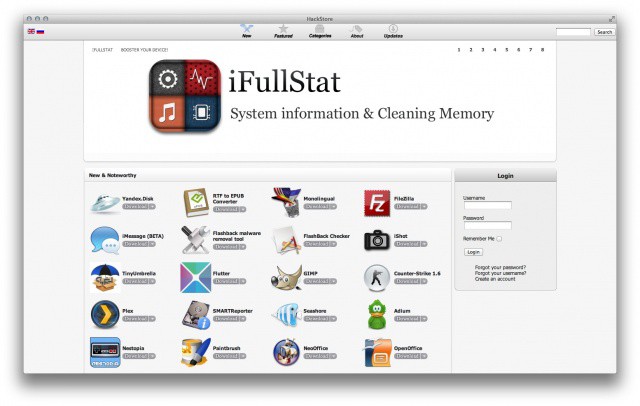
Mac apps that Apple won't let into the Mac App Store are available in the HackStore.
Several weeks ago we brought you an exclusive look at the HackStore, an upcoming Mac App Store alternative for unapproved OS X apps and tweaks. After finishing up development, the HackStore is now available for everyone to download.
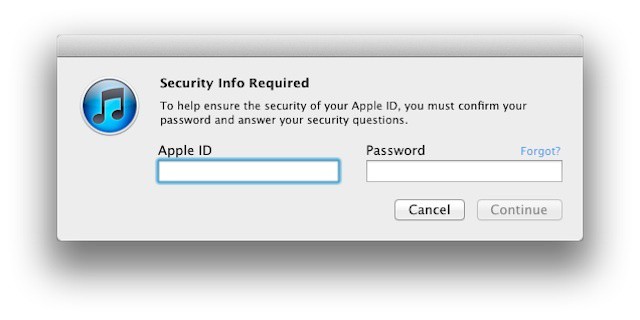
Apple recently began prompting users to select three security questions for their iTunes Store accounts. The move helps to ensure that you’re the authorized account holder if you have problems or forget your password.
The idea is well intentioned and a sensible protection for Apple and its customers. Unfortunately, Apple’s way of rolling out these security questions and the questions themselves highlight the old adage about the way to hell being paved with good intentions.
Clear, the hugely popular to-do list management app from Realmac Software, has received its first major update since hitting the App Store back in February. Version 1.1 brings new themes, new gestures and new features, in addition to a whole host of tweaks and fixes that make Clear even more of a joy to use.
iGenApps lets you create mobile web apps right from your iOS device
Puerto Rico based iGenApps showed off its signature service at the DEMO Spring event in silicon valley this week. iGenApps offers the ability to create iOS and other mobile apps with no programming knowledge and just a basic working knowledge of HTML. The service is centered around web app development, but the company claims a premium service will turn web apps into native apps for a price.
Think Apple's software is free from vulnerabilities? You couldn't be more wrong.
Apple’s operating systems and its software are generally believed to be the best available in terms of security and stability, but a new report from Trend Micro reveals that’s a huge misconception… at least in recent months. In fact, the Cupertino company suffered more vulnerabilities during the last quarter than rivals like Oracle, Google, Adobe, and even Microsoft.
Thought you'd done everything there is to do in Plants vs. Zombies? Think again.
Plants vs. Zombies has been a smash hit on iOS for well over two years now. But despite its age, developer PopCap is still adding new content. Its latest update is sure to put a smile on your face, adding a new game mode, new minigames, more achievements, and lots more.
One of the most annoying things about Apple’s Bluetooth implementation in iOS is that turning it on or off is a four-step process involving digging deep into Settings. Considering the battery drain associated with just leaving Bluetooth on and the wide variety of devices you can connect via Bluetooth to your device, it’s a constant irritation for many.
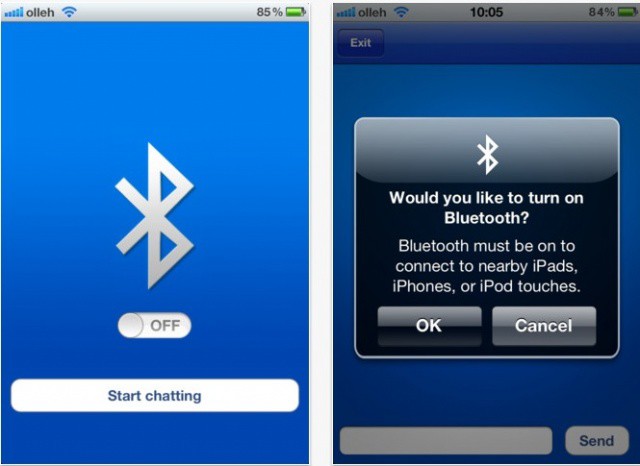
Jailbreak utilities like SBSettings make turning bluetooth on/off on the fly a fairly simple proposition, but unfortunately, Apple hasn’t borrowed inspiration from any of them when it comes to baking better Bluetooth toggling into iOS. A new $0.99 app on the App Store, though, makes it much easier to toggle Bluetooth on the fly on your device even without a jailbreak. Launch the app once to toggle Bluetooth on, launch again to toggle off. Simple.
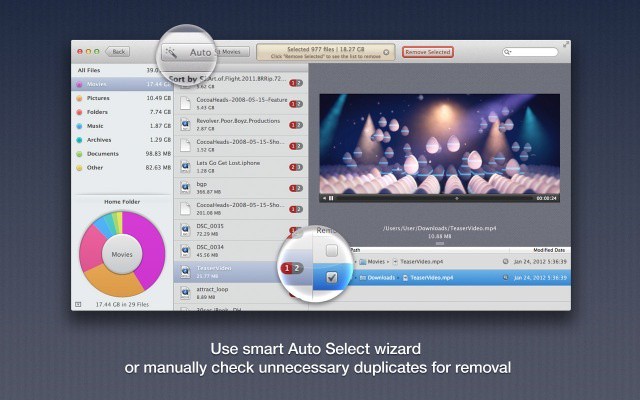
Gemini is a Mac app that does one thing: Find duplicate files on your Mac. You just point it at a directory (your home folder is a good place to start) and sic it on your files. After a few moments it gives a list of anything that is doubled-up on your machine, and then the fun begins.
If you liked Read It Later, you'll love Pocket. And so will your wallet.
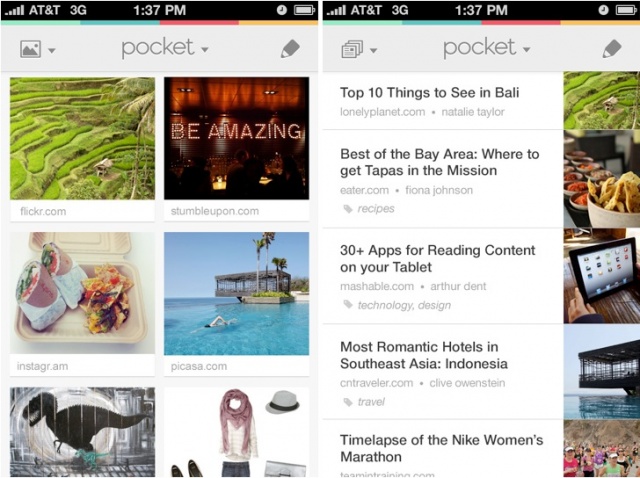
Read It Later, the most popular way for users to save content they find on the web, has just received a new name, stacks of new features, and lost its price tag in a major update released today. Now called Pocket, the new app is free across Android and iOS devices, and delivers a new user interface, video and image filters, favorites, and much, much more.
This unique string of alphanumeric text attached to every iPhone and iPad is the source of a lot of privacy concerns.
Many of us feel a deep personal connection with our iPhones, and small wonder: the average person’s smartphone knows more about them than their spouse or significant other. Our iPhones hold our contacts, photos, videos, music, banking data, texts, emails, voicemails, web logins, apps and more. We use our phones to pay our bills, send texts to our girlfriends, check-in to our favorite club, play games with friends, and much more besides.
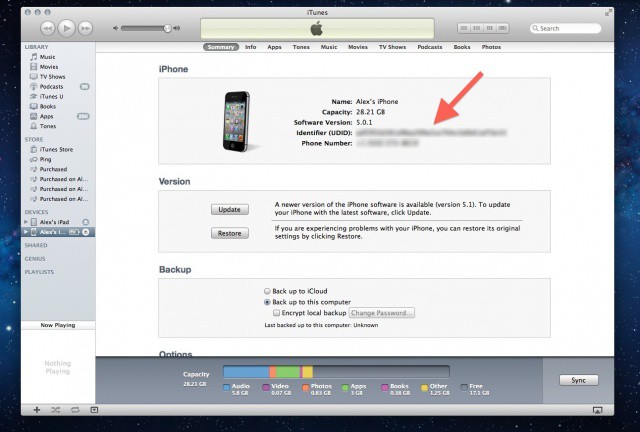
That makes our iOS devices a juicy target for tracking, and what most people aren’t aware of is that, historically, Apple has made it very easy to anyone to tell what you do with your iPhone. It’s called a Unique Device Identifier or UDID. Every iOS device has one, and using it, third-parties have been able to put together vast databases tracking almost everything you do with your iPhone, iPod touch or iPad.
The good news for privacy advocates is that the days of UDID are numbered. Following the recent stink the U.S. Congress raised over how iOS apps handle a user’s personal information without permission, Apple has given an ultimatum to third-party App Store developers: either stop tracking UDIDs or get kicked out of the App Store. Now ad networks and developers are scrambling to agree on a way to track your device in the future.
But are these replacements any good, or do they pose even bigger privacy concerns than UDIDs did?
Want to download a trial version of Apple’s iWork apps? Tough. Apple just pulled them, replacing the page on its site with a notice sending you over to the App Store: “The trial version of iWork is no longer supported. But you can easily purchase Keynote, Pages, and Numbers from the Mac App Store to start creating beautiful presentations, documents, and spreadsheets today.”
Translation: Everything – and we mean everything, will be going through the App Store from now on.
Apple CEO Tim Cook was reportedly spotted at the headquarters of PC gaming platform Valve this morning. The Washington-based company boasts the most robust and established desktop gaming network in existence. Think of Valve as the iTunes of PC gaming. Is a Valve/Apple partnership in the works?
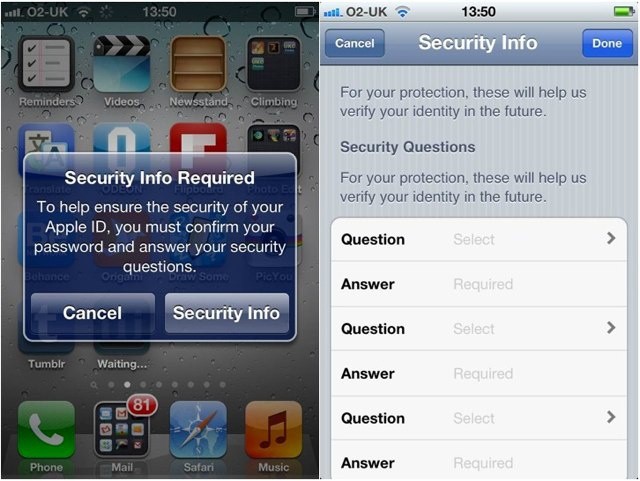
Apple wants you to set a number of security questions that will help identify you in the future.
In an effort to increase security for your Apple ID, Apple is forcing users to set a number of security questions and answers that will help “verify your identity in the future.” If you forget your password or your account is compromised, you will be asked to answer these questions to prove who you are.
LogMeIn has launched a new cloud-based storage, syncing, and sharing service that hopes to compete with services like Dropbox, Box.net, and the upcoming Google Drive. Called ‘Cubby’, the service offers 5GB of free storage which is protected by LogMeIn’s 128-bit SSL encryption, and it can be accessed from a web browser or using the official Cubby apps for Android and iOS.
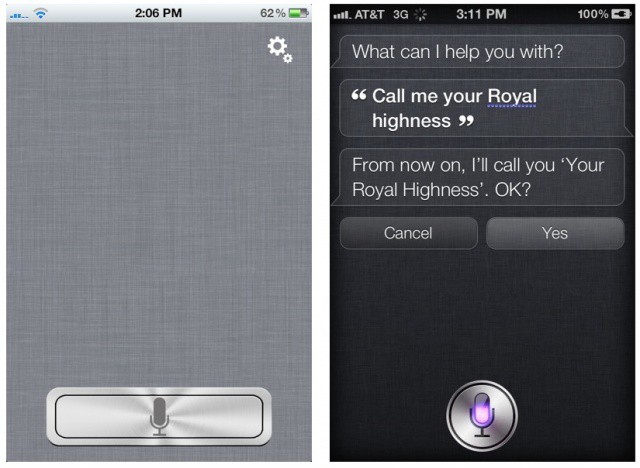
Voice Actions may not look quite the same, but it think it's Siri on steroids.
Apple’s App Store approval process is a mysterious thing. Sometimes the Cupertino overlords can be incredibly stringent about the guidelines an app has to adhere to in order to be approved for sale onthe App Store, and other times we’re all left scratching our heads wondering how on earth an app like this made it through.
Siri knockoffs are nothing new, of course. In fact, they’ve been a pretty common occurrence in the iOS App Store ever since Apple unveiled the digital assistant alongside the iPhone 4S last October. We’ve seen apps like Evi that piggyback off Siri’s success, but a relatively new app has seen incredible success by riding Siri’s coattails all the way to the top of the App Store charts.
The best part? Not only does it look heavily — ahem — inspired by Siri, even the developer doesn’t know how it got approved.
Quickoffice is finally complete thanks to Powerpoint editing.
Quickoffice Pro HD is one of the App Store’s best third-party office suites, and until Microsoft Office hits the iPad, it’s the best way to view and edit Word and Excel documents on the go. Its latest update adds Powerpoint editing to that, in addition to native email support, an enhanced visual interface, and more.
After teasing the game way back in October, Criterion will finally release Burnout Crash! for iOS tomorrow, April 12. The top-down racer will be Criterion’s first mobile game, and it’s already shaping up to be a huge hit. Even David Hasselhoff loves it, as you can see from the clip above.
Hipster just went mainstream. Wait, does that mean it's not hipster anymore?
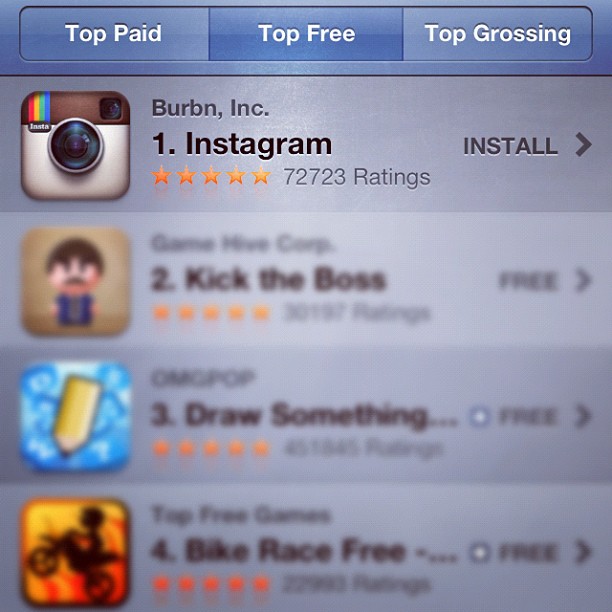
Looks like Instagram’s billion dollar deal with the devil didn’t land it in hot enough water after all. Following widespread concerns regarding Instagram’s future from what was apparently a vocal minority, the popular photography app has soared to the top of the App Store.
For the first time in the app’s 16 months on the App Store, Instagram reigns as the most popular free app for the iPhone. Take that, haters.
What's the number one feature you want to see in iTunes 11?
Rumors have been relatively quiet on the iTunes front for awhile. We’ve had reports pop up here and there over the past couple years, but nothing that exciting has happened to Apple’s desktop music app for a long time.
iTunes is due for a refresh, and it looks like we’ll be seeing an iCloud-centric iTunes 11 alongside the release of iOS 6.
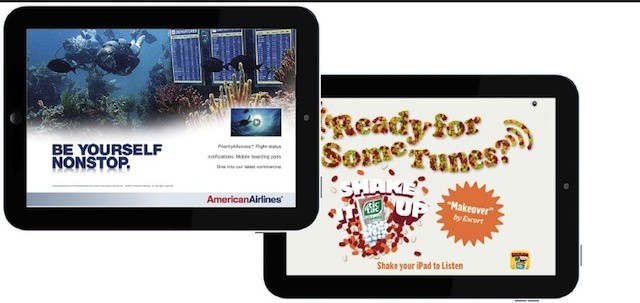
Few iPad publications include interactive or immersive ads (source: Kantar Media)
It’s pretty clear that digital distribution is going to play a large role in the future of magazines and newspapers. That doesn’t mean, however, that print editions are going away any time soon. For the foreseeable future, we’re likely to see print/digital hybrids while consumers and publishers test the waters of both digital products and distribution channels.
The road to digital hasn’t been a smooth ride for many publications. Part of the reason is the lack of resources being devoted to creating engaging and immersive digital content that doesn’t feel as if you’re simply reading a PDF of the print edition.
One big area where publisher are still failing is advertising – despite excellent interactive ad systems like Apple iAd, publishers are still stuck in a print mentality when it comes to ads. In fact, according to a new study, publications often simply toss the exact same print-formatted ads into digital editions that run in their print counterparts.
Papermill launched on Android several weeks ago. Developed by Ryan Bateman and designed with the help of Matt Legaspi, the app is a beautiful Instapaper client for Android devices. Papermill received high praise from the community and widespreadmediacoverage when it launched, and the developer has since broken down its success based on sales. The conclusions he draws about Android users in general are particularly interesting.
Bateman says that, “Android users not being willing to pay for an apps whose focus is quality and whose price reflects this.” Is this true only for the average Android user, or should the average iPhone user be considered as well? How can one make the blanket argument that people don’t want to pay for quality apps? I think it comes down to the basic issue of supply and demand.
Whale Alert is a free app that could help save the whale from extinction.
Marine authorities estimate that there are only 350 to 550 whales left in the world, making the mammal an endangered species. Those that are left are at risk of being killed by deadly collisions with ships, but conservationists are hoping Apple’s iOS devices can help save the species from extinction.
Introducing the HackStore, where Cydia meets the Mac App Store (design in progress)
When the App Store first launched on iOS, the need for an alternative marketplace quickly arose. Jailbreakers and power-users wanted a way to download and install apps that gave them more control over their devices than what Apple would allow.
That was how Cydia was born. Created by Jay ‘saurik‘ Freeman, the Cydia app store allows users with jailbroken devices to not only install apps that bypass a number of iOS’s built-in restrictions, but to more easily discover them.
On the Mac, there’s obviously no jailbreaking, but given the sandboxing restrictions placed upon App Store developers, there’s still a need for a Cydia-like alternative: an easy-to-use, curated catalog for apps that give power-users too much control over their systems for Apple’s comfort.
Enter the HackStore, which hopes one day to be as synonymous with user-empowered Macs as Cydia is with jailbroken iOS devices.
Dolphin Sonar gives you complete control over your browser using only your voice.
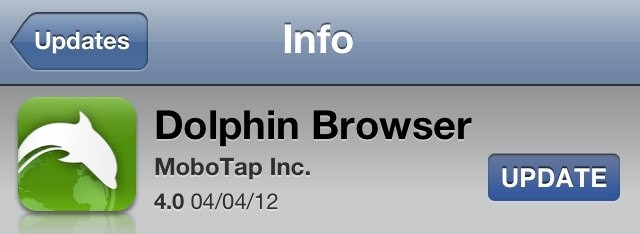
Dolphin Browser is arguably one of the best third-party browsers for iOS, and the iPhone version just became even better with its latest update. Version 4.0 brings a stack of new features including Dolphin Sonar voice controls, a URL keyboard, and a night mode — and it’s available to download now.