No one likes to be throttled — just ask Shep Smith — so when AT&T started sending throttling warnings to “unlimited” customers they considered to be the “Top 5%” data hogs, outrage and confusion ensued. After multiple complaints and an online petition, AT&T was forced to clarify their throttling policy and what it means to be in the “Top 5%.”
In case you haven’t heard, Google made a few changes to their privacy policy that has some people up in arms. No matter who you are, or what OS you use, chances are you use a Google product, so this news is concerning. Now we say Google made changes but the reality of it is, Google didn’t really change much of anything. They haven’t changed what data they collect or any of your privacy settings. Everything remains the way it has always been, aside from the fact that they can now share your data across their own services. That means if you’ve been searching luxury cars on Google and head into Youtube, you’ll probably see video suggestions for Mercedes-Benz. To me, it’s more personalization rather than a cause for concern.
The latest ruling to come out of the ridiculous patent game comes in favor of Apple and awards them an injunction on Motorola Android products found to infringe on an Apple patent regarding scrolling behavior in the photo gallery application. What does this ruling actually mean for German users? Nothing really. Motorola will simply push an update to change the scrolling behavior and that will be the end of that. Will German Motorola users notice the change? Most likely not. So what was the point? The same point of everything that involves lawyers — money.
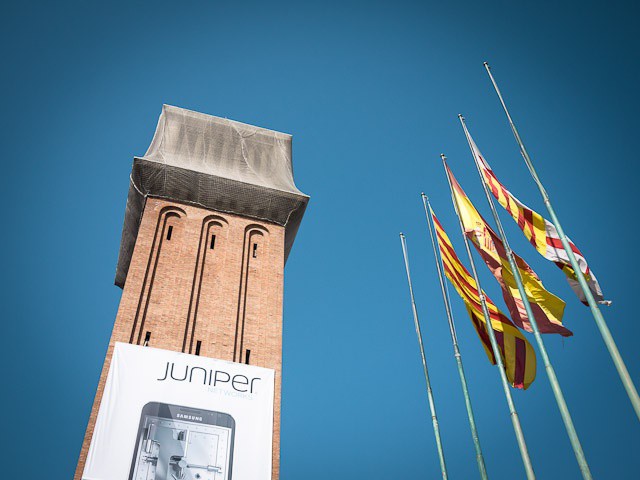
The historical home of yearly mobile excess: Plaça d'Espanya in Barcelona
BARCELONA, MOBILE WORLD CONGRESS 2012 — When we shuffle from meeting to product demo to boozy party it’s easy to forget what a weird place the yearly Mobile World Congress is. Tens of thousands of attendees flood Barcelona’s hotels and commandeer its taxis, while companies from tiny to huge spend a fortune to sell and promote their wares.
As Ferris Bueller might say, if you don’t stop and look around once in a while, you might miss it. Here’s a quick look at the best, worst and weirdest of this year’s show.
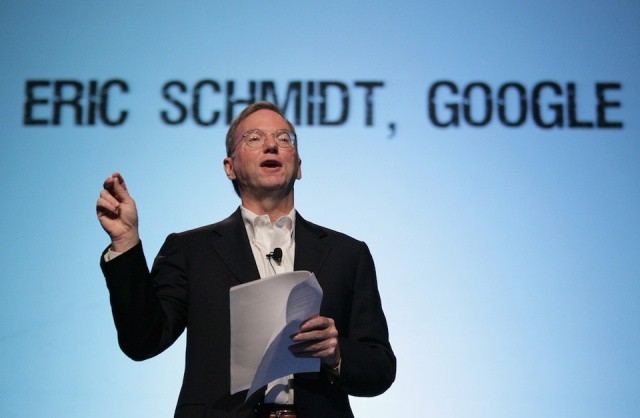
BARCELONA, MOBILE WORLD CONGRESS 2012 — During his keynote speech on Tuesday, Google’s Executive Chairman Eric Schmidt said, seemingly with all seriousness, that someday, “there will be Android in every pocket.”
For someone who has been prowling around Mobile World Congress for the past four days, it’s a statement that’s hard to react to without spraying crumbs. Schmidt couldn’t sound any more delusional if he were sealed up in a hermetic chamber with a scale-model of the Spruce Goose. The iPhone dominates Mobile World Congress. Google can’t even get an Android in every pocket at its own tradeshow.
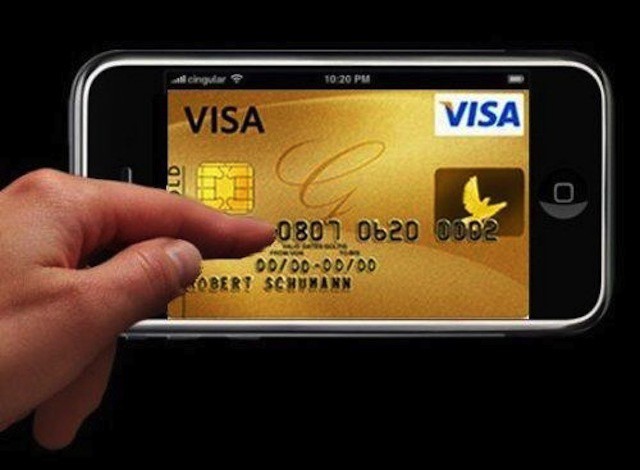
One of the big trends at the Mobile World Congress in Barcelona has been announcements regarding NFC. While NFC has been supported in a handful of Android phones and BlackBerry models, till now there haven’t been many real-world applications for it. With several announcements around NFC, the technology’s time may be finally be coming.
Despite rumors, Apple has never shown an interest in adopting NFC in the iPhone or iPad. Could Apple’s lack of NFC support could stick out like a sore thumb despite the fact that it managed to upstage every company at MWC with yesterday’s iPad 3 event announcement.
The GSMA has announced the winners of the 17th Annual Global Mobile Awards which took place yesterday at Mobile World Congress. The top mobile products and services were showcased and there was even some entertainment with comedian/songwriter Tim Minchine as the host. Categories ranged from Best Consumer Mobile Service to Best Mobile Innovation for Publishing and while we love hearing about innovative products, it’s really the hardware categories that had us talking.
Ever find yourself alone in your positive review of an app? Maybe you think the price of a mobile game is too high while others think it’s a steal. User satisfaction in the mobile ecosystem is quite a roller coaster of information and emotion. That’s why uTest, a software testing company, decided to crawl hundreds of thousands of apps and user reviews to see just how happy or unhappy users of the top two mobile operating systems were with their app experience. uTest has laid out this information in a nifty little infograph showing user satisfaction across Android and iOS with side-by-comparisons of the two. Check it out and tell us what you think.
BARCELONA, MOBILE WORLD CONGRESS 2012 — In Russia, if you want to come up with a mascot for your company or a character for your app, there’s no focus groups or testing: it all comes from the top down.
That’s why when Russian app development and publishing company iFree wanted to release a new virtual assistant for Android and iOS to take on Siri, i-Free’s Kirill Petrov dictated the design of i-Free’s latest character. He would be an all white, gremlin-like humanoid with huge flashing teeth and glowing yellow eyes. He would hail from the planet Edelweiss (named after a beer), and he would come to Earth in the time-honored tradition of many alien invaders before him: namely to kidnap our women for his own lascivious pleasure.
Meet Spoony. He’s terrifying. He uses much of the same core technology as Siri, the distant relation he’d eventually like to kill, or at least surplant. Presumably after making out with her first.
BARCELONA, MOBILE WORLD CONGRESS 2012 — On the surface of things, Asus’s Eee Pad Transformer Prime is just a wonderfully swell idea. Why have both an ultrabook and tablet when you can have one that is both? What if you could take your iPad, snap it onto a keyboard + trackpad, and have a MacBook Air?
It’s a nice dream, and, in actuality, the Transformer Prime is a beautiful piece of hardware. But the challenges aren’t hardware: they lie in software. And in software, neither Android nor iOS is yet up to the challenge of driving both a mobile and laptop OS. But after Windows 8 sets the bar higher, they both could be.
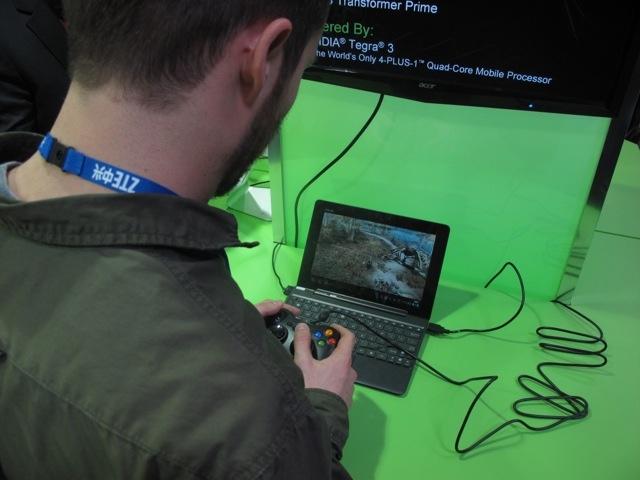
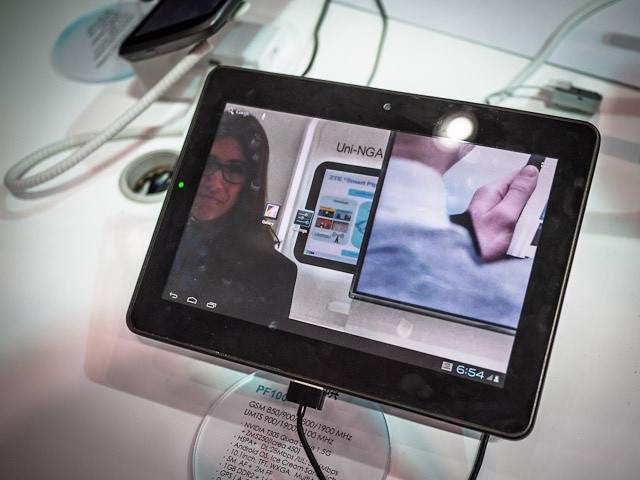
Zzzzz. ZTE's PF100 starts with a dull name and then goes downhill from there
BARCELONA, MOBILE WORLD CONGRESS 2012 — One of the big stories at this year’s Mobile World Congress is Android tablets. If last year saw the things popping out like maggots from a rotting wound, this year they are skittering across the floor like a carpet of startled cockroaches. And like cockroaches, they all look pretty much the same. So let’s take a look at a couple of them: ZTE’s PF100 and T98.
Mobile customers have been waiting for what seems like forever for family shared data. One carrier that’s been slowly working on making it happen is Verizon. Not to long ago we saw leaked training material from Verizon that showed they were gearing up for some sort of family shared data plan. We now have a better idea of when to expect these changes as Verizon’s Communication CFO Fran Shammo spoke about them in an investors meeting yesterday.
Oh those clever bastards at Apple are up to it again. Sitting back in their glass spaceship palace in Cupertino acting so coy as they unleashed their trickery on the world in the form of a simple invite . Right as Google’s Eric Schmidt was taking the stage at Mobile World Conference to talk about how awesome his company’s Android platform is, Apple completely distracted the entire internet by sending out invitations to their iPad 3 event.
Mere coincidence you say? Bullshit. Apple usually sends out invites exactly 7 days before the date of a keynote, but today they broke tradition and sent the invites out 8 days before the event just to screw with Google.
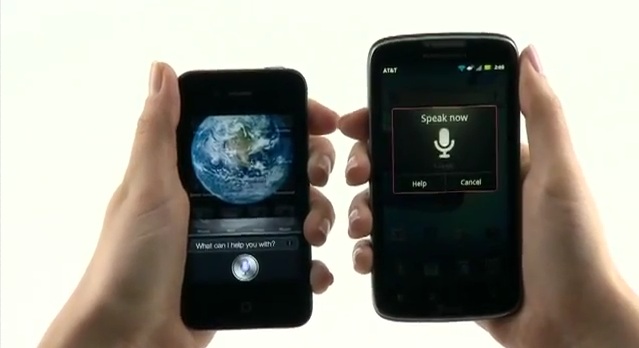
While Siri seems to get all the attention when it comes to voice actions, Motorola wants to remind people that Android not only does voice actions, but does them extremely well, if not better. At least that’s the message we’re getting out of Motorola’s latest campaign pitting Android’s voice actions against its top contender Siri. Motorola runs through a slew of voice action challenges using three different Motorola phones and the results are impressive. I’m blown away by how fast both OS’s perform the tasks given and it’s an excellent reminder of the fact that Android has been perfecting voice actions for quite some time. I’m betting there are a lot of you that didn’t even realize your phone could do the things your about to see. Check out the videos after the break.
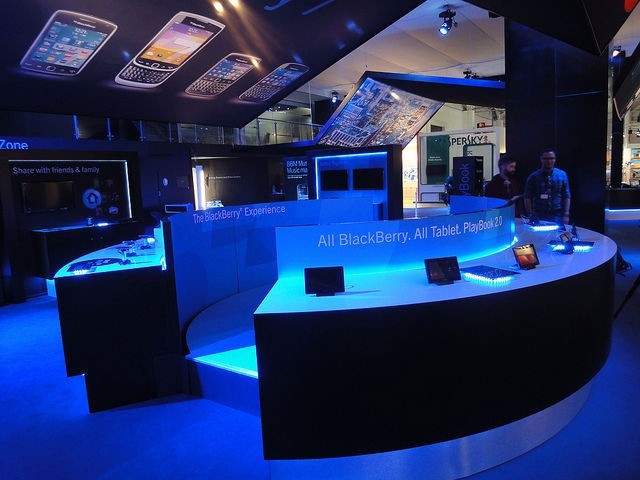
RIM, which is not showing much in the way of new products or technologies at this week’s Mobile World Congress in Barcelona, sought to dispel the idea that its failures over the past year had created tensions between the itself and BlackBerry developers.
The words, meant to be reassuring to developers and users, had a rather hollow ring to them considering that the company has seen major mobile developers retreating from its existing OS and its new platforms based around QNX. The move comes as RIM is seeking to court developers for its PlayBook tablet and future BlackBerry 10 devices. It also comes following the loss of several high profile enterprise BlackBerry customers, something that is sure to be on the minds of mobile developers when choosing platforms to support.
A recent study of finance chiefs at over 200 companies revealed that one in six expect the job of CIO to be gone within five years. More than twice that many (40%) expected that IT will eventually be folded into the finance department. This highlights the impact of trends like BYOD, the consumerization of IT, and the growing importance of cloud services.
As IT departments struggle to deal with an ever-increasing influx of iPhones, iPads, Android devices, and other “consumer” technologies, this raises big questions. Would handing management of IT over to a CFO with limited technical experience help or hinder Apple’s position as a business vendor? Would that drive BYOD programs or inhibit them? Would this ultimately be beneficial to most employees at a company?
The iPhone is ranked as the top smartphone in the United States, and with sales on the upward trend worldwide, one would think that there’s no stopping Apple’s magical handset. As it turns out, the iPhone has a “crutch” that’s key to its success: carrier subsidies.
It’s common practice for U.S. carriers to subsidize a phone to make it more affordable for the average consumer. The trick is that customers get locked into a two-year contract. While Apple profits and carriers take an initial hit off the subsidized model in countries like the U.S. and U.K., less expensive Android devices are dominating markets where consumers pay full price for their new phones.
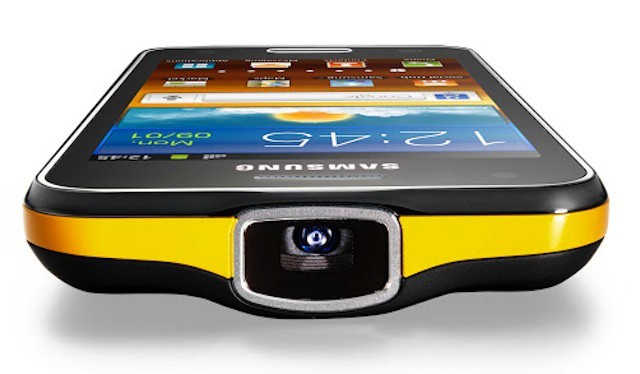
Although Android has an overall lead over iOS in smartphone marketshare, there are IT departments that remain hesitant on the platform. Unlike the iPad and iPhone, which are beginning to be seen to be as business tools rather than consumer-oriented entertainment devices, most Android phones have yet to prove that they offer a business feature that can’t be found on other platforms. Samsung’s newly announced Galaxy Beam smartphone may be the first Android phone to solidly offer something powerful and unique for business users.
The Galaxy Beam is Samsung’s new handset that includes a 15-lumen pico projector. Although Samsung’s press release for the phone offering a lot of personal entertainment uses, this is a device that has clear business potential.
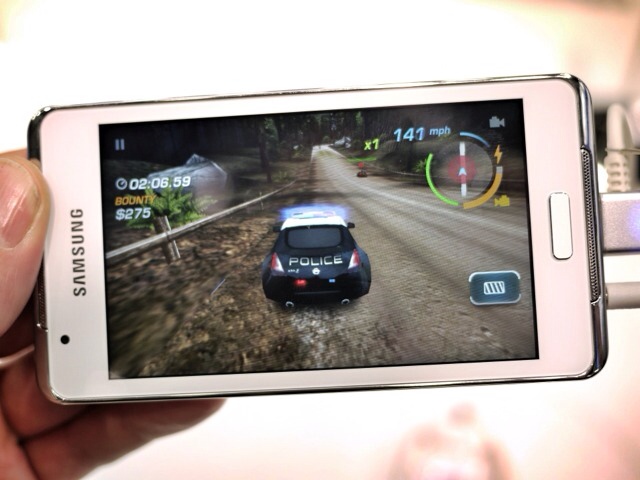
BARCELONA, MOBILE WORLD CONGRESS 2012 — Samsung continues to chip away at the iPod Touch market with a newer, bigger version of its Wi-Fi-only Galaxy S Wi-Fi 4.2. It’s a Gingerbread device, running on a 1GHz processor, and — surprisingly — it has a 4.2-inch screen. Obviously Samsung saw lucrative a gap in the market between the 4-inch and 4.5-inch sizes.
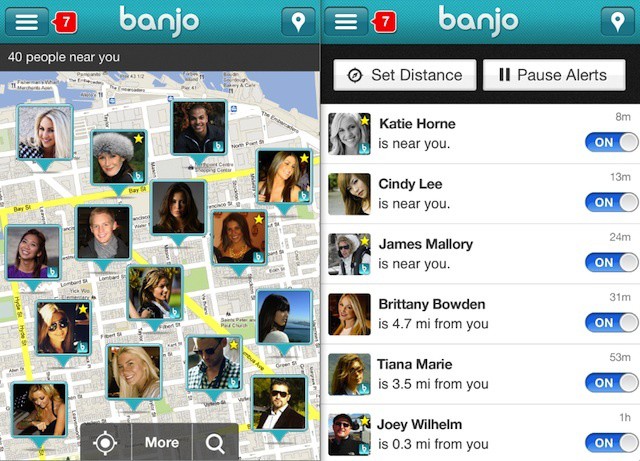
Spectacular and a little spooky; Ban.jo, an iOS/Android app that launched last summer, is startling in what it’s able to give the user: the realtime whereabouts of any friends who have location services active for any of (now five) different social media platforms.
Are you still emailing contact cards and photos to your friends? Did you know that you can transfer them instantly with a fist bump using the free Bump app? The best thing about Bump is it’s not just available on iOS, so you can use it to send contacts and images to friends on Android devices and other smartphones, too.
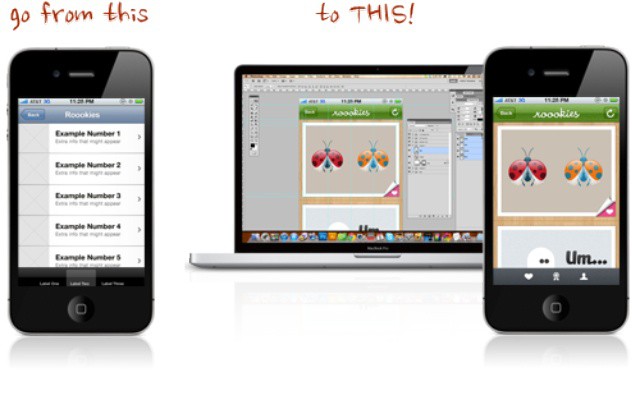
So you’ve got your mobile app idea and you’ve learned Objective C / Java and are ready to start coding. Now all that’s left to do is to create an elegant and inviting user interface so that people will actually use your app.
And now you’ve hit that roadblock.
Today we’re introducing you to design guru Jen Gordon as part of our newest Cult of Mac Deals offer that will help you become a mobile design rockstar – and at a savings of 61% off the normal price!
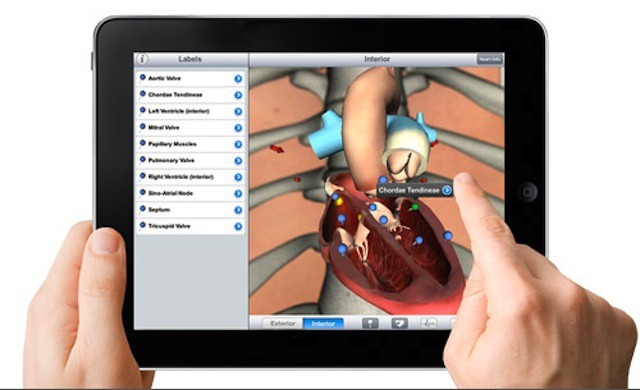
Healthcare was one of the first fields to adopt the iPad after it launched two years ago. As with other fields, the initial use of the iPad in healthcare came from doctors and other professionals buying their own iPads and bringing them into their practices or along with them on rounds – a move that predated most of today’s BYOD planning.
A recent study of mobile technology in healthcare clearly shows that the iPad is the number one device used by doctors, nurses, and other healthcare workers with significantly greater use than Android or BlackBerry devices or even the iPhone.
A new report from Forrester makes it clear that IT departments and the users that they support are not on the same page when it comes to employees using their own devices in the workplace. In fact, according to Forrester’s survey of both IT staffers and knowledge workers illustrates that IT may be largely out of touch with how many users are bringing their own iPads, iPhones, and other mobile devices and how many devices each employee is bringing to the workplace.
This adds an interesting counterpoint to the study that we profiled early today that indicated that by and large IT departments are beginning to embrace BYOD and other parts of the consumerization of IT trend.
We all love a good fight around here and we even have a recurring Friday Night Fights where we pit features of iOS vs Android, but this latest video by Samsung is just so asinine that not even us Android fans will defend it. To further promote their Galaxy Note, Samsung has decided to embarrass themselves by “going to the streets” to try and convince people how awesome the S-pen functionality is by challenging an obviously clueless iPhone user to perform the same mundane tasks as a seasoned (trained & scripted) Note user.