We all love a good fight around here and we even have a recurring Friday Night Fights where we pit features of iOS vs Android, but this latest video by Samsung is just so asinine that not even us Android fans will defend it. To further promote their Galaxy Note, Samsung has decided to embarrass themselves by “going to the streets” to try and convince people how awesome the S-pen functionality is by challenging an obviously clueless iPhone user to perform the same mundane tasks as a seasoned (trained & scripted) Note user.
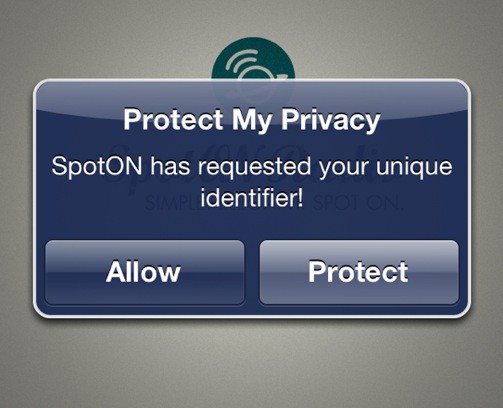
A jailbreak tweak called "Protect My Privacy" informs you when an app attempts to access your personal information without prompting you.
Path recently sparked a huge controversy over user privacy violations in popular App Store apps, and the media firestorm that resulted has now promoted The California Attorney General to enforce new standards for informing users about app privacy policies.
Apple, Google, Microsoft, HP, Amazon and RIM will now be implementing new policies that developers must comply with when publishing apps online. All information that’s collected from the user will be outlined in the app’s privacy policy and made viewable in app stores before downloading.
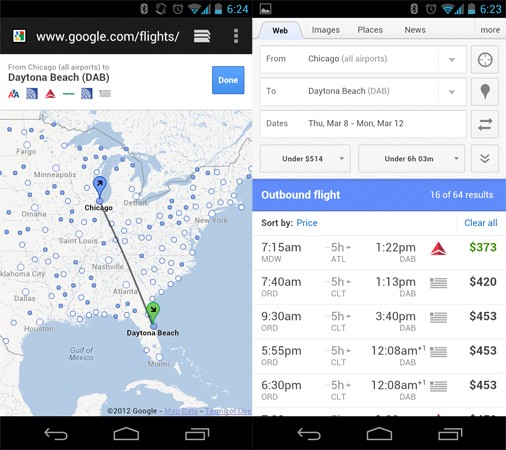
Users of Google’s Flight Search will now be able to receive the same great desktop features on their mobile devices. Flight Search is now available for both Android and iOS users who search for a flight via their mobile browser. Just search for a flight departing from the US and watch as Google provides you with a table that shows available flights, including duration and prices. Benefits of Google’s Flight Search include:
Mobile devices are now so common in the workplace that we’ve reached a tipping point where providing mobile options for many desktop apps has become a requirement for businesses. That’s the findings of a new survey from Symantec on mobile device use in business.
The survey, initially reported by InfoWorld, identified that not only are the numbers of mobile devices increasing, but also that the tasks they perform are increasing. A dramatic number of companies are now seeing core business tasks being completed on mobile devices. That’s driving the need for companies to develop comprehensive mobile apps for access to corporate information systems.
Get ready to save Springfield from a horrific nuclear explosion caused by none other than the bumbling Homer Simpson in what Electronics Arts expects to be one of the biggest freemium hits of the year. Expected to be released in the coming weeks on iOS (and then later on Android – D’oh!), The Simpsons: Tapped Out will be a free download for users but will follow the success of other freemium apps by offering optional in-app purchases. This virtual currency will of course come in the form of doughnuts and while not necessary to complete the game, will give impatient users a way to speed things up.
Twitter has pushed out an update for both the Android and iOS mobile apps which brings back a few popular features as well as adding a couple new ones. Also, owners of the Kindle Fire will be happy to know that the Twitter app is now available via the Amazon App Store, and if you happen to own a Barnes & Noble NOOK Color or NOOK Tablet, you can expect to receive the app on February 23rd. So what’s new? According to the Twitter Blog, here’s what you can expect:
Today a German court ruled that most of Motorola’s products infringe on Apple’s slide-to-unlock image patent with the only exception being the slide-the-circle gesture used in the Motorola XOOM. This ruling allows Apple to enforce a permanent injunction against the Motorola products found in violation. Motorola can still appeal the decision therefore Apple would be taking a very big risk enforcing such an injunction at this time. Should the ruling be overturned, Apple would have to reimburse Motorola for any lost sales due to the injunction. Regardless of Apple’s decision, one thing is for sure: Motorola will now have to make changes to their UI.
Centrify offers DirectControl for Mobile and DirectControl for Mac
Earlier this week, Centrify launched an open beta of the company’s DirectControl for Mobile service. The service, which supports managing iPhones, iPads, and Android devices in business and enterprise settings, currently includes a subset of the features typical in other mobile device management (MDM) systems. Centrify, which is known for providing enterprise integration technologies for OS X as well as various Unix and Linux distributions, plans to maintain the current selection of controls as a free solution when the product emerges from beta while adding further management capabilities to a commercially licensed version.
Most MDM solutions are of the bolted-on variety – they run on a dedicated server or cloud offering that can pull information from enterprise systems like Microsoft’s Active Directory but use a separate management interface and data store for management profiles and other information. Centrify’s DirectControl does offer a cloud management system, but it uses Active Directory itself as the primary interface and data store, an approach that has several advantages including a very minimal learning curve for experienced systems administrators.
Beyond the sheer number of devices sold, one of the biggest ways to Apple and Google try to position themselves as having the top mobile platform is by comparing the number of third-party apps available for users to download. Apple usually takes the number of apps available one step further when comparing iOS to Android by pointing out how many apps take advantage of the iPad’s tablet features such as screen size.
This is one of the reasons that an active and developer community is crucial a mobile platform’s success. Although Android entered the app race after Apple had begun to establish a successful developer community, the platform began to catch up quickly. All that seems to have changed over the past year, with a new report showing iOS developers are now creating three apps for every single new Android app.
Readability is a nice little app that turns virtually any web page into a clean, comfortable reading view, with syncing to allow for the reading of articles at a later date. While the web app has been available for some time now, the iOS app has been sitting in limbo for 4 month awaiting approval. In the meantime, Readability has managed to develop an Android app which is now almost ready for launch. As you can see from a tweet from a Readability developer, they’re simply waiting for Apple’s approval so they can go ahead and launch the apps:
RIM thinks Apple employees are pretending to be from other companies to rig votes for the nano-SIM.
Life hasn’t been good to RIM lately. The company is losing developers and major enterprise clients on a weekly basis. Its PlayBook tablet hasn’t made a dent in iPad sales (or even Android tablet sales, for that matter) and the company is practically begging Android developers to port their apps to the PlayBook. You’d expect the company to be frantic, particularly after the ousting of its co-CEOs last month… but that isn’t the case.
In one of the biggest delusions of grandeur that I’ve ever seen (which is saying something considering I was once the IT director for a mental health services agency), the company’s executives and board apparently think things are fine, that Apple is on the verge of death, and anyone outside the company is a moron. At least that’s the picture one RIM board member painted in an interview with Canada’s Globe and Mail recently.
Remote server management has long since been a way of life for IT professionals. While there are many tools that allow systems administrators to perform the majority of their job functions remotely, those tools are typically run on an administration PC – an approach that is effective but not always convenient. Today, HP announced that it planning to make the life of sysadmins a bit easier by shipping mobile server management tools for its Gen8 server line that can run on iOS and Android.
The new tools will provide monitoring and overall server health dashboard functionality. More importantly, they will offer systems administrators login, management, and even shut down capabilities. For organizations centered around HP’s server lineup, this will allow significantly more remote troubleshooting and problem resolution options.
Everyone’s favorite 8-bit world building game just got better thanks to an update. Minecraft Pocket Edition received its first Survival update, allowing users to choose between Survival and Creative mode when creating a map. Other great additions include:
The consumerization of IT along with the growing trend of BYOD programs in business is requiring virtually all companies to at least look at mobile device management (MDM) solutions. There are dozens of MDM vendors out there that support iOS as well as most flavors of Android. The cost and complexity of implementing mobile management can vary widely depending on the extended feature sets of MDM products.
Until now, most MDM vendors offered enterprise-style licensing programs and there were very few low cost cost options. That changed this morning with Amtel’s announcement that it will be offering a free cloud-based MDM solution that supports a basic set or features for iPhones, iPads, and some Android devices.
Laaaaaaaaaaadies and Gentlemen, welcome to Friday Night Fights, a new series of weekly deathmatches between two no-mercy brawlers who will fight to the death — or at least agree to disagree — about which is better: Apple or Google, iOS or Android?
After this week’s topic, someone’s going to be spitting teeth. Our question: What’s Better For App Stores, Walled Garden Or Open? Apple vets every app released on the iOS and Mac App Stores, but Google lets anything in, removing apps only if they violate their terms. Which is better for developers and consumers?
In one corner, we have the 900 pound gorilla, Cult of Mac; in the opposite corner, wearing the green trunks, we have the plucky upstart, Cult of Android!
Place your bets, gentlemen! This is going be a bloody one.
Your brand new car starts losing value the second you drive it off the dealer’s lot – that an old (and very true) addage. Like a new, a new piece of technology begins to lose value or depreciate as soon as you leave the store. With cars and with major tech purchases like a new iMac, this isn’t an immediate source of pain or dismay since you’ll be using them for at least a few years.
When it comes to smartphones and other mobile devices like our iPhones and iPads, depreceiation and loss of dollar value is equally true. The big difference is that most of us don’t hold to them for nearly as long.
If you’re in the habit of passing your iPhone or other mobile device onto friends or family members, that may not matter too much. But what if you’re looking to recoup some your investment?
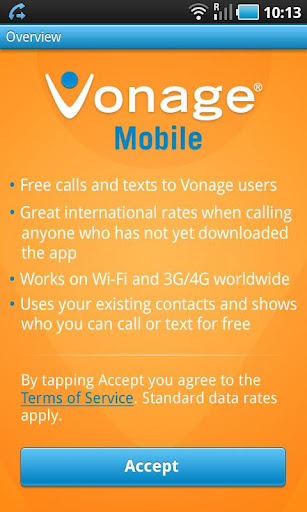
It’s been quite some time since I heard anyone mention the name Vonage but it appears they are still alive and kicking. They’re looking to steal some of Skype’s mobile business by offering a new VOIP app for both Android and iOS that claims to offer international calling at 30% less the cost of Skype. Of course the biggest draw is the free app-to-app calling and texting as well as free calls to any Vonage number. Full features of the Vonage Mobile app include:
We often wonder about what the “woman behind the curtain” would look like when we use voice action apps such as Siri but for the Android alternative Iris, we now have a pretty good idea. Iris was an app created for Android by developers Dexetra and started as a tongue-in-cheek reply to iPhone’s Siri. It became immensely popular and currently has over 1 million installs. Things seemed to be going good for this Android Siri competitor until Gizmodo recently revealed the “woman behind the curtain.” It turns out ChaCha, the search engine behind the app, is a bigoted, religious zealot that may have some disturbing answers to some of your questions.
Often the first and biggest question that confronts any company developing a new mobile presence (or revamping an existing one) is whether to focus on developing a native app or a mobile web site. While each approach has its pros and cons, one way to decide may be to look at how users are accessing content on their mobile devices like the iPhone and iPad.
Unfortunately, the latest news from comScore is that users are evenly split between using a dedicated native app or using a mobile web browser to access content – making that criteria alone useless when it comes to developing a mobile strategy.
A big challenge for businesses and organizations is cost management, particularly in the current economic climate. Many companies are trying to maximise their budgets – one of the big factors pushing the BYOD trend. Where BYOD isn’t feasible, however, businesses may still have the need to support mobile professionals – and need to do so as cost effectively as possible.
Despite the common presumption that Apple solutions are more expensive, the iPhone offers companies unique advantages when it comes to keeping costs down – and those advantages aren’t likely to be found in Android devices.
A recent survey of mobile carrier execs by Deloitte highlights some of the major concerns over the next few years. Chief among them is losing control of the mobile industry and market space to platform developers – namely Apple and Google. As Galen Grumen points out for Infoworld, this scenario actually gives Apple more power than Google because Apple controls the entire iOS ecosystem, from operating system to hardware to app and media sales.
This situation has mobile carriers worried. Carriers in Europe have actually gone so far as to consider developing their own smartphone platform to compete with iOS and Android in the hopes of enough success to maintain bargaining power against the demands of Apple or Android manufacturers. But the big question is whether or not this is good for consumers and business customers.
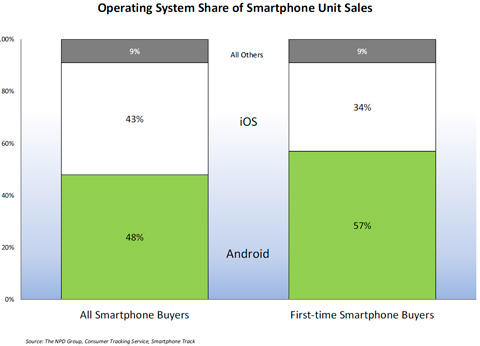
A study by The NPD Group, a leading market research company, provided us with some interesting Q4 statistics. On the obvious side of things, the number of smartphones sold in Q4 were up, with Android and iPhone accounting for over 90% of those sales. While you probably didn’t need a study to tell you that iOS and Android lead the smartphone market, I bet you weren’t aware that Android was actually a favorite among first time buyers.
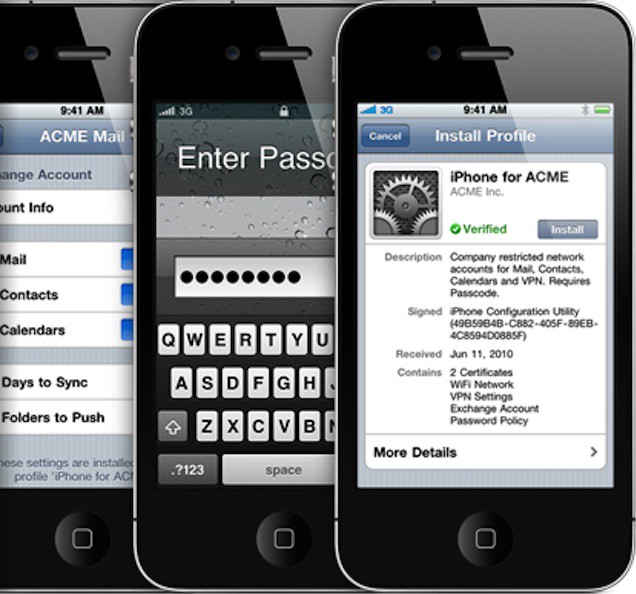
Haliburton’s decision to choose iOS as its new mobile platform was made after “significant research” indicated that iOS “offered the best capabilities, controls and security for application development,” according to a leaked memo published by AppleInsider. These capabilities, collectively known as mobile device management (MDM) features offer a solid framework that can be used to apply a number of security policies like complex passcode requirements and that a device’s data be encrypted. MDM features also include the ability to IT departments to restrict access to iOS features (say installing apps or taking photos) and to monitor devices remotely. Of course, they also include the ability to remotely wipe a device if it’s lost or stolen.
One excellent facet of MDM in iOS 4 and iOS 5 is the ability to monitor a device. There are a wide range of states that management software, including the Profile Manager service in Lion Server, can collect about managed devices. This includes seeing what apps have been installed, ensuring OS updates are rolled out, and being able to tell if a device has been jailbroken.
While all this may sound a bit like big brother, if you’re a major energy company with operations in dozens of countries, security can be a major issue. Of course, I could say the same thing about a medical practice needing to maintain privacy compliance.
Despite the fact that not only are current LTE chips too power-hungry and huge to fit into the iPhone without huge design and performance trade-offs, and the fact that the vast majority of the country has no 4G coverage, a lot of Apple’s Android competitors have been pointing their fingers and laughing at the iPhone over the last year for not embracing LTE.
Well, who’s laughing now? In response to profits that dropped 26% this quarter, HTC had admitted that making an early transition to LTE was a “big mistake.”
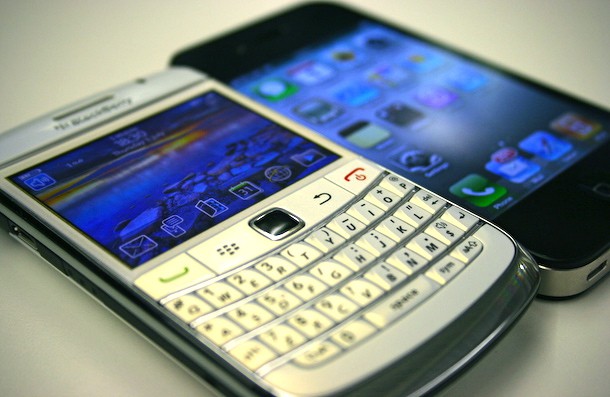
In what appears to be a watershed moment for Apple’s iOS, a leaked memo published at AppleInsider indicates the one of the world’s largest energy companies, Haliburton, will be transitioning to the iPhone as its exclusive smartphone of choice. That comes as a huge opportunity for Apple and iOS, and a huge blow to RIM.
According to the memo, the move will take place over the course of the next two years, but will be a complete transition from one platform to another with no plans to continues to support BlackBerry devices once the transition has been completed.