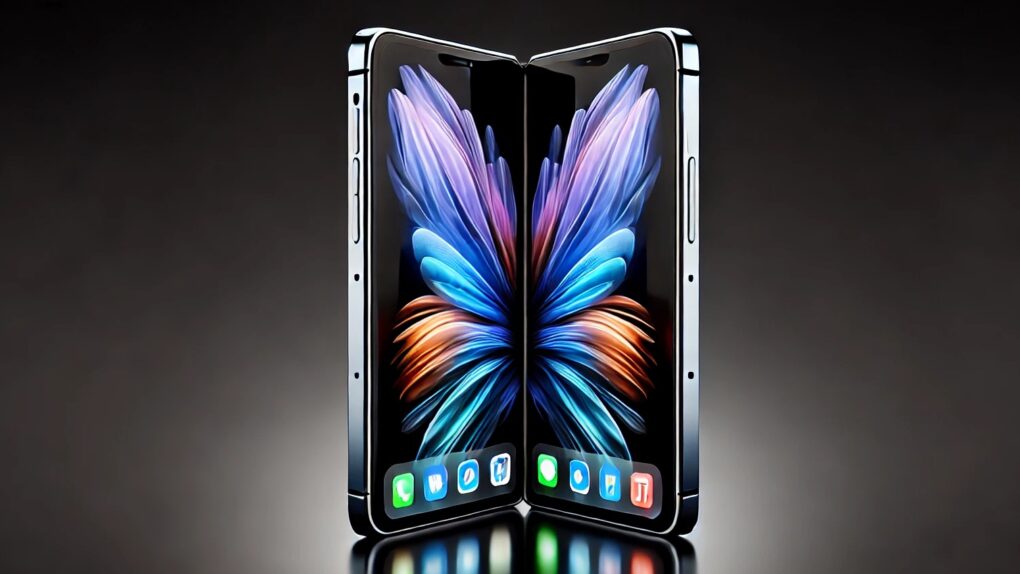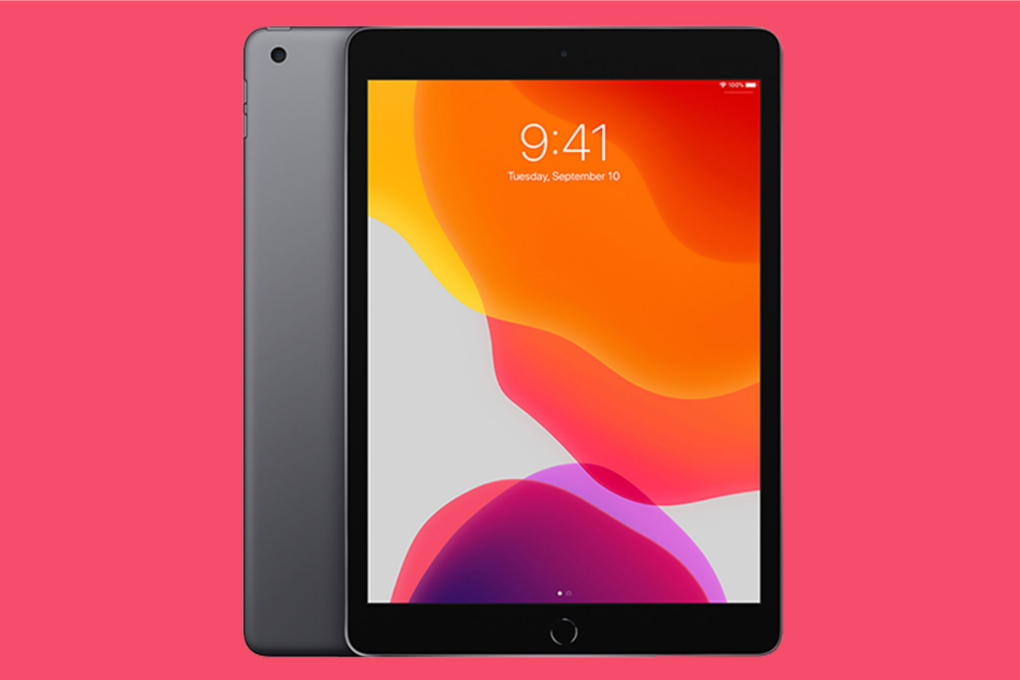
Serious craft from Japan’s Mobile Art Lab in transforming the iPhone into an amazing interactive image in a children’s story book from the future. I love it. All kids should get one for Christmas.
We have an exclusive interview with one of the top people in the Apple story. I’d say they were number 3: the third most influential person in Apple’s history.
This is the first time they spoken publicly about Apple in many, many years. They have some good stories, a lot of fascinating insights, and a couple of surprises.
Isamu Sanada’s day gig is photography, but his passion is Apple mock-up design.
An amateur designer of fantasy Macintoshes with a website that showcases dozens of his speculative designs for Apple gear, Sanada got his mock-up cred back when he posted an amazingly prescient take on the Titanium G4 PowerBook months before the real deal was released.
Though he’s gotten lots of praise for his designs, Sanada has been quoted regarding his design chops humbly, saying, “Apple’s thought is more splendid than my thought.”
Hit the jump for more Steve Jobs lookalikes and if you find one out and about — or happen to be one yourself — send us a pic or post it on our Facebook wall and we may feature yours in a gallery post down the road.
Is this Steve Jobs driving a tank in a classic Apple TV spot from the late 1990s? That was the rumor at the time: Jobs was making cameos in Apple commercials.
Ken Segall, the TBWA ad man responsible for naming the iMac and Think Different, reveals the truth after the jump. He also shares some rare behind-the-scenes photos he took during the filming of this commercial and another from the same era.
Meet Ken Segall — the man who dreamed up the name “iMac” and wrote the famous Think Different campaign.
Segall is a veteran creative director who worked at Apple’s agency, TBWA\Chiat\Day, back in the day.
“I’ve put in 14 years working with Steve Jobs on both Apple and NeXT,” says Segall. “I’m the author of the Think Different campaign and the guy who came up with the whole “i” thing, starting with iMac.”
Segall collaborated closely with advertising legend Lee Clow, chief creative officer of TBWA\Chiat\Day, whose retirement was widely — but prematurely — reported last week.
In this exclusive interview, Segall talks about working with Steve Jobs, how Jobs initially hated the word “iMac,” and the importance of the Think Different campaign to Apple.
Adobe made its position on the unavailability of Flash for the iPhone clear Monday with a snippily worded announcement that points the finger squarely at Apple for any iPhone user who might end up at the ‘getflash’ web page.
But an interesting comment on the Reddit thread about the long-standing brouhaha makes it appear the Adobe folks might doth protest too much. Flash would suck the iPhone’s battery dry in less than an hour.
Here’s a couple of videos of the new 27-inch iMac in action as an external display. The new iMac is the first that can act as a monitor for another machine, but will only work with devices that output DisplayPort video, like newer MacBooks.
Kara Johnson, a material scientist at design and engineering firm IDEO, has just posted up a fun behind-the-scenes look at how some of her colleagues created the above shot of a 12″ PowerBook for dinner as part of her book I Miss My Pencil.
It’s actually surprisingly hard to wreak such meticulous havoc, and it’s fun to see the process of great engineers up close — especially since IDEO and its predecessor David Kelley Design engineered a huge number of Apple products from the late ’70s into the mid-’90s.
Hit the link to see the full process, if you’re not traumatized by the sight of violence against a Mac.
There’s a dirty little secret lurking within the hearts of iPhone and the iPod touch: neither of them is a particularly great music player. A lot of iPhone owners actually keep a separate iPod nano or classic with them to listen to their music libraries. I’m not one of them, but I’m thinking about it.
Don’t get me wrong. Syncing media to modern Apple handheld is the best such experience money can buy, and the actual playback and browsing experiences are in the top tier of media phones and Internet tablets. That doesn’t mean they’re great, though. For the most part, the iPod app found on the iPhone and touch is a fairly literal translation of the original iPod interface ported over to a much higher-end device, plus an overly complex Cover Flow mode — which doesn’t even work well with Playlists. And that’s kind of pathetic, given Apple’s ordinarily high standards.
This is not the usual case where Apple is so far ahead of the competition that it’s not even clear how a media player app should change as it migrates to a modern multitouch platform. The video linked above is the proposed Rachael UI for the media player app in Sony Ericsson’s Android-based phones. It’s not amazing, but it does a few things really, really well. Notably, it provides a lot of rich information on artist pages that brings back some of the feel of listening to a physical album, and it also makes it easy to find your favorites, recently added albums, and tracks, and your most recently played music — all on one screen. That alone, in my opinion, annihilates the best of the current iPhone music experience. And I think we’d all agree it’s a refreshing departure from either a long list of artists listed in alphabetical order as a home screen.
The Zune HD, though its UI is an overly stylized collection of wank, also does some interesting things with tagged favorites that show the untapped possibilities available in next-generation handheld music playback.
I’ve had my iPhone 3GS for about four months now, and I love everything about it — except that it doesn’t do a great job of helping me rediscover diamonds in the rough of my music collection. The iPod app is good enough, but it isn’t great yet. Here’s hoping that the old competitive spirit will push Apple to truly push the edges of what’s possible. Shouldn’t we be able to view iTunes LPs on the iPhone, at the very least?
Customers check out the iPhone at a Beijing launch event. Bloomberg News
In spite of the fact that all iPhones are made in China, Apple’s super smartphone wasn’t officially available to Chinese consumers until this weekend. China Unicom, Apple’s network partner in the world’s largest mobile phone market, held a late-night kick-off event in Beijing on Friday to mark the momentous occasion, but the Wall Street Journal reports that the big to-do was mostly a to-don’t.
Hundreds of people braved cold and rain to attend a Friday night party thrown by China Unicom Ltd., the state-owned carrier selling the iPhone, at a Beijing shopping center. Still, the crowd seemed subdued compared with the thousands who turned up at stores when the iPhone was introduced in markets such as the U.S. and Japan, where it quickly sold out in many locations. As of Sunday night, stores around Beijing still had the iPhone in stock.
Why? Because imported iPhones are already widely available in major Chinese cities — and at dramatically lower prices. Official iPhones in China run $730 to $1,020, a premium of $200 to $300 over gray-market phones from Australia and other nearby markets. Worse, the official China Unicom iPhone has its WiFi disabled.
While it’s certainly too soon to call the Chinese iPhone launch a flop (that was the initial assessment for the Japanese market, and the 3GS went on to become the best-selling phone in Japan), these are significant hurdles that will be tough to overcome. Apple has taken nearly two and a half years to launch the iPhone in China, and offering over-priced crippleware after all that time is underwhelming in the extreme.
Only time will tell. Any Beijing readers with either a China Unicom model or gray-market iPhone care to chime in?
Earlier in the week we asked readers to post pics of their workspaces on our Facebook page for the chance to win a new Magic Mouse — and the response was great. So far, more than 90 of you have taken the time to become fans of Cult of Mac on Facebook, snap a shot and upload your pictures — thank you!
While everyone is waiting with bated breath to find out who’ll win the Magic Mouse (announcement to come tomorrow, Sunday, November 1), we thought readers might like to see a cool dozen of some of the most interesting.
Let us know what you think in comments below and feel free to continue posting your own shots over at the Facebook fan page.
The sexiest all-in-one computer has long been the iMac, and last year’s 24-inch model was a beauty. But oh my Lord, the new 27-inch machine induces crazy lust. Look at the size of that screen!
I just returned from the Apple store with one. I went to buy the new Magic Mouse. They were out of stock, so I bought the new iMac instead — it comes with a Magic Mouse.
Crazy, I know. I just couldn’t help myself. We’ve already got a 24-inch model, but the 27-inch is so much… bigger.
Yeah, like 3-inches of extra screen makes a difference. But it does. The screen is simply HUGE. There’s no other word for it. If you’re sitting right in front of it, hunched over the keyboard, you have to physically MOVE YOUR HEAD to look from one corner to the other. You get motion sickness if there’s video playing, like being in the front seats of a movie theater.
Thanks to this big beautiful screen, the sexiest desktop in the world got a lot sexier. The question is though: is the screen too big?
Full review after the jump, including real-world benchmarks and tons of pics.
I’m a multitouch junkie. Everything I touch has to be multitouch, or it just ain’t right. I can no longer use a regular laptop trackpad — there’s no two-finger scrolling. It irritates me no end if I can’t point, scroll and double-click with my fingers.
How long will it take then, to get used to the Apple’s new Magic Mouse? So far, it’s been frustrating. It seems like the Magic Mouse would be perfectly natural to use, but it isn’t.
As anticipated, Apple has updated the Apple TV software to 3.0, which brings a new interface and home screen with quick access to favorite content. Instead of drilling down to get to a recently-rented movie, it’s now accessible right off the home screen, as are favorite TV Shows, podcasts and YouTube movies.
The update also adds support for iTunes LPs and iTunes Extras, as well as Genius Mixes and internet radio.
The update likely breaks Boxee, the unsanctioned internet media player that actually makes the Apple TV useful, but internet radio is a welcome addition.
To support the new Apple TV software, Apple has also updated iTunes to 9.0.2. As well as being compatible with the Apple TV 3.0 software, the update adds a new “dark” viewing option in Grid View. The iTunes update also once again breaks Palm Pre syncing.