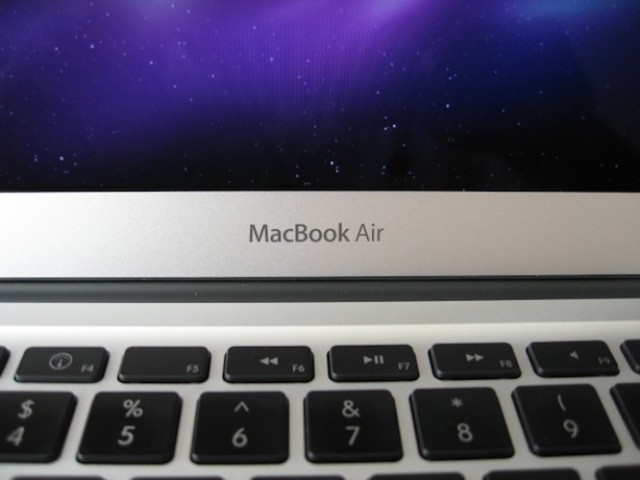
AnandTech is reporting that Apple has appeared to have made some changes to the MacBook Air released in October 2010. The Macbook Air refresh last fall included some welcome surprises for Apple fans — a new 11.6″ form factor, an external case redesign, faster graphics, and larger SSD drives. All of this came at a lower price. The most interesting part of the refresh was the new SSD drives. Apple didn’t use regular 2.5″ or 1.8″ SSDs and instead introduced a whole new type of SSD form factor called mSATA SSDs a.k.a. blade SSDs.
Nearly a year ago, I predicted in my Computerworld column that Apple’s iPad would not only eat into netbook sales, but sales of laptops and even desktop PCs. It was an unpopular prediction.
If you look at the 300+ comments attached to that piece, you’ll see that the majority of commenters at the time thought I was crazy, stupid or both.
One wrote: “Obviously Mike Elgan has gone off the deep end on this one. This article is so naive to the real world, and so far fetched it makes me think this is nothing but, once again, a biased article by an iSheep in its purest form.”
Another said: “This article made me laugh out loud. I thought I was reading The Onion!”
Still others were more direct: “I’m pretty sure this is the stupidest article on the internet.”
You still hear people dissing the iPad these days, of course, but nobody dismisses it. Sales of the iPad have far exceeded the expectations of all but a tiny minority of us who were very bullish from the start. Analysts have had to raise and raise again their unit-sales estimates. Early doubters have been silenced.
Now, you might think I’ve come to brag that I was right and my critics were wrong about iPad replacing PCs. A Gartner report published this week says that PC shipments are down from last year. Overall PC shipments in the United States fell by 6.1 percent. HP was down 3.5 percent. Dell dropped 12 percent. And Acer took a nearly 25 percent hit in unit sales. Meanwhile, Apple’s sales grew nearly 20 percent.
One analyst at Gartner said the PC declines resulted from buyers “turning their attention” to media tablets and other devices. The “media tablet” market is a euphemism for the iPad, which owns 70 percent market share and is expected to sell in the 45 million unit range this year.
But no, I’m not here to brag. The replacement of PCs I predicted hasn’t quite begun in earnest. The replacement will come. And I will brag. But for now, it’s more interesting to see how the iPad is gradually undermining the foundations of PC dominance.
Here’s how Apple’s iPad is setting the stage for the decline of the PC.
Thanks everyone for your hilarious and entertaining comments in my Throwboy Giveaway post. I had a fun time reading them all and it was REALLY hard to choose the two winners.
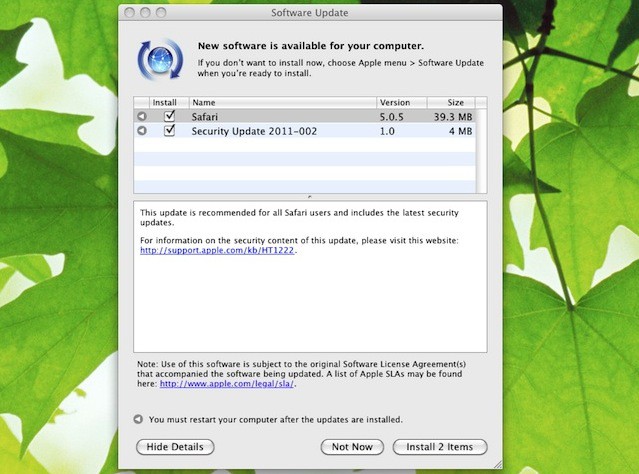
Apple has just released Safari 5.0.5 – an update for Safari on Mac OS X which offers unspecified bug fixes and security updates for Apple’s web browser application.
The release notes read:
This update is recommended for all Safari users and includes the latest security updates.
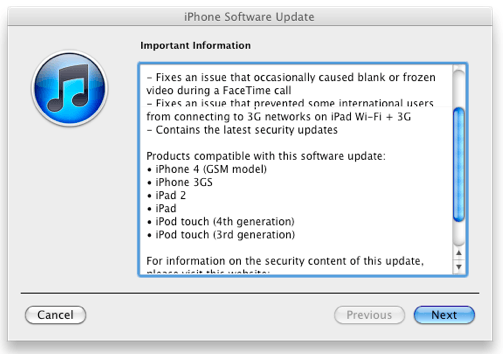
Apple has just released iOS 4.3.2 – an update for all devices that support the 4.3 software – except the Verizon iPhone 4 (CDMA) – which fixes a FaceTime bug and an issue that prevents some international users from connecting to 3G networks on the iPad.
The release notes read:
– Fixes an issue that occasionally caused blank or frozen video during a FaceTime call
– Fixes an issue that prevented some international users from connecting to 3G networks on iPad Wi-Fi + 3G
– Contains the latest security updates
As usual with an iOS update, jailbreakers should avoid updating their devices, especially if they rely on an unlock. Dev-Team member MuscleNerd has warned hackers with messages on Twitter, confirming that Apple is working hard to prevent untethered jailbreaks:
ultrasn0w unlockers stay away from today’s iOS 4.3.2!
Apple sure is aggresively patching these untethered jailbreaks lately (but that’s better than lawsuits)
The iOS 4.3.2 update is now available to download via iTunes. Verizon users get the same bug fixes, but they come in the form of iOS 4.2.7 – also immediately available.
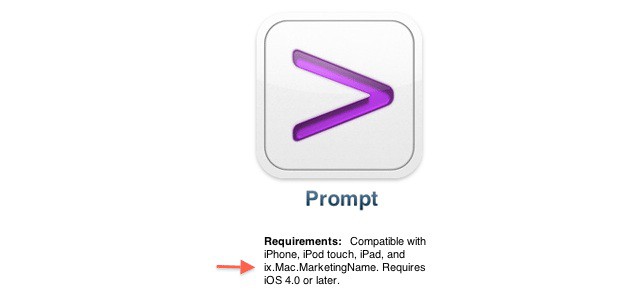
Late last night, the iOS App Store experienced a wide scale bug that affected the listings of hundreds of apps. Under the app’s “Requirements” listing, a new product became listed as possibly compatible with iOS apps after iPhone, iPod Touch and iPad: “ix.Mac.MarketingName.”
What does it mean? Possibly and even probably nothing, but the “Mac” designation in the string implies a Mac that can run iOS apps.
Uninstalling software under Mac OS X is generally a straightforward procedure — just delete the program from the Applications folder. Few vendors offer uninstallers on the Mac, and generally they’re not necessary. Most programs don’t run background components or alter system settings files (like the Registry on Windows), and leaving old preferences and support files on the hard drive generally doesn’t do much harm.
But if you are trying to remove an old or corrupt component, reinstall software to change a serial number, or just free up disk space, removing all components of the old application can be important. These components include the application itself, preferences and support items, and sometimes hidden files or kernel extensions. Anyone who’s had problems installing an Adobe CS application or removing Symantec AntiVirus will appreciate how hard it can be to fully remove old software.
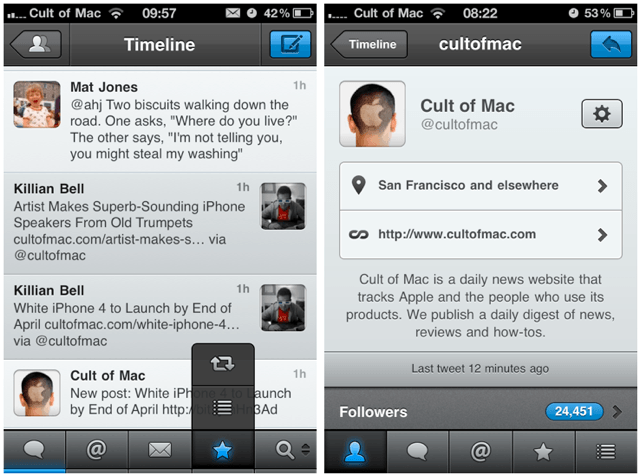
One of the most anticipated Twitter clients for the iPhone finally hit the App Store yesterday, and I was staggered by the attention it received within its first few hours – I can’t remember the last time an iOS application launched with that kind exposure – especially not a Twitter client.
From Tapbots – the creators of Convertbot, Pastebot and Weightbot – Tweetbot promises to be a full-featured Twitter client with a lot of personality; boasting a meticulously crafted user interface, smart gestures, and customizable navigation.
Tweetbot’s launch is big news today – it’s all over Twitter and many publications are dubbing the application a Twitter for iPhone killer. But is it as good as the release day hype would have you believe? Find out in our review after the break!
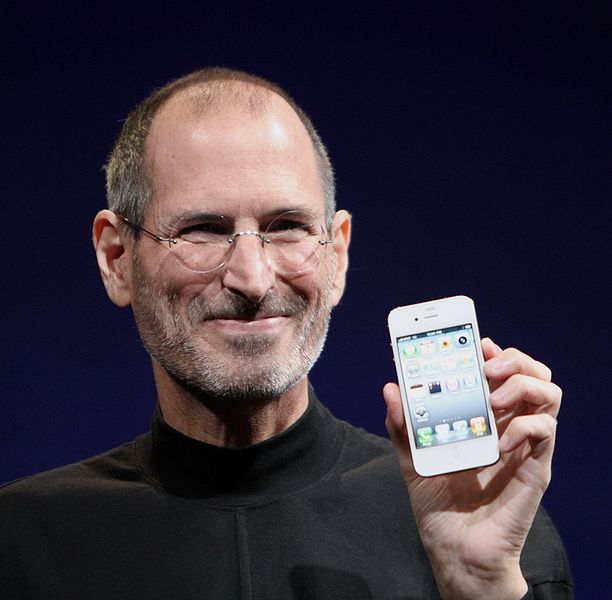
Following a long 10-month delay, the wait for Apple’s white iPhone 4 could soon be over, according to three people with knowledge of the company’s plans. The device will be available through both AT&T and Verizon Wireless and will launch by the end of April.
A Bloomberg report on Wednesday cites three people who are familiar with Apple’s plans, while another report published on Thursday by Reuters cites two more who also claim the white iPhone 4 is currently in production.
A bout of manufacturing challenges have delayed the device – which is rumored to have included paint that becomes discolored and peels under heat, light leakage into the camera, and light leakage out of the case – the device that many thought would never see the light of day could finally be released from the Foxconn factory.
Despite a message on Twitter last month from Apple’s vice president Phil Schiller, confirming the white device would be available this spring, the recent removal of any image depicting the device from Apple’s website fuelled rumors that the handset would not be launching.
An Apple cloud service has been one of the main focal points for a lot of recent speculation, and a new job listing on the Apple website confirms that the company is currently putting together a crack team of people to build “the future of cloud services at Apple.”
The listing is for a “Cloud Systems Software Engineer” – a full-time role in a “small team” based at the company’s main Cupertino campus. In true Apple style the listing doesn’t reveal a lot of information about this cloud service, however, it does state that the team will be responsible for writing software “which forms the foundation” for some of Apple’s “most exciting new products and services.”
Apple’s only attempt at cloud services so far has been MobileMe, which has left a great deal to be desired for many of its users. Recent rumors claimed that a revamped MobileMe service would soon go live, featuring a digital storage function similar to iDisk which would enable users to store content that could be streamed to iOS devices.
Since Apple has only just started advertising for people to build their new team, it doesn’t look like the cloud service will be launching anytime in the immediate future. It is believed cloud services will be a big part of iOS 5, so the first we hear about it could be at WWDC in June.
Interestingly, since this job listing became famous, it seems to have been removed by Apple.
Steve Jobs isn’t exactly the kind of guy to let a grudge go. That’s why when Google released Android and it featured a “pinch to zoom” feature just like iOS, Jobs decided to make sure that Apple board member and Google CEO Eric Schmidt couldn’t steal any of Cupertino’s other bright ideas… like the original iPad.
It’s always sexy time in Philadelphia, apparently.
Public health officials there are the latest in the U.S. to arm horny inhabitants with info on where to find condom dispensers via mobile phones in the hopes of helping bring down STD rates in young people.
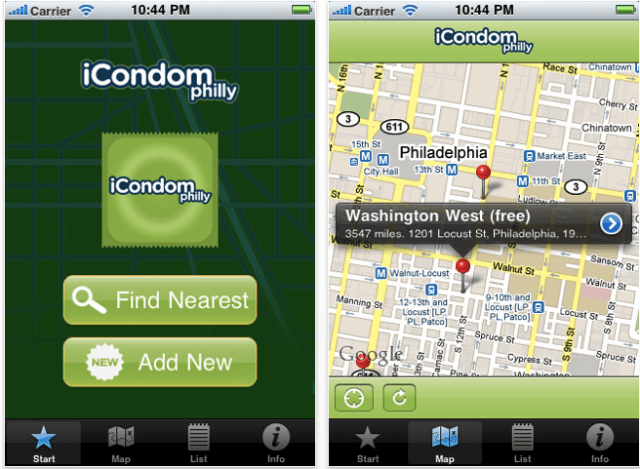
iCondom Philly, offered free in iTunes, is launching as part of a health campaign that includes a sex ed site called Take Control Philly. The city is in the top 10 U.S. cities for sexually transmitted diseases with a disproportionate number of adolescents affected.
If you don’t live in Philadelphia, you may still be in luck. iCondom Philly piggybacks off an app called iCondom, which provides the same info for New York City and Washington D.C.
Gratis to download but ad supported, thanks to hordes of helpful randy regular joes (and josephines) who have added condom dispenser info, it can also help you locate the goods in Brazil, Spain, Australia, Canada, UK, France, Italy, Switzerland, Sweden and Ireland.
“When we designed iCondom, we had in mind that the application could be easily developed to meet the needs of each city’s publicly-run condom programs that exist worldwide. Philadelphia immediately understood how useful the application could be in targeting youth 11 to 19 years old,” said Morgane Danielou, Founder of iCondom.
With the February release of the Verizon iPhone and the Schiller-claimed shipment of the white iPhone 4 “real soon”, rumor consensus at this point has the iPhone 5 pegged for a September launch instead of a traditional summer unveiling.
Could it end up being even later than that, though? A new analyst report says that it might slip later, with iPhone 5 production only set to start in September.
Live from the Final Cut X event (via twitpic user @fcpsupermeet)
Update: Final Cut X will be $299 and will be available in the App Store in June. Still unknown are the future of Final Cut Studio (Including Soundtrack, Motion, Compressor, Color, DVD Studio) or Express.
Apple is, at the very moment I’m writing this, taking the cloak off of Final Cut X live and to much applause in front of the Final Cut Pro User Group Network in Las Vegas. For several weeks there have been rumors and murmurings that Apple would today unveil the next iteration of its venerable Final Cut video editing software, we’re learning now those rumors were true.
Final Cut users know that the last major update the software had was about 10 years ago. Though many users love the program, it was getting so long in the tooth it was starting to look like a vampire.
Details of the new Final Cut X are still coming in since the unveiling isn’t over yet, but one attendee at the event is posting updates via twitter (thanks @fcpsupermeet). Here are some notables from his twitter stream:
Crowd is unruly!
Final Cut X is a full rebuild from scratch
64 bit – Crowd: “finally!” “thank you!”
Cocoa, Core Animation, Open CL, Grand Central Dispatch support
The Focus was on image quality
Fully color managed
Resolution independent playback/timeline all the way up to 4K
Features people detection, single or in groups
Non-destructive auto color balance
Automatic audio cleanup (option to auto noise reduce audio, more)
Features “smart collections”: a lot like the smart folders found in OS X
Editing can start immediately during importing of AVCHD and other media, switches silently to local media as it ingests
Uses every available cpu cycle to keep things rendered. Also highly scalable. Will even work on a Macbook
No interruption for rendering. No transcoding, EVERYTHING native. (incl DSLR footage–assume this means AVC)
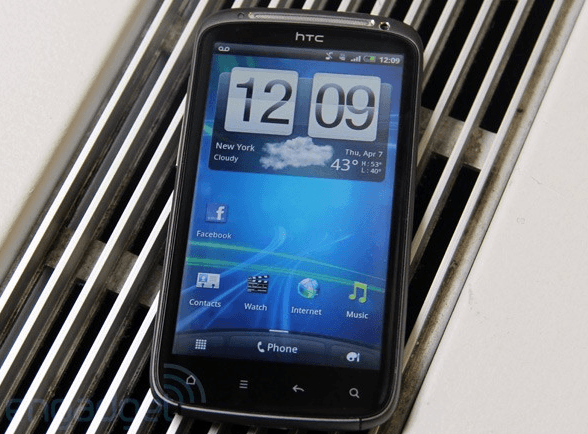
At an event in London today, HTC unveiled a brand new addition to its ever growing smartphone lineup called the Sensation 4G. Boasting 4G data connectivity, a Super LCD screen, and a dual-core 1.2 GHz Snapdragon CPU, the Sensation is a worthy adversary for the iPhone 4. So how do the two compare?
We’ve created a great little comparison that compares all of the main specifications, helping you decide which device deserved your hard earned cash. Check it out after the break!
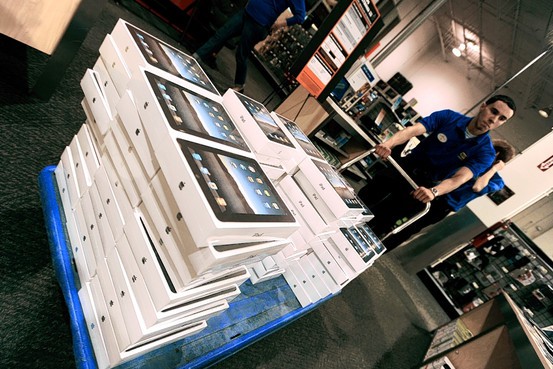
Best Buy hasn’t exactly been playing fair cricket when it comes to distributing iPad 2s to customers. First, Best Buy admitted they were holding back iPad 2s, supposedly for an “upcoming promotion” but rumored to actually be to manipulate their sales quota numbers. Strike one.
Now we’ve got strike two. A reader writing to Crunchgear says a Best Buy manager effectively blackmailed him into buying a $109 rip-off Best Buy protection plan before he would sell him an iPad 2.
You can just imagine the teens huddled in this iDevice-compatible park shelter listening to music. The shelter has imbedded wireless speakers that work with the iPod, iPhone and iPad. The solar-powered gathering place does not work at night, officials say.
It’s part of a park renovation project in Carterton, Oxfordshire. The £200,000 project (about US$326,000), in part funded by city coffers and in part by grants, will renew the Alvescot Road Recreation Ground.
Aside from offering a spot to sit around and scowl protected from the drizzle, there is also a play area with jungle gyms, swings and a zip-wire.
We weren’t able to find out other details about the shelter, but will update when we do.
Amazon’s goal is to have a Kindle in every pair of hands in America. That’s Apple’s goal with the iPad too, but the difference is, Apple wants to do it while remaining profitable on the hardware. Amazon’s willing to give that up if it means they can make boatloads of cash on the ebooks.
That’s why Amazon releases free Kindle software for every platform capable of running text on a screen, and that’s why — if you plot the Kindle’s price decline over the past couple of years — you can see that it is on track to eventually be free in November of this year, at least to Amazon Prime customers.
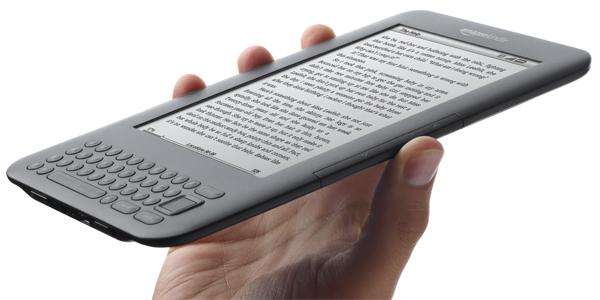
For the rest of the consumers out there, though? Amazon’s now working on a new plan: ad-supported Kindles. And while users don’t get much of a discount off of the regular Kindle now (just $25 off the $139 entry-level Kindle price to have your e-reader “sponsored” with advertisements on the homescreen and in the screensavers), I expect that the savings will drop to free soon enough.
Amazon’s plan has never really been to build the best e-reader, although the Kindle’s an excellent device. Their plan has been to make a good enough e-reader cheaply enough that they can just give one away to anyone who wants one.
Getting large libraries of music and movies to synchronize wirelessly over WiFi hasn’t been easy, according to a source close to the company who asked to remain anonymous. But Steve Jobs himself sees it as key to updating the aging devices, which are becoming increasingly obsolete in the iPhone/iPad era.
“Jobs is pushing hard to get WiFi syncing into the next-generation of iPods,” says our source.
Despite recent speculation that a third generation iPad will launch later this year, component makers in China have ruled out the possibility of two iPads in twelve months, and claimed that although Apple has released its plans for a higher resolution tablet, the device is still in the “initial planning stage.”
Sources said they do not see the iPad 2 as a transitional product, and pointed out that the launch of an iPad 3 so soon after the release of the second generation device would simply cut off interest in the iPad 2. Component makers confirmed that they are yet to receive any notice for next generation iPad components, and with such a strong demand for the iPad 2, an update won’t appear anytime soon.
Touch panel makers also revealed that Apple may be considering an AMOLED panel for the iPad 3, which would be a “great risk” for the Cupertino company since AMOLED technologies are currently largely controlled by Samsung. It may mean Apple could no longer have priority over the key technologies used in its devices, and meeting demand for the device could prove even more difficult.
A new service from Piecable, called Piecable Viewer, allows you to run iOS applications in your web browser. They’re not just watered down demos either; they’re complete applications – just like you’d get from the App Store – that run on Flash with just one additional line of code.
The service provides developers with a great way of giving people access to their applications for testing, without having to worry about iTunes redemption codes or the UDID limit Apple places on developer accounts. All they have to do is sign up to the Piecable service and choose one of its tiered pricing plans, add an extra line of code to their application, and upload it to the service. They receive a link to the app on the web which can be sent out to agencies, clients, organizations, and the press, enabling the recipient to play around with the application in their web browser.
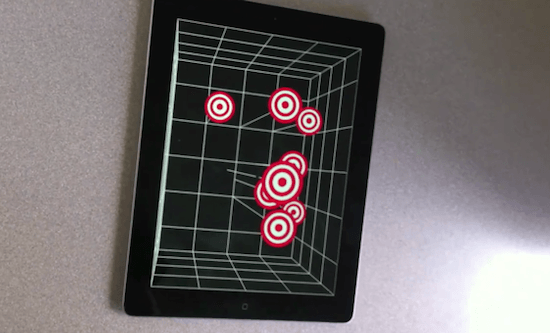
Thanks to its front-facing camera, the iPad 2 is capable of producing a glasses-free 3D effect using head-tracking technology. Jeremie Francone and Laurence Nigay from the Laboratory of Informatics of Grenoble at the EHCI Research Group have used this technology, along with some really basic applications, to show off what the iPad 2 is capable of when it comes to 3D.
We track the head of the user with the front facing camera in order to create a glasses-free monocular display. Such spatially-aware mobile display enables to improve the possibilities of interaction. It do not use the accelerometers and relies only on the front camera.
The video below demonstrates how the concept works, and I think it’s really impressive. I can’t wait to see how developers might use head tracking to create a 3D gaming experience.
These may not be the worst of times, but they’re not the best either. So the folks who make Geotrio Tours, an iPhone app that allows users to become virtual tour guides, think that awesomeness should be rewarded — they built a feature in their virtual tour app that allows people who go on the user-made tours to tip their guides, all from within the app.
The tours use the iPhone’s GPS to guide tourists along a set route, with photos and audio automatically popping up at predetermined points along the route. If they enjoyed the tour (and if they’re not cheap sods), at the end of the tour, tourists can leave tips for the guide. Virtual guides can make tours of anything they want, for free, at Geotrio’s website, or via their free TourRecorder app. There’s also a paid, pro version for the likes of big institutions.
No one’s going to make a million bucks off the app (if your tour is that good, send me a link), but it might net you some money for time invested in a fun little project.
I just spent the last hour or so reading the 1996 profile, which Isaacson published when Gates was at the height of his power. Isaacson managed to get full access by persuading Gates it was a shot at winning Time’s Person of the Year. Gates didn’t win, but the profile is a great piece of work. It’s full of personal anecdotes and is psychologically penetrating. Isaacson talked to Gates’ friends, family and colleagues, and paints a rich, detailed portrait. It’s highly readable but also critical of Gates. We can only hope Isaacson does the same thing for Jobs, who has famously resisted biographers so far. As previously reported, Jobs has granted Isaacson full access for iSteve: The Book of Jobs, which is to be published early next year. (I don’t think it’s fair, but columnist Michael Wolff says Isaacson is a social-climbing sycophant).
Here’s a taste of the Gates piece:
When Gates decided to propose to Melinda in 1993, he secretly diverted the chartered plane they were taking home from Palm Springs one Sunday night to land in Omaha. There Buffett met them, arranged to open a jewelry store that he owned and helped them pick a ring. That year Gates made a movie for Buffett’s birthday. It featured Gates pretending to wander the country in search of tales about Buffett and calling Melinda with them from pay phones. After each call, Gates is shown checking the coin slot for loose change. When she mentions that Buffett is only the country’s second richest man, he informs her that on the new Forbes list Buffett had (at least that one year) regained the top spot. The phone suddenly goes dead. “Melinda, Melinda,” Gates sputters, “you still there? Hello?”
Okay, this is sorta creepy — and if you aren’t aware of this little fact by now, you should be: Unless you’ve adjusted the settings to turn this feature off, every time you snap a photo with your iPhone it embeds data with your exact location in the image file. This data, called a geotag, can be easily read using easily available software by anyone who has access to your images online (btw, contrary to what the folks at NBC say, it’s not new technology; the ability to geotag photos has been around since at least the first iPhone to include GPS, the 3G).