Feast your eyes, folks. Who likes the Z-Car? Woz likes the Z-car! Because it’s AWESOME!
Via Epicenter
Feast your eyes, folks. Who likes the Z-Car? Woz likes the Z-car! Because it’s AWESOME!
Via Epicenter

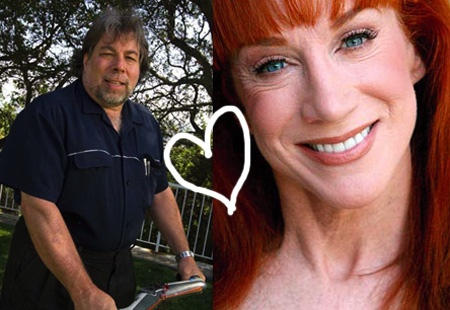
Oh, Woz. We could forgive all the Segway polo. And the US Festivals. Even the interviews hyping iWoz. But dating Kathy Griffin? Really?
While I’m sure the stand-up comic and star of “My Life on the D-List” has a hidden interesting side that she’s never shown in any of her acting or comedy, she just doesn’t seem like your type. Then again, since I hear you met her after one of her shows, you must share a sense of humor. If you leverage that into a new Bay Area dial-a-joke service like you had back in the day, maybe all will be forgiven.
Via Perez Hilton
Technorati Tags: kathy griffin, d-list, woz
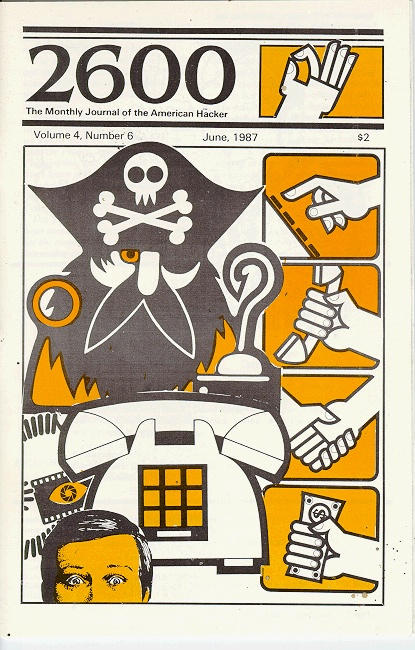
With Apple on top of the market, it can be easy to forget that Steves Jobs and Wozniak first collaborated on an illegal project, making blue boxes to place illegal long-distance phone calls — phone phreaking. One of their biggest inspirations, according to Woz’s autobiography, “iWoz,” was Joe Engressia, who legally changed his name to Joybubbles.
A student at the University of South Florida in the late 1960s, he was given the nickname “Whistler” due to his ability to place free long-distance phone calls with his whistle. He was disciplined by the University early on, but after graduating his studies in philosophy and moving to Tennessee, law enforcement raided his house; he was charged with malicious mischief and given a suspended sentence and quickly abandoned phreaking, although was able to whistle 2600 hertz throughout his life.
Joybubbles lived a tragic life, as you can read in his Wikipedia entry. Still he had a profound impact on the early days of Apple. This Esquire story, featuring Captain Crunch and Joybubbles, changed consumer electronics history by inspiring the Steves. Rest in peace.
Via Boingboing
Picture courtesy of Geek Culture.
There’s a couple of data points about today’s Cult of Mac column on Wired News that didn’t make the cut because of length, so I’ll post them here.
The column concludes with an anecdote about the opposing design philosophies of Steve Wozniak and Steve Jobs. While Woz advocated open, commodity hardware, Jobs pursued closed, proprietary designs. And this of course, is the story of the PC industry. While Intel-compatible PC makers developed a standard, open hardware platform, Apple plowed a closed, proprietary route.
Apple has always been criticized for this, of course, but Woz eventually came to sympathize with Jobs’ approach. As he told Macworld in an interview:
“… I see two things that make Apple successful now where others aren’t. They are really a tight monopoly. They’re a hardware monopoly, and there’s no hardware monopoly on the other side. So that gives them some advantages in control and in pricing to have profits. A company isn’t going to be a good company and really develop better and better things if it can barely squeak by and doesn’t have good profits. Apple can have the profits that it needs to make these great, exciting products that are steps forward, instead of just kind of sitting in the competitive consumer throwaway product category everyone else is.”
The other thing I’d like to have included in the column is the delightful story Gary Wolf tells at the end of his insightful Wired magazine profile of Woz from 1998. The tale is the most appropriate I’ve read about the man:
“Among his other activities, Woz collects phone numbers, and his longtime goal has been to acquire a number with seven matching digits… after more months of scheming and waiting, he had it: 888-8888. This was his new cell-phone number, and his greatest philonumerical triumph.
The number proved unusable. It received more than a hundred wrong numbers a day. Given that the number is virtually impossible to misdial, this traffic was baffling. More strange still, there was never anybody talking on the other end of the line. Just silence. Or, not silence really, but dead air, sometimes with the sound of a television in the background, or somebody talking softly in English or Spanish, or bizarre gurgling noises. Woz listened intently.
Then, one day, with the phone pressed to his ear, Woz heard a woman say, at a distance, “Hey, what are you doing with that?” The receiver was snatched up and slammed down.
Suddenly, it all made sense: the hundreds of calls, the dead air, the gurgling sounds. Babies. They were picking up the receiver and pressing a button at the bottom of the handset. Again and again. It made a noise: “Beep beep beep beep beep beep beep.”
The children of America were making their first prank call.
And the person who answered the phone was Woz.”
Tomi from PodBrix writes:
“We are releasing a new apparel product tomorrow (1/17) at 9:00pm EST and I wanted to give you some information about it.
The product is called the Wozwear 6502 and is a custom made shirt featuring an image of our previous Woz minifig holding a 6502 processor chip. The interesting aspect is that we use an actual 6502 processor chip and attach it to the shirt with a magnetic clasp. See the attached image to get a better idea of the product. As I’m sure you will recall this is the chip used in the classic Apple II line of computers. With Apple’s recent switch to Intel processors I thought it would be interesting to offer a product capturing the nostalgia of the old Apple II processor.
The 6502 chip attached to the Wozwear is purely cosmetic, but it is in working condition and if plugged into an old Apple machine it would function properly. You can easily remove the chip from the Wozwear shirt to launder it.
As is standard for PodBrix products, the Wozwear 6502 is a signed limited edition of 300 units. The Wozwear shirt is available in five sizes (S, M, L, XL, XXL) and is individually screen printed to order to ensure everyone can receive the desired size without exceeding the 300 unit limited edition.
The Wozwear 6502 is available for $34.99 each and will go on sale tomorrow night (01/17/06) at 9:00pm EST. International orders are welcome.”
Steve Wozniak:
My best computer prank involved counterfeiting twenty thousand brochures for a phony computer. I did it at the West Coast Computer Faire, where the Apple was introduced.
Bruce Damer’s ever-excellent Digibarn Computer Museum has a scan of Wozniak’s proudest prank.
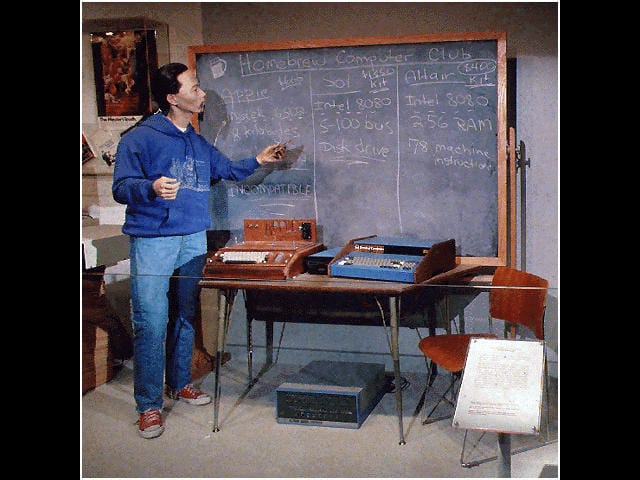
Apple I nerds may be interested in a Homebrew Computer Club retrospective at the Vintage Computer Festival this weekend in Mountain View, California. Apple cofounder Steve Wozniak will be there, as will several other Homebrewers.
“The VCF in conjunction with the DigiBarn Computer Museum is proud to
present a 30th anniversary celebration of the founding of the Homebrew Computer Club, the legendary Silicon Valley institution that helped to launch the era of the personal computer. Bruce Damer of the DigiBarn Computer Museum will moderate this panel of former Homebrew members, including Steve Wozniak, Lee Felsenstein, Allen Baum, Len Shustek, Bob Lash and Michael Holley.Join the panel as they recount their experiences and gab with the group as we feast on some yummy cake, courtesy of the DigiBarn.”
(The comical Homebrew diorama is taken from an Information Age exhibit at the Smithsonian’s National Museum of American History).
The Festival is at the Computer History Museum in Mountain View. Doors open 9:30am until 6:00pm; full exhibit is $12 per person per day; $7 per person per day for exhibit and marketplace only. Kids under 17 are free.

 May 17, 1983: John Sculley takes the helm as Apple’s third president and CEO. The former Pepsi-Cola boss is short on tech experience but long on marketing, which will become increasingly important as the personal computer revolution ramps up.
Steve Jobs personally lured Sculley to Apple using one of the most famous lines in the history of business. “Do you want to spend the rest of your life selling sugared water,” Jobs asked Sculley, “or do you want a chance to change the world?”
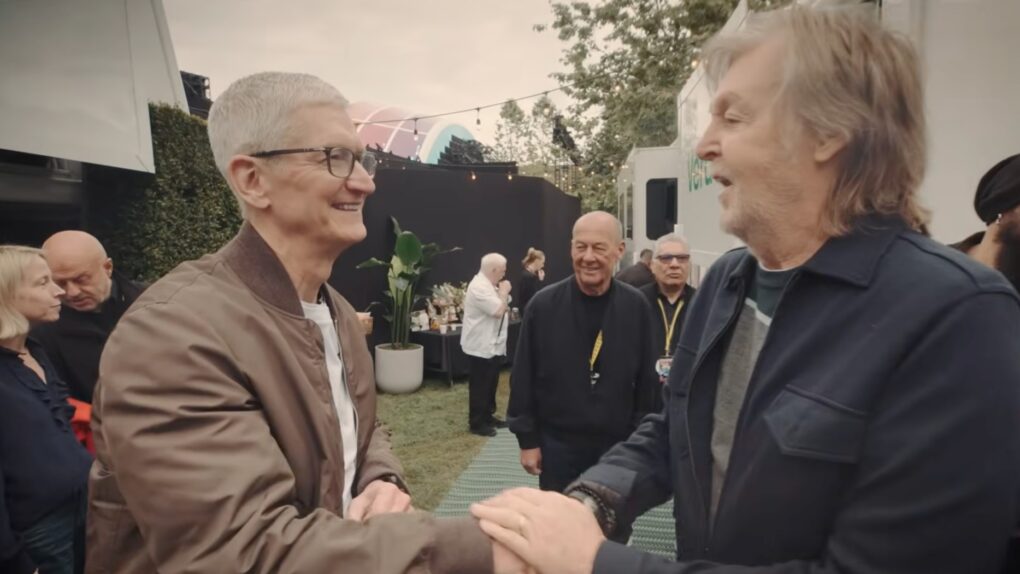
If you’ve been green with envy watching those grainy fan clips of Paul McCartney lighting up Apple Park last month for the iPhone giant’s 50th anniversary, Sir Paul just gave the rest of us a proper consolation prize. McCartney posted a polished, three-minute, behind-the-scenes film to his YouTube channel Tuesday, offering an intimate look at his celebrated March 31 performance.
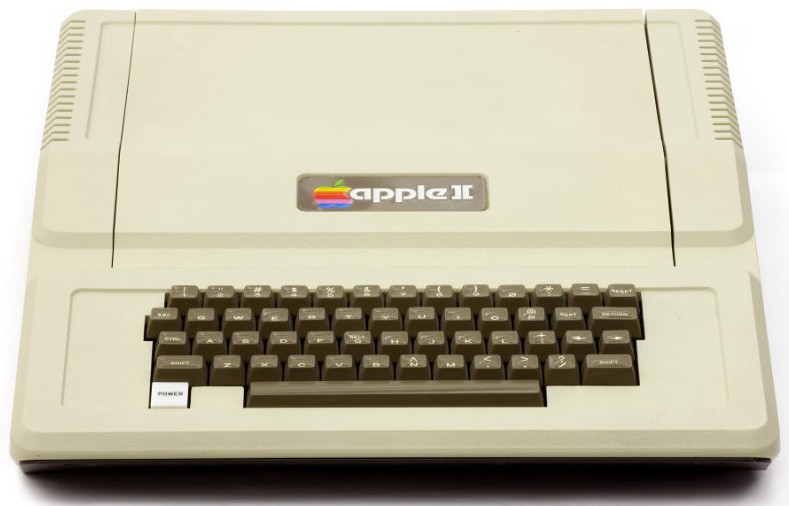
 April 17, 1977: The Apple II launch at the West Coast Computer Faire positions Apple at the forefront of the looming personal computer revolution.
The company’s first mass-market computer, the Apple II boasts an attractively machined case designed by Jerry Manock (who will later design the first Macintosh). It also packs a keyboard, BASIC compatibility and, most importantly, color graphics.
Fueled by some marketing savvy from Apple co-founder Steve Jobs, the Apple II launch makes quite a splash at the San Francisco Bay Area’s first personal computer convention.