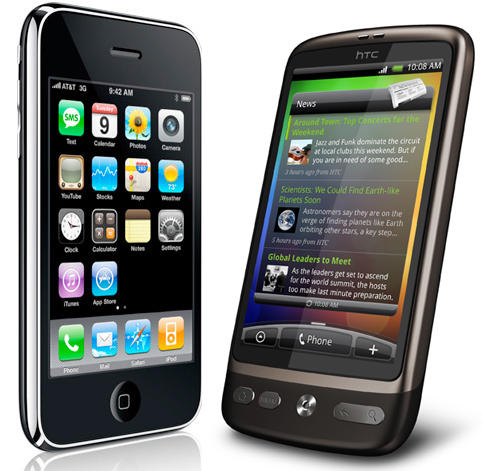
HTC just got a powerful new ally in its patent fight against Apple.
Following Google’s announcement that they would support their frequent manufacturing partner in its defense against complaints made by Apple that HTC handsets infringe upon a number of key iPhone-related patents, Microsoft has issued a press release saying that they have signed a broad patent-sharing agreement with HTC.
According to the agreement, Microsoft will license its patents to HTC across all of their phones. If the phone is a Google Android handset, HTC will pay them a couple bucks in royalties on every handset sold.
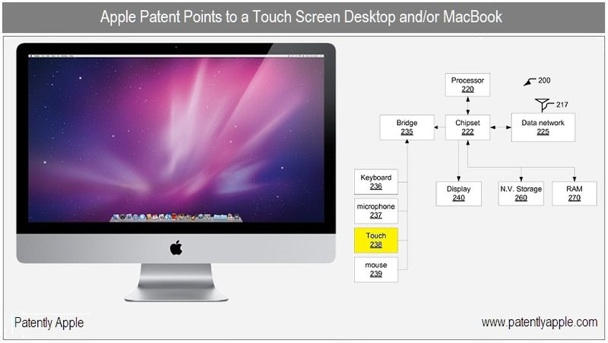
The team at Patently Apple mined a patent granted today to find what may be future gold: more evidence that the Cupertino company is toying with the idea of touchscreen iMacs and MacBooks.
After slogging through patent no. 20100100947, titled “Scheme for Authenticating without Password Exchange,” they discovered a flowchart illustrating a touchscreen that could be associated with both a Macbook and a small desktop.
In a patent that even these document hounds defined “obscure,” the flowchart they sniffed out points to a touchscreen component not restricted to the iPhone.
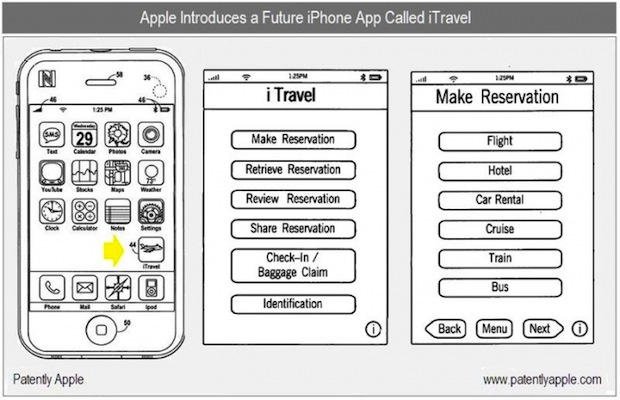
Apple has filed a very interesting patent for a travel app called iTravel that books flights, hotels and car reservations. But the most interesting part is how it uses a radio chip to check you in at the airport, whisk you through security and allows you to wireless board your flight.
The iTravel app uses Near Field Communications, a short-range wireless technology that is starting to become widely used in cell phones for mobile ticketing, payment and electronic keys, especially in countries like Japan.
Apple is rumored to be adding NFC chipset to the next iPhone. If so, it could turn the iPhone into an electronic wallet, allowing you to for everything, from a cup of coffee to a subway ride. Your iPhone could unlock your car, pick up e-coupons at the local mall, and pay for all your supermarket groceries just by laying it on top of the checkout.
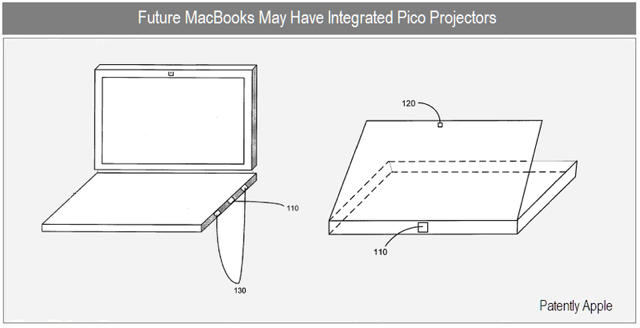
I think you can safely chalk this latest Apple patent won’t come to fruition, but it’s an interesting one the nonce: a MacBook Pro with a built in pico projector in the hinge, perfect for giving presentations on-the-go, or just throwing a movie up on the wall for your friends to watch.
It’s neat, but it’s also way to marginalized a feature to expect any time soon, especially given the relative lameness of pico projectors: Apple might well pull this trick out of their hat one day, but not until they can do it right. What do you think?
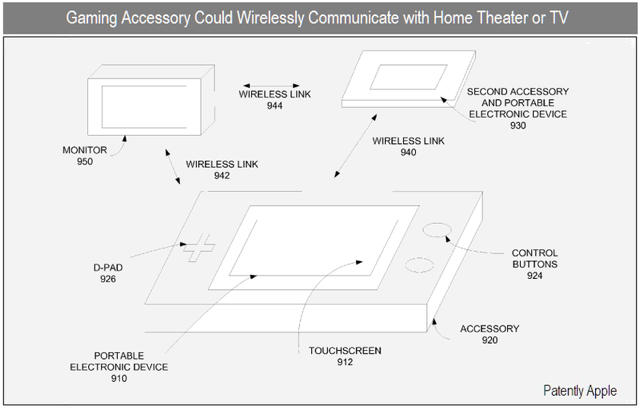
Ever since the iPhone’s release, one of the most pervasive criticisms of Apple’s handhelds as dedicated gaming devices have been the device’s lack of analog controls. It’s a criticism that has seemed considerably limper as time goes on and developers have figured out to utilize the iPhone’s touchscreen and accelerometer effectively, but for certain genres like fighting games and twitch shooters, there’s still something be said for the good old d-pad.
Taiwanese chip and touchscreen maker Elan Microelectronics Corp. has asked the U.S. International Trade Commission to ban the import and sale of some Apple Inc. products — including the almost-in-your-hands iPad — alleging patent infringement.
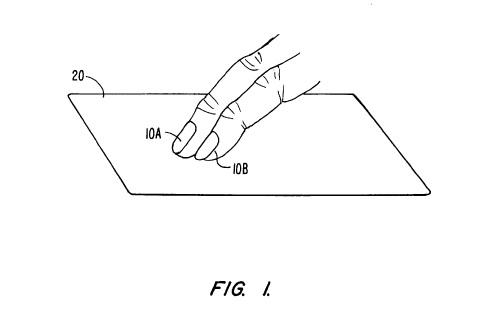
Apple’s iPhone, iPod Touch, MacBook, Magic Mouse and iPad use technology which the company claims infringes Elan’s patent “352” granted in 1998 for detecting the simultaneous presence of two or more fingers, Elan said in an email statement today.
“Our goal is to protect our technology and to stop sales of those products in the U.S.,” Elan spokesperson Dennis Liu told Bloomberg.
This isn’t the first time Elan, which bills itself as the “smart human interface expert,” tries to give Apple the eFinger: they filed suit against Apple in a California court over another touscreen patent, “353,” in April last year.
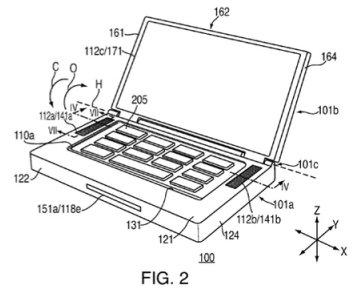
Apple’s always struggled to keep its laptops both cool and quiet. Steve Jobs is notoriously perturbable in regards to fan noise, which means the fans on Macs, when present, kick in a lot less often than on their PC counterparts. A lot of the true engineering genius of the unibody aluminum MacBooks are in the way they effectively dissipate heat while keeping the fans turned low.
It’s a great solution for now, but laptops are just going to burn hotter in the coming years, not cooler. Forward thinking Apple isn’t going to sit on its haunches when it comes to notebook heat dissipation. They’ve filed for four separate patents related to cooling efficiency in future Macs: one for venting heat through open USB and FireWire ports, two addressing a notebook’s ability to adjust its performance dynamically based upon airflow measurements, and one that outlines a plan to use heat conductive hinge assemblies.
As usual, there’s no telling just when, or even if, we’ll see these patents rolled out into actual Apple products, but it’s good to know Apple’s staying on top of the problem as computers continue to burn hotter. After upgrading to a unibody MacBook, I couldn’t go back to my first-gen’s proclivity for scrotum searing if I tried.
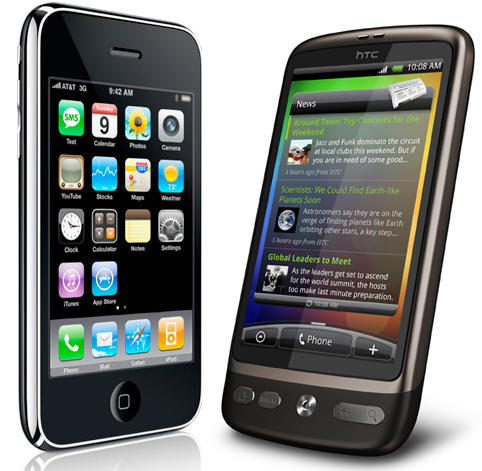
Yesterday, Cupertino surprised everyone by throwing a bonafide legal temper tantrum about rival handset maker HTC’s alleged infringement on up to 20 Apple patents.
Although Apple is targeting HTC, the takeaway here is clear: Apple’s going after Android, HTC’s bread-and-butter. Google recognizes this, and is standing in solidarity with HTC.
As Apple fans, it’s easy to lose sight of the big picture here. Competition is good for the consumer, and Android becoming a credible threat to the iPhone’s dominance will only make the iPhone cheaper and better for consumers in the long run.
There’s other aspects that make this sort of patent battle bad news for consumers though. The New York Times Bits blog asked some IP experts on the possible ramifications of the Apple-HTC patent dispute, and according to Harvard Law School professor Jonathan Zittrain, if Apple wins, we could see the courts order HTC to hit the kill switch on their Android phones, just like what happened in the TiVo/EchoStar lawsuit of 2004.
Apple is again back in legal headlines, Tuesday suing handset maker HTC for allegedly infringing 20 unspecified iPhone patents. HTC has designed a number of smartphones powered by Google’s Android mobile operating system.
The lawsuit, filed with the U.S. International Trade Commission and in the U.S. District Court of Delaware, points to the iPhone patents covering user interface and associated architecture and hardware, reports said.
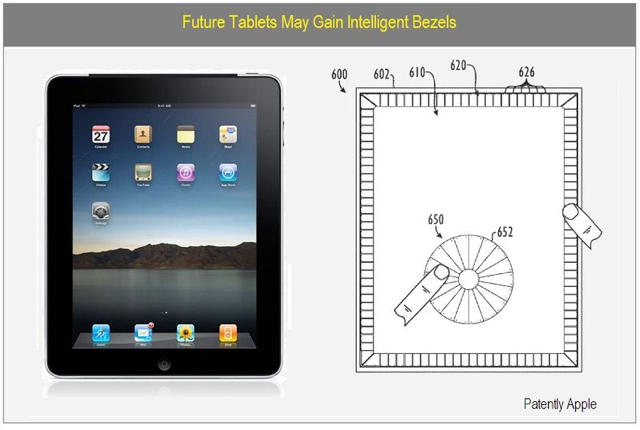
Our eagle-eyed patent scouring friend Jack Purcher over at Patently Apple has noticed a cool new filing trickle through the USPTO pipe, which deals with tablet computer with advanced touch technologies.
The patent describes technology which uses a touch-capable bezel that could control things like music volume, track skipping, zooming functions or even gaming controls. Given the iPad’s pretty sizable bezel and Apple’s recent forays with display-less, touch-capacitive surfaces (e.g. the Magic Mouse) this seems like it would be a great addition for next-generation iPads… especially in addition to a touch-capacitive back.
This is a very Apple thought process. We’re unfortunately a long way away from eliminating bezel entirely from our devices, and as much as Apple might want out iPads to just be slates of glass in our lap, it’s not going to happen anytime soon, Making the bezel actually useful is the next best thing.