Mobile menu toggle

Search results for: patent

Apple Sued By Patent Trolls Over Mail.app Spam Filtering

By

spam-mail3

Apple has just been named co-dependent (along with nearly three dozen other companies) in a patent infringement lawsuit yesterday relating to spam filtering technology.

“Email as we know it would essentially stop working if it weren’t for InNova’s invention,” said InNova’s lawyer “More than 80 percent of email is spam, which is why companies use InNova’s invention rather than forcing employees to wade through billions of useless emails. Unfortunately, the defendants appear to be profiting from this invention without any consideration for InNova’s legal patent rights.”

And what is this amazing invention Apple stole from InNova? InNova came up with the idea of using a contextual database to identify emails a user wants from unsolicited ones according to conditions like whether or not a “From” address had been emailed before.

Spam filtering’s an amazing invention, no doubt, but it takes more to invent something than being the first to register they had the idea with the government. This is a totally scurrilous case, filed by parent troll InNova Patent Licensing in the Eastern District of Texas in Marshall, well-known as a friendly court for pursing patent infringement cases. The list of defendants include Google, Dell, HP, IBM, Yahoo… as well as the likes of JC Penney, Snapple and Dr. Pepper. Really. Dr. Pepper!

Let’s hope Apple destroys these bozos.

Apple Hit With False Patent Lawsuit

By

Apple has settled claims with state regulators who allege the company mishandled electronic waste.
Photo: Thomas Dohmke

Did Apple market its iPod and iPhone using expired patents? That’s the claim of an Austin Texas group asking a court to fine the Cupertino, Calif. company and several wireless carriers $500 per falsely-labeled product. The Americans for Fair Patent Use is suing under the federal False Marketing Statute.

The AFPU is also suing Sprint Nextel, Verizon Wireless and Samsung. The group alleges Apple marketed the iPhone, iPod touch, fifth- and sixth-generation iPod classic and third- and fourth-generation iPod nano using patents that had expired prior to the products reaching store shelves. The patents in question are U.S. Patent Nos. 4,577,216, 4,631,603, 4,819,098, and 4,907,093.

New Apple Patent Describes Wireless Charging and Syncing Dock

By

patent-100715-1

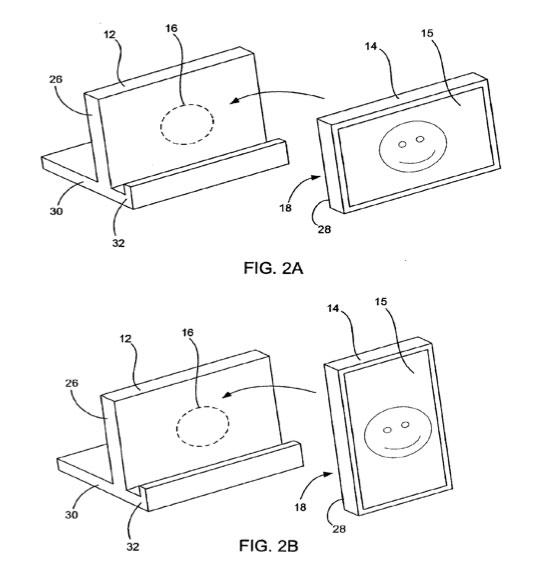
As spotted by Apple Insider, Apple’s latest patent application to be unearthed describes a dock wit a “rotationally symmetric” port that allows you to sync and charge your iPhone or iPad in any orientation that you may choose.

The most interesting part about this application is that it isn’t a plug-in device: in other words, an iPhone or iPad could sync and charge just by resting against the surface of the dock.

Much as I would kill to see the end of the USB iPod Dock Connector Cable for inductive syncing and charging technology, It’s strange to see Apple trying to patent this: the Palm Pre‘s Touchstone Charger has done this same thing for two years, and HP presumably now owns the patent on it. If I had to guess, the difference here is that Apple’s patent covers both syncing and charging, while the Palm Touchstone can only do the latter.

How will Apple’s device sync information wirelessly, though? My guess is not through induction, but rather through WiFi… a capability of future iDevices confirmed just last month by Steve Jobs himself.

Apple Patents Solar-Powered iPhone With Invisible Collection Cells

By

post-45392-image-0983e0580433530c01e4f950406815d3-jpg

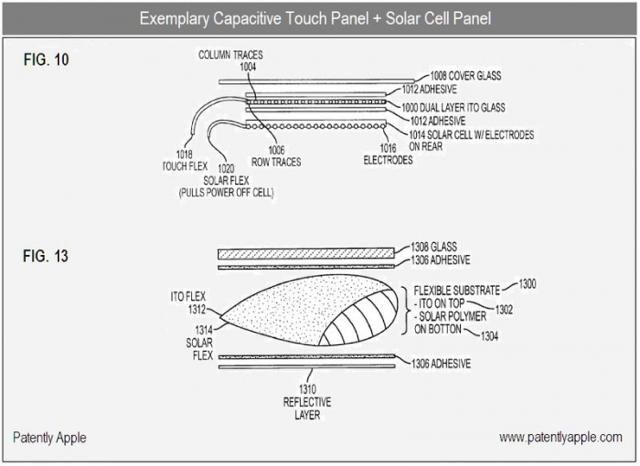
Patents are usually dry, dull affairs, but this latest Apple patent has an elegant beauty to it that is more than a little bit breathtaking.

Yes, it’s for a solar-powered iPhone, but Apple being Apple, they’ve got a better solution to solar-charging than just a bunch of ugly panels stuck to the back of the device: the energy collection cells are actually hidden underneath the display. The iPhone itself would look no different, but lay it out in the sun and it will juice itself up.

HTC Countersues Apple Over 5 Patents

By

post-1284-image-97e186e3db391903d8e632d155e2805e-jpg
Photo: bloomsberries/flickr)

Taiwanese smartphone maker HTC Wednesday filed a countersuit against Apple, asking the U.S. International Trade Commission to stop imports of key products sold by the Cupertino, Calif. company. The complaint, while centering on five patents, is the latest skirmish in a proxy war between Apple and Google.

“We are taking this action against Apple to protect our intellectual property, our industry partners, and most importantly our customers that use HTC phones,” Jason Mackenzie, HTC’s vice president of North America, said in a statement. In March, Apple sued HTC, claiming the handset maker infringed 20 iPhone patents. One analyst said the move was a “warning shot” for rivals building handsets aimed at the iPhone. The ITC soon announced it had begun investigating Apple’s claims.

Apple Hit with another iPhone Patent Infringement Lawsuit

By

post-1284-image-97e186e3db391903d8e632d155e2805e-jpg
Photo: bloomsberries/flickr)

When you have deep pockets, you’re likely to be the target of lawsuits. That maxim has never been more true than with Apple. A week after Nokia again sued the Cupertino, Calif. company, a graphics display outfit in Washington State has sued Apple, claiming the iPhone infringes its patents on scaling web graphics to mobile devices.

Patent No. 7461353, entitled “Scalable Display of Internet Content on Mobile Devices,” mentions many iPhone-centric features, including manipulating the size of on-screen graphics. “Mobile devices enabled to support resolution-independent scalable display of internet (Web) content to allow Web pages to be scaled (zoomed) and panned for better viewing on smaller screen sizes.”

Nokia Sues Apple, Claiming iPad, iPhone Infringe Patents

By

post-1284-image-97e186e3db391903d8e632d155e2805e-jpg
Photo: bloomsberries/flickr)

Nokia is again back in court, this time claiming Apple’s iPad and iPhone infringe five patents. The venue — a federal court in Wisconsin — has some people scratching their heads.

In its latest legal jab at the Cupertino, Calif. consumer electronics giant, Nokia alleges the patents involve “enhanced speech and data transmission, using positioning data in applications and innovations in antenna configurations that improve performance and save space, allowing smaller and more contact devices.”

Apple Patents Embedded Heart Rate Monitor For iPhone Shells

By

iPhone-EKG1

Apple’s always experimenting with new ways to interact with their devices, and their latest patent takes that experiment one step further into turning your iPhone into a programmable heart rate monitor.

The patent describes a design in which a series of electrodes are seamlessly embedded into the iPhone’s shell in such a way that they are not “visibly or haptically distinguishable on the device.”

You may not be able to see or feel these electrodes, but that doesn’t mean they don’t do anything: instead, they’ll constantly measure your heart rate, with the data used to do anything from measure burned calories to change your music depending on your mood to automatically discharge the battery as a “paddle shock” when your heart suddenly explodes. Win!

Steve Jobs: Patent War Brewing Over Ogg Theora and H.264

By

post-41326-image-2d83864760d07f29aae21819bf36ec05-jpg

Steve Jobs is very serious about HTML5 being the future of the web, and in Jobs’ view, H. 264 is an integral part of that formula. Google and Microsoft agree: they’ve committed to MPEG LA’s video codec as the new standard for online video. That puts the three biggest players all in the same corner when it comes to H. 264.

But Opera and Firefox aren’t fans of the standard. Instead, they back a codec called Ogg Theora, which is royalty free and open source, while H. 264 is closed source and only royalty free until 2015. Their fear is that mass adoption of H. 264 will cause MPEG LA to “flip the switch” on royalties five years down the line, leaving companies no choice but to pay exorbitant licensing fees.

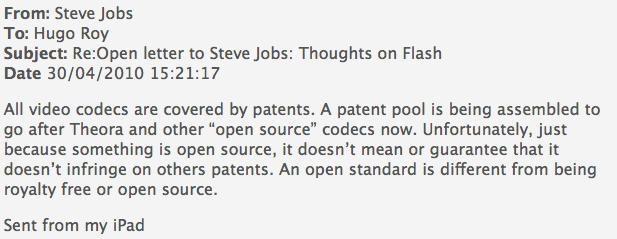
So why isn’t Apple on board with Ogg Theora? Apple fan Hugo Roy wrote Steve Jobs over the weekend, asking him about Apple’s backing of the H. 264 standard. Jobs informative and surprisingly length reply follows:

Apple Patents New Multitouch Gestures, iPod Tempo Adjustment Technology

By

post-40768-image-9bf2696af7fc0a78416fcd04f427511d-jpg

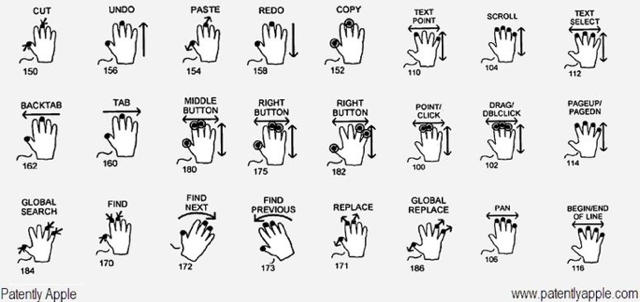
Today, Patently Apple revealed a whole slew of new multi-touch gestures that Apple might introduce in new products and software updates, most of which are detailed in the image above… which, incidentally, looks like the pictogram instruction set for the secret high five that was in vogue my senior year in high school, and which I could never pull off without the tendons in my wrist rolling up like a window shade.

Patently Apple’s post also indicates a neat new iPod technology which is unrelated, but plenty cool: automatic adjustment of music tempo based on your performance. For example, if you’re flagging on the hill, the tempo increases, while if your heart is about to explode, it slows on down. Looks like a smart evolution of Apple’s current Nike partnership to me.

1 39 40 41 42 43 235