Oh, Samsung. We know you have a complicated relationship with Apple, building components for them with the one hand, suing with the other. But can’t you stop mouthing off about the components you’re building them about Cupertino’s top-secret upcoming projects? Keep this up and you’re likely to find yourself wearing concrete shoes at the bottom of the local reservoir.
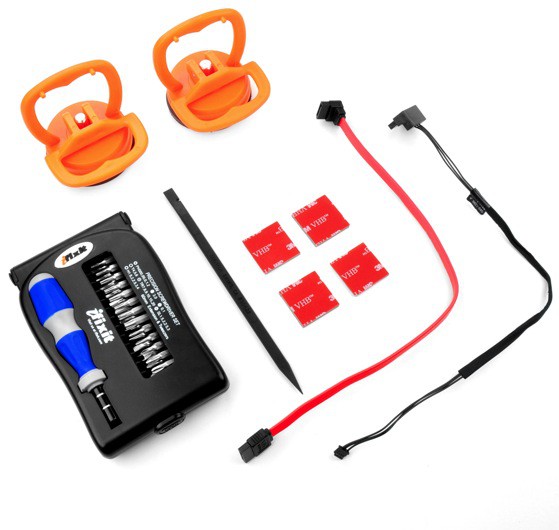
Take apart one of Apple’s latest iMacs and inside you’ll find plenty of space for mounting an additional hard drive. Of course, it’s useless if you don’t have the tools for the job, but that’s where iFixit comes in. The teardown specialists have released a new kit that provides you with everything you need for installing an additional hard drive in your new iMac.
Apple's next-generation of MacBook Pros are expected to be thinner and lighter just like the MacBook Air.
Ever since the redesigned MacBook Air first debuted back in late 2010, the rumor mill has strongly indicated that Apple would redesign its MacBook Pro line of laptops to suit, ditching their bulkier chassises, optical drives and slow, spinning hard drives for Air-like slimness and ubiquitous SSDs. But when is it actually going to happen?
It looks like it might finally happen in 2012, with a report now claiming that Apple “plans to exit 2012 having completed a top-to bottom revamp of its notebooks lineup that will see new MacBook Pros adopt the same design traits [as the] MacBook Air.”
The behemoth Consumer Electronics Show is upon us. By tomorrow, press-only showcases will already begin revealing this coming year’s tech magic (the show floor opens for everyone else on Tuesday).
We’ve been drawing aside the curtain as much as we were able in the form of previews throughout this past week. For those who missed them — and for the rest who want a quick recap as we plunge into the show — here’re the big highlights going in.
In late 2010, after years of abstaining from entering the netbook market, Apple finally succeeded in transforming the MacBook Air from a disappointing promise of laptops to come into a machine that revolutionized ultraportables the same way the iPhone revolutionized smartphones and the iPad revolutionzed tablets. Not only was the MacBook Air as thin as a samurai sword and about as small as a 12-inch netbook, it had the performance of a beefier laptop thanks to the inclusion of a proper CPU, dedicated GPU and ubiquitous flash storage… all at a sub-$1000 price point.
Overnight, the MacBook Air finished what the iPad had started and almost completely killed off netbook demand once and for all. Now all of the gadget makers who had previously been counting on netbook sales to boost their bottom lines are trying to catch up with Apple. But as usual, they’re about a year late.
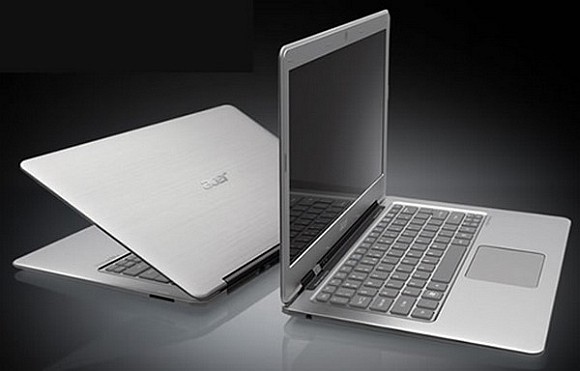
What does this mean for CES 2012? Expect to see ultrabooks, ultrabooks and more ultrabooks.
Apple is relatively unscathed by the recent Thailand flooding which threw for a loop PC makers more dependent on hard drives. That’s the word from Wall Street analysts who say Apple’s move to flash memory saved the Cupertino, Calif tech giant from the fate of Intel.
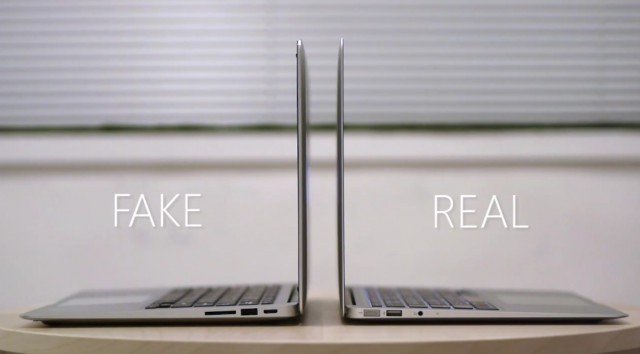
If imitation is the sincerest form of flattery, then this Chinese imitation of the MacBook Air is the biggest compliment that Apple has received in a long time. Cleverly called the “AirBook,” this feat of design plagiarism looks exactly like Apple’s MacBook Air.
Costing only $499, the AirBook possesses many similarities to Apple’s notebook, but there some crucial differences. Did we mention that it runs Windows?
Apple’s a master of the supply chain, keeping just a couple days’ worth of inventory at stock any time under the mantra that any product in a warehouse is just costing the company money. The benefit of all of this is Apple is able to manage its supply chain with laser precision, deliver new products quickly and on-time without worrying about selling out existing inventory and save millions while doing so. But when something unexpected happens, Apple can find it doesn’t have enough inventory in stock to fulfill demand.
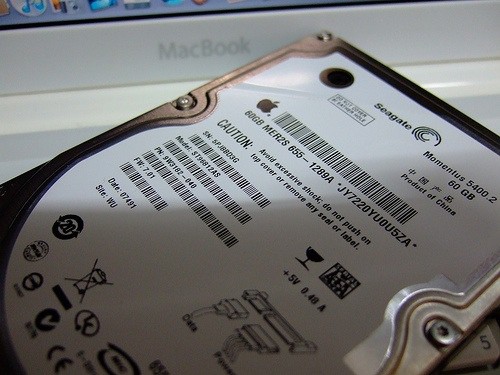
Apple’s just been hit by the rare downside to the way it handles its supply chain. The hard drive shortages caused by massive flooding in Thailand over the past few months have finally caught up with Apple, delaying built-to-order iMacs with two terabyte hard drives.
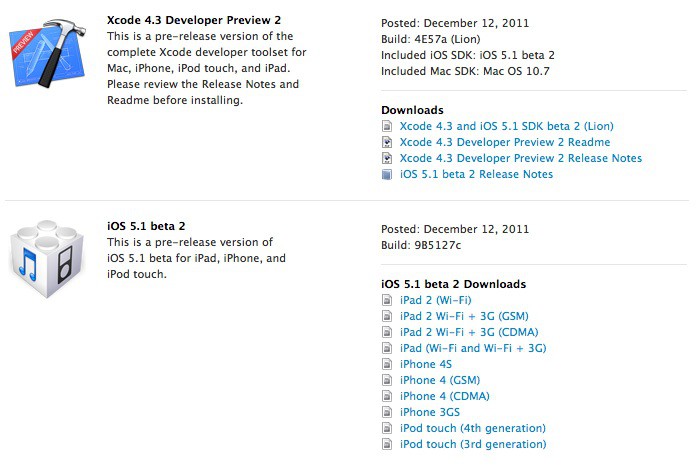
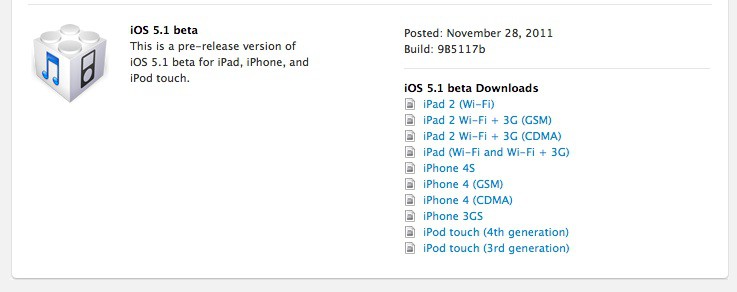
Apple has just seeded the first iOS 5.1 beta to developers, along with XCode 4.3 beta. What’s new, only time and playing around with iOS 5.1 will tell, but according to past reports, iOS 5.1 should not only get to the bottom of the iPhone 4S’s battery drain issues, it should also introduce some cool new Siri functionality. We’ll have to wait and see though.
After the jump, the release notes. Are you a developer who has noticed something new in iOS 5.1, or seen the update fix your iPhone 4S battery drain problem? Please tip us!