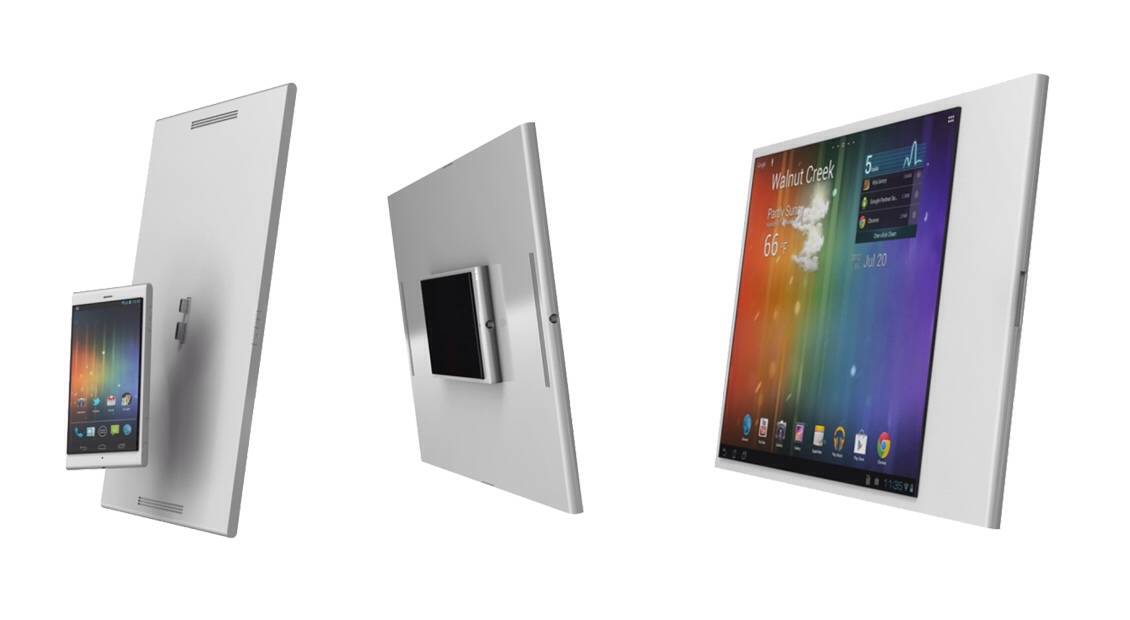
If you think of a device that’s the very opposite of everything Apple makes, it would be the NexPhone. Whereas Apple makes a single product for each use-case (desktop, notebook, tablet, phone), each optimized for its own purpose, the NexPhone takes a Microsoftian approach. In fact, it makes the lame Surface “tablets” look sensible. Here’s the NexPhone’s tagline:
The smartphone that becomes a tablet, laptop or PC.
Waiting for its little brother? The wait could soon be over.
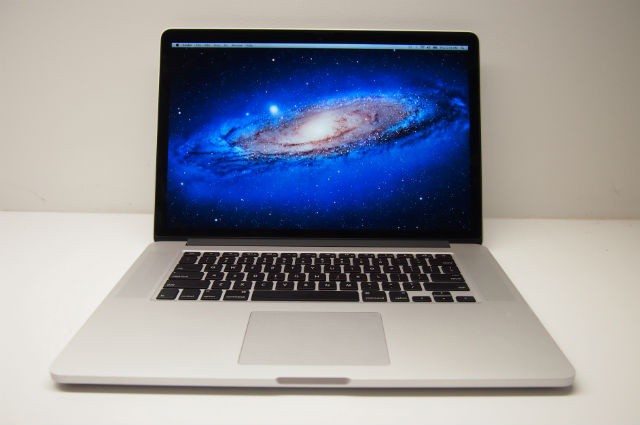
Itching to get a Retina Mac, but worried the 15-inch MacBook Pro is too big? Well you may not have to wait too long for the 13-inch model. According to one report, Apple’s suppliers have already begun shipping the 13-inch Retina MacBook Pro, and refreshed iMacs ahead of their launch in the coming months.
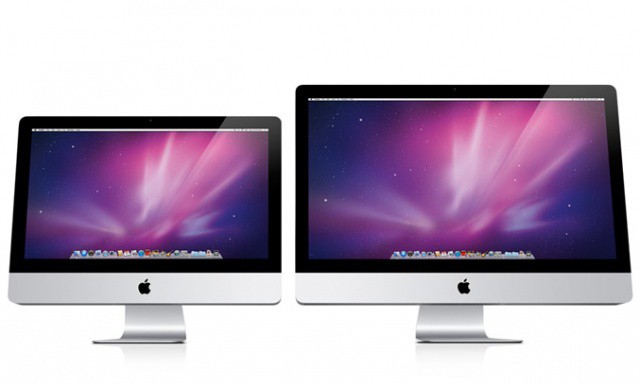
A new report suggests that Apple is gearing up to launch its latest lineup of iMacs very soon. It’s unclear whether they’ll get that much-anticipated Retina display, but if that’s not going to be a decider for you, it looks like you’ll have a new all-in-one in the coming weeks.
You lucky thing. The summer’s over, or nearly over, and you’re already planning on heading back to school. Just like last year, you will begin this year fresh and full of energy and enthusiasm, only to be ground down by the man. Luckily, we’re here to help with advice on the best apps and gear to get you through the year and into next year’s summer vacation with the least effort possible.
So sit back, relax and take a look at the Cult of Mac back to school/college superguide.
Lucas Oil Stadium, home of the Indianapolis Colts, will be one of the few stadiums to offer fans Wi-Fi and app access during NFL games.
NFL teams may be embracing the iPad, but the league seems a bit mixed in its approach to fans carrying iPhones, iPads, and other mobile devices. Despite a plan announced earlier this summer that NFL stadiums would be equipped with large-scale Wi-Fi access along with mobile apps for fans to use while at a game, the NFL has decided to take a much more cautious approach to game-day technology.
Earlier this year, amid reports that tickets sales for NFL had fallen for a fifth straight year in a row, the league announced free Wi-Fi and some ambitious in-stadium perks for fans willing to put down the money to see their favorite team play in person. Unfortunately for most fans, only five stadiums will be offering these features during the 2012 season.
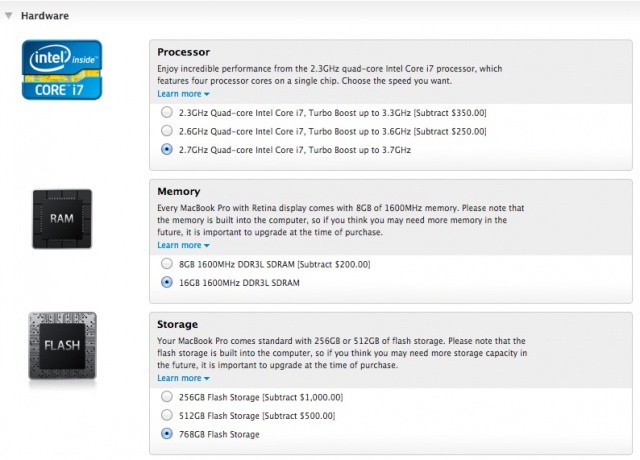
Want a Retina MacBook Pro? Want to spend gobs more money on it? Apple has just expanded the build-to-order options for their most powerful notebook, allowing you to jack up the CPU to up to a 2.7GHz Quad-Core Intel Core i7 processor, or even upgrade the SSD to up to 768GB of flash. Now the most expensive Retina MacBook Pro you can buy is a whopping $3,749.00!
Update: We originally misunderstood the nature of these new build-to-order options. It is only the 2.3GHz Retina MacBook Pro that has recently gotten the option to upgrade to up to 768GB of flash storage; previously, Retina Display MacBook Pros with a faster processor were the only ones capable of being upgraded in this manner. We’re sorry about the confusion. Either way, it now looks like Apple has pulled these build-to-order options from their online store.
One of the new features in OS X Mountain Lion is called Power Nap. Touted as a tool that get things done while your Mac is sleeping, Power Nap enables a Mac running Mountain Lion to download email, sync with iCloud, check for system updates, etc. while in sleep mode. There is a big caveat, however. Power Nap will only run on Macs with an internal solid-state hard drive (SSD).
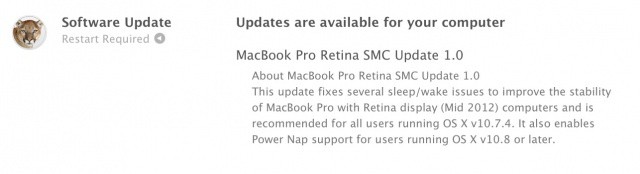
During the developer beta phase of Mountain Lion and continuing into its public release stage, it was noticed that certain compatible Macs didn’t have Power Nap installed by default on the final release of Mountain Lion. Apple has since issued a firmware update to bring Power Nap to the MacBook Air, and now a new update today has been issued for the new MacBook Pro with Retina display.
OS X Mountain Lion is here, and it's even sleeker than Lion.
It’s hard to believe that it was just a little more than a year ago that Apple released OS X Lion. Only twelve months later, and we’re now staring right down the maw of Apple’s ninth major release of Mac OS X: Mountain Lion.
OS X 10.8 Mountain Lion signifies a new approach on Apple’s part towards OS X updates: instead of going years between major releases, Cupertino is trying to take the rapid release approach that has worked so well for them with iOS and apply it to the Mac.
Mountain Lion, then, feels in many ways less like OS X 10.8 than OS X 10.7.5: a smaller, more tightly focused update continuing what OS X Lion started, taking iOS’s best ideas and bringing them to Mac.
Thanks to major breakthrough features like iCloud syncing, Notification Center, Sharing, AirPlay Mirroring and more, there’s less of a distinction in Mountain Lion between the Mac and iOS than ever. But is that a good thing, and how will it change the way you use your Mac?
We showed you how to switch on Power Nap on your Mountain Lion-running, SSD-equipped Mac, but just what does this new feature do?
We know that you Mac enters a kind of robotic REM sleep, where it’s brain activity spikes and the network connections power up to download various bits of data, just like Newsstand on iOS. But a new Apple Knowledge Base article outlines the surprising number of tasks which are going on under the sleepy-lidded hood.
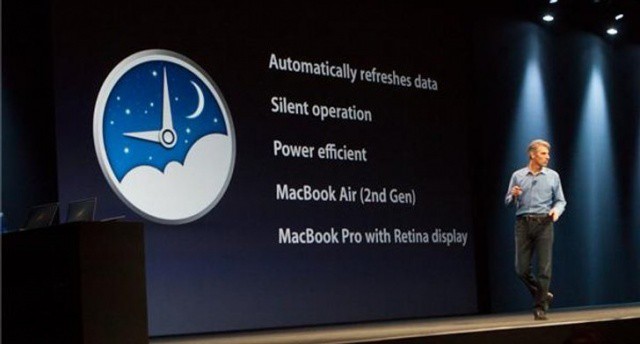
Apple unveiled Power Nap in Mountain Lion during the WWDC conference in June.
Can’t find Mountain Lion’s Power Nap feature anywhere on your MacBook Air? Apple has issued a new firmware update to bring the feature to 2011-2012 models. In case you didn’t know, Power Nap is a system management feature in Mountain Lion that silently fetches your emails, iCloud data, software updates, etc. while your Mac sleeps. For Power Nap to work, your Mac must be connected to a power source. The Mountain Lion feature works only on Macs with an internal SSD drive, like the MacBook Air and mid-2012 MacBook Pro models.
Power Nap doesn’t seem to be included on all Macs running the newly-released Mountain Lion OS, but this new firmware update should restore any issues for MacBook Air users.