Hackers Tuesday forced MacRumors to halt its live-blogging coverage of Apple marketing exec Phil Schiller’s keynote speech at Macworld Expo. The hack hit MacRumorsLive.com, a domain created for commenting on the annual San Francisco, Calif. Mac-focused tradeshow.
Interspersed with live updates about news of iPhoto upgrades were offensive messages, including one declaring Apple CEO “Steve Jobs just died.”
In a statement posted about an hour after Macworld Expo opening, the site’s founder Arnold Kim apologized to readers for the attack.
Although Apple marketing head Phil Schiller announced a 17-inch MacBook Pro and more DRM-free music from iTunes, one analyst believes what wasn’t said is what counts most.
Gene Munster, the Piper Jaffray analyst and Mac-watcher, wrote Tuesday that the lack of many fireworks during Schiller’s talk signaled “Steve Jobs remains primary spokesman and active leader” for Apple.
The question of how active Jobs will be as CEO while he undergoes therapy for a “hormone imbalance” was raised Tuesday when brokerage firm Oppenheimer & Co. wondered if Jobs could fully perform as head of Apple.
The media and the public trickled onto the Macworld exhibit floor in the wake of Phil Schiller’s Keynote speech Tuesday in San Francisco with a collective yawn, casting a sad and listless pall over Apple’s final year at the seminal trade show dedicated to Mac and Macintosh innovation. Gone was the excitement generated in recent years by the introduction of revolutionary new products such as iPod and iPhone. Gone was the sense that Steve Jobs contagious’ enthusiasm and obsessive secrecy could somehow reward us with ever more new, beautiful, elegantly designed products that would change our relationship to technology and with each other.
Instead, Schiller left the Apple community pondering battery life and notebook aftermarket resale values, wondering how a little face paint and eye shadow applied to iWork and iLife is going to drive increasing revenue to One Infinite Loop between the end of Macworld on Thursday and the next Cupertino Town Hall event sometime later this year.
One the surface of things, a mood that I might liken to one in a household where the divorce has been agreed to but not yet finalized, is curiously appropriate to the uncertain economic horizon each and every one of the hundreds of Macworld exhibitors – as well as, of course, the show’s anchor tenant – is facing.
Sure it would have been exhilarating for Phil Schiller to have whipped out a thoroughbred upgrade to the Mac mini today, or a revamped Apple TV that might challenge the assumptions of what an interface between the office and the living room could look like. But I talked to several long time Mac addicts on the floor this afternoon, who confided they were relieved not to be tempted by any groundbreaking hardware innovations from Apple – because big ticket expenditures of every stripe are on hold until further notice.
In its way, then, Apple proved it still has the pulse of its audience well in hand – why offer revolutionary new products that would require hundreds or thousands of dollars in new investment (not to mention the huge investment in manufacturing required to roll out new hardware) when the company can let its legions of loyal consumers who have already bought Macs and iMacs over the years try on new software outfits at $50 – $80 a pop? Lean times may be coming for everyone but by golly you can spend your downtime learning how to play guitar with John Fogarty and marvel at the face recognition amazements of new iPhoto software.
Some of the busier booths on the exhibit floor this afternoon were ones hawking accessory items costing well under $100. Big gear manufacturers with shiny new products costing in the hundreds and thousands of dollars, not so much. And the reps of a couple of those exhibitors told me some of the newest stuff they have at the show are just prototypes, with no big production commitments coming into place until the economy and consumer spending shows signs of taking an upturn.
Compared to recent years, Day 1 attendance was significantly lower, something I could tell in the sparse lines at the concession stands and in the reliability of the WiFi connections available throughout the hall. But fewer people were here today because Steve Jobs was not here today. Tomorrow, when you’d expect the attendees interested in Macworld regardless of Steve Jobs’ presence, we’ll get a better idea of just how deflated the Mac community is over Apple’s final Macworld appearance and a sense of how much air has gone out of what was until pretty recently a high-flying market for computer technology.
Well, there we have it: Phil Schiller’s delivered Apple’s final Macworld keynote while Jobs recuperates, and since Apple didn’t present a new iMac for $5, an iPhone the size of a window (and another the size of an SD card) and world peace, we can be sure its stock price will plummet accordingly.
If you took the sensible approach and didn’t have crazy expectations, this wasn’t a bad keynote, although it’s hardly going to go down as a particularly memorable one, which is a shame since it’s Apple’s last. Some of the new features in iLife ’09 (facial recognition in iPhoto, improved interface components in iMovie) and iWork ’09 look pretty good (although the full-screen view on Pages won’t wrench me away from WriteRoom any time soon), the online iWork demo seemed decent enough, and the 17″ MacBook Pro even throws pros a bone by offering a matte option. (Note, though, how the 24″ display you can hook it up to is glossy-only! Clearly, someone at Apple has a warped sense of humour, and I’ll bet it’s Mr. Jobs.)
There was one somewhat worrying aspect to the keynote, however, and that’s the way in which Apple was playing catch-up in the key area of music. Incredibly, the iTunes portion of the keynote was saved for Apple’s usual showstopping ‘last thing’. What we got: Apple canning its pricing structure to offer tiered pricing (boo!), but providing DRM-free tracks (hurrah!). In other words, it’s now the labels that have Apple by the short and curlies, finally forcing the Cupertino giant’s hand.
Being able to buy via cellular networks via iPhone is a nice touch, though, and could become a key differentiator in the long run, although that tiny slice of Apple won’t be enough to tempt me back from Amazon and Play.com just yet.
Minus a million points, though, for not getting Tony Bennett to sing out the keynote with: We’ll meet again, don’t know where, don’t know when, but I’m sure we’ll meet again some sunny day!
(Oh, and it’s now business as usual if you’re in the UK: with Sterling getting a kicking, Apple’s now seriously hedging its bets. The $169 Mac Box Set translates to a whopping £149 in the UK—I was hoping for £135, but then I’ve decided to be an optimistic sort this year.)
The baked-in rumor news calls for a DRM-related shift in music pricing and portability on iTunes, an AT&T play for new revenues through “sanctioned” iPhone tethering plans, and yes, an upgraded Mac mini.
Phil Schiller’s Keynote is now less than two hours away and we’ll be down at San Francisco’s Moscone center throughout the day with live reports from the conference and our first impressions of what lies ahead for Apple and the Mac community.
Join us here and at Twitter for the latest frm Macworld 2009.
Photo: Cishore/FlickrOppenheimer Tuesday upgraded Apple’s health to “outperform,” saying Monday’s announcement by CEO Steve Jobs provided a six-month period from talk of his gaunt appearance.
“The ‘Apple Community’ is now due an update in late spring, but until then the recovery will presumably be allowed to run its course without undue prying,” Oppenheimer told investors.
Monday, in an open letter, Jobs explained he suffered from a ‘hormone imbalance’ which caused his weight loss. Since September, when the Apple leader appeared frail and gaunt, fans and investors have speculated about his health and status as CEO.
If you’ve ever wondered what it might be like to work at Apple, out in the wild are more than a couple of tell-all accounts penned by former employees, and as the company prepares for its final Macworld appearance next week in San Francisco, the UK Guardian has one, published Friday, by Chuq von Rospach, a former Apple employee who has taken his experience there and turned it into a little cottage industry of freelance writing.
Von Rospach’s piece for the Guardian waxes a bit nostalgic for the days when Steve Jobs delivered the Macworld keynote, but he says nevertheless “still tune in with great anticipation” to this year’s speech by Phil Schiller, especially because word on the street says Apple will bow out of Macworld with a hiss and not a bang.
The piece is rather on the long side, and true to form for the genre, is more about the author than about the experience of working at Apple, but von Rospach does provide a glimpse of behind-the-scenes observations that are rarely seen in Apple’s context and, for those interested in one person’s perspective, provides a worthwhile read.
Photo: Cishore/FlickrEven before the January kick-off of Macworld 2009, analysts say we aren’t likely to see much news coming from the annual event now that Apple CEO Steve Jobs won’t be keynoting.
“Expectations are low given Steve Jobs will not speak at the conference,” Piper Jaffray analyst Gene Munster told investors Tuesday. Earlier this month, Jobs announced he was handing the speaking reigns to Apple marketing chief Phil Schiller. The 2009 event will also be the last for Apple.
The introduction of Schiller at the key Apple gathering “suggests there will not be any revolutionary products this year,” Munster wrote. As a result, chances for a new iPhone being launched at Macworld are not as likely as once thought by the bullish Apple watcher.
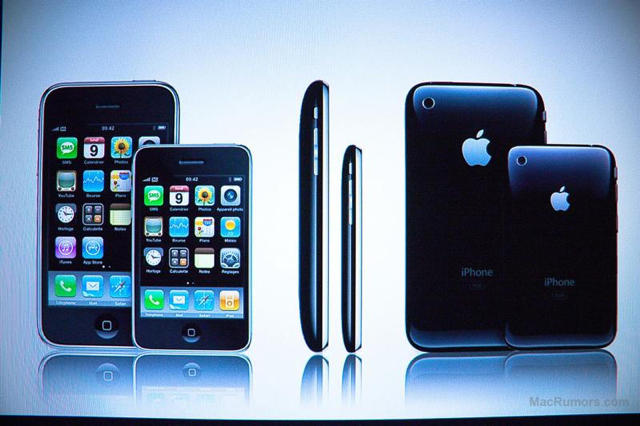
What would an impending Apple-oriented convention be without some rumor-mongering to pique the interest of the faithful and get tongues a wagging? Ahead of Macworld 2009, slated for January 5 – 9 at San Francisco’s Moscone Center, one of the more persistent rumors has involved the supposed announcement of a smaller form-factor iPhone, dubbed the iPhone Nano.
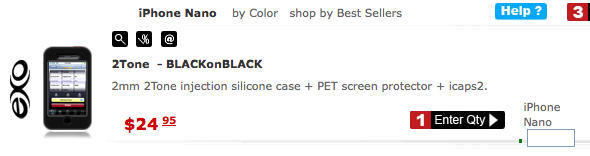
TUAW reported an interesting escalation of the iPhone Nano rumor Monday, showing evidence of an iPhone Nano case being marketed by XSKN, a company that began selling iPhone 3G cases in mid-May of 2008, almost 2 months prior to Apple’s release of the phone. In early September, XSKN was showing off new 4th Generation iPod nano cases, prior to the Let’s Rock event where they were officially unveiled.
As you can see from the screen shot I captured tonight from the XSKN website, the company is taking orders for cases for a product called iPhone Nano.
If that’s not enough to whet your whistle, how about the photo, below, which someone submitted late Monday on the down-low to MacRumors.
Wonder if Phil Schiller will use the traditional “one more thing” phrase on this item or if perhaps Apple has something else up its sleeve.
It’s probably a good bet Phil Schiller is not going to introduce an iPhone with a built-in video camera in a few weeks at Macworld. In the meantime, Sol Lipman and 12seconds.tv have created a 99¢ app for the iPhone that lets you take 3 photos (either on the fly or choose from your camera roll), record 12 seconds of audio, which it ties into a multimedia masterpiece “video slideshow” you can then share with your friends and an unsuspecting world.
Slideshows are automatically uploaded to servers at 12seconds.tv, where users have an account from which they can manage their body of work. Every video has its own page (sort of like Flickr) and any video can be emailed, downloaded or embedded.
One of the 12seconds dev team told us, “we tried hard to keep the app simple and straightforward and fun.” From all appearances, they have succeeded. The slideshows make effective use of the “Ken Burns effect” that will be familiar to anyone who’s made a slideshow in iPhoto, and the recording quality of the iPhone’s microphone is surprisingly good.
Another consideration behind limiting the final output to twelve seconds was that “twelve seconds is about the ideal amount of time for most user-generated content,” according to David Speiser, who consulted with Lipman on development of the app. “The goal is to keep the barrier for consumption really low – no matter how badly a video might suck, you know you’ll never waste more than twelve seconds of your life watching it.”