Apple began providing registered software developers daily download statistics this week that point to the “game changing” success of the AppStore distribution model.
Eliza Block, the part-time developer behind a popular iPhone crossword application shared a few days worth of her statistics with 9to5Mac that highlight the revenue opportunity for iPhone application developers.
Block’s 2Across app, which sells for $5.99 and has lately been listed as an Apple “Staff Favorite” on the iTunes AppStore, earned her nearly $2000 a day in the last week of July.
While there’s no way to predict whether hers or any other application can sustain that kind of momentum, the news should be enough to send many a coder scurrying to get up-to-speed with Objective C.
After a rocky three weeks since the official launch, Apple’s MobileMe service got an all-green status update Tuesday night. In a message to subscribers the company said it has established a dedicated chat line for anyone with ongoing problems related to MobileMe mail, the final piece in what the company calls “this new ambitious service” to become fully operational.
The status update also described a newly discovered bug which caused some MobileMe users to lose contact and calendar data on their iPhones, though the integrity of the data on their Macs and with the MobileMe “cloud” was unaffected.
Apple posted a resource for getting data restored to affected iPhones as well.
Image via Hardware Zone
The hottest tip on the rumor wires right now is that Apple does have really interesting Mac hardware on the way, as I’ve been known to suggest on a fewoccasions. Even Apple, at its conference call last week, was willing to acknowledge that it had a “future product transition” coming this quarter.
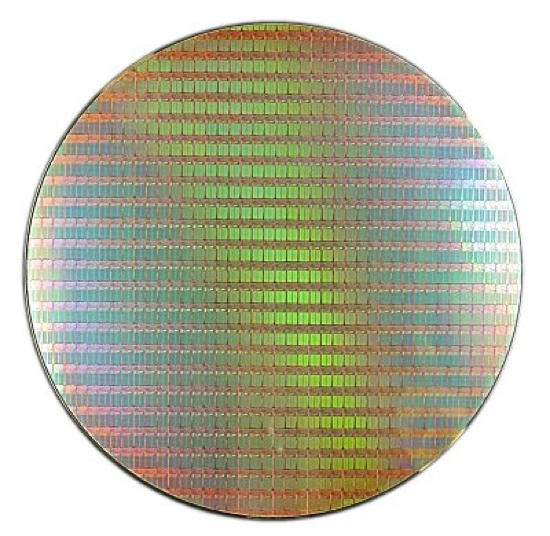
But the rumor circulating through the Intertubes this week goes further. It claims that Apple intends to use non-Intel silicon on its upcoming Macs. Not for the CPU, which will remain Intel, but for the rest of the chipset. While this rumor has slightly more credibility than it would if Apple had not recently purchased PA Semi or if AMD and VIA weren’t pumping out chipsets like crazy. And as AppleInsider notes, such a move could help Apple to differentiate based on silicon. Everyone else is using Montevina, and Apple could have something unique. It sounds like good judgment.
Except it’s a waste of time and money. Worse, it’s a losing strategy. After all, Apple doesn’t need to differentiate on silicon. Industrial design and software is enough. To read why, click through.
Recent questions regarding Steve’s health have renewed calls for a succession plan at Apple. While I hardly give two shakes over the “Industry Concerns” cited in the recent New York Post article, I would go a little further and suggest that what Apple needs is not a ‘Succession Plan‘, but a new CEO.
As startling a statement to make as that is, hold the flames for just a few more moments, follow me after the jump to find out why.
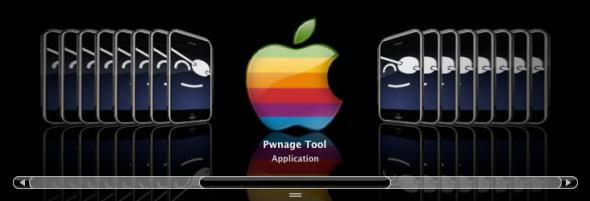
The iPhone Dev Team released its Pwnage jailbreak tool for iPhone over the weekend. Despite the tool’s inability to unlock iPhones for use with unapproved phone carriers and decreased demand for “illegal” apps in the light of Apple’s own AppStore, enough curious parties overwhelmed Dev Team servers and forced mirror sites into service to satisfy iPhone’s teeming masses still yearning to break free.
The tool jailbreaks and unlocks older iPhones, and jailbreaks iPhone 3Gs and iPod Touches but “We only support the 2.0 firmwares,” according to the Dev Team’s blog.
Software engineer Satoshi Nakajima, the lead architect of Microsoft’s Windows 95, picked up a Mac for the first time two years ago.
He was so impressed, he says he’ll never touch a PC again.
Satoshi loves Apple products so much, he started a company in April, Big Canvas, to develop for Apple’s iPhone platform full-time.
“We have chosen iPhone as the platform to release our first product (for) several reasons,” explains his company’s website. “We love Apple products… You need love to be creative.”
Based in Bellevue, WA — right next to Microsoft’s home turf of Redmond — Satoshi spent nearly 14 years at Microsoft, serving as the software architect of Windows 95 and 98. He also oversaw the development of Internet Explorer 3.0 and 4.0. While at Microsoft, he developed the third largest portfolio of intellectual property of any employee at the company, according to his bio.
Last week, Satoshi released his company’s first iPhone application, Photoshare, a free, social networking app for sharing pictures with the iPhone.
Photoshare is like Flickr for iPhone photographers. The downloadable Photoshare app allows users to upload pictures to Photoshare’s website, and then share those pictures publicly or privately — without any required registration or the need for a computer.
We spoke with Satoshi about the pleasures of writing software for the iPhone SDK and got some of his thoughts about Apple’s UI, its distribution model for iPhone apps and the future of handheld communications.
It’s been Apple against the world for so long that we’re kind’a just used it being that way. However, when we compare Apple against her chief rivals, as well as against some entire industries, a different picture emerges.
Looking at our favorite company in this light maybe helps us understand parts of Apple’s strategy that seem confusing if not just downright bizarre. Follow us after the jump and we’ll discuss why, when we talk about Apple vs Microsoft, Dell or the entertainment industry at large, this ain’t a David versus Goliath matchup anymore.