Mobile menu toggle

Search results for: Apple One

First Impressions: Google’s Voice Search Hits a Home Run

By

post-4846-image-91661b8a1b3441faf9f3890804c8c0c8-jpg

Google’s voice search application for the iPhone is nothing short of spectacular. After tantalizing would-be users with either a PR goof or a brilliant marketing ploy that resulted in a delayed release on the AppStore, the updated version of Google Mobile finally hit on Monday and I got it on to my phone last night.

It’s like the home screen says, “For voice search, just bring the phone to your ear and speak. Really, no buttons required!” The program offers to let you watch a video to learn more, but it’s about as easy as it gets to call up a search results page that gives you just what you’re looking for simply by speaking into the phone.

When I searched for “70 Harper” the program returned results for “cindy harper,” but when I amended the search to “70 harper street, san francisco” I got a Google map pinned exactly to the address I spoke into the phone. Speaking about the incredible performance of this free app with my colleague Leander Kahney this morning, he agreed Google has served up something pretty amazing, saying, “it even understands my weird English accent.”

Say what you will about Google having worn out its welcome, or being on the downside of its rise to Internet glory, this advance in mobile search technology is a huge leap forward in this reviewer’s opinion. The iPhone may not yet be a fully functioning Star Trek communicator, but Google’s voice search brings it closer than many thought we might get.

IPod Imports May Be Banned By Spansion Lawsuit

By

post-4832-image-b90258d24f247f43d6f26656f65c6eaa-jpg
(Photo: Brandon Shigeta/Flickr)

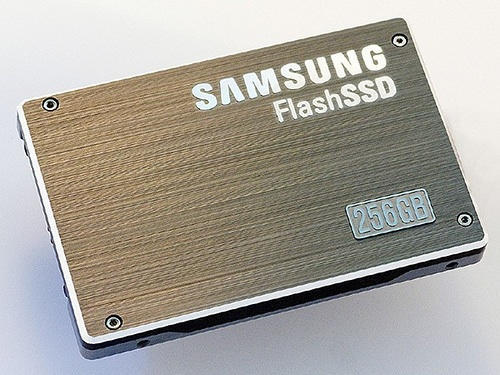
As we enter the critical holiday shopping period, the future of Apple’s iPod hangs in the balance as two courts consider a patent lawsuit over memory chips. Sunnyvale, Calif.-based Spansion Inc. Monday named Apple, along with other customers of Samsung in a dispute over alleged abuse of flash memory patents.

While the Delaware lawsuit, covering six patents, asks for damages and an injunction against Samsung, Spansion’s case before the International Trade Commission could result in blocking imports of Apple and other makers of devices containing flash memory chips, according to the Wall Street Journal.

A wide range of gadgets, from MP3 players to cell phones and digital cameras, use flash memory. The ITC could forego an import ban if it views the blockage would impose undue harm on a company.

Slork Plays MacBook Music

By

cult_logo_featured_image_missing_default1920x1080

This is the sound of slork, the Stanford Laptop Orchestra.

All instrumentalists are equipped with a black MacBook and a hemispherical speaker pod made out of Ikea tableware.

The brain behind the orchestra is Ge Wang, and if his name sounds familiar that’s because you might have seen it mentioned recently in connection with the superb app Ocarina.

Recently highlighted at apple.com, slork makes use of custom software written by Ge Wang:

“I wanted to focus on the intersection of music and computer science. So I authored a language with my advisor, Perry Cook, and researchers at Princeton and beyond. We called it ChucK. It’s a programming language completely tailored for sound. It let us quickly synthesize sound and use various controllers in our performances.”

Update Fixes Bugs in 4th Gen iPod Nano

By

cult_logo_featured_image_missing_default1920x1080

Apple released a significant update for 4th generation iPod Nano Tuesday night. Software Version 1.0.3 includes a number of fixes to cover art and photo distortion issues that some users had been experiencing, and delivers support for the eagerly awaited Apple in-ear headphones with mic and remote.

Although the headphones were announced in September when the iPod Nano line was refreshed, they have remained as yet unavailable.

Nano users can obtain the new software by connecting the digital media player to their computer and launching iTunes. Follow the prompts for downloading and installing the software.

MacBook Nano – Work of Art or Crime Against Nature?

By

cult_logo_featured_image_missing_default1920x1080

Flickr user Mickphoto has put up a couple of extensive photosets showing how he hacked an MSI Wind to turn it into an Apple “netbook” he calls the MacBook Nano.

Many have expressed a desire for a small, super-portable Apple notebook and Mickphoto’s creation has a certain je ne sais quoi that’s sure to get the notice of Apple enthusiasts – if not the Apple legal department – and keep the netbook conversation going.

Click on a few shots in the gallery below and visit Mickphoto’s Flickr pages for more. Is this Apple evangelism, a labor of love, or is it over-the-top? Let us know your thoughts about the MacBook Nano in comments.

The Hacked Apple Netbook MacBook Nano MSI Wind is the base computer
MacBook Nano in Black Runs XP and OS X Leopard Mick's pretty sweet set-up
Side by side w/ 17 See son, this is how it's done... Hacked Apple Key

A Commanding Sight In Iceland

By

post-4655-image-f3af4821f0584d70be4af0c81dbf2eeb-jpg

The keen Mac cultists among you will already know the story behind the cloverleaf Command symbol (⌘) but for those of you who don’t, this photo (by cogdogblog on Flickr, used under CC license) tells the story rather well.

The ⌘ was discovered for Apple by bitmap artist Susan Kare in a dictionary of symbols, where it was said to be commonly used in Scandinavia to identify places of interest or camp sites.

Cogdogblog’s photo shows the symbol alive and well in Iceland, 1300 miles or so away from Stockholm but culturally close nonetheless.

Where else has the command symbol been spotted? In a jellyfish. In a bakery. In a bedroom. If you’ve seen it anywhere interesting, do let us know.

Steve Jobs Still Doesn’t Get Business Customers

By

post-4648-image-9ac75334177b8b603a4f128611e18f6f-jpg

It’s no secret than I’ve been a less-prolific blogger over the last, oh, six months or so. Part of this is fairly dull personal life details (marriage, etc. Hi, honey!), but a bigger part of it has been the very quiet development of my first book, Wired to Care, which I co-wrote with my dear friend and colleague Dev Patnaik of Jump Associates. The book won’t be out until January, but our new blog is live now.

Now, far be it for me to avoid any shameless self-promotion, but I bring it up for another reason. The top post of the moment is my epic manifesto on why it is that Apple has never made significant in-roads in the enterprise space, while IBM remains the machine of choice more than 30 years after Steve Jobs declared war on Big Blue. It’s tied tightly to the theme of the book, but I think it can be regarded most as a guest appearance by Cult of Mac at the Wired to Care blog. Plus, it has the Apple Lemmings ad:

“Steve Jobs doesn’t have a clue about how to sell anything to business customers. From 1981’s defective Apple III to the $10,000 NeXT Computer to Apple’s current efforts, the offerings that Steve Jobs has created for enterprise technology customers have universally flopped. The company’s current high-profile effort in that arena is the xServe, a sleek metal computer meant to handle the file-sharing needs of a small or medium business. While beautifully designed in the way that all of Apple’s products are, the xServe screams to the world of business that it was not designed with them in mind. People working in technology at companies want to buy something that looks reliable, fast, and, most importantly, too complex-looking for ordinary people to manage. Simple hardware doesn’t connect with its intended audience, and the xServe has no traction whatsoever with business customers.”

I have a lot more to say on the subject, and I hope you do, too! Let the argument begin in the comments thread at W2C, and I’ll keep you updated whenever there’s more Apple content over there!

Microsoft to Look at Using Webkit in IE Development

By

cult_logo_featured_image_missing_default1920x1080

Microsoft CEO Steve Ballmer told a developers’ conference in Australia yesterday he thinks the idea of using Webkit as the rendering engine for Internet Explorer is “interesting” and that his company “may look at that” as the Microsoft web browser continues to evolve.

Asked directly why IE remains relevant and what is the value of a proprietary rendering engine “when there are open source ones available that can respond to changes in Web standards faster,” Ballmer responded by admitting that Microsoft would need to consider the future of the browser and determine if there is any lack of innovation for the company to capitalize upon with “proprietary extensions that broaden its functionality.”

Since defeating Netscape, once the lone challenger to its dominance of the browser market, IE has been wildly outpaced by the likes of Firefox, Safari and Opera in the past five years, while the speed and standards compliant advantages of Webkit have led a number of developers to make it the foundation for their web browsers and other web related tools. Among them are Nokia’s mobile browser, Google’s new Chrome, and of course the mobile Safari browser used by Apple’s iPhone.

With Microsoft having long preached the gospel of praising developers for the innovations brought to its core product, the company would no doubt gain the undying gratitude of the developer community should it adopt Webkit and free developers from the extra work currently required to make their code render predictably in Internet Explorer.

Via AppleInsider

Old Next To New: How Far We’ve Come

By

post-4592-image-50bc67c72aefd8d8b1e66dc29fe31e7b-jpg

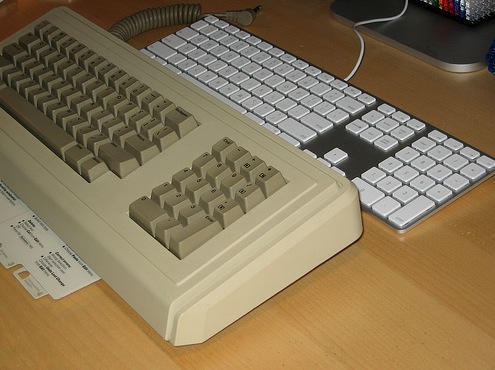
I just love this picture. It sums up perfectly the progress that’s been made in computing over the last couple of decades. That which was once beige and plasticky is now sleek and silvery. (I know some people still swear by those old clacky keyboards, though: John Gruber once called the Extended Keyboard II “the single best hardware product Apple has ever manufactured.”)

newimac-oldimac-20081105.jpg

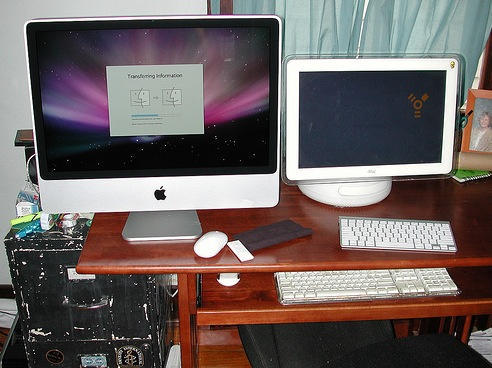
You get the same feel from this one. I remember being utterly amazed by the G4 iMac’s design. I borrowed one from Apple to write a review, and marveled at the computer’s shiny hinged neck and (for the time) large, bright display. Now compare it to a modern iMac. It looks like a toy. (Those of you still using a G4 iMac and enjoying it, get in touch to tell me how and why. Send pics.)

(Photos used under Creative Commons licence. Thanks to: Blakespot and Editor B

Opinion: Confessions Of An Accidental Mac Evangelist

By

cult_logo_featured_image_missing_default1920x1080

Like most nerdy types, I went through a phase of being the family tech support guy. Back in the days when I knew a few tricks to make Windows co-operate, this was occasionally a productive use of my time. These days, it’s a complete waste of it.

So I’ve refused to take on tech support jobs for family and friends over the last couple of years. To avoid causing offense, I’ve usually just shrugged my shoulders and said in a regretful tone: “Sorry, I don’t think I’ll be able to help. I’ve not used Windows for years and I wouldn’t have a clue where to start.”

This get-out sounds even better because it’s the truth.