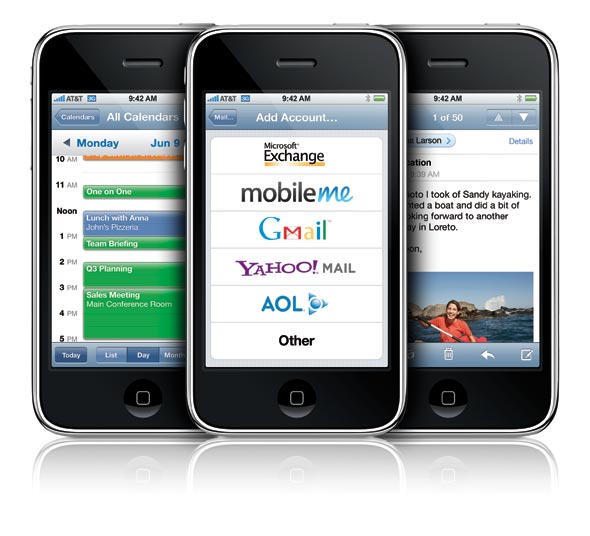
Apple has posted a job opportunity for a position it calls “iPhone Security Engineer.” An “exceptional individual” will get the chance to “have a major impact on Apple’s embedded operating system products,” according to the job posting.
Job requirements and useful experience include “passion for developing “proof of concept attacks, industry exposure to and knowledge of OS security and UNIX internals” and “involvement in reverse engineering and security communities.”
Apple, Inc. is expected to report strong second quarter earnings after US markets close on Monday and the company will do so without recognizing a single iPhone sale, according to a Bloomberg report. Instead of including sales of first generation iPhones that came at the end of the second quarter before the release of the wildly successful iPhone 3G, the company will report an increase in earnings on rising sales of Macintosh computers and iPod media players alone.
“The Mac is the primary reason we own Apple shares,” said Michael Obuchowski, a portfolio manager at New York-based Altanes Investments LLC, which began buying Apple shares in 2006. “For several quarters, we’ve seen an incredible acceleration in Apple’s PC business.”
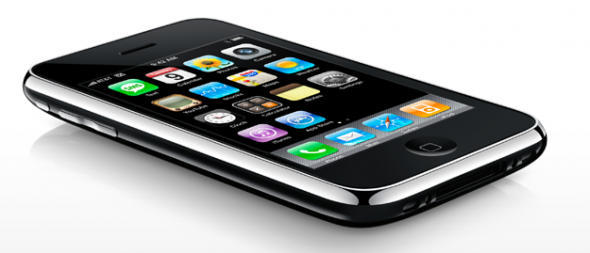
There could be even more good news ahead for Apple shareholders, who will undoubtedly receive another boost next quarter, when Apple tells the story of its hugely successful iPhone 3G release, which has nearly completely sold out in the United States, Germany and other worldwide locations in its first 10 days on the market.
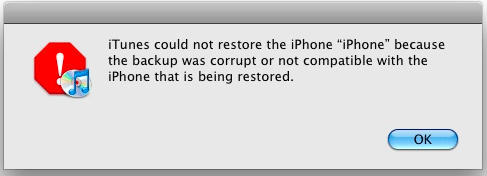
The backup/synch process for iPhones takes a really long time and may turn out to be worthless for restoring a bricked device, according to emerging reports.
Blogger Erica Sadun wrote the other day about her frustrations with Apple’s synch and backup protocols in the iPhone 2.0 firmware and wondered why on earth she has to wait for entire applications to backup every time she synchs her phone with iTunes, instead of having iTunes backup only changed Document and Library data.
Writer Rob Griffiths also complains, “I can connect my phone, let it run a full backup and sync, disconnect it, let it sit on the desk for three minutes, then connect it again”¦and get hit with another hour-long backup cycle.”
And what’s worst is the local backup may be useless for restoring an iPhone to its as-configured state after crashing due to application instability or glitches in the 2.0 firmware. If this is a real problem, Apple’s millions of iPhone customers juggling their tens of millions of AppStore downloads will be letting us know quite soon, but as Griffiths writes, “the current implementation of backup in iPhone 2.0 seems very broken.”
Apple filed suit against Florida-based computer maker Psystar on July 3rd, alleging copyright infringement, inducement of copyright infringement, trademark infringement and other legal claims. It seeks any profits earned by Psystar from sales of its Open Computer, triple damages for willful acts, a permanent injunction against the sale of the product and a recall of units already sold.
Despite a seemingly definitive ruling against Apple clone-makers in a landmark 1983 copyright decision, Psystar has lately continued selling what it calls “open source” computers with copies of OS X, while Psystar owners and managers admitted in public statements their knowledge of the existence of Apple’s software license agreement and its terms, according to the suit.
Legal experts speculate Psystar has almost no credible defense against the suit and believe this may truly be the end of Apple clones after the last major knock-off shop, Franklin Computers, closed its doors in the wake of the 1983 case.
Updated below – Apple CEO Steve Jobs pronounced the iPhone 3G’s worldwide reception “stunning,” according to AppleInsider.
Noting the 1 million phones sold in its “opening weekend” (as the lines between commerce and entertainment grow ever more blurred), Jobs trumpeted the fact that “It took 74 days to sell the first one million original iPhones, so the new iPhone 3G is clearly off to a great start.”
Of course, its availability in more than 20 countries helped iPhone 3G sales, whereas the original phone was first offered only in the United States, but consumers’ embrace of the new model is sure to heat up the smartphone market. The sales numbers are impressive by any measure, especially given widespread activation issues that slowed down the purchase process and caused much grumbling among opening weekend buyers.
Apple’s sales figures are the subject of some debate in the wake of the company’s press releases this morning, according to a post at Fortune‘s Apple blog. While sales at Apple retail outlets are counted at the register, sales to partner carriers such as AT&T are counted by the company when they leave the loading docks in Asia. “In other words, some of those 1 million iPhones recorded as sold by Apple (AAPL) may still be in transit,” says the Fortune report.
Also today, Piper Jaffray analyst Gene Munster put sales at around half the 1 million reported by Apple and said he thinks it will take two weeks or more to hit the 1 million served mark.
Apple retail outlets in Canada will not be selling the iPhone 3G when it makes its global debut on Friday, according to a report at AppleInsider. Speculation has been rampant that Apple Corporate is disgruntled by the PR fiasco created by Rogers Wireless service plan offerings for the new phones in Canada, which so far have attracted more than 50,000 signatures to a petition decrying the company’s pricing as predatory.
Rogers and its partner stores will be the only places to buy an iPhone 3G in Canada come Friday. Canadian Apple retail stores will, however, have demo units on hand for the July 11 launch.
Apple has ordered millions of earth-friendly packaging trays from a Dutch company that makes injection-molded shipping products from potato starch, according to The Register. After weathering criticism in the past from the likes of Greenpeace for the company’s use of Brominated Fire Retardants (BFRs) and Polyvinyl Chloride (PVC) in its products, last year, Apple CEO Steve Jobs promised a greener Apple. Turning once again to the company that made shipping trays for the first generation iPod nano and iPod video, Apple plans to ship its new iPhones in cardboard boxes with a fully recyclable tray made from 100% natural sources such as potato or Tapioca starch, according to Hans Arentsen, CEO of the Dutch company PaperFoam.
Amid reports of a surge in orders for all flavors of Apple gadgetry, anticipation of the iPhone 3g’s July 11 debut has the Apple Retail division preparing for the onslaught and chipmakers such as Broadcom and Marvel hoping happy days are here again.
Wall Street analyst Craig Berger, speaking for FBR Capital Markerts, says the bump in Apple’s supply chain activity “suggest[s] Apple continues to knock the cover off the ball, that its product cycle momentum is ramping, and that any consumer spending malaise in the U.S. or Europe has yet to impact Apple-related product demand.”
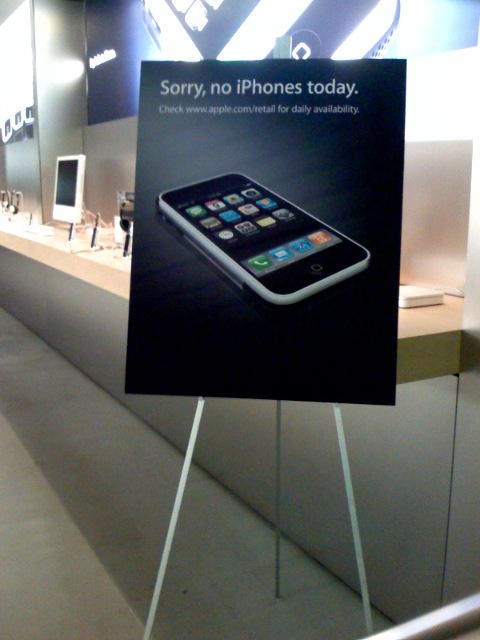
In a memo distributed throughout its Apple Stores division, company executives laid the ground rules for interacting with the public as 3G launch day approaches. Among the anticipated issues, the idea of getting on a waitlist for first dibs was shot down definitively by Apple corporate, and retail employees have been told to call any customer who has reserved an iPhone Personal Shopping session on or after July 11th to inform them Personal Shopping sessions will not apply to the iPhone 3G.
At an Apple Store in New York this week, actor Kiefer Sutherland is said to have made a strong case for obtaining a pre-launch iPhone 3G to no avail.
The company plans to hold worldwide retail meetings on July 6th to begin conveying more specific official launch procedures to its staff, according to a report at the Unofficial Apple Weblog.
Confident now that it’s got a winning product, Apple is set to release the iPhone 3G simultaneously in 22 countries on July 11. And unlike the limited distribution model in the US, where consumers may only purchase phones from the company or from AT&T, overseas customers will be able to find the new phone in plenty of places.
Apple Insider reports that Deutch Telekom, T-Mobile’s German parent signed a first deal which will let Gravis sell iPhones attached to a T-Mobile service plan, allowing customers there to pick up a phone without visiting a T-Mobile retail outlet.
Dutch and Italian consumers will also have a variety of outlets to choose from, according to an item in Macworld. The high-street-availability distribution model appears to derive from the success Apple and UK carrier O2 had in bringing Carphone Warehouse on board to maximize availability of the product.
AT&T may be subsidizing up to $425 of the cost of each new iPhone it activates for service when the 2.0 3G models launch next month, Barron’s reports.
According to Oppenheimer analyst Yair Reiner, AT&T will cover an additional $125 premium over the carrier’s typical $200 smartphone subsidy because the company thinks the iPhone will increase subscribers and average revenue per user. Apple will receive an additional $100 bounty for every new AT&T customer who signs for service at an Apple Store.
The early book on the new phone is very bullish, with Reiner calling for 15 million units to be sold in 2008 and another 33 million in 2009.