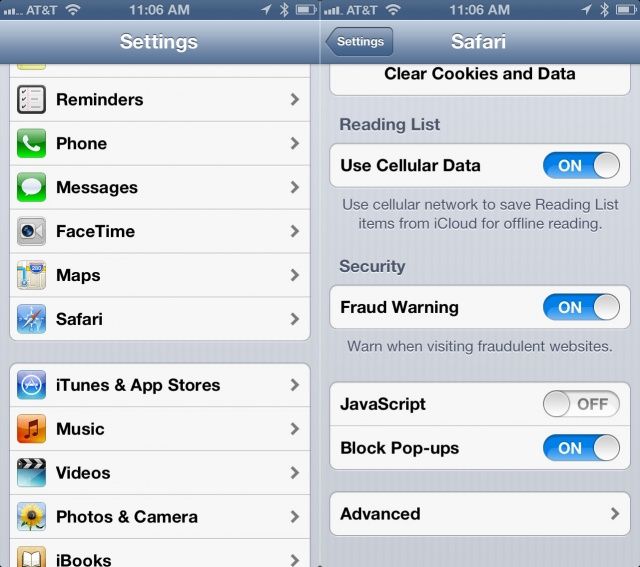
If you’re one of the many folks that own and still use an older iPhone, iPod touch, or iPad, you might notice a slowdown when using the more recent web apps out there. Many of these rely on Javascript, which can slow down older devices when browsing those sites.
Luckily, it’s fairly easy to disable Javascript on mobile Safari. Here’s how.
Using the real web on an iPhone is a wonderful thing. Apple has made their iOS browser, Safari, into a solid powerhouse of web-browsing goodness, ready to use out of the box, accessible in many ways to many kinds of people. It’s a great app.
And yet, the size of the iPhone screen, iPhone 5 included, can be a bit cramped. Add in the top address bar and the bottom button bar, and you have even less screen real estate to use for actual browsing. That’s why Apple included a new feature in iOS: full screen browsing.
With Pinch to Unlock, you can get your finger in on the action.
Apple’s iOS lock screen has remained largely unchanged for the last five years. That’s probably because it serves its purpose pretty well, but sometimes it’s nice to try something different. Thanks to Pinch to Unlock, a new tweak for jailbroken iPhones, you can do just that. Rather than sliding to unlock your device, you just pinch.
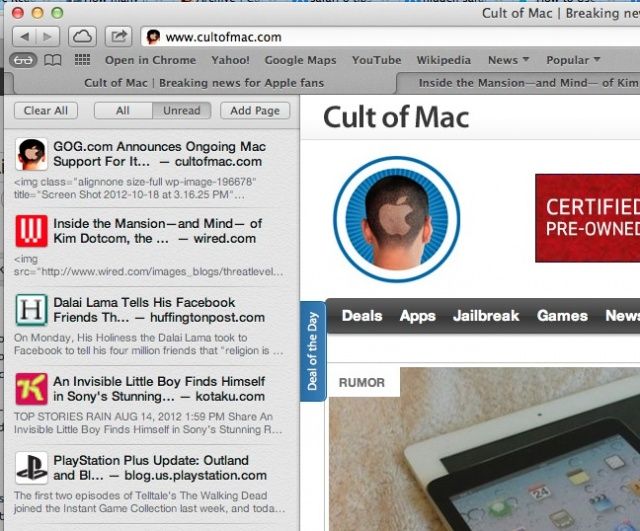
Safari 6, the web browser that comes with OS X Mountain Lion, added a ton of new features when it launched a while back, and Reading List is one of the cool ones. Reading List will let you save articles without having to bookmark them, thus avoiding all the hassles of organizing and/or synchronizing bookmarks. It’s a similar system to something like Instapaper or Pocket (formerly) Read It Later, but baked right in to your Safari browser.
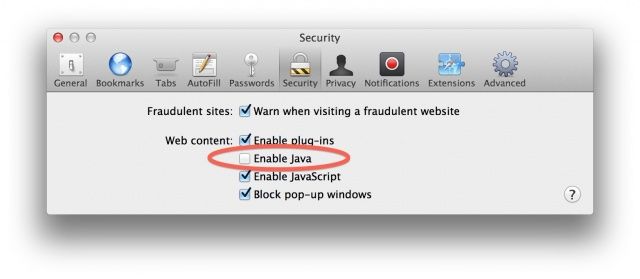
Apple released a small Java update for OS X users this Wednesday. The update effectively removed the Java applet plug-in that typically comes pre-installed in all web browsers on the Mac. Why? Well, Apple has been trying to distance itself from Java for quite some time, mainly due to the fact that most malware spreads via Java vulnerabilities.
Take the recent Flashback trojan, for example. Millions of Macs were comprised because hackers were able to exploit a security vulnerability in Java on the browser. You could visit a bad site with a corrupt Java applet and get infected. After this week’s update, Java is no longer included in browsers like Safari.
I got really used to using Chrome on my desktop and laptop Macs before Mountain Lion came out with Safari 6 at its heels. I try to use Chrome on my iOS devices, for the history and bookmark synching, I really do, but more often than not, I end up using mobile Safari, because a) it’s the default for all clicked links in other apps and b) I really, really like Reader.
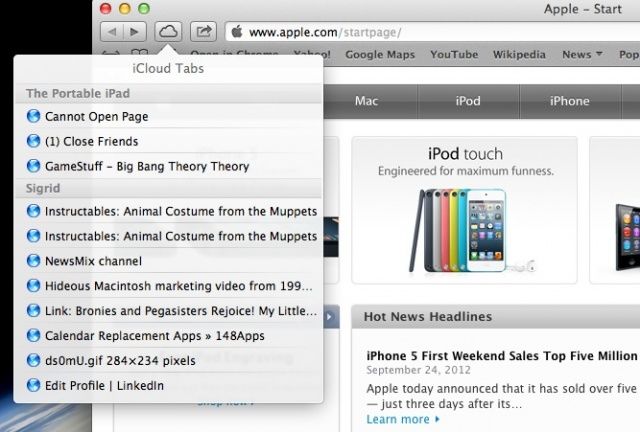
Now, if you’re using Safari on both your Mac and your iPhone, iPad, or iPod touch, you’ll be pleased to know that you can access the tabs you’ve opened on your iPhone on your Mac, and vice versa, as long as you’re using iCloud. Let’s take a look at how we do this.
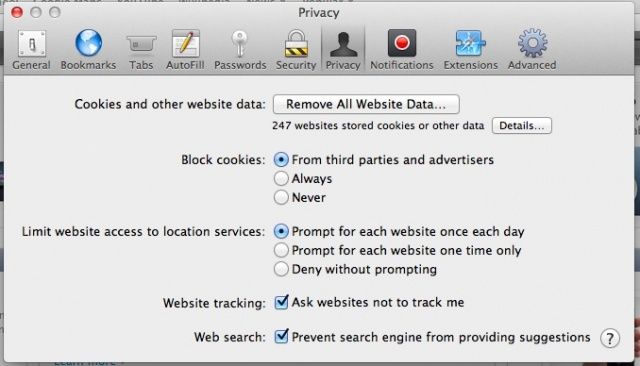
There are some new privacy settings in Safari 6 that potentially prevent a couple of security issues from plaguing you as you roam about the internet.
Some websites may track your browsing activity when they send you web pages to view, which allows those sites to tailor what is presented to you on a specific web page. In addition, when you type search words into the new integrated search bar in Safari 6, Safari will send those words to the search engine itself so that it can send you a list of common searches that are similar to yours. Both of these issues are potential privacy issues, and here’s how you can disable both of them.
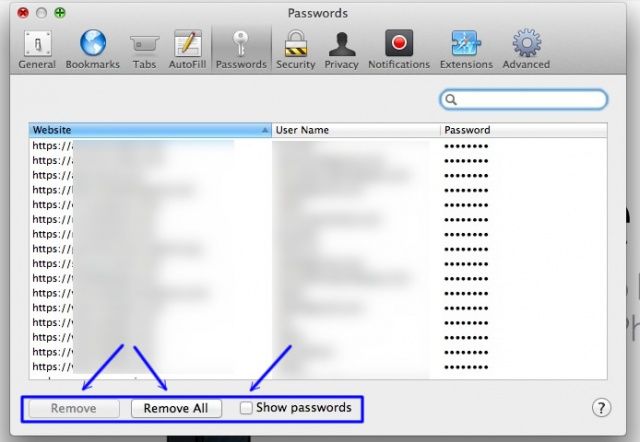
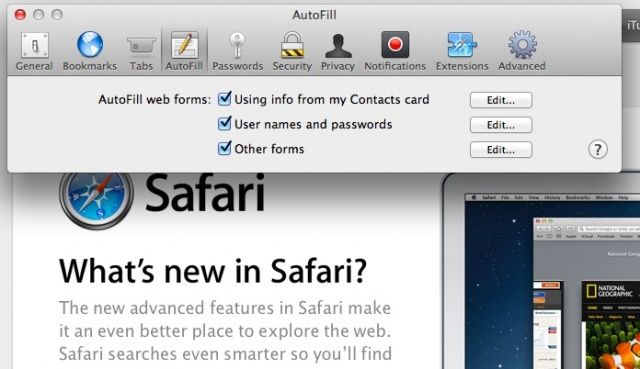
Yesterday, we showed you how Safari 6 keeps track of the passwords you use when you visit websites that require them. They’re kept in a list in the background, so that when you connect to a secure website, you don’t have to enter in your user name or password every time. This is enabled (or disabled) in the Safari Preferences window, under the Auto-Fill tab, for some reason.
Disabling this feature makes your Mac more secure, if you are sharing the Mac or other folks have access to it. If you do use the saved password feature, however, there’s a cool little way to see what those passwords are right in Safari.
Safari does a great job at making your time on the web easy and simple. It will fill in frequently occurring form information, like your name, address, and email address, so that you don’t have to for every site you visit with a form requesting this information. Fill it out once, then let Safari auto-fill the info the rest of the time. It will also save website user names and passwords. Which, when you think about it, is a great idea for your own personal computer at home, but not so great for a work or shared computer.
You’ve seen Microsoft’s famous Internet Explorer 9 commercial, right? You know, the one with that catchy dub-step song and all the crazy graphics of IE being like superhero fast? They play it on TV all the time and the at movies so you must have seen it by now. It’s not really that realistic though, so World Wide Interweb made an “honest version” of the commercial.
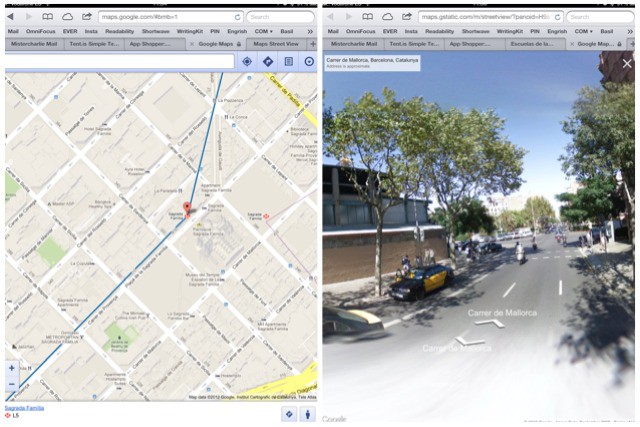
Missing Street View on your iPad? Good news: Google has enabled it in Mobile Safari, letting you check out street-level detail from your iOS device, right there in the browser.
Expect mobile Safari's address bar to look like this for some time.
One of the improvements Apple made to Safari 6.0 was to take the search and address bars and roll them into one — just like a lot of popular web browsers do. The change hasn’t been made to the mobile Safari app, though, which is puzzling, because it’s a more efficient use of screen space on a smaller display.
On Tuesday, The New York Times reported that Google is currently working on a native Google Maps app for iOS, which is expected to make its debut before the end of the year. But in the meantime, it will be bringing Street View to its web app so that you can enjoy the much-loved feature in mobile Safari.
While Google Maps may no longer be available as either the default iOS map app or as a standalone app of its own, the search giant’s other flagship software has been quietly updated for iPhone 5,iOS 6, and an unspecified number of “Stability and security improvements,” according to the App Store description page for the alternate iOS browser.
iOS 6 comes with a host of new and improved features for us all to play with. We’ll be messing about in there over the next several weeks, helping you find the hidden tips, tricks, and features of iOS 6. Today, however, we’d like to show you the ten killer tricks we’ve found in iOS 6 to date.
Some of these tips may seem simple, while others may not be applicable to your own personal situation. Regardless, we hope that we can show you the coolest tips and tricks for your new iOS device, whether it’s a new iPhone 5, a new iPad, or anything that comae out before; iOS 6 will support the iPhone 3GS and up, the iPad and up, and the iPod touch third generation and up, so have at it!
Today, three months after its first preview at WWDC, iOS 6 has been released to the public and is now available to download via iTunes. We’ve already presented you with a comprehensive guide to everything that’s new — big and small — but which of those features really stands out?
So that you can jump into iOS 6 and quickly start using its killer new features, we’ve compiled a list of our top ten for you to check out. These may not necessarily be the biggest features Apple has introduced, but we’re confident that once you start using them, you’ll agree that they’re the best.
We’ve all been itching to get our hands on iOS 6 since it got its first unveiling at WWDC back in June, and today, three months after that announcement, the software finally gets its public debut. Apple’s packed a ton of new features into this update, including some major new features like Map and Passbook, plus some enhancements to existing apps and features, such as new Siri capabilities and a VIP inbox in Mail.
Apple’s been promoting some of these features on its website, but there are tons you may not have heard about. With that said, here’s your comprehensive guide to everything that’s new in iOS 6.
Using mobile Safari’s private browsing mode on an iOS device is a pain, because you have to activate and deactivate via the Settings app. In fact, I’ve always found that it’s just easier to use a third-party browser. But not anymore. If you’ve got a jailbroken iOS device, installing the Privata tweak allows you to switch back and forth between Safari’s private browsing modewithin Safari itself.
Apple continues to test Facebook integration for Mountain Lion.
Apple has seeded a new OS X Mountain Lion 10.8.2 build (12C35) to participants in its AppleSeed program, continuing its testing of Facebook integration. Though it states that there are no known issues with this update, the Cupertino company is also asking users to focus on Messages, Game Center, Safari, and Reminders.
Dolphin looks a lot prettier thanks to its latest update.
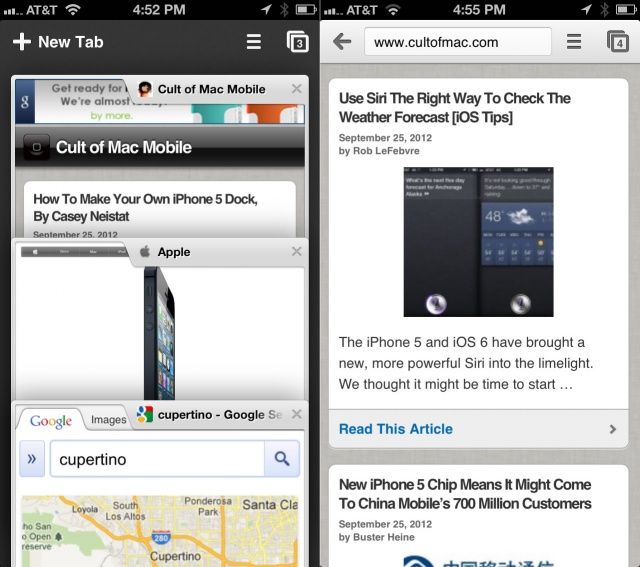
Dolphin is one of the best third-party browsers you’ll find on iOS, and it just got even better on the iPhone, thanks to a new design and user interface, new features, and lots of improvements in version 6.0.
Here’s another one of those “so simple it hurts” tips that we find from time to time, leaving us scratching our heads, wondering why we didn’t figure it out sooner.
When you’re browsing the web, whether you’re on a computer or your iPhone, you don’t always want to open links in the window you’re browsing in. Neither do you always want to open them in a new tab in the foreground. Sometimes, especially when you’re doing internet research, you want to open tabs in the background. On the Mac, it’s simply a matter of Command clicking a link in your current browser, or setting a preference or two for your favorite web apps.
You can do this on iOS, too, with a simple tap in Settings. Here’s how.
We love Readdle’s productivity apps here at Cult of Mac, especially when they’re going cheap. The company is currently holding a Back to School campaign that sees a number of iOS apps that “are indispensable for studying” reduced. Those included are ReaddleDocs for iPhone, ReaddleDocs for iPad, and Remarks.
The most noticeable change in the way Safari works in its latest version is in the way it allows you to search. Just like Google’s Chrome web browser, Safari now includes an integrated search in the previously URL-only address bar at the top of the browser.
There are some tricks to narrow down search results, as well as a couple neat ways to save specific searches for later use. Let’s check them out together, shall we?
Today Google updated its Chrome browser in the iOS App Store with the ability to share webpages to Twitter, Google+, and Facebook. By updating now, Google has beaten Apple’s own Safari browser to the punch. Safari in iOS can share directly to Twitter, and Facebook integration is coming in the fall with iOS 6. Google+ integration is not offered, and given Apple and Google’s rocky relationship, don’t expect to see it ever.
The release of iOS 6 just weeks away. The new release includes a range of new features. Some seem tailor-made for business use like the new VIP contacts feature in Mail. Others are clearly designed for a mass-market consumer audience. Even those consumer-oriented additions have a lot of potential for use in the office, however.