
Pluribus, Vince Gilligan’s newest TV series, has already bagged a perfect 100% rating on RottenTomatoes.com — a feat topping even acclaimed Apple TV shows like Severance.
The creator of Breaking Bad and Better Call Saul wowed the critics once again with Pluribus, a post-apocalyptic science fiction psychological thriller that premiered on Apple TV on November 7. And it’s generating big-time buzz as one of the year’s most compelling television events. Its third episode airs Friday. And if you’re anything like me, you can’t wait because the first two blew you away.
To me, the show is like the world’s longest episode of The Twilight Zone — in the best possible way, and in the here and now rather than circa 1959.
Caution: Pluribus spoilers ahead.
Pluribus season 1 review: 3 reasons to watch it on Apple TV
Pluribus stars Rhea Seehorn as Carol Sturka, a discontented romance novel author who finds herself among the few people immune when the rest of humanity is suddenly “joined” into a hive mind following a mysterious data transmission from a distant world.
What makes this show particularly intriguing is how it inverts typical apocalypse narratives. Instead of zombies or violence, this is an apocalypse of contentment, where the infected become placidly happy members of a collective consciousness that seeks to peacefully assimilate the remaining individuals. But at what cost will that assimilation come?
Pluribus represents something increasingly rare in modern television: a wholly original idea from a proven creative voice, given the resources and trust to execute that vision without compromise. It’s challenging, thoughtful, visually stunning and deeply unsettling in ways that linger long after the credits roll.
Whether you’re a fan of Gilligan‘s previous work, a science fiction enthusiast or simply someone looking for television that respects your intelligence and rewards your attention, Pluribus deserves your time.
Here are three compelling reasons to dive into this unsettling yet captivating series.
1. Rhea Seehorn delivers a tour-de-force performance
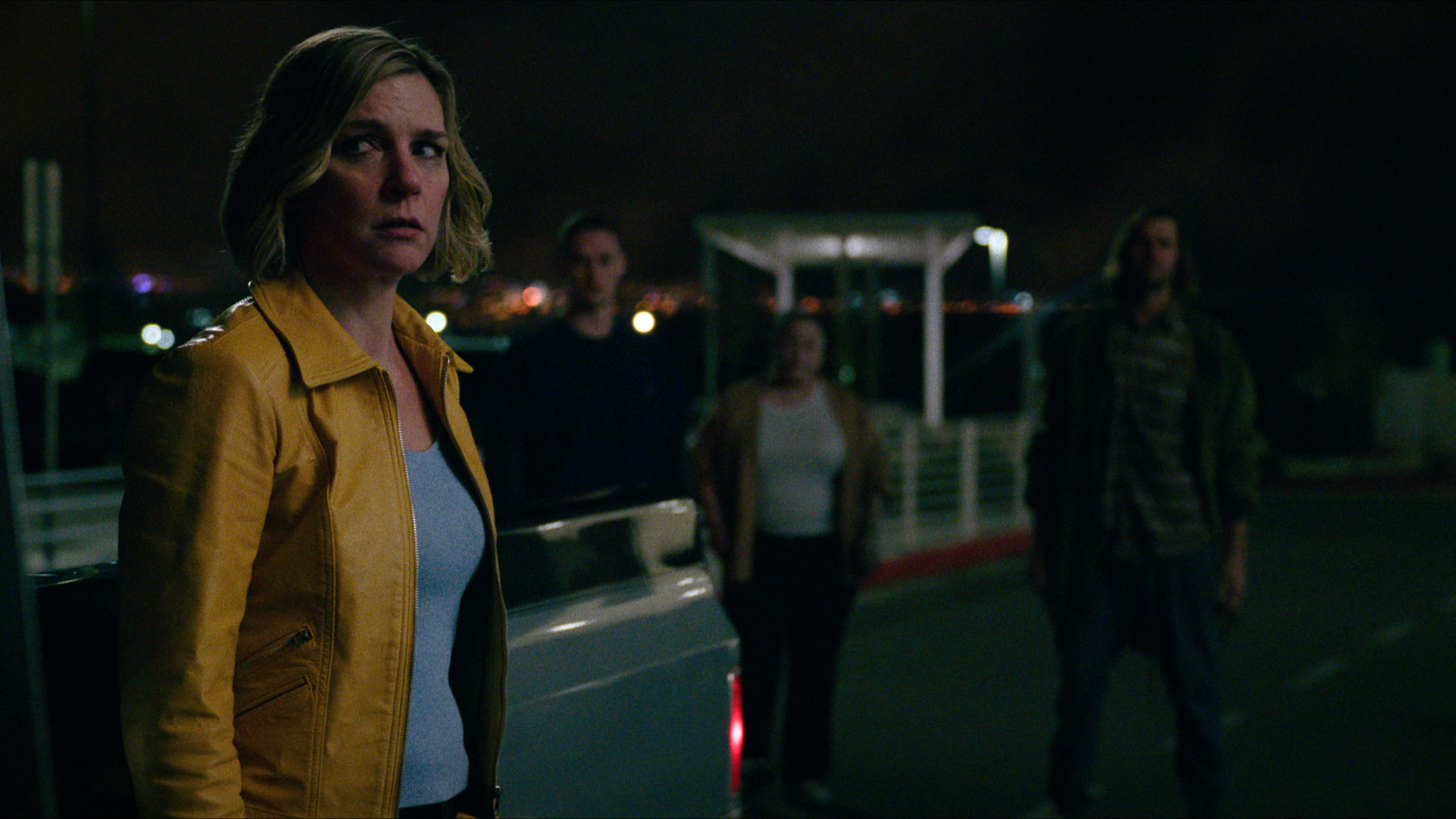
Photo: Apple TV
After six seasons of playing the morally complex Kim Wexler in Better Call Saul, Rhea Seehorn reunites with Gilligan in a role that showcases her remarkable range as an actor. Seehorn runs through a gamut of emotions — by turns confused, clever, resigned, enraged and determined — as she navigates a shockingly changed world.
Gilligan crafted the character of Carol Sturka specifically as a “flawed good guy” who tries to save the world. And Seehorn inhabits this role with incredible depth. Described as “the most miserable person on Earth,” Carol is an angry, complicated individual beating against a tide of contentment in a one-speed society. This isn’t the composed, calculating Kim Wexler. Carol is messy, frustrated and deeply human in ways that make her both relatable and fascinating to watch.
‘The biggest mass murderer since Stalin’
As the show progresses, Seehorn often carries entire sequences with minimal dialogue. She conveys Carol’s isolation, determination and fear through physical performance. That makes it Seehorn’s show, where she commands the screen, even in silence. And those bits contrast nicely with her tirades — which she is mortified to find play havoc with the hive far and wide. (So tune in and find out why she calls herself “the biggest mass murderer since Stalin.”)
The casting extends beyond Seehorn, of course, with standout performances from the supporting cast. Karolina Wydra plays Zosia, one of the “Others” who serves as Carol’s liaison to the hive mind. And their dynamic creates a fascinating push and pull.
Even soap opera veteran Peter Bergman makes a memorable appearance, demonstrating Gilligan’s knack for finding perfect actors for unexpected roles. Bergman plays this show’s version of a “designated survivor,” a relatively minor and excessively blow-dried under-secretary representing the hive mind from the White House like a used car salesman represents an amazing deal on a fantastic certified pre-owned vehicle.
2. Vince Gilligan’s masterful direction creates something truly original
One of the most striking aspects of Pluribus is how different it feels from anything Gilligan has done before, while still bearing his distinctive creative fingerprint. After spending nearly 15 years in the criminal underworld of New Mexico with Breaking Bad and Better Call Saul, Gilligan has returned to his science fiction roots. He served as a writer on The X-Files early in his career. And now he’s back with something that feels both familiar and completely fresh.
Critics have noted stylistic influences from classic science fiction works, including Invasion of the Body Snatchers, Night of the Living Dead and 28 Days Later, while others have compared it to The Prisoner, The Leftovers, The Twilight Zone and The Last Man on Earth. Yet despite these reference points, Pluribus feels like its own thing — a wildly fanciful series that feels unsettlingly real at its core.
Skillful direction builds tension
Gilligan’s direction showcases what he does best: creating atmosphere and building tension through deliberate pacing and meticulous attention to visual storytelling. His work on Pluribus emphasizes sequences that show a new reality in a detailed way that never rushes to give us answers. And that seems to ensure most of the audience will stay engaged to finally grasp its mysteries.
When Xosia goes from the filthy work of recovering bodies in one country to piloting a transport plane on her way to becoming Carol’s chaperone in New Mexico, we simply understand the hive mind is at work and Xosia, like billions of others, simply knows how to do everything now. The fun is in realizing it through observation before anyone says it.
The production values are exceptional, with stunning cinematography and production design. Filming took place primarily in Albuquerque, New Mexico — Gilligan’s familiar stomping grounds — but also extended to the Canary Islands in Spain. It provided diverse landscapes for sequences set in locations ranging from a Norwegian ice hotel to Morocco.
What makes Gilligan’s approach especially powerful is how he transforms the concept of a hive mind from pure horror into something more philosophically complex. The infected aren’t zombies. They’re genuinely happy, incapable of violence and sincere in their belief that they offer Carol something better. And that ambiguity creates a more unsettling experience than straightforward horror ever could.
3. The show tackles timely themes about individuality and artificial intelligence

Photo: Apple TV
Perhaps the most compelling reason to watch Pluribus is its relevance to our current moment. While the show deals with an alien “virus” — for lack of a better word — that creates a hive mind, it’s impossible not to see the parallels to contemporary concerns about artificial intelligence, social media echo chambers and the erosion of individual thought in favor of hopelessly divided collective agreement.
The title itself refers to “e pluribus unum,” a Latin phrase meaning “out of many, one.” The phrase, found on U.S. currency, takes on new and troubling meaning within the context of the show. Gilligan has created a narrative that asks difficult questions: If everyone is happy, is that really such a bad thing? What’s the value of individuality if it comes with misery and conflict? Is the pain of being human worth preserving?
Gilligan himself has been vocal about the show’s connection to anxieties about AI and technology. The series includes an anti-AI message in its end credits — “This show was made by humans” — and Gilligan has compared AI-generated content to regurgitated nonsense. These concerns about technology homogenizing human creativity and thought clearly inform the show’s central premise about a hive mind that erases individual perspectives in favor of collective happiness.
Plausible premise with no easy answers
The virus in Pluribus originates from a signal transmitted from space, which scientists decode into a molecular pattern. This concept of a lysogenic virus — one that integrates into host DNA and can remain dormant — gives the show’s premise a veneer of scientific plausibility that makes it even more unsettling. The show doesn’t just rely on fantastical elements; it grounds its premise in concepts that feel disturbingly possible.
The show’s exploration of these themes becomes all the more effective because it refuses easy answers. The series grapples with questions about humanity, technology and contentment. It asks whether a hive mind that makes everyone happier might actually be acceptable. Carol represents our instinctive rejection of such a loss of self, even when that self is unhappy, but the show doesn’t simply validate her perspective. It forces viewers to sit with uncomfortable questions about what we truly value and why.
The show also serves as a meditation on loneliness and connection in the modern world. Carol is isolated not just physically but emotionally. She’s the miserable outsider in a world that has found peace through unity. Her journey becomes one of figuring out whether fighting for individuality is worth the cost when everyone else seems so much happier without it.
And when will we find out about her immunity and how her damaging rage might relate to the deaths of upwards of a billion humans who didn’t survive the joining, including her partner? It may be neither here nor there, but to twist an old song lyric, What’s hate got to do with it?
A must-watch event on Apple TV

Photo: Apple TV
Apple TV won a bidding war for Pluribus by promising Gilligan “the gift of trust and time,” and it immediately renewed the series for a second season after its premiere, demonstrating confidence in the project. With new episodes released weekly through December 26, now’s your chance to engage with this (so far) great show.
Apple TV+ is available by subscription for $12.99 with a seven-day free trial. You can also get it via any tier of the Apple One subscription bundle. For a limited time, customers who purchase and activate a new iPhone, iPad, Apple TV, Mac or iPod touch can enjoy three months of Apple TV+ for free.
In November 2019, “Apple TV+ became the first all-original streaming service to launch around the world, and has premiered more original hits and received more award recognitions faster than any other streaming service. To date, Apple Original films, documentaries and series have been honored with 580 wins and 2,787 award nominations and counting,” the service said.
Those include multi-Emmy Award-winning comedy Ted Lasso and historic Oscar Best Picture winner CODA.


David Snow, an expert on Apple hardware and software, writes on a variety of technological and cultural topics for Cult of Mac. They include Apple news, technology buying guides, and features about computer setups and Apple TV shows and movies.
With 30 years of experience covering technology and other subjects, he has written and edited for numerous print and online publications, including CMP Media, TechTV.com, CNET, Wired News, Red Herring magazine, Law.com, The National Law Journal and Law Technology News magazine. Among other roles, he served as executive editor of the Law.com network of websites and editorial director, technology, for ALM Media.
Snow graduated with a B.A. from Syracuse University with majors in magazine journalism and psychology. While there, he worked as a reporter for The Daily Orange newspaper and associate editor of Equal Time magazine.
Founder of the blog At the Waterline, he can be reached on X (formerly Twitter) via @atthewaterline and on Mastodon via @dsnow.

