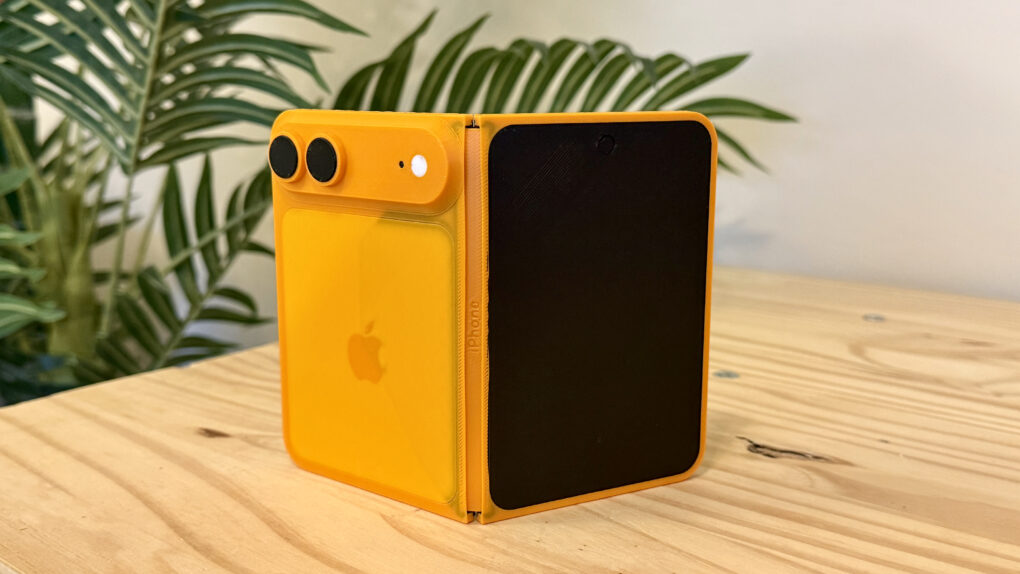
After the purported dimensions of the first folding iPhone leaked a few weeks ago, it didn’t take long for mockups to hit MakerWorld, a popular site for people with 3D printers to share their models. I got my hands on one of those models, and I have lots of thoughts. If the rumored folding iPhone looks anything like this, it’ll be weird.
For one thing, it’s almost as short as the original iPhone, but wider than the widest iPhone ever. Lots of design questions remain unanswered, too. Where will the volume buttons go, since there isn’t any room on the left side? Will it only have one speaker, like the iPhone Air? Will the two cameras arranged horizontally across the back mean the camera sensors are in landscape, not portrait?
I’ve been fiddling with a 3D model of the first folding iPhone all week. Here are my thoughts and observations.
Hands-on with a folding iPhone 3D-printed mockup

Photo: D Griffin Jones/Cult of Mac
The folding iPhone is the most highly anticipated iPhone model in years. It’ll be something totally new. Rumors are rock-solid that Apple will release a phone-size device that unfolds into a tablet, rather than a phone that flips down into a smaller size.
The supposed display sizes also leaked, showing a 7.7-inch inner display with a 5.3-inch cover display on the outside. Imaginations are running wild that the folding device will put the full power of iPadOS multitasking in your pocket.
The screen sizes are really the only stat we need to know to make a pretty reasonable mockup, since iPhone design has been remarkably consistent over the last few years. And thanks to Matt VanOrmer, fellow Apple nerd and 3D printer owner, I got to play around with a folding iPhone mockup to see what the device might feel like.
Different proportions from other phones and foldables
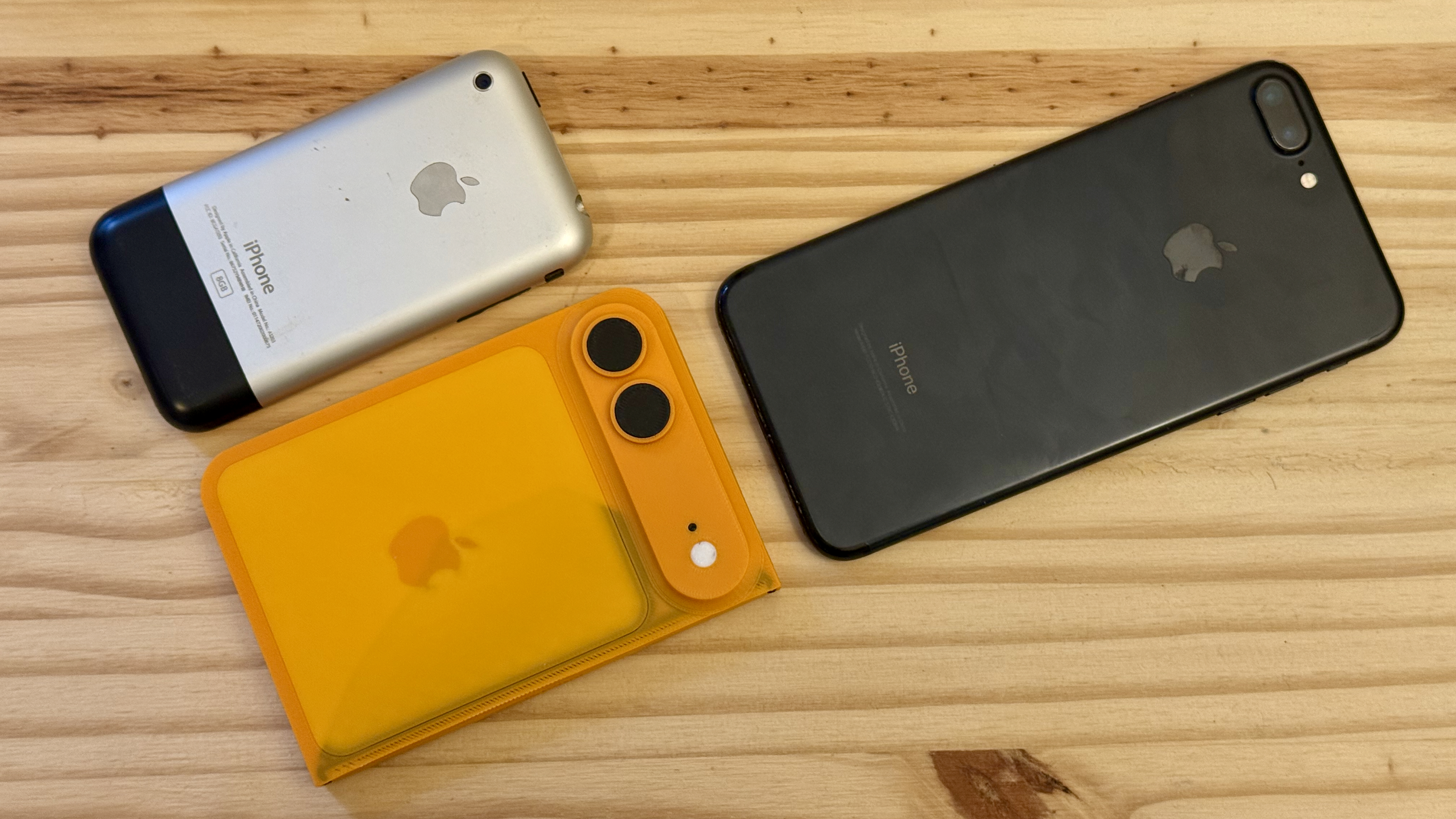
Photo: D. Griffin Jones/Cult of Mac
The most shocking thing when you see and hold this folding iPhone mockup is how weird the proportions are. The folded-up package is slightly wider than today’s iPhone 17 Pro Max, but only as tall as an iPhone 4.
Every iPhone since the iPhone 5 has been slightly more than twice as tall as it is wide, roughly a 2:1 aspect ratio. This became even more obvious starting with the iPhone X‘s edge-to-edge 2:1 display.
As shown in this 3D-printed mockup, the inner display of the folding iPhone likely will have a 4:3 aspect ratio, which is perfectly normal for an iPad. But fold that in half, and you have a 2:3 display on the front, which is far shorter and stubbier than any iPhone released in the last decade and a half.
Holding it in the hand
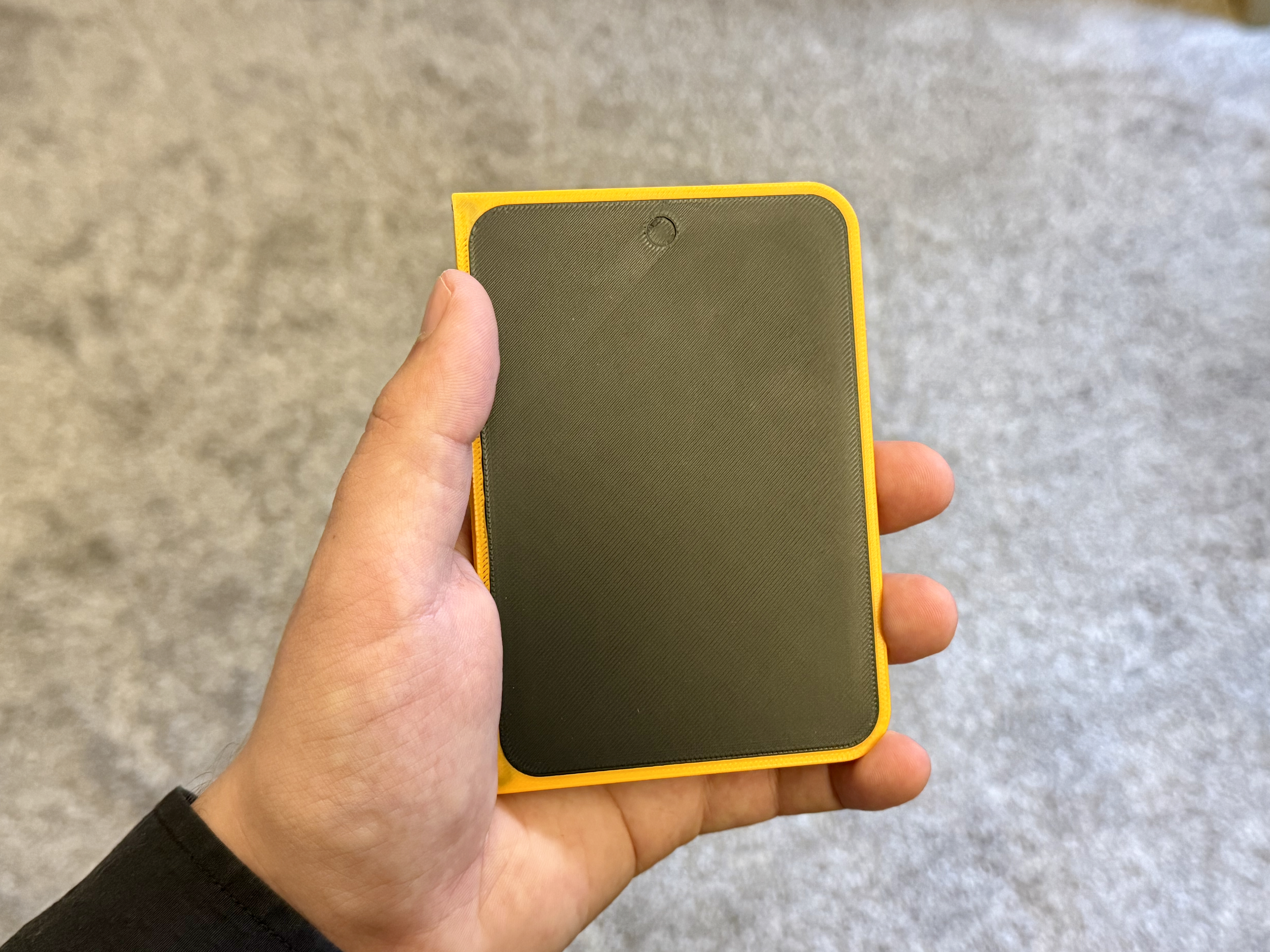
Photo: D. Griffin Jones/Cult of Mac
The shorter and wider proportions mean I can really easily tap the top of the screen, where the back button, status bar and Dynamic Island live. But it also means I can’t reach the right side of the iPhone mockup at all in its folded state. My thumb makes it only about 80% of the way across without adjusting my grip.
There’s also a problem I hadn’t thought about before. I always hold my phone in my left hand. But folded up, the bottom-left corner of this rumored device must be square, not rounded. I don’t expect it to feel as sharp as the mockup, but the hinge limits Apple’s ability to round it for comfort.
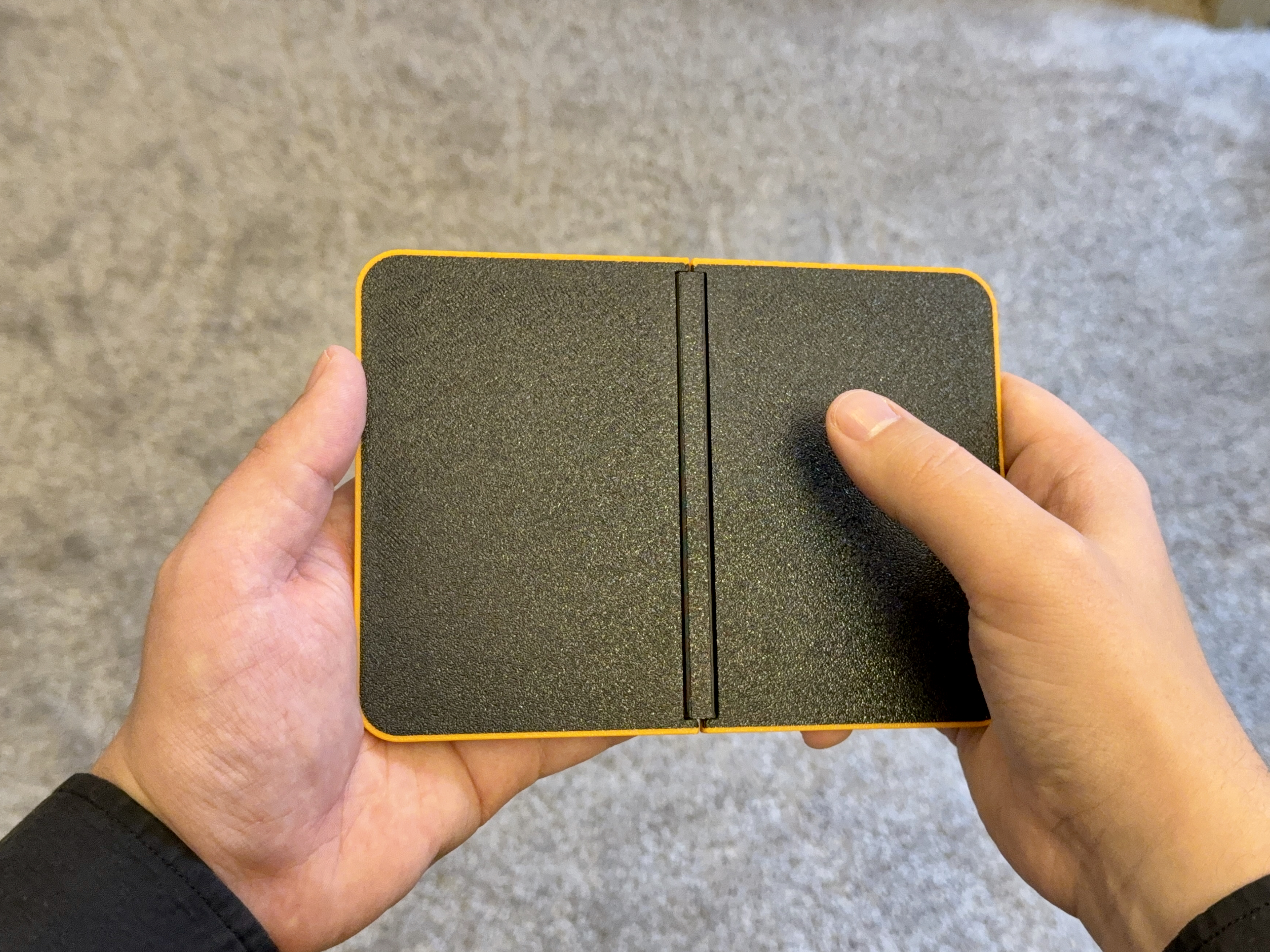
Photo: D. Griffin Jones/Cult of Mac
When unfolded and gripped with two hands — how the device is likely meant to be used — I have pretty incredible range. I can reach top to bottom on either side and in most of the surface area. Only a narrow spot in the center of the top remains out of range.
It’s hard for me to judge how well I will be able to one-hand the iPhone when it’s unfolded, because this plastic mockup weighs only a fraction of what the actual device will.
Pocketability
If a Pro Max- or Plus-size phone fits in your pocket, this should do better. It’s less likely to stick out of a shallow pocket because it’s not as tall. The cameras bulge out if you’re wearing tight pants, but that’s also not unique to this model — all models are trending toward thicker camera plateaus.
What’s unique, though, is the hard corner on the left edge. The final product should be rounded a little, but the corner may still catch on your pocket on the way in and out.
How will the buttons work?
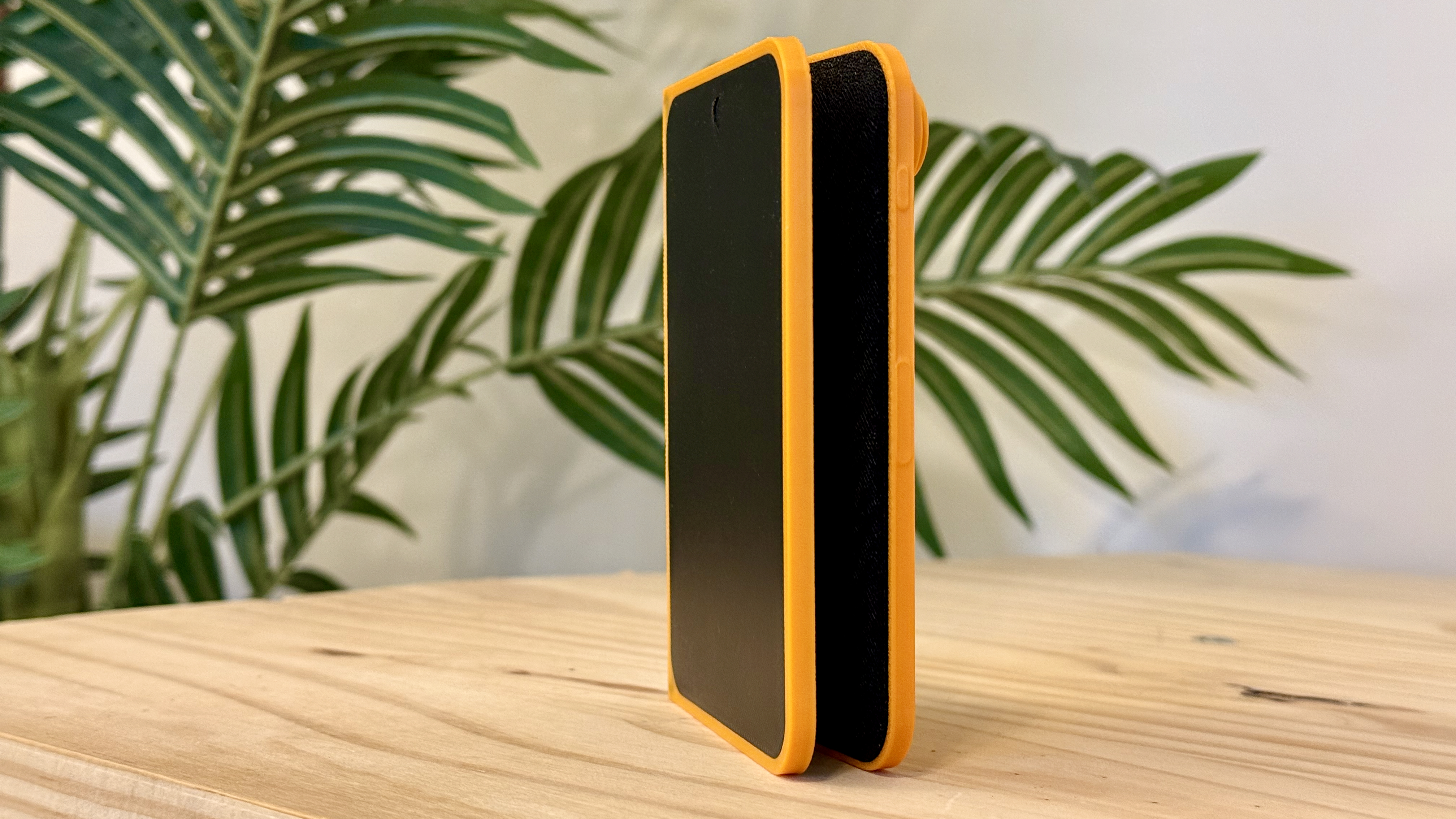
Photo: D. Griffin Jones/Cult of Mac
Another interesting point about the folding iPhone that I hadn’t thought of before is the buttons. Android foldables have it easy because Android non-foldables tend to put all the buttons on the right side anyway.
Apple always puts volume buttons, and now the Action button, on the left edge of the iPhone. But this is a phone that, essentially, only sometimes has a left edge — folded up, it has two right edges. If Apple put buttons on both of the right edges, it would be hard to tell them apart in your pocket.
My 3D-printed mockup came with one small button near the camera and a single larger button below — what looks like an Action button and a power button. I’m not confident this is accurate, but if it is, that would be … interesting.
Maybe the big button is a weird rocker switch that can click up, down and in the middle for volume up, volume down and power. Maybe it’s a capacitive button that clicks for power, but you can swipe up and down on it for volume — like the Camera Control, which everyone loves so much.
Speakers and microphones
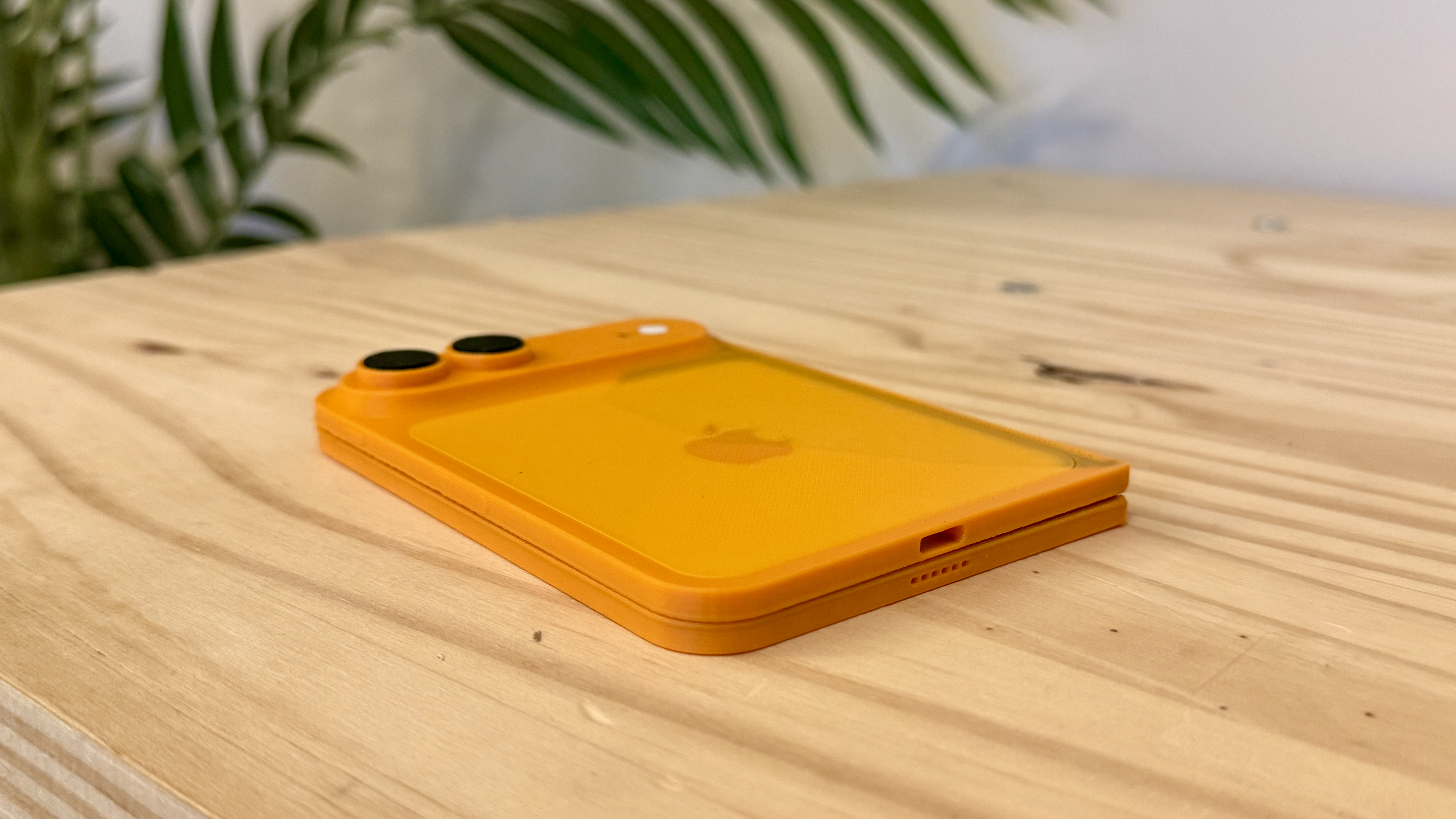
Photo: D. Griffin Jones/Cult of Mac
Apple made some compromises with the iPhone Air to cram a bunch of phone into much less space than usual. The folding iPhone mockup is just as thin, but has something like 75% more area for components.
That’s why I’m surprised that the folding iPhone mockup only comes with one set of holes on the bottom, presumably for a microphone. Most iPhones have two, for a microphone and a speaker. The iPhone Air skimped on a second speaker and sounded loud, but not good.
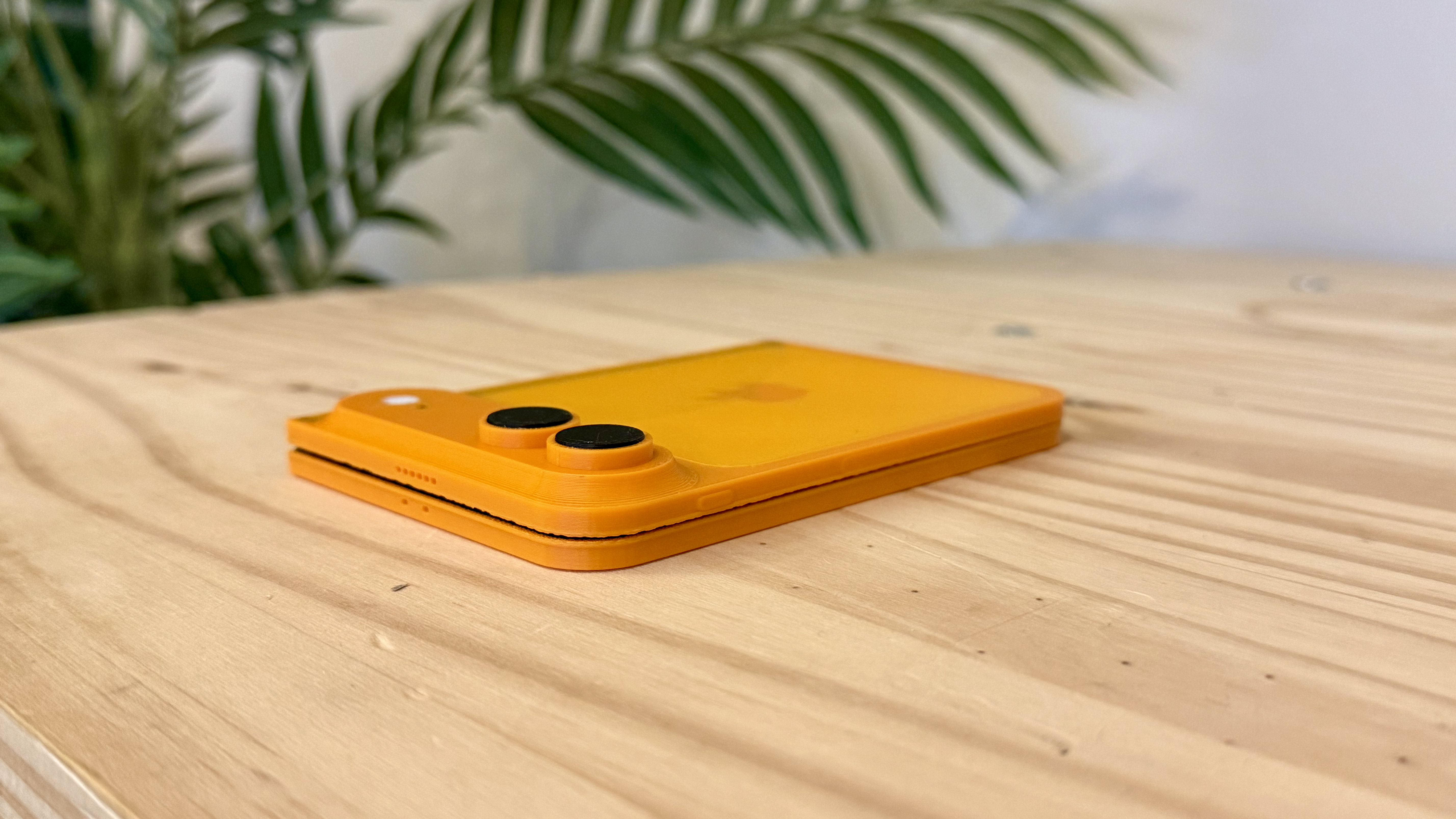
Photo: D. Griffin Jones/Cult of Mac
There are two sets of holes on the top of the mockup, presumably for a speaker and a secondary mic. I mean, it wouldn’t make sense to have two speakers on the same side. Nor would it make sense to have one microphone on the side farther away from your mouth when you’re making a phone call.
What’s up with the dual cameras?
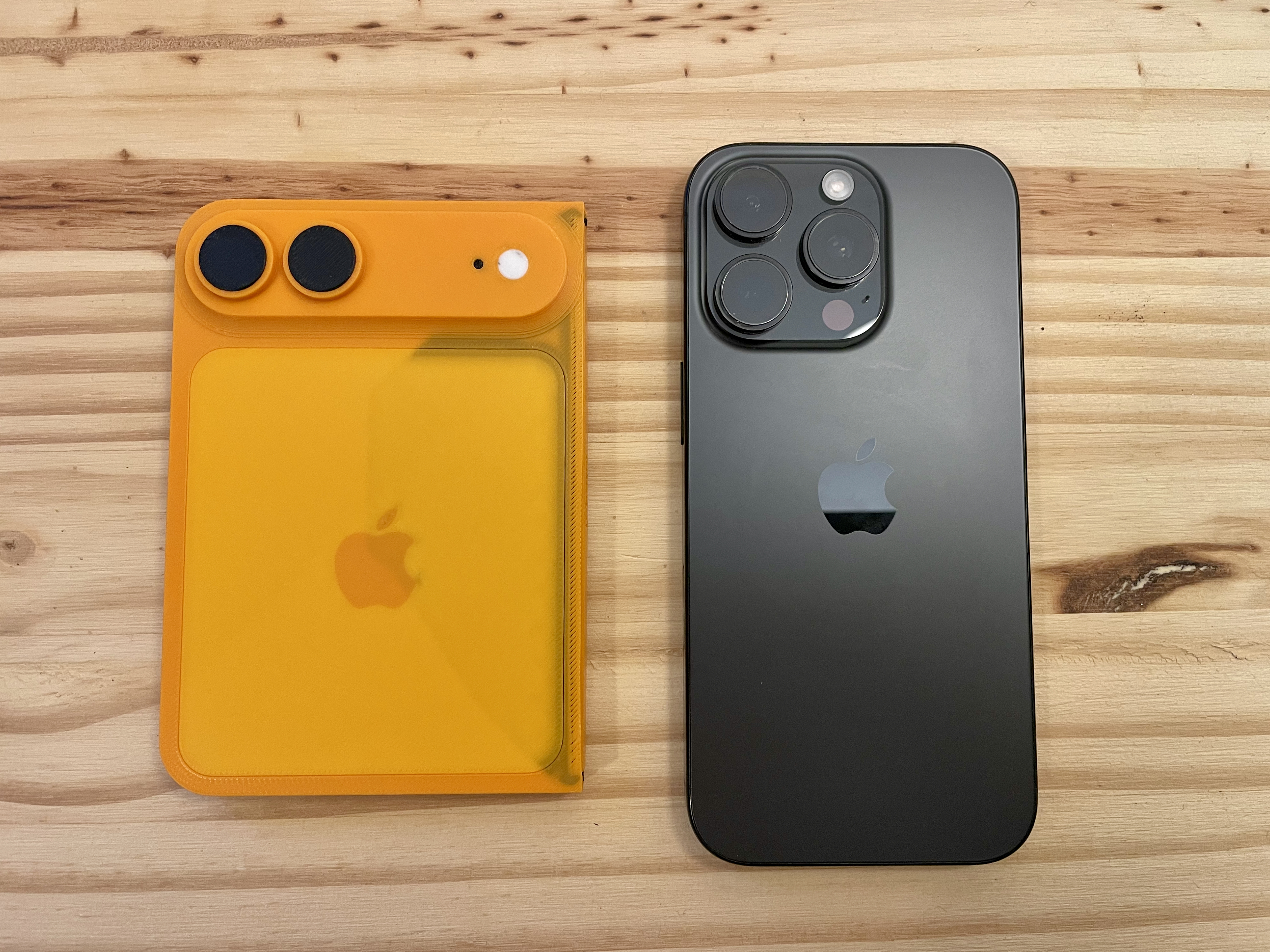
Photo: D. Griffin Jones/Cult of Mac
The folding iPhone is expected to come with two cameras, just like the mockup.
Ever since the iPhone 11, any iPhone with two cameras has come with a wide lens and an ultrawide lens. The need for a telephoto lens isn’t as strong, since the 48 MP sensor gives you a 2× “optical quality” crop. With the wide and ultrawide lenses, an iPhone can handle all the features that combine data from both sensors: macro photography, Portrait mode with focus control and spatial video.
The different layout of these cameras got me thinking. Every iPhone has its camera sensor match the orientation of its display; it’s such an obvious choice you don’t even think about it. You hold your phone vertically, it takes a vertical photo or video. The image from the camera fills the entire screen of your phone, giving you the best view.
But this phone has two orientations; a small portrait screen and a big landscape screen. Which way will Apple orient the camera sensors? My guess is they’ll probably be landscape, not portrait. In fact, the sensors have to be landscape in order to take spatial video, because its lenses are side-by-side rather than top-and-bottom.
Final thoughts
I’m glad I could spend a few days with this dummy folding iPhone model to gather some thoughts in advance of the device’s likely release this fall. I don’t think the folding iPhone will be universally loved — if it’s anything like this, it’ll be weird. Not just unlike any other iPhone, but unlike any other foldable.
To anyone who’s complained that there’s never anything new with the iPhone anymore, well, you’ll get your wish. September can’t come soon enough.

D. Griffin Jones was a writer, podcaster and video producer for Cult of Mac. Griffin has been a passionate computer enthusiast since 2002, when he got his first PC — but since getting a Mac in 2008, he hasn’t turned back. His skills in graphic and web design, along with video and podcast editing, are self-taught over 20+ years. Griffin has a bachelor’s degree in computer science and has written several (unpublished) apps for Mac and iOS. His collection of old computers is made up of 40+ desktops, laptops, PDAs and devices, dating back to the early ’80s.
Griffin writes for his personal blog, Extra Ordinary, and is currently looking for work.


2 responses to “Hands-on with a folding iPhone mock-up: This thing is weird”
Will it have a display on the front like the current iPhones ?I’ll presume they will.
Yes, the black areas are where the displays will be.