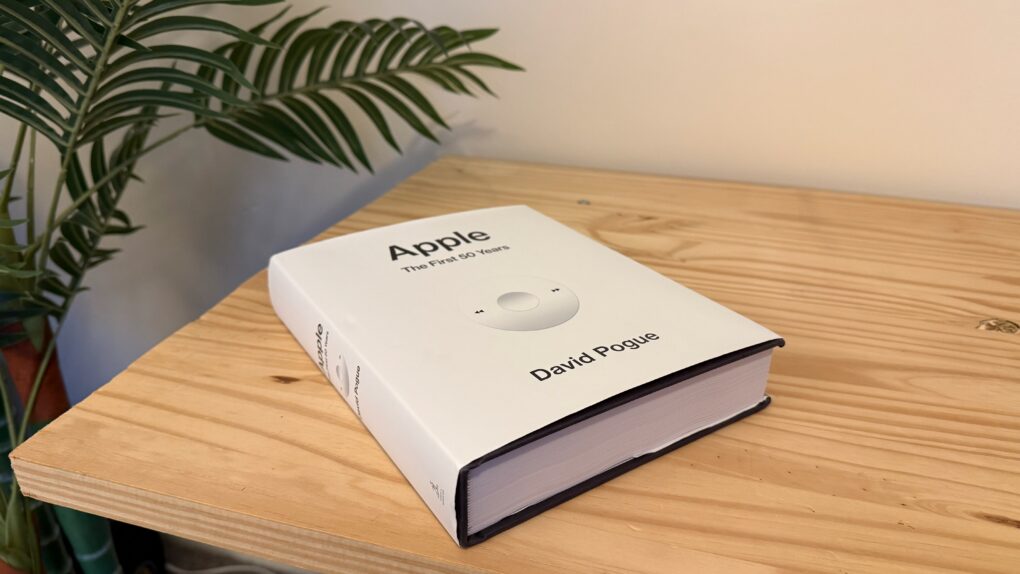
 Apple: The First 50 Years by David Pogue is a comprehensive retelling of the most influential tech company in history and the people behind it. The book covers the early hobby projects of teenage Steve Wozniak to Apple Intelligence, and the lifetime’s worth of everything in between, in about 600 pages.
It’s just the right amount of detail and depth to tell the whole story of Apple’s rocketing rise to power, years of tumult and insanely great turnaround. It’s an easy and highly entertaining read. You don’t need a technical or nerdy background at all. And there are hundreds of full-color pictures.
Apple: The First 50 Years is now the definitive all-encompassing book I would recommend for anyone interested in the company that changed the world … at least three separate times.
Review of Apple: The First 50 Years
In time for Apple’s 50th anniversary, CBS Sunday Morning correspondent David Pogue tells the iconic company’s entire life story: how it was born, nearly died, was born again under Steve Jobs, and became, under CEO Tim Cook, the most valuable company in the world.
- Comprehensive: Covers all 50 years.
- Well designed
- Easy and fun to read
- Full color photos throughout
- Recent history not as in-depth
- Full color = higher price

There have been many biographies and stories from Apple that cover its most influential products — and people. The Apple II Age by Laine Nooney covers the life of the first personal computer. Revolution in the Valley by Andy Hertzfeld covers the Macintosh’s wily development. On the Firing Line by Gil Amelio covers Apple’s darkest 500 days. And, of course, the bestselling book that spawned this very blog, The Cult of Mac.
But before you say that to really understand Apple you need to buy a years-long reading list of books, you can instead get started with Apple: The First 50 Years. A single story, pieced together from 150 interviews, told as concisely as it reasonably can.
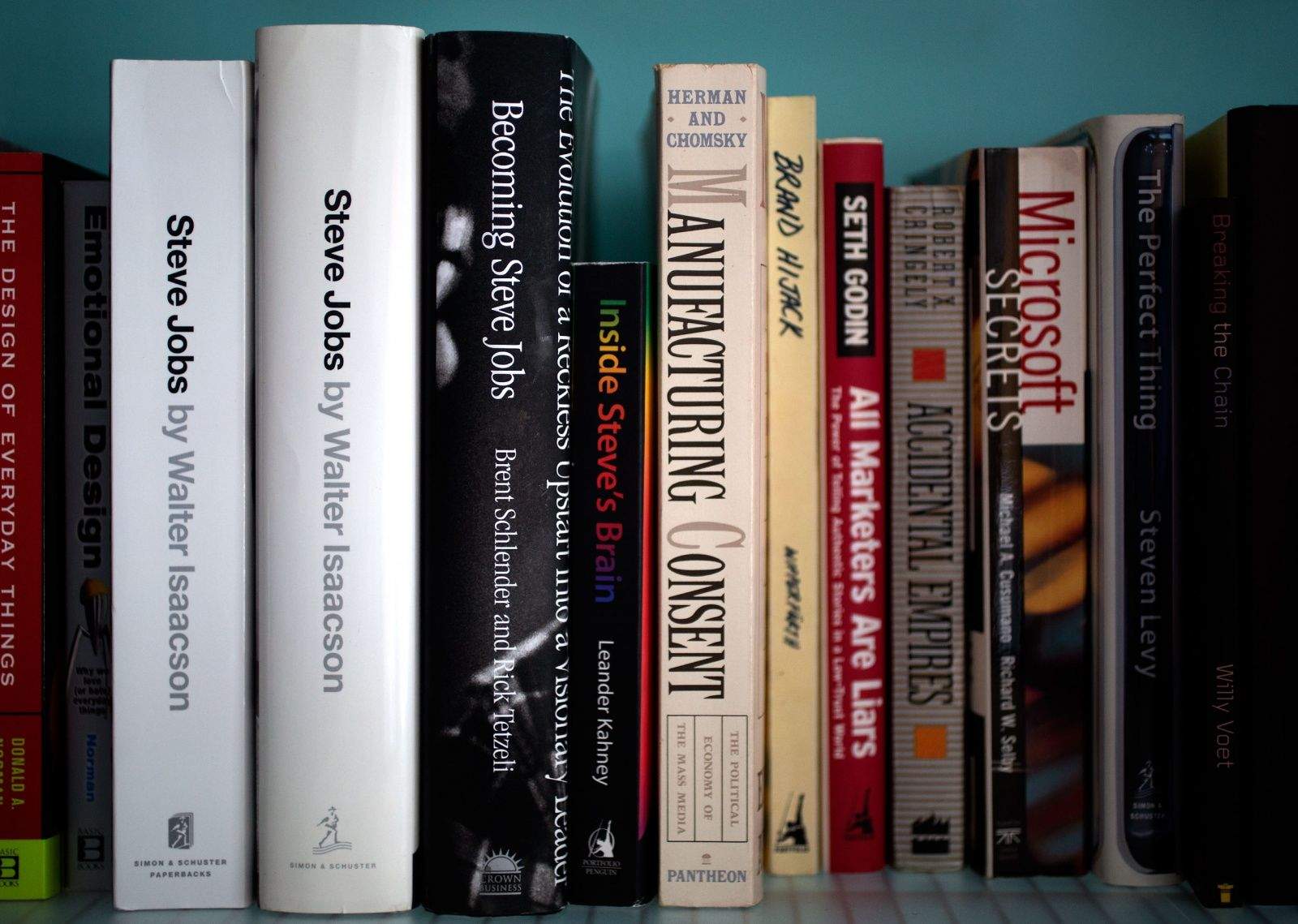
Photo: Jim Merithew/Cult of Mac
Watch our interview with David Pogue about Apple’s first 50 years:
Pogue had access to dozens of high-ranking executives currently working at Apple and its recent alumni. Names you’ll recognize if you’ve watched a few Keynotes or read our site in the last few years: Eddy Cue, Kaiann Drance, Alan Dye, Craig Federighi, Scott Forstall, Jony Ive, Lisa Jackson, Greg Joswiak, Kevin Lynch, Deirdre O’Brien, Mike Rockwell, Phil Schiller, Johnny Srouji, John Ternus, Jeff Williams and dozens upon dozens more.
An accessible retelling of Apple’s history
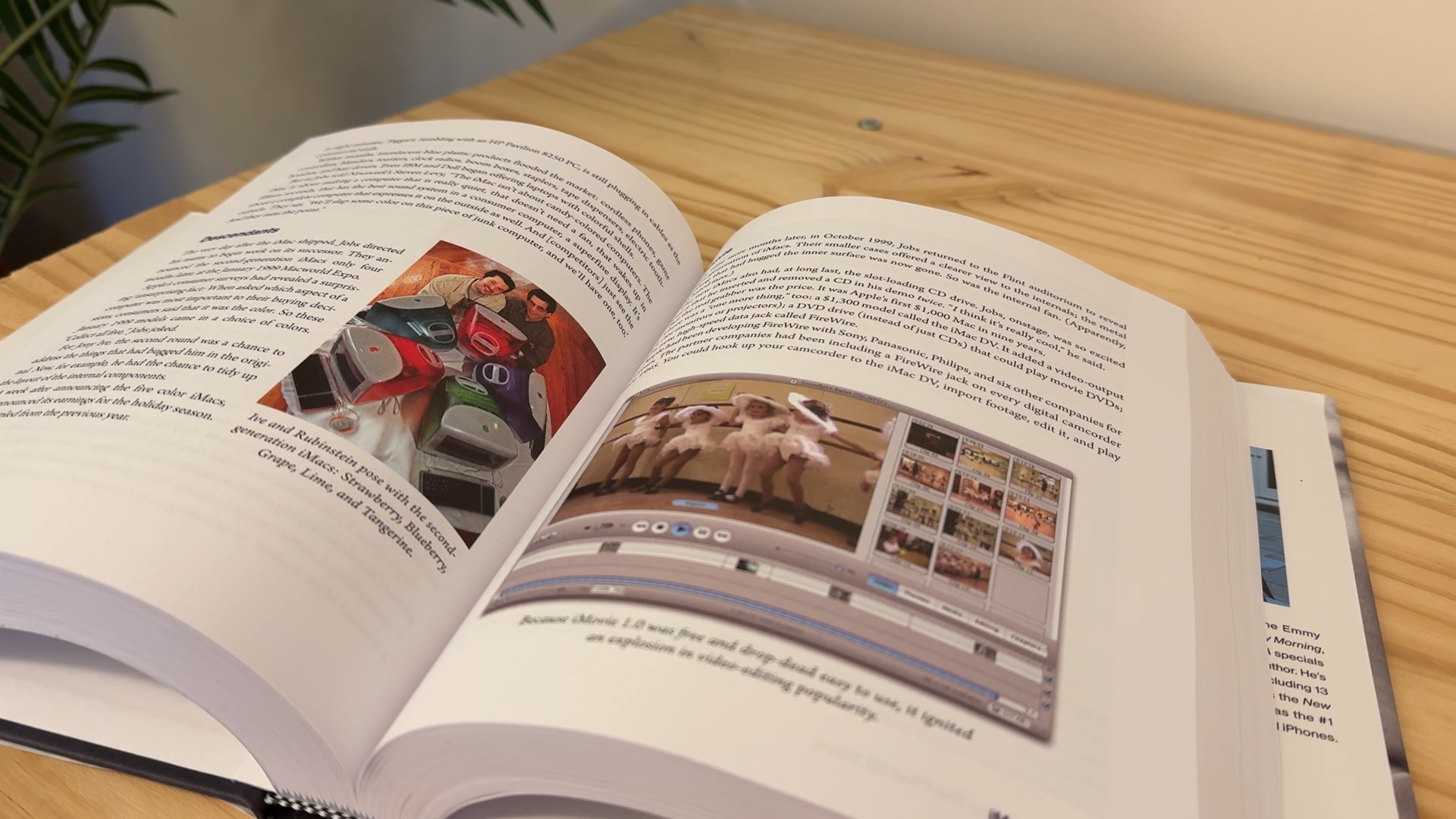
Photo: D. Griffin Jones/Cult of Mac
Don’t think that you have to be a nerd with a computer science degree who compiles Linux distributions from source code for fun to understand the book. David Pogue is a veteran writer of For Dummies and Missing Manual books. He wrote for publications from Macworld to The New York Times. He has the skill (and restraint) to dive into the technical details only when absolutely necessary, and in terms nontechnical people can easily follow.
The chapters are all bite-sized (or, if you prefer, byte-sized). You can go a chapter a time in small increments. Fittingly, it’s exactly 50 chapters long — I wonder how far into the writing process Pogue was before he realized he could pull that off.
You’re in the room where it happened
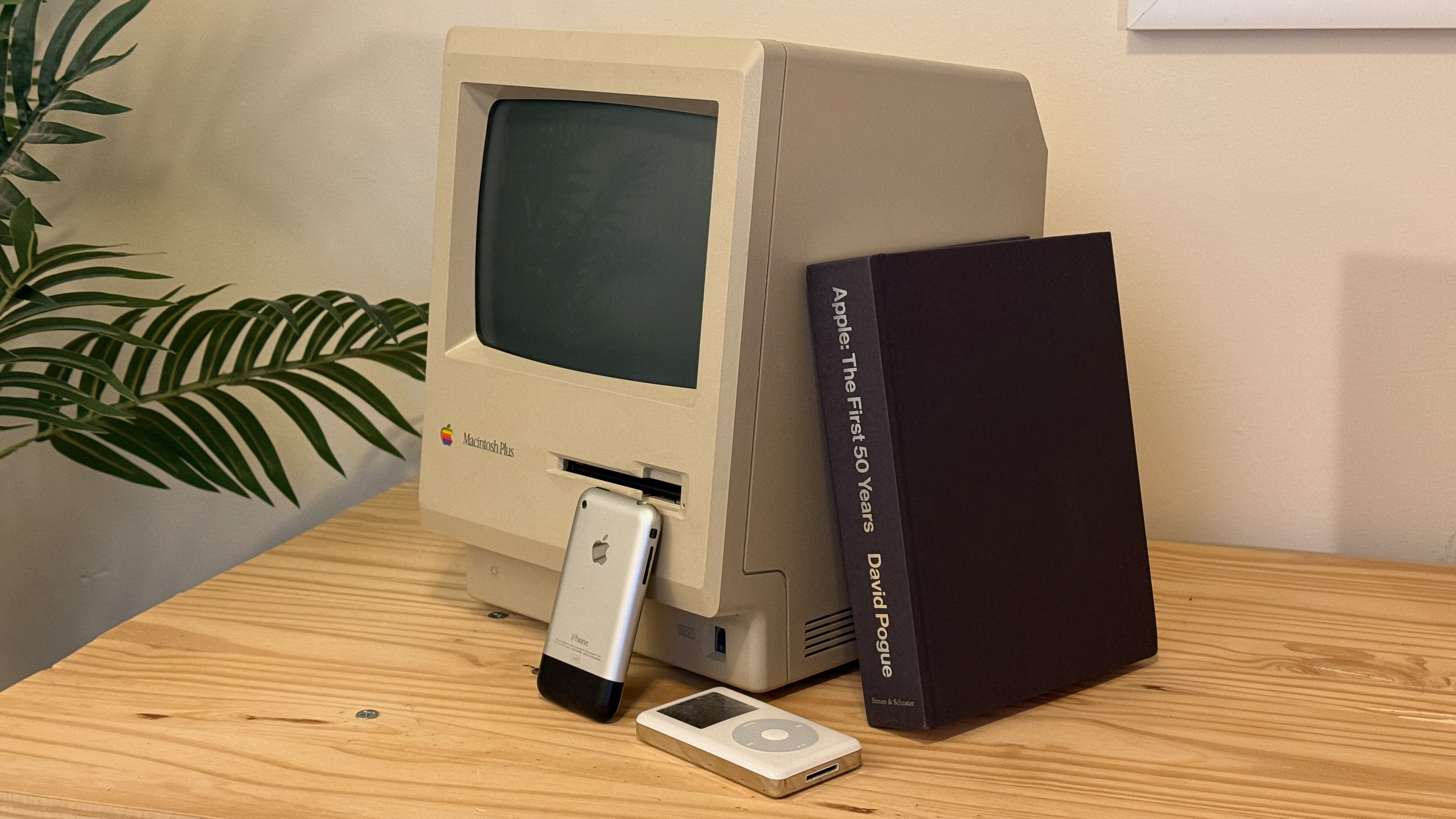
Photo: D. Griffin Jones/Cult of Mac
What I love is how well Pogue tells the story of historical events fully immersed in the perspective of the time. It’s easy to interpret Apple’s successes and failings as inevitable. Apple’s meteoric rise was, in fact, highly unlikely and uncertain. It was a bunch of scruffy hippies building circuit board computers (not entirely localized within the garage, as Pogue points out). They were rejected frequently.
Everyone knows that Apple was well and truly on the brink of failure in 1996. But Pogue makes clear that Apple was fighting for relevance for most of its life before that, too. The Macintosh had some early enthusiasts. But the Mac didn’t find true purpose until the desktop publishing industry it created with Adobe and Aldus saved it. The Macintosh II strategy of targeting the highest-end corner of the market turned profits for a few years. But it cornered the Mac into devastatingly tiny market share.
Many retellings of the history of Apple breeze over those middle years to instead tell you about NeXT, Steve Jobs’ other venture. Not so here. Jobs disappears from the story between 1985 and 1996. (Similarly, he doesn’t mention Microsoft until page 127.) And even after the NeXT acquisition, Pogue spends a lot of time in the seven months it took for Jobs to return to Apple.
It’s all in service of telling you the story as it happened to the people making the decisions at the time. You see all the alternate histories that could have happened. There are the vast number of projects that executives cut five yards from the end zone. You see how the cursed projects that never ought to have shipped were developed. You come away understanding why those decisions were made.
Tantalizing background stories from the recent past

Photo: D. Griffin Jones/Cult of Mac
You may think the back chapters of the book wouldn’t be too interesting. It recaps the Tim Cook era of the last 15 years. But there are actually tons of juicy product development details that you’d think we would have to wait many more years to hear at all.
You’ve heard about the Apple Maps disaster leading to Scott Forstall’s ousting from the company. It all makes sense when you learn the project had only “an eight-person quality-assurance team” that “spot-checked it in other places.” In this instance, “other places” means the entire globe.
There was that major product launch that many ridiculed for its insanely high luxury pricing and mediocre battery life. Critics called it an unfocused accessory product people don’t really need. After disappointing sales, Apple executives even considered canceling the entire line. No, not that one — the Apple Watch. Jony Ive had to convince the team to be patient and wait for sales to pick up.
There are hilarious stories of the Face ID team’s exploits as they try to train AI models on as many different kinds of faces as they can. Apple, you might be surprised to hear given its recent stumbling in AI, was once “the number one buyer of second-hand NVIDIA graphics cards on eBay.” You even get the inside scoop on products as recent as the Vision Pro. If you think it’s heavy now, well, the first prototype “weighed 50 pounds and had to be supported by a crane arm.”
Preorder today for a release on March 10
Even if you fancy yourself an Apple historian and trivia expert, there’s still plenty of new stuff in here for you that’ll make it worth your time. Get to know the key people who get lost in the historical footnotes: Michael Scott and Mike Markkula. You’ll learn that the king of Thailand was an enthusiastic Mac developer. And why all the names you may associate with the Macintosh development — Andy Herzfeld, Susan Kare, Burrell Smith — left Apple just after its release.
Apple: The First 50 Years is available for preorder now and will be available March 10. You can get a hardcover book as shown, eBook and audio book.
Buy from: Bookshop.org
Buy from: Barnes & Noble
Buy from: Amazon
In time for Apple’s 50th anniversary, CBS Sunday Morning correspondent David Pogue tells the iconic company’s entire life story: how it was born, nearly died, was born again under Steve Jobs, and became, under CEO Tim Cook, the most valuable company in the world.
- Comprehensive: Covers all 50 years.
- Well designed
- Easy and fun to read
- Full color photos throughout
- Recent history not as in-depth
- Full color = higher price
★★★★★

D. Griffin Jones was a writer, podcaster and video producer for Cult of Mac. Griffin has been a passionate computer enthusiast since 2002, when he got his first PC — but since getting a Mac in 2008, he hasn’t turned back. His skills in graphic and web design, along with video and podcast editing, are self-taught over 20+ years. Griffin has a bachelor’s degree in computer science and has written several (unpublished) apps for Mac and iOS. His collection of old computers is made up of 40+ desktops, laptops, PDAs and devices, dating back to the early ’80s.
Griffin writes for his personal blog, Extra Ordinary, and is currently looking for work.

