This viral video is too meta to be believed. It stars Randi Jayne, the sister of Facebook founder Mark Zuckerberg and David Prager, COO of online TV channel Revision3, which hosts the Diggnation show, and the video’s about an Apple product. It’s like a Silicon Valley intermarriage.
It’s still pretty funny, though. Especially if you’re into parodies of “Freak Like Me.
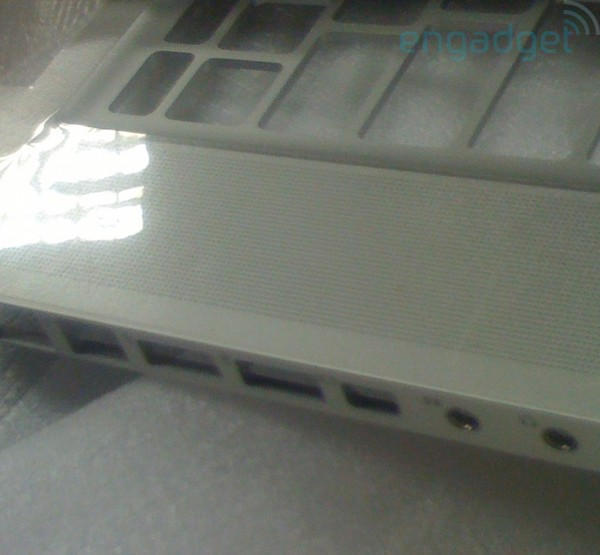
The “leaked” pics of a new iMac making the rounds are clearly a Photoshop fake made from images of Apple’s Cinema Displays taken from Apple’s website. See below.
The color also screams fake.
A new iMac is rumored to be introduced by Steve Jobs at a special event at Apple HQ on Tuesday — and everyone is hoping for a redesign. But Apple’s consumer machines do not come with metallic finishes. That’s reserved for the “pro” level machines. If the iMac has a new case, it will be made of plastic and will come in black, white or maybe other fruity colors.
Fake Steve has been outed by (of all publications) the New York Times, and turns out he’s Dan Lyons, a senior editor at Forbes. Here’s the story: A Mystery Solved: ‘Fake Steve’ Is an Editor
“Mr. Lyons said he invented the Fake Steve character last year, when a small group of chief executives turned bloggers attracted some media attention. He noticed that they rarely spoke candidly. “I thought, wouldn’t it be funny if a C.E.O. kept a blog that really told you what he thought? That was the gist of it.”
Ironically, Lyons was the author of a Forbes hit piece on blogs last year, called Attack of the Blogs. It begins: “Web logs are the prized platform of an online lynch mob spouting liberty but spewing lies, libel and invective.”
Of course, libel, lies and invective is what makes Fake Steve fun, but a lot of it was aimed at his fellow journalists. It was pretty clear Fake Steve was a journalist or editor — given all the pops he made at fellow Silicon Valley scribblers. He called Gawker publisher Nick Denton a “macrocephalic sodomite” (Denton is gay and has a large head).
Now that he’s been outed, it’s going to be pretty uncomfortable for him running into his targets.
UPDATE: Fake Steve has just posted his won entry about the Times story. He’s glad he was busted by the Times and not Valleywag, which has been on the hunt for months. Fake Steve writes:
“One bright side is that at least I was busted by the Times and not Valleywag. I really, really enjoyed seeing those guys keep guessing wrong. For six months Dr. Evil and Mr. Bigglesworth put their big brains together and couldn’t come up with the answer. Guy from the Times did it in a week. So much for the trope about smarty-pants bloggers disrupting old media. Brilliant. My only regret is that we didn’t get a chance to see Bigglesworth take a few more swings and misses.”
Caution: What you don’t know about this post could cause your children to develop psychic powers and revive the dead — with stolen iPods! Also: Alarmism in television news magazines: Are you safe? More importantly, is your cat?
Everyone must watch or read the transcript of Dateline NBC‘s howlingly funny special “\to catch_an i-Jacker” (I swear I didn’t make up any of the odd formatting in the above title, which, um…reminds me of a certain Daily Show segment…). Apparently, the investigative crew was shocked — SHOCKED! — to learn that iPods occasionally get stolen. And worse, sometimes other things get stolen, too!
In Los Angeles, robberies of iPods and other gadgets shot up 34 percent last year.
To make sure iPods don’t kill your children, please click through, and don’t stop until the part where the reporters use a sexual predator tactic in order to catch a thief. No, seriously. You have to see this.
According to The Register, a Microsoft employee who made this hilarious Zune parody ad (featuring his boss, Monkey Boy Steve Ballmer) was fired for his trouble.
With all the hubbub surrounding the release of the iPhone (can you believe it’s been more than a month already?), Apple’s introduction of miniature Apple Stores inside of Best Buys kind of flew under the radar. Which is kind of odd, because the Best Buy mini-stores represent Apple’s resurgence more than almost anything else that’s happened in Steve Jobs’s tenure.
After all, in the 1990s, Best Buy did such a terrible job selling Macs that Apple pulled is products out of the entire chain, focusing on CompUSA and Internet sales. Now, almost 10 years later, Apple returns on its own terms.
I checked out the Apple mini-store in the Best Buy in Santa Rosa, California on Saturday night, where I took a couple of photos. It’s an interesting set-up, all-in-all. Very consumer-focused, which makes sense, but I was surprised that Apple isn’t selling any Mac Pros at Best Buy at all. It’s MacBooks (and Pros), iMacs, and nothing else. The entire display centers on computers — not on iPods, let alone iPhones, which aren’t stocked at Best Buy at all. A very interesting positioning all around — given that it’s the iPod and its accessories that brought Apple back into most retail stores.
Macs star, and it’s about time. Click through the jump for another image from the store.
Several hundred thousand people across the country are now happy iPhone users. They’re also all AT&T users, whether they wanted to be or not. Until Apple shipped their wonder-phone, I was never that interested in phones focused on e-mail and web browsing — then it all changed. However, as a T-Mobile user, my options are limited. Much as I would like to say I’m glad that my service agreement will force me to wait until at least the second-generation iPhone, I’m not. I want a great phone. And so I headed to the T-Mobile store yesterday, in search of hope. And I found none. To read the gory details, hit the jump.
Hot technologies often inspire imitators and detractors. The set of touchscreen iPhone-alikes coming from China are pretty clear evidence of the former, and anyone telling themselves they like their Treos just fine represent the latter.
But nothing’s weirder than the ancillary universes that show up to support the latest buzzworthy devices. And nothing for the iPhone is weirder than iRovr, a social network for iPhones only. It doesn’t seem to be much more than Friendster or Facebook optimized for the device, but it just expands the exclusive advantages extended to iPhone owners.
As you can see, however, there is a way to cheat your way in. Just use Safari 3. Which raises an interesting question: Is it lamer to join iRovr as an iPhone owner — or to cheat your way in as a non-iPhone-owning Safari user because you want the reflected glory?
The iPhone’s non-user-replaceable battery has been a source of endless controversy since Apple first debuted the device. Some claimed that Apple wouldn’t even be able to sell any iPhones once people realized they couldn’t pop in a spare battery on the road (this idea totally ignoring, of course, the fact that many people, myself included, have never ever swapped cell batteries on the fly…). Others are under the impression that the iPhone’s battery will altogether stop working after either 300 or 400 charges — even though it’s pretty clear that figure states that iPhone battery capacity is more likely to fall to 80 percent after that time. Which is a bit different from 0 percent.
Now, of course, all of this confusion has yielded a class-action suit. Perhaps if everyone would just talk to Philip Elmer-Dewitt at Apple 2.0, this would all get cleared up. He’s put together a very detailed account of the entire battery saga. Check it out, and try not to lose your mind. That way lies madness.
Very few promising technologies have taken as long to catch on as the ebook. Everyone seems to be under the impression that electronics will one day replace printed books. But almost no one wants to actually read their books that way.
The sole users of ebooks tend to be people with PDAs — and now iPhones. A new site, TextOniPhone has sprung up to meet people’s needs to read works of literature on their revolutionary Internet Communicators. The site purports to have more than 20,000 books and novels optimized for reading on the iPhone. All the texts are public domain, and, as seems to be the norm these days, the site only works on iPhone (or a user-agent-spoofed browser). IPhone Dispatch has a nice review.
Gerry Manacsa, a senior designer at WOWIO, checked out a bunch of PDFs on an iPhone to test the platform’s viability as an ebook reader. His results were fairly good, particularly for comics, which is where I see the iPhone excelling, personally. This will be an interesting thread to watch.
Despite the best efforts of folks like me, bonafide iPhones didn’t show up in the wild until a few week prior to release. As it turns out, that’s because Apple was smart enough to hide iPhones inside of other devices. This according to Richard Burns, AT&T’s President of Wireless Networks, in an interview with the Louisville Courier-Journal.
So secretive was the project that he didn’t even show the phone to his wife. And when AT&T’s team of testers hit the streets to try the phone in ballparks, subways and skyscrapers, Burns said they used a contraption to cloak the device so nobody would know what the testers were holding.
Burns declined to offer a description of the cloaking device, calling it “something that looked like something else.”
That’s how you know Apple is brilliant: They made it look like “something that looked like something else.” How visionary. Or not.
My best guess is that Apple made the iPhones look like Zunes. Any other guesses?
Columnist John Dvorak, who is perhaps the most hated pundit by Mac users because of his constant (and quote deliberate) Mac bashing, is now a Mac user himself — and he likes it.
In his latest PC Magazine Column, Dvorak confesses that he has been using an iMac at work for a couple of months, and it’s “not half bad.” After heaping on more weak praise, he says he has no plans to buy a Mac for personal use at home, but he increasingly finds himslef recommending the Mac to friends and neighbors who ask him what to buy! He writes:
“I can see why the Mac is gaining market share, because the rationale for using one is simple. Do you want to deal with the agony of antivirus, firewall, antispyware, and other touchy software subsystems, many of which do not work well? Or do you want to boot Microsoft Word and write a document and be done with it?
As someone who does recommend gear to people, I have to think to myself, “Should I recommend something that will come back to haunt me, or recommend a Mac with its higher price but lower hassle factor?” The answer is simple. I hate the idea of having to do customer service for people who cannot keep their systems clean, and that’s most people.”
Apple’s Q3 was the company’s best ever. It raked in $5.41 billion in sales, posting a $818 million in profit. Gross margins — the amount of revenue that is profit — is up to a whopping 36 percent. This surely is the highest in the industry. By contrast, Dell reported Q2 2007 margins of just 4.3 percent, earning $605 million profit on revenues of $14.1 billion.
Apple also reported 10 million iPods sold — up 21 percent on the year before; and 1.76 million Macs, up 33 percent year-on-year.
Apple’s stock is rebounding on the news: it’s up 6 percent after taking a hammering yesterday on AT&T’s iPhone numbers.
AT&T’s quarterly results said only 146,000 were activated in the first two days — so it looks like 124,000 people either waited a few days to activate their phones, or had trouble activating them, as was widely reported.
We now have definitive proof that a business world built on the quarterly earnings report is destined for self-destruction: Apple’s stock fell almost $9 because its partner AT&T “only” managed to activate 146,000 iPhones in its first day and a half on sale. Not that the activation figure directly reflects the number of iPhones sold.
Yes, I’m serious, and I’m totally bewildered. Analysts and investors are pretending that the second quarter, which closed June 30, would be the one that reflects the impact of the iPhone. Which is nice, except that the iPhone went on sale at 6 p.m. on June 29, and AT&T had serious network issues that prevented people from activating their phones until well into the next week. Which means that anyone who couldn’t or chose not to activate their iPhone until after midnight on June 30 got left out of this report.
Which is obviously a clear sign that it’s time to sell all of your shares in AAPL. Obviously. You know how, in movies, we’ve gotten to the point where people talk about the highest opening 5.5-day gross ever by a film released on a Tuesday in a month with a full moon that falls on a Saturday? This is the opposite. This is the smallest 1.5-day activation ever for an incredibly successful product. They chopped off Sunday, for heaven’s sake!
But this is the world that exists. It’s all about the quarterlies. And maybe that means that Apple did AT&T a disservice by not launching a week sooner. It shouldn’t have any impact on the long-term health of either firm. But it’s idiotic. Especially since AT&T experienced — wait for it — 61 percent total revenue growth!
Grrrr. Anyway, don’t read too much into these numbers. Apple will release its sales numbers soon, which are a clearer indication of how well the iPhone did in its first day and a half. Not that a day and a half of sales matters. It’s stupid. Can we talk about this in October?
Watch the video up top. It’s a pretty terrifying video of a totally compromised iPhone through a new exploit of Safari, both on iPhone and likely PCs and Macs. A fix is already in the works, but I have to say I’m not that bothered. Why? Because it, like every other really dangerous exploit of a Mac or Apple product I’ve seen is heavily reliant on social engineering. For your iPhone to freak out and possibly shoot your cats with an iLaserbeam, you first need to go to a website specifically designed to make your iPhone freak out and kill your kittens. And I’m sorry, there’s no amount of protection that can protect people who are dupes for fraud. You can only go so far. This hole needs to close, no doubt, but if people vulnerable to harm on the web don’t know to only go to links they can trust, they probably shouldn’t be using the web at large.
Now, when people can make this happen over WiFi without the use of an exploit-focused website, then I’ll panic. And probably go back to landlines.
Looking for an obsessive chronicle of Apple’s products over time? Look no further than Designed in California, a website that takes every product — and every single SKU — Apple has released since Steve Jobs resumed control of Apple in 1997. It’s a million times more detailed than the map I tried to pull together a few weeks ago.
Can you believe that Apple ever routinely released top-of-the-line computers for almost $5,000 without a monitor? Worse, can you believe that the new octocore Mac Pros are $4,000 without a monitor?
An incredible undertaking. Anyone know the story here? According to a whois look-up, the owner is Graham Parks, who also owns Fondant Fancies. I’ve dropped him a note, so stay tuned.
Scott Walker, the assistant managing editor of the Birmingham (Ala.) News, has made a hack for the ages. Taking an old newspaper vending machine, as a base, he fitted a 17″ LCD screen to the front of the box and then rigged a Mac mini running PhotoPresenter to constantly stream the front pages of newspapers from the Newseum. As well as anything from his iTunes library.
It’s a wonder to behold. And all of this on deadline, too!
Via TUAW
Being a Machead can be a disease. We spend too much on Apple stuff, we get embarrassing temporary (and not-so-temporary) tattoos, and our partners tolerate our obsessions out of love and not much more.
I think such bonds are automatically made null and void if anyone comes home with the above item, which is a 6-foot-tall neon Apple logo sign being auctioned by Huntsville, Ala. Mac store MacResource on eBay. And here’s the deal. Despite currently going for $4,350 at auction (the equivalent of more than 7 fully loaded iPhones!), the reserve has not been met.
Color customizers extraordinaire Colorware are now offering iPhone paint work. For $150, they’ll take your iPhone and remake its look in your image. They’re also selling pre-colored iPhones for the same premium over stock models. I’m always surprised that Colorware’s work looks so good — color’s such a tricky design element, especially when it’s literally an after-thought — but their work is hot.
That said, it’s not for me. I’m still scraping together the money for an iPhone, so…
This YouTube compilation was first posted to MacRumors as the interface we might see on a forthcoming OS X iPod. To be honest, the graphics look right, but something here isn’t right. Specifically, the aspect ratio. All of the clips are in 4:3, horizontally oriented, exactly like the existing video iPod. If Apple does roll out a new iPod with an iPhone-like interface, it should get a nice rectangular screen in place for widescreen movies. In fact, it should just look like an iPhone, but with some distinguishing design features.
I wouldn’t be shocked if this clip is legit. I also wouldn’t be stunned to learn it’s a fake.
Just a week after claiming that Apple’s iPhone had caused wireless network disruptions on its campus, Duke University’s IT organization now blames the trouble on a Cisco network problem.
Cisco worked closely with Duke and Apple to identify the source of this problem, which was caused by a Cisco-based network issue. Cisco has provided a fix that has been applied to Duke’s network and there have been no recurrences of the problem since. We are working diligently to fully characterize the issue and will have additional information as soon as possible.Earlier reports that this was a problem with the iPhone in particular have proved to be inaccurate.
It’s remarkable how rapidly bad news can spread. This story made headlines in the largest publications in the U.S. without any verification — in large part because the investigation hadn’t been completed. Apple tends to attract such negative stories, in part because the company is riding so high these days. Nothing sexier than the iPhone wreaking havoc.
Because, let’s be honest: Network routers having problems isn’t actually news.
We’ve all seen Apple use the New York Times website to demonstrate the iPhone’s tremendous facility on the Internet. But the Times site works so well in part because the newspaper’s web page somewhat mimics the look of a real newspaper front page. What about the hundreds of terrible newspaper web pages that we read for local content?
Enter PressDisplay. The company takes the original layouts of newspapers and turns them into browseable web objects. And it’s now compatible with iPhone.
As you might expect, it’s optimized for crazy zooms, rotations and all of the other interactions that just make iPhone special. It is a commercial service, but it’s free through the end of August, so there’s really no better way to read the Washington Post or the San Francisco Chronicle on the train to work until then!
San Francisco’s Chinatown provides a wealth of cheap goods. While shopping for ridiculous San Francisco mementos for a friend who’s moving away, I spotted this display of clearly fake MANNDigital Mp3 players that mimic exactly the look, size and even packaging of Apple’s clippable iPod shuffles.
I could easily see the casual shopper getting confused here, but a few distinctions stand out to me: 1) The volume and skip track buttons have switched places. 2) This device comes in a few colors Apple shuffles don’t, including black. 3) These have a dedicated mini-USB port, instead of Apple’s remarkable headphone/power/USB port.
All told, an excellent knock-off, and one worthy of a cease & desist letter. So get ’em while they’re hot.