How could this have failed? The Apple Lisa is the computer for Type A personalities who go to work at dawn with their dogs via bike and then continually stare at the same spreadsheet for a half-hour. Sign me up!
Apple’s entry into the mobile phone market has been a pretty spectacular success in its first six months on the market, according to research house Canalys. As Roughly Drafted notes, in North America, the iPhone is the No. 2 smartphone platform, not just model. It trails only the full BlackBerry market at this point, but is ahead of all combined Windows Mobile devices. This confirms an earlier NPD report that Apple was commanding about 27 percent of the smartphone market. In honor of this moment, let’s look back at some memorable quotes of the last year:
“There’s no chance that the iPhone is going to get any significant market share. No chance.”
— Steve Ballmer, Microsoft CEO
“We’ve learned and struggled for a few years here figuring out how to make a decent phone. PC guys are not going to just figure this out. They’re not going to just walk in.” — Ed Colligan, Palm CEO
“They would have been stepping in between us and our customers to the point where we would have almost had to take a back seat “¦ on hardware and service support.” — Jim Gerace, Verizon Wireless VP “What Apple risks here is its reputation as a hot company that can do no wrong. If it’s smart it will call the iPhone a ‘reference design’ and pass it to some suckers to build with someone else’s marketing budget. Then it can wash its hands of any marketplace failures.” — John Dvorak, International Tool
Ah, memories.
I don’t think I’ll ever get sick of stupid crap vaguely inspired by the iPod. The best of these in recent memory is the iPond, an Australian product that crams a really tiny fish tank — and a Siamese fighting fish — into a weird package that looks sort of like an iPod (and more like a 1G Zune). Oh, and it plays music through a really crummy speaker.
The best part of all of this? The iPond is virtually guaranteed to kill any fish unfortunate enough to get put into the iPond. Fighting fish need 10 liters to live, and the iPond is .65 liters. Oops. The Sydney Morning Herald has the story:
Studies proved fish had memories well beyond a few seconds and were social creatures that experienced pain and boredom, he said.
“The fish in this thing does not look like it has very long to live and it can barely move,” he said.
“Even if it does live it’s not [a] life worth living … it’s really just a torture box.”
Even better? The sound from the speaker leaks inside the tank. So it’s a really loud torture box. I know it’s a little late, but how do I get this on my wishlist?
Once Apple began to work with Intel, it got a lot easier to begin predicting the future development of Mac hardware. When IBM and Motorola provided the horsepower (or lack thereof, as the case may be) for the Mac platform, it was anybody’s guess when Apple might ship new machines — or what would cause the shipping delay this time. Intel, however, is an open book. They show off their processor roadmap up to a year in advance.
RIght now, everyone is waiting for Apple to unveil new portable Macs using the Penryn chip, the world’s first consumer 45nm CPU. They should drop at MacWorld. But Intel’s way out in front. According to BusinessWeek’s Reena Jana, the future will be ultra-efficient chips powering greener laptops with longer battery life. She writes about her exclusive preview on the Next blog.
Yet Intel seems to really be walking the walk on these two matters. Chip-wise, the company will be rolling out a platform code-named “Menlow,” in Q2 or Q3 of 2008. It’s the first-generation of low-power platforms, which promises to run on 10 times less CPU power and is 5 times smaller than previous chips.
Sounds like the ideal way to make a tiny MacBook with extremely efficient battery life that won’t burn your knees. I’m just waiting for the first Mac portable that can operate for 9 hours without a charge.
Remember a year ago, when the iPhone was announced? No, not Apple’s iPhone, the VoIP product line from Cisco’s Linksys product line! Though Cisco enjoyed a lot of press after Steve Jobs gave Apple’s revolutionary multi-touch wonderphone the same name, but then the other iPhone sort of vanished. What’s happened since?
Not much, actually. As our colleague Rob Beschizza reports for Wired News, the Linksys iPhone is selling OK, and the company plans to roll out new models under the name. But the name iPhone is Apple’s. No one, not even the most contrarian anti-Apple antagonists, thinks of seamless VoIP calls when they hear the name.
But a year on, Apple has its iPhone and Cisco has its iPhone, and no one confuses one with the other. And everybody’s happy with that, as Cisco spokesperson Karen Sohl says:
Relations with Apple, Sohl said, are good. “There’s no bad blood,” she said. “We enjoy working with Apple.”
I just spilled coffee all over my computer keyboard. While horrified at the damage, I was fascinated to see how the coffee pooled in the middle of the keys.
I’ve never seen the like before.
It’s an Apple keyboard. The keys have a glossy finish and are slightly depressed in the center. Of course, most of the coffee drained off the keys and collected in the keyboard’s base, which is made of transparent plastic. I wish i’d got a picture of that. It looked like one of those paperweights filled with oil and water, but in this case, it was a muddy brown liquid. But the coffee drained out when I turned it over.
I shall run the keyboard through the dishwasher to see if that myth works.
At this point, it’s pretty clear that everyone loves the iPhone. Celebrities, executives, Time Magazine, even my Uncle Jim. It’s Apple’s biggest sensation since the original launch of the iPod, and a break-out success all around.
Unfortunately, the June arrival of the iPhone came at a cost. Apple had to delay the launch of its Leopard operating system by months in order to pull software developers off the Leopard team and onto the iPhone team. At the time, I didn’t think much of it. If anything, I presumed only good could come of mingling iPhone DNA with Leopard DNA.
But it’s mainly been frustrating. The delays were bad enough, but it really does appear that the switch-up had an impact on the overall quality of the shipping version of Leopard. I can’t think of an operating system from Apple since OS X 10.0 so filled with bugs and questionable design decisions. There are wholecommunities devoted solely to the documentation of Leopard bugs.
Worse, some of the intentional choices with Leopard aren’t up to Apple’s standards.There are many wonderful features like QuickLook and Time Machine, but a lot of the new interface elements are just flashy for the sake of flashiness. CoverFlow is goofy for browsing through anything other than photos in the Finder, and I will never understand the logic of a translucent menu bar as long as I live.
I’m never going to join the throng calling Leopard the new Vista, but I do have to wonder: How much did the stress put on the Leopard team to finish the iPhone disrupt the shipping version of the OS? This is a team that definitely put in 80, 90 hour weeks if not longer to finish the iPhone and then had to go straight back onto Leopard to meet an ambitious ship date. Whose quality wouldn’t take a hit under such circumstances?
What do you think? This is the first time in memory when I can recall a core Mac product being impeded or hampered by a more pressing new market product for Apple. What does that mean for the six-color bleeding Mac faithful? Are you bugged, or just delighted you got your iPhone on time?
Well, it’s command-line for now, but the iPod touch has been hacked to enable VoIP calling by a modder going by Eok.
The hack uses the utility SvSIP, which was originally created to enable the same capability on the Nintendo DS. It’s pretty far from usable by mere mortals for the time being — typing can be enough of a pain on the virtual keyboard, let alone doing any mucking around in a shell script — but this is fun. The touch is an iPhone in all but communication connectivity only anyway, why not make it a true little brother to the iPhone?
Also, can I get a German layout for my iPhone? I love the look of “QWERTZUIOP”.
Heres’ the first picture of Steve Jobs in a suit and tie for at least a decade, maybe longer. Jobs wore the monkey suit to the Nobel Prize ceremony, in support of Al Gore, environmental activist and Apple board member.
The revamped Spaceship Earth ride at Disney’s Epcot Center has a special “Steve Jobs section,” according to the lifthill blog, which tracks news about rides and roller coasters, and was invited to a special preview.
But once at the Steve Jobs area, which is supposed to depict the birth of Apple computer in a garage, the lifthill blogger noticed that the lone figure in the garage looked a lot more like Wozniak than Jobs.
The figure is facing the wrong way, so it’s hard to tell, but it’s wearing the same shirt as Wozniak in a famous early photograph copied below, and has similar hair and beard. Conspriacy theorists note that Jobs is the single largest shareholder in Disney– but I can’t believe he cares that a section of Epcot bears his name or likeness (or not).
Anyway, there’s no second figure in sight, so one of them is slighted. And so too is the third Apple-founder, Ron Wayne, but no one cares about that.
But what is that thing the dummy Woz/Jobs is sitting in front of? It ain’t no Apple I or II — the first and only machines Woz created more or less single-handed. It looks like a big wooden Mac, but none of the Mac prototypes looked like that — they were much more finished.
To win one, simply decorate your Mac, iPod, or iPhone for the holidays and email the picture to [email protected].
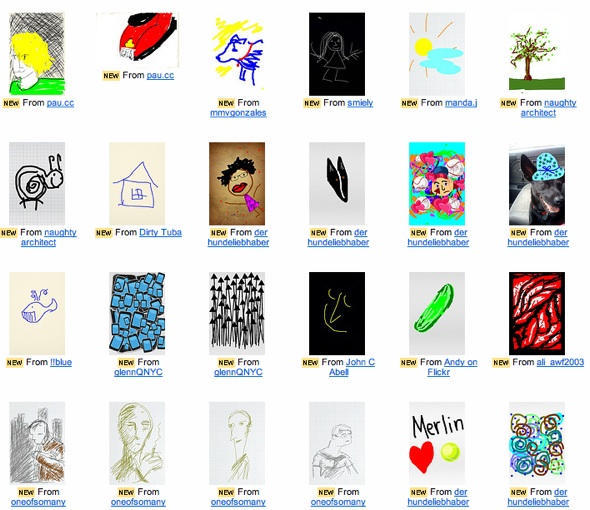
We’ll post the pictures here next week. The three best will get an Energi To Go battery extender. The Energi To Go is a $20 battery-powered iPod charger that juices all iPods equipped with a dock connector. It runs on two AA batteries (Energizer recommends lithium AA batteries for better performance). It will charge an iPod nano for up to 46 hours; and an iPod video for up to 32 hours, Energizer claims.
Steve Jobs was inducted in California’s Hall of Fame in a swank ceremony in Sacramento last night hosted by Gov. Schwarzenegger and First Lady Maria Shriver. Jobs was among 13 visionaries and trailblazers honored, including Ansel Adams, John Steinbeck, Elizabeth Taylor, John Wayne and Tiger Woods.
Apparently Jobs wasn’t thrilled about attending, but Shriver made the honor contingent on attending the induction ceremony. She told local affiliate KNBC that she had a hard time convincing Jobs to attend. “He’s trying to balance children, family, business, he doesn’t like to be singled out,” she said. “He believes that Apple is the star of the Silicon Valley, not him.”
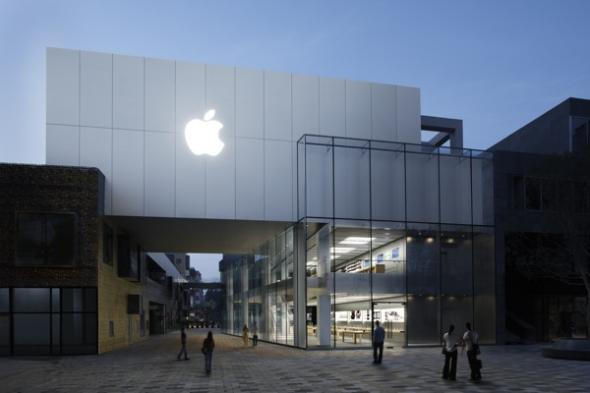
Allen, who lives in Berkeley, flew out for the grand opening of the 14th Street store on Friday the 7th at 6 p.m. He’ll no doubt be waiting in line soon to be first inside the store. Allen is a dedicated grand opening camper, and will likely be blogging at IFOAppleStore.
The store will be giving out commemorative t-shirts to the first several hundred inside, and some unspecified “special surprises,” according to the 14th Street Store’s webpage.
The store is one of Apple’s biggest. It’s three stories tall, and one whole floor is given over to service. Unlike its sister store on Fifth Avenue, it will be open 9 a.m. to midnight, not 24 hours.
The haters offer their assessment. The forums are ablaze with vitriolic rage. Haters pan the device for being less powerful than a Cray X1 while zealots counter that it is both smaller and lighter than a Buick Regal. The virtual slap-fight goes on and on, until obscure technical nuances like, “Will it play multiplexed Ogg Vorbis streams?” become matters of life and death.
In the rush to create high-markup accessories for the iPhone, one company is hawking the Pogo Stylus: a pointing device for the Apple iPhone and iPod touch — two products expressly designed to be used without a stylus.
Is there really a market for this? I imagine the pudgy fingered might take a look, as might people who have become accustomed to poking around their smartphone with a little pen. But the whole point of Apple’s multitouch is doing away with pointing devices. But the market for iPod accessories is worth more than $1 billion annually, so companies are taking a throw-it-out-and-fingers-crossed approach. Available now from the company’s website for $25.
One good opening deserves another, so Apple is just about ready to match its new San Francisco store in the Marina with a new shop in Manhattan’s Greenwich Village big props to Apple’s creatives for a logo that’s so darn Big Apple. Beautiful work, guys.
David Sebastian Buus took the photo while on a bike ride.
Love Time Machine? According to Peter Weisz, you can soon reach new levels of productivity with it by applying its time-travelling powers to your stock options. Inspired satire. Definitely click through.
The entire world went crazy in the last 24 hours, as investors and rumor-mongers alike realized that maybe, just maybe, Apple might possibly sort of, update the iPhone with new features at some point in the future. All of the hullabaloo was set off when AT&T CEO Randall Stephenson, repeatedly pressed for information about higher-speed iPhones, said “You’ll have it next year!”
And just like that, the stock jumped up. It’s so funny. I’m going to go further, and announce that at some point in the future, Apple will release an iPhone with more storage, GPS, better typing, more applications, games and faster WiFi. Some of those features will be delivered in 2008. Does the stock go up now?
One of the enduring complaints about the first-generation iPhone (other than the price, slow EDGE data, AT&T exclusivity, limited storage, battery life, no third-party apps, no landscape keyboard outside of Safari…) is the lack of GPS support in its version of Google Maps. While several high-end smart phones now double as navigation tools, the iPhone requires you to enter your starting location for driving directions.
But that fault might soon disappear. Yesterday, Google rolled out Mobile Google Maps 2.0, which features My Location, a service that uses the positions of nearby cell phone towers to guess where you’re located. It’s not available for iPhone yet, just BlackBerry, Windows Mobile and S60 Nokias (if Apple allowed third-party apps, you’d already have it…), but it seems like an iPhone GMaps update is inevitable. I tried to make it work on my circa-2004 BlackBerry, and it doesn’t work. I now have a phone-crashing application, and that’s it.
Anyone have it working? How accurate is it in your neighborhood?
A video from 1996 at Newton just resurfaced after years of obscurity. Basically, the erstwhile Apple division had 4,000 spare modems for the PDA that they just had to get rid of. Soon, a spectacular display was planned. Over at MacLife, Maurice Sharp, a former Newton Engineer, explained what happened…
I remember making this video… the simple beginning of an email letting people know there were some modems if you wanted one, the discovery that a few was 4,000 or so, then the start. Luckily I lived very close by so I rushed home to get my video camera.
During this time, the Newton group was still in it’s heyday. We were pushing the envelope. We had fun disagreements on what the optimal design was for our customers. There should still be a Newton prototype around somewhere that was built into an empty Palm Pilot shell (now that would have been interesting, though the cost of the Newton would have been much higher.) And the return of Jobs and demise of Newton was not even a bad dream.
I really admire the faith of the Newton true believers. Right up there with the Amiga faith.
Licensing songs for commercials is a major stream of revenue for musicians these days. Moby likely wouldn’t be a household name if it weren’t for his gleeful whoring of his 1999 album Play. Inevitably, however, rampant licensing can get a little out of hand. For example, right now, The Shins are basically endorsing both the iPhone and Zune. The band’s song “Sleeping Lesson” accompanies the above the Zune ad (message: using Zune is exactly like doing acid!), while the cover of the album it comes from, Chutes Too Narrow, appears in an iPhone commercial.
Of course, this isn’t the first time a rock band has two-timed the iPhone. John Mayer, who played at MacWorld during the lunch of the device went on to endorse the BlackBerry Curve in advance. I guess a paycheck is just a paycheck, some times.
Celebrating the growing Hackintosh community, the small but prominent group of closeted Mac-lovers finding ways to put unauthorized installs of OS X onto garden-variety PCs, Willowhaven, a user at Insanely Mac, has created a set of logos to print out and slap on the side of your beige box to show your true heart.
They all look pretty good, except for that horrifying Apple + Dell logo. Some things simply can’t get redeemed.
I’m losing my mind. I’ve spent the last two evenings trying to get a 300-page document written in Apple’s Pages ’08 word processor to export properly to Word format.
The bulk of the document exports OK, but it screws up hundreds of endnotes: the markers jump to the wrong endnotes. I’ve tried everything I can think of — exporting to PDF (which can’t track changes) or RTF (which strips the endnote markers).
Anyone got any ideas?
UPDATE: Many thanks for all the suggestions. I eventually found a solution. There were several problems with the endnote markers in the Pages document. The most serious was a missing endnote marker right at the beginning of the 300-page document, which caused all the subsequent endnotes markers to point to the wrong records. Trouble is, the problem only manifested itself when I exported to Word. The missing marker wasn’t apparent in the Pages document — it only showed up after exporting to Word! And no matter what I tried, I could not get rid of that screwy marker. So here’s what I did:
1. Convert all the endnotes to footnotes.
2. Cut and paste the document, one chapter at a time, to separate Pages documents.
3. Export each Pages document to Word, one at a time, carefully checking that all the endnote markers work.
4. Reassemble from the separate chapters in Word.
Miraculously, it worked. Why? No idea. Note: Exporting the Pages as a PDF works better than exporting to Word for preserving endnotes. All the endnotes are present and correct, but you can no longer track changes.