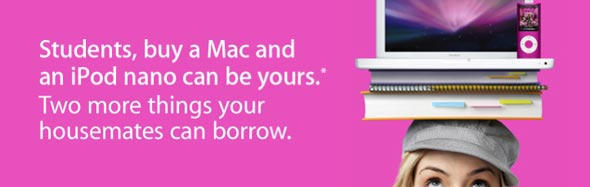
The US back to school promotion’s done, but its equivalent has now fired up in the UK. Brits can now grab Apple laptops or iMacs, an iPod nano or iPod touch, and then get a rebate of up to £95 (which doesn’t actually cover the cost of even the cheapest iPod on offer, but still).
The most interesting part about this is the offer’s closing date: the spooktastic October 31. It’s pretty rare for Apple to start shipping new Macs when this kind of promotion is still running (although it does sometimes happen), so does this mean we now won’t be seeing new Mac laptops and iMacs until November? Or are British students just getting ‘encouraged’ to clear Apple’s UK inventory, readying the company for its autumn/fall assult?
Update: other European Apple Stores are also running similar offers—this isn’t just specific to the UK.
Stuff Magazine: iPhone in Gadget of the year contest
The summer holidays are barely over and the children only back at school for a week, but already the Christmas tat has started appearing in the shops and the media is casting its collective eyes over the events of the last few months to put together some “thing of the year” contests.
And first on the radar is the UK’s Stuff Magazine, best known for the scantily clad ladies who adorn its front cover (usually clutching some gadget or other in their manicured paws).
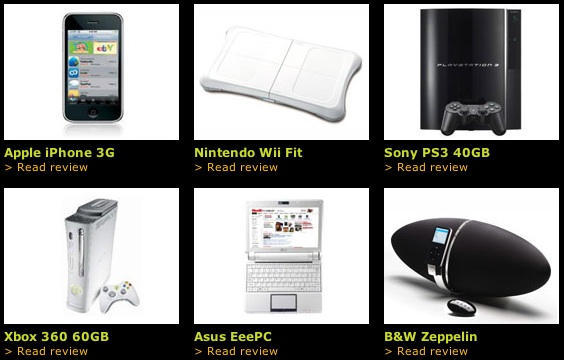
In the Reader’s gadget of the year category, the iPhone 3G is up against Nintendo’s Wii Fit, the Asus Eee, game consoles the PS3 and XBox 360 60GB, and the B&W Zeppelin speaker system.
That’s not all though. The MacBook Air crops up in the Design of the year category, against the Zeppelin (again) and a bunch of other things that, in my opinion, don’t even come close.
So does the iPhone deserve Gadget of the Year status? I’d say it does, yes. I’ve not seen anything else — except perhaps Mario Kart on the Wii — make people smile so much. Everyone who picks up an iPhone, whether they’re playing with a friend’s or toying with one of the demo models in a shop, smiles. You watch, it’s true. They pick the thing up for the first time, they start tapping on it, and they smile.
Apple released the OS X 10.5.5 update in the US on Monday afternoon to immediate acclaim as an all-out assault on bugs. Despite initial skepticism, even TUAW, which was first to the tape, acknowledged the release notes are “quite detailed.”
Gizmodo provided a laundry list of items addresed in the update, with MacWorld shortly touting 30 bugs fixed in the new software. Not six hours later, ComputerWorld upped the ante to 70 bugs fixed.
Security experts are finally satisfied the “Dan Kaminski exploit,” referring to the researcher who disclosed a critical flaw in DNS that made it much easier than originally thought to “poison” the cache of DNS servers, or insert bogus information into the Internet’s routing infrastructure, has been fixed.
Apple also updated Mac OS X’s implementation of BIND (Berkeley Internet Name Domain), the open-source DNS software maintained by the Internet Software Consortium (ISC), to keep it current with an early-August version that ISC released to solve performance issues that had shipped in the original fix for Kaminsky’s vulnerability.
The update also fixes a number of non-security flaws, according to the release notes. iCal and Mail both received more than half a dozen fixes, Time Machine got slapped around a bit, and MobileMe even came in for some love.
See the complete list of adjustments after the jump.
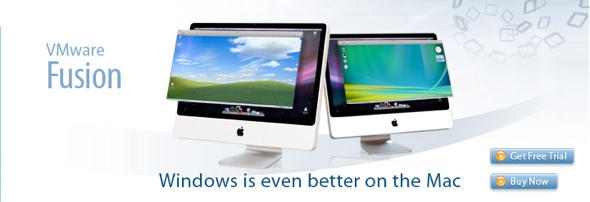
VMWare Fusion, one of the two leading virtualization solutions for Mac, has just been updated to 2.0. The $80 app is a free upgrade for all users of the previous version, and it adds several features that make it better to run Windows on a Mac, oxymoronic though that might sound.
You can read more about the upgrade here, or download it here. After all, it and Parallels are the only ways to run Chrome on a Mac, so…
Over the last year and a half, a few dozen…dozen would-be “iPhone-killers” have emerged to take on Apple’s little widescreen iPod/phone/Internet browsing device that could. And illustrious these phones have been, ranging from the underwhelming Samsung Instinct to the equally underwhelming LG Dare and even the moderately adequate HTC Touch Pro.
And now, as dynamic Verizon pitchman Mike Lanman proves in this eternal launch video, RIM is throwing its Canadian hat (it’s flannel, with ear-laps) into the ring with the puzzling BlackBerry Storm. You will be shocked to learn that this amazing phone will “Take the market by <cue thunderbolt> STORM!”
Except that it probably won’t make any impact on the iPhone market. And that’s because Apple created a platform and RIM is building a product. Click through to read why.
Microsoft has maintained a publicly announced schedule for releasing Windows 7 in early 2010, but its internal calendar has June 3, 2009 as the planned release date, according to a report by InternetNews.com.
Stung, perhaps by the relentless ribbing its Vista operating system has taken at the hands of Apple advertising, along with countless jibes from pundits on the Internet, Microsoft plans to release a beta version of the new system at its Professional Developers Conference next month.
Inside sources confirm that internal builds of the redesigned platform have already been made available to partners for hardware and software certification. Windows 7 is not a whole new OS but an evolution of Vista, and will reuse the old kernel and device driver model. That means it would use the kernel in its newer state, when Microsoft updated it with Vista’s first service pack. It also means existing device drivers for Vista will work on Windows 7.
Electronics retail giant Best Buy Monday announced it would acquire Napster for $121 million. The Minneapolis-based company told Cult of Mac the move wouldn’t harm its growing relationship with iTunes owner Apple.
“Our relationship with Apple is strong and will continue to be so,” said Susan Busch, Best Buy Corporate PR Director.
The acquisition of the digital music service would become “a platform for accelerating our growth in the emerging industry of digital entertainment, beyond music subscriptions,” Best Buy Executive Vice President Dave Morrish, said in a statement.
As part of the acquisition, Best Buy gains Napster’s 700,000 subscribers, its online platform and mobile technology. Napster CEO Chris Gorog and senior management would stay on. The retailer will keep Napster’s headquarters in Los Angeles, where it employs 140 workers.
Best Buy could use Napster to attract consumers still unsure of digital music.
“They might be able to find a business in bringing in late-adopters or stragglers into the online music market by virtue of their breadth of products and service,” Mike McGuire’s Gartner’s media analyst, told Cult of Mac.
McGuire said that while iTunes and Napster may have been rivals when they first arrived on the digital music scene, Napster has never been a threat to Apple. This may be why Best Buy emphasized it will still sell the Apple iPhone.
In May, Napster took a swipe at iTunes, announcing it would sell 6 million DRM-free songs, calling it “the largest major label MP3 catalog in the industry, but also the largest library of independent music available anywhere.” McGuire, however, saw the MP3 effort as “something a bit more than an afterthought, but not much more.”
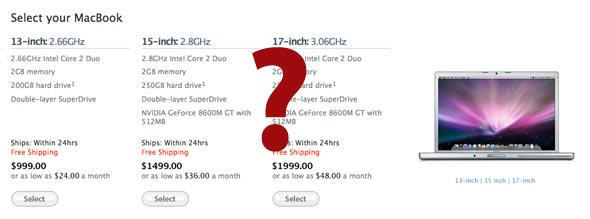
In July, Apple noted that an upcoming ‘product transition’ would affect future profit margins, prompting speculation. For once, such speculation has started to fade, but now rumors regarding the new MacBook are beginning to surface: an aluminium case, LED backlit display, multi-touch. Does that sound like anything to you?
Is Apple going to ditch the ‘Pro’ from MacBook Pro and streamline its laptop range, leaving just a ‘standard’ MacBook (with different screen sizes and minor tinkering possibilities under the hood), and the Air for people who happily set fire to 50-dollar bills? (Clearly, they would once have lit their cigars with said bills, but you’re not allowed to smoke anywhere in the free world these days.)
Obviously, this is idle speculation, but such streamlining would make sense. Run SuperDrives across the new MacBook range, and position the low-end model at an aggressive price-point, but with roughly the grunt of today’s mid-range MacBook (albeit with some extra toys), and then beef up the mid- and top-ends with larger screens and a graphics card, but slice their price-tags, too.
According to resellers we’ve spoken to, laptops are the Apple hardware that continues to outperform the market and expectations, and so if Apple really does want to make a play for market-share, this could be the way to do it.
Update: As Gruber just pointed out, Apple was likely referring to the new iPods introduced last week and the guidance was for the quarter about to end. But what the hell—I still have an inkling that the laptop line-up is going to change rather dramatically over the coming months. So there.
The percentage of iPhone 3G speed tests with extremely slow outcomes has been cut in half since Friday’s release of 2.1 software, according to Test My iPhone administrator Donovan Lewis.
Prior to Friday’s software update, 3G download speeds registering in the very-pokey 100 – 300kbps range accounted for 10 – 11% of all 3G speed tests done using the iPhone performance utility. Since then, results in the 100 -300kbps range account for just 5.37% of all 3G download tests. The site has registered over 250,000 3G tests since its inception. It also provides EDGE and Wifi testing and includes upload and download assessment, as well as testing for non-iPhone connectivity.
“We’re seeing an overall more consistent kbps score and the number of 3G tests where the user scored a real low 100kbps – 300kbps is down,” Lewis told Cult of Mac, adding, “I think that’s a real big improvement overall.”
Others have reported generally satisfactory reactions to the improvement with app handling and system crashes since loading their phones with the new software. How is 2.1 affecting your iPhone experience? Let us know in comments.
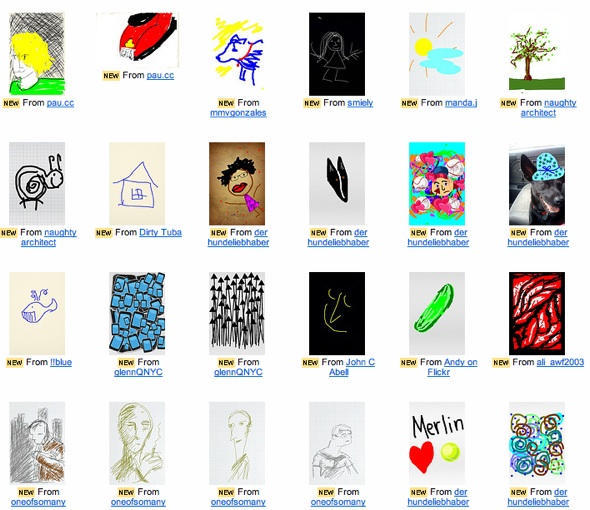
There’s a bunch of iPhone/iTouch apps that offer some sort of sketching functionality. It was only a matter of time before people started sharing some of their sketches online, and my favorite gallery so far is the Flickr iPhone Sketches pool, which contains some real gems (like Luis Mendo’s untitled sketch, above, and Waiting by Pepita P.) There’s loads more:
iPhone art pool
If, like me, you like the idea of drawing during dull moments but are rarely organized enough to carry around a sketchpad and a pencil, iPhone artwork is probably the next best option.
Got some iPhone artworks you’d like to share? By all means post links in the comments. A URL on a line of its own gets auto-linked. Let’s see whatcha got.
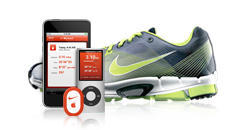
Apple has filed a patent application detailing a method of “pairing a sensor and an authorised garment”, such as “running shoes, shirts or slacks” in hopes of deterring what the company has determined is a disturbing trend toward people “[taking] it upon themselves to remove the sensor from the special pocket of the [iPod-linked] Nike+ shoe and place it at inappropriate locations (shoelaces, for example) or place it on non-Nike+ model shoes.”
Apple sells the Nike+ iPod Sport Kit as a tool for storing data about your workout on your iPod, allowing you to track and analyze your progress toward fitness perfection. As one commenter on Slashdot said about the $30 sensor, “you can also share your workout stats with others, help build community, etc – sort of the antithesis of the “isolated runner with headphones on” kind of thing. Very Web 2.0.”
Under the patent Apple has applied for, companies like Nike could authorise their garments by burying an RFID chip inside it, requiring that chip to activate the sensor. No longer would you be able to use the sensor you paid for with any shoe of your choosing.
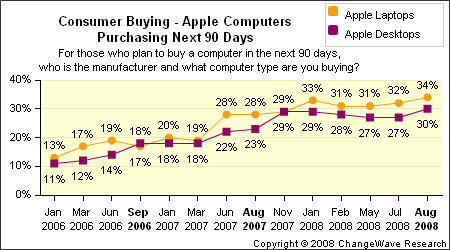
Another survey seems to confirm Apple products are immune from the general economic malaise hurting consumer spending. Consumers planned to buy more Mac laptops and desktops for the back-to-school period as well as over the next 90 days, according to a a survey by ChangeWave released Monday. This compares to the No. 1 PC maker, which consumers said they would buy fewer.
Also, the August survey found the release of Apple’s iPhone 3G is having a “halo” affect on other products. ChangeWave found 17 percent of consumers said the new iPhone made them more apt to buy a Mac.
Eight percent of the 4,416 mostly-U.S. consumers said during the critical back-to-school season they would buy an Apple product online compared to four percent who said they would buy less from Apple’s Web site, for a four percent overall gain for the Cupertino, Calif. company.
Consumers said, in general, they planned to spend less on electronics over the next three months. ChangeWave found 34 percent of consumers said they would spend less on electronics, compared to 15 percent that indicated they would spend more on electronics. The findings are 13 percent lower than a year ago.
Confidence in Apple products differs from overall PC buying plans. Desire to buy an Apple laptop rose two points (34 percent) with plans for an Apple desktop rising by three points to 30 percent. This contrasts with a decline in plans to buy a PC.
When it came to the top two PC sellers – HP and Dell – the retail reticence was pronounced. Plans to buy a Dell laptop within the next 90 days fell 4 points while future desktops rose by 3 points. U.S. consumers said they would buy fewer HP laptops and desktops, compared to July.
It should be noted that much of HP sales are coming from outside the United States. On Friday, Gartner analyst Alfonso Velso told Cult of Mac that Apple was particularly susceptible to any economic downturn that affected consumer spending. However, only recently had the research firm detected rumblings of any blowback from the economy. Gartner placed Apple as the sixth-largest PC maker. MetaFacts had earlier said Apple ranked fourth in laptop sales.
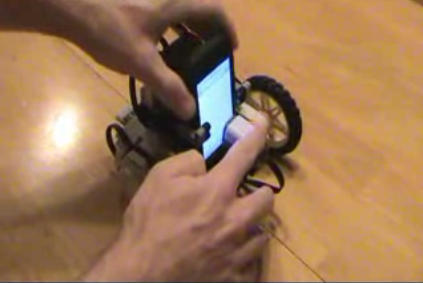
Wanna build an iPhone robot? Of course you do. And the people at BattleBricks have got everything you need.
You need two iPhones for this trick, thanks to the robot’s ingenious control system. The robot is controlled via a simple Google Web Toolkit app. The iPhone in your hand is used to issue commands; the iPhone attached to the robot displays coloured squares in different shades of grey, and an on-board light sensor watches what it’s showing; one shade says “turn right”, another “turn left” and so on.
Full instructions can be downloaded from the BattleBricks page. There’s exciting video to watch too.
And if you should happen to build your own robot, do let Cult of Mac know, so we can share your creation with the rest of the Cultists.
A film that looks at the evolution and culture surrounding the Macintosh has been selected to the shortlist of the 2008 Naperville Independent Film Festival which takes place next week.
That exclusive interview was added just before the movie’s European premiere at the Globians Documentary Film Festival in August. The documentary mixes history, criticism and Apple idolatory into an exploration of the early years of Apple as seen through the eyes of Apple employees, engineers, resellers and supporters.
While there has been much speculation about webkit powered Chrome and the possible implications for Apple’s Safari browser, we think the shot Google fired last week was across a different bow altogether.
Follow us after the jump where we discuss how Chrome has it’s sights set on Windows and why Apple couldn’t care less if there’s ever a Safari v4.0.
Apple was the sixth-largest desktop PC vendor worldwide in 2007, shipping just over 3 million computers, research firm Gartner said Friday. The numbers were unexpected, one analyst said.
“We were pretty surprised by the 2007 figures,” Alfonso Velso told Cult of Mac. The 2007 sales figures were 26 percent higher than 2005 when Gartner had estimated Apple shipped 2.5 million desktop computers.Velso said the sales jump is due to Apple products, as well as some missteps by rivals.
“They are riding a crest of good products and design,” the analyst said.
Velso said Gartner had also received anecdotal evidence problems with Dell customer service also sent college students to Apple.
However, Apple faces difficulty keeping up with other PC makers as companies increasingly turn to India, China and other emerging markets to balance lower sales elsewhere due to the economic slowdown. Gartner said just 1 percent of Apple sales come from emerging markets.
Both Dell and HP have experienced success selling low-cost computers to emerging markets as sales in North America, Europe and Japan either shrank or experienced slower growth. Apple doesn’t play in the $400 market, the Gartner analyst said.
The research firm also hinted that Apple could be especially hit by the global economic slowdown. Because its sales are weighted toward the consumer rather than business, sales for Apple could be volatile, according to the report.
Apple’s reliance on designing and manufacturing the hardware and software means the computer company spent $1.1 billion on designing and purchasing custom components. Other PC makers spent far less — $32 million on design and $92 million on purchasing –œ because they dole out work to Asian companies.
Earlier this week, research firm MetaFacts announced Apple was the fourth-largest seller of consumer notebook computers, with 8 percent of the U.S. market.
American Technology Research analyst Shaw Wu adjusted estimates downward for Apple sales and profitability in 4Q 2008 and FY 2009 Friday, based on reduced visibility in the computer maker’s supply chain.
“Our supply chain checks indicate a mix shift towards low-end and mid-range Macs as it appears that more affluent consumers may be feeling the effects of a tighter credit environment,” Wu wrote in a report to clients.
As a result, he estimates Apple will earn $5.29 per share on sales of $32.8 billion in 2008, down from a previous estimate of $5.34 on $32.9 billion. Estimates for fiscal 2009 now show the company earning $6.15 per share on revenue of $38.8 billion, down from $6.35 on $39.2 billion.
Wu trimmed is price projection for shares of Apple common stock (AAPL) to $205, down from $220. In late trading Friday AAPL shares were trading down $3.49 on the day at $149.16.
For a while Spore seemed to have gone the route of Duke Nukem’ A game often hyped, frequently shown, and never delivered, but Sunday September 7th I finally got my copy of the God of God Simulators. Follow me after the jump to see if it was worth the 3-year wait.
One common problem I’ve noticed is that recent switchers from Windows to OS X don’t expect to encounter problems. At all. In many cases, they’ve heard so much good stuff about OS X that they expect it to be good stuff all the way through.
I make a point, these days, of saying to potential switchers: “Macs can break, you know. They do break. They can drive you crazy.” And the potential switchers look at me like I’m mad and say: “So why switch then?” And I reply: “Because it will happen far less frequently than it does with Windows, and most of the time recovery will be quicker and easier.” Note that: most of the time.
Anyway, Asraf Sani has a disappointed tone in his voice when he writes about the artistically interesting graphics failure that hit his iMac running Leopard last Friday. The colourful light show made it unusable, but at least the screenshot controls were still working, enabling Asraf to grab a few snaps for his Flickr stream.
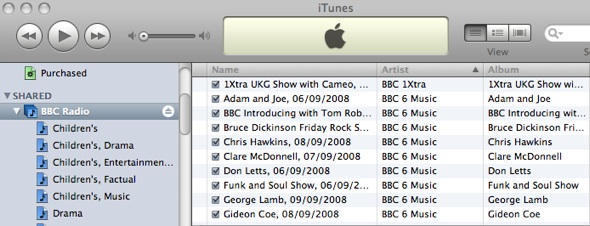
“Here’s what I was thinking: all my music is in iTunes. iTunes, via an Airport Express, plays out through my Big Speakers. Wouldn’t it be nice to be able to use it to find out what this week’s Thinking Allowed is about, or to enjoy some rough dubplate pressure from 1Xtra? … Simply, the app grabs programme information from /programmes and re-presents it to iTunes in its native tongue: DAAP.”
In short, Matthew’s code grabs the BBC’s Flash-based online radio service and hooks it up with iTunes, ending the need for using horrible Real Player (and therefore browsers or Dashboard widgets that depend on it). What a neat idea.
It’s not very consumer friendly yet, but it’s pointing in a very attractive direction.
I don’t often read Windows sites, let alone link to them, and even then not when I think they’re rightly criticising Apple or Mac OS X. But in this case, I think it’s justified.
Ed Bott got a surprise when he upgraded to iTunes 8 on his PC running Windows Vista. Not only did he get iTunes 8, he also a QuickTime update – and that’s fine, because the installer told him that was going to happen, and he continued with the upgrade knowing what to expect.
Or so he thought.
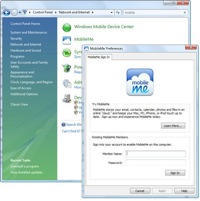
But on further investigation (see the annotated gallery), it turned out that the upgrade process also installed a bunch of other things: Apple Mobile Device Support, Bonjour, and Mobile Me. And on top of those, a couple of drivers, one of which is a known cause of serious crashes.
Ed’s post isn’t a complaint about the software itself (although the crash-causing driver is a pretty annoying problem). What he’s most annoyed about is the manner in which it was installed. If Apple wanted to install all this extra stuff, it should at least have the courtesy to tell him so first.
This is precisely the sort of behavior that Microsoft, Real, and many other Windows software companies got into trouble over back in the 1990s and early 2000s. I can remember people getting hugely angry with Windows software that tried to sneak its way into your computer.
Perhaps Apple is doing it this way because it thinks Windows users are accustomed to it. But think how you’d feel if, next time you ran Software Update on your OS X Mac, it told you there was one upgrade available and then started to install six different things? Wouldn’t you be suspicious? Wouldn’t you be just a tad annoyed?
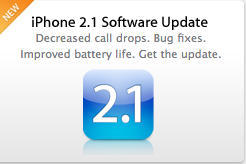
Apple has released iPhone 2.1 firmware as promised at Tuesday’s Keynote event in San Francisco. This highly anticipated software update is supposed to fix a host of bugs and provide performance enhancements that should dramatically improve the iPhone user experience, according to Apple.
Among noticeable upgrades, users should see improved cellular network connectivity, significantly improved battery life, dramatically shorter iTunes backups, improved fetching of e-mail and faster installation of third-party applications. The update also adds a repeat alert up to two additional times for incoming text messages, adds an option to wipe data after ten consecutive failed passcode attempts, and adds Genius playlist creation in iTunes.
Does your iPhone seem bigger, better, faster, more with 2.1 firmware? Let us know in comments below.
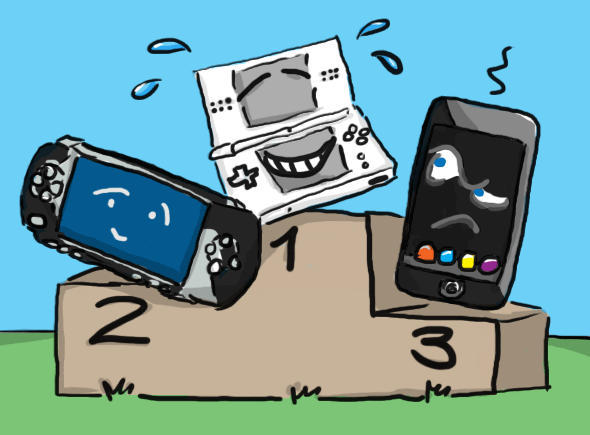
The iPod touch segment of Let’s Rock was particularly notable for Apple’s attempts to position the device as a major gaming platform. “It’s the best portable device for playing games,” claimed Jobs. Apple’s website now calls iPod touch the ‘funnest iPod ever’, and talks about its ‘hundreds of games’. This emphasis on gaming, along with the demonstrations we’ve seen from various developers, appears to be positioning iPod touch alongside Sony’s PSP and Nintendo’s DS, rather than talking about mobile gaming as though iPod touch has any relationship whatsoever to a certain smartphone and cell-phone gaming in general.
There are arguments in favor of this belief. Games have proved phenomenally popular on the App Store. They’re also cheap, relatively plentiful, and simple to get on to your iPhone or iPod touch. Also, crucially, Apple’s solution betters Sony’s and Nintendo’s by allowing updates to games—something owners of the abhorrent DS port of The Settlers no doubt wish were true of their platform.
The problem is, iPod touch is only ever going to be a niche concern in the gaming space. Find out why after the break…
Photography, magic and music-making. Like the iPod before it, iPhone is becoming a cultural icon with creative innovators exploring unusual diversions for the device.
Magic master
Multimedia magician Marco Tempest (he’s on TV with his ‘Virtual Magician’ series in 52 countries) was an early mover. He created a video which appeared to be software running on an iPhone and queued for ten hours to buy one the day it launched in the US. Within ten minutes he’d installed the clip, which he used to entertain the crowd with a series of illusions.
Among other visual tricks, this made it appear the device was being used as an X-ray machine and an electric razor. Watch the amazing video:


 The percentage of iPhone 3G speed tests with extremely slow outcomes has been cut in half since Friday’s release of 2.1 software, according to