Here’s a witty idea for putting you overheating iPhone to good use over the July 4 weekend, by freelance illustrator Chad Covino.
Turn Your Overheating iPhone Into a July 4 Barbeque
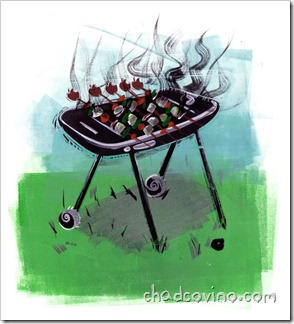

Here’s a witty idea for putting you overheating iPhone to good use over the July 4 weekend, by freelance illustrator Chad Covino.

In a move to bring the gospel to the mobile masses, Honolulu-based New Hope Christian Fellowship is claiming to be the first church to broadcast its weekend services live via iPhone.
Though some remain skeptical about the live streaming capabilities of iPhones, even the 3GS, New Hope Christian Fellowship officials say they did a successful test church service run “with hundreds of users” and have enough faith in it to launch regular live video of services on Saturday, July 4.
“We are always looking for ways that we can leverage technology to reach people where they are at,” said New Hope’s Interactive Developer Peter Thourson in a press release. “Through live streaming video on iPhone and iPod touch, users across the globe will be able to continue to attend church regardless of where they are.”
Over 12,000 people regularly attend the five weekend services held in six locations in Hawaii, the church says.
This is not your analog, snooze-inducing service coming from a place of fire and brimstone — check out the goofy “money rap” video and the cheerful-looking celebrants who wear leis.
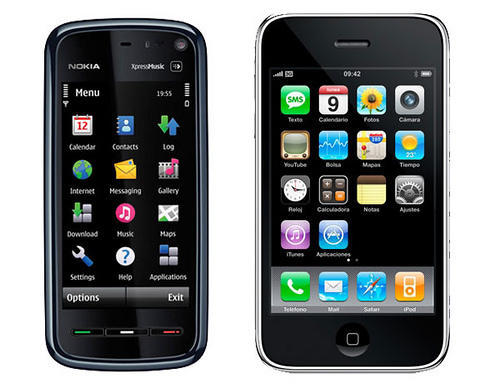
Apple now has overall market share leadership in the worldwide smartphone segment, having overtaken former frontrunner Nokia based on browser calls for mobile ads. A recent report at BNet Technology cites AdMob statistics that show Apple with 49 percent of mobile ad traffic in the first quarter of 2009, compared to 32 percent for Nokia.
The market shift may have less to do with customer preferences for Apple’s hardware, however, as a recent smartphone industry analysis from Gartner notes; services and applications have become the primary drivers of smartphone success.
The stats appear to vindicate Apple’s approach to application distribution via the iTunes App Store. William Volk, CEO of entertainment and business apps vendor PlayScreen, said on a professional forum posting that “other stores simply aren’t matching the ARPUs [average revenue per user] of the Apple App store.”
The iPhone OS also enjoys a comfortable lead over every other mobile operating system, including Symbian, Research in Motion (RIM), Palm and Windows, with May numbers showing iPhones had 68% of the browser requests in the survey.

If you’ve forgotten those sweet new iPod speakers, but still want to jam out to your favorite tunes, turn any available surface into an impromptu sound system. The K-box ($74.50, pictured) includes an audio input jack and patented technology to send sound waves through the floor, table or whatever is below the cell phone-size unit.
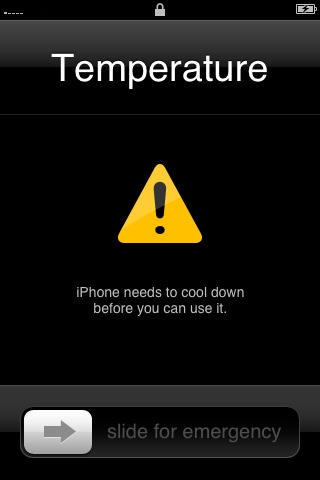
Apple has a support document called “Keeping iPhone 3G and iPhone 3GS within acceptable operating temperatures” to which the company has directed those with concerns about alleged overheating problems with 3G and 3GS models of the device.
In addition to offering practical advice such as “Don’t leave the device in your car” (as car interiors can exceed the recommended operating range of -20º to 45º C [-4º to 113º F]), the document also warns that CPU-intensive applications, such playing music or using the GPS while in direct sunlight may also overheat the iPhone.
The OS has a temperature warning screen built in, that appears to indicate when the phone could be running into problems and may not work properly.
Using the iPhone in temperatures over 95 degrees can trigger the temperature warning, according to at least one report. “Low- or high-temperature conditions might temporarily shorten battery life or cause the device to temporarily stop working properly,” Apple warns in the support document, though it says when the temperature warning appears, the phone “may still be able to make emergency calls.”
Recent anecdotal reports of 3GS iPhones overheating, with some white models turning pink as a result, have led to speculation that Apple may have a recall situation on its hands, but the company so far is relying on the fact that “iPhone 3G and iPhone 3GS comply with the safety standard for Safety of Information Technology Equipment, IEC 60950-1,” and has had no further comment on the overheating issue.
[GearLog]
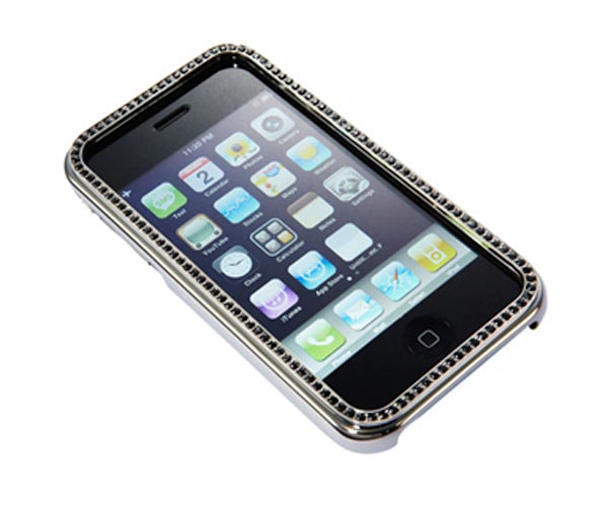
If felt isn’t fine and you are bah-humbug about bamboo, consider a crystaline case from Swarovski. The $66 metal case is covered with crystals from Swarovski and is available in several styles, including chromium-plated black, silver-plated pink and gold-plated pink and clear crystals.
The case, from Audrey Charm, promises the crystal bling won’t block your ability to access your iPhone and includes a neopreme lining to protect your Apple communications device.

Fast Company co-founder Bill Taylor has sparked a bit of a controversy on his Harvard Business Review blog by suggesting the heretical idea that — shock! — Steve Jobs might not be the best role model for other business leaders.
Apparently, it’s deeply offensive to suggest that what makes Steve great are the exact qualities that typically make for bad management at most companies. He micro-manages every aspect of Apple, has been known to fire people with minimal cause, and perennially runs the risk of out-shining his company — which is particularly problematic when his health problems continue to cast into doubt his long-term prospects as CEO.
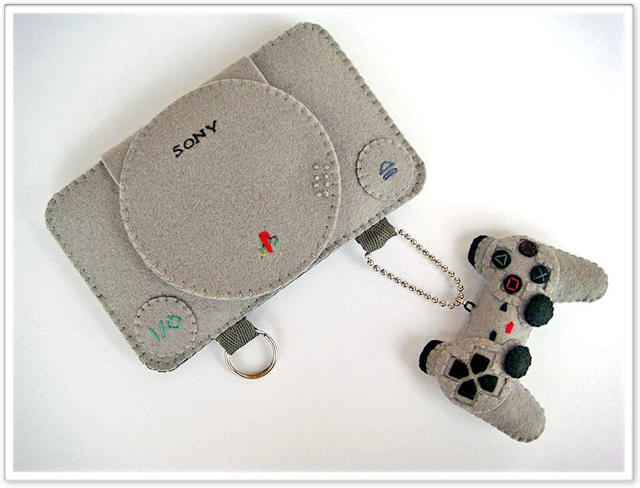
I don’t know why, but a felt representation of a beloved gaming platform designed as a case for my current most-beloved gaming platform? Just makes me sigh. Isn’t it dreamy?
Etsy via iPhone Savior via Gizmodo
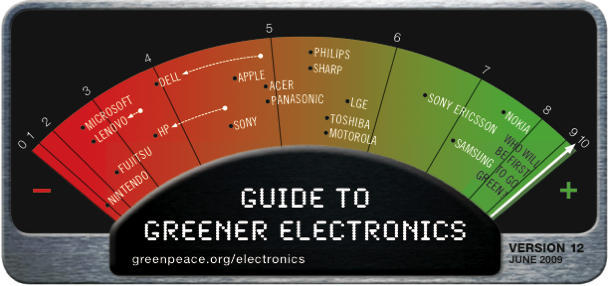
Despite touting its green credentials in new TV ads, Apple is ranked fairly low in Greenpeace’s latest survey of green electronics.
Greenpeace’s quarterly green scorecard was released on Wednesday, and while Apple got high marks for reducing toxic chemicals, it got low marks for not supporting global recycling initiatives or using more recycled plastics.
Overall, Apple scored 4.7 out of 10, putting it in the lower half of a pack of 18 electronics manufacturers. Nokia came top with a score of 7.45, and Nintendo came bottom with a score of 1.
Apple has been advertising the green credentials of its new MacBook line in TV ads — proclaiming them the greenest laptops ever.
Greenpeace’s 12th Guide to Greener Electronics ranks tech companies on three main criteria: reducing overall environmental impact, eliminating toxic chemicals, and recycling efforts.
Some freshmen at the University of Florida are required to start school with an iPod Touch in hand.
Officials recently put “important notice” up red text on the College of Pharmacy website to warn the fall class of 2009 that they must show up for class with an iPod touch or an iPhone.
The 8G model, which will set freshmen back $229 unless they get it with the back-to-school offer, meets the minimum requirement.
The Florida decision comes a couple of months after the University of Missouri journalism school first said they required the Apple device for new students, then backed down on whether the requirement was, uh, really a requirement or simply recommended after criticism that they were pushing Apple products and bumping up student expenses.
Via Apple Insider
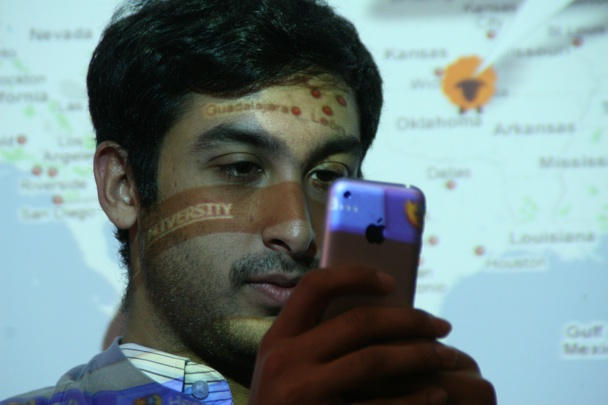
Halitosis and letting them see you sweat are so old school: the social paranoia du jour is gadgetiquette, especially the use of smartphones at work.
A survey of 2,000 UK 18-24 year olds found that at over half know an iBore, reports techradar, though less than 30% will admit to plaguing the rest of the populace with their Apple devices, iPhones in particular.
Annoying, apparently, is not in the hand of the beholder.
The NYT also recently ran a story on smartphone etiquette, opening with an anecdote about a client fiddling with his iPhone for the first half hour of a meeting:
Someone peeked over his shoulder. “He was playing a racing game,” Mr. Hobbs said. “He did ask questions, though, peering occasionally over his iPhone.”
But, Mr. Hobbs added, “We didn’t say anything. We still wanted the business.”
Having been on both sides of the boardroom/boredroom, it’s a tough call: there’s no point in competing with someone who’s thumbing away while you speak, but during the occasional stultifying soliloquy it’s nice to be able to firm up later plans for reinvigorating drinks.
What makes an iBore, exactly?
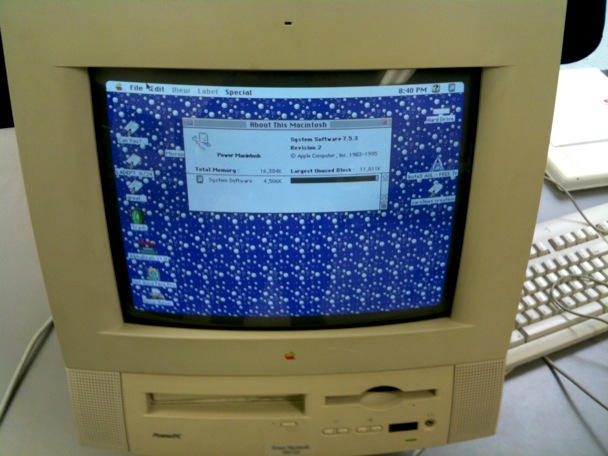
Apple rightly has a reputation for making quality gear. The company doesn’t make junk that breaks down in a few months, or even years. Or even 20 years.
MacMedics, a repair shop in Millersville, Maryland, recently serviced a Macintosh IIci, which was on the blink after two decades of faithful service.
Introduced in September 1989, the Mac IIci is one of the most popular early Macs. It was the first to have built-in color video, three Nubus expansion slots, and a 40 or 80 MB hard disk. It originally sold for $6,700.
The machine was putting up funny patterns on the monitor. The client thought it was the screen, but it was actually the main logic board. He’d been using the machine for 20 years — 20 years! — and had no interest in upgrading to a modern Mac.
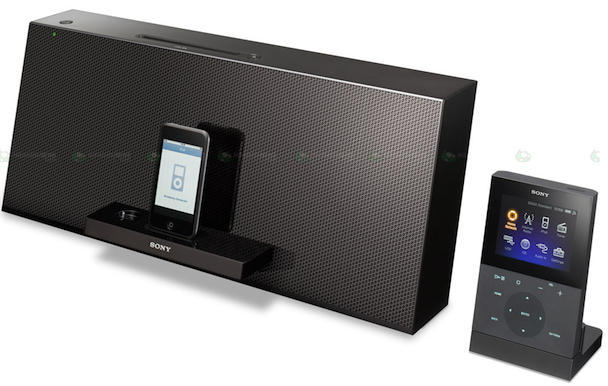
Sony Wednesday introduced two iPod speaker docks with Wi-Fi streaming. The NAS-Z200iR (shown) includes a hand-held remote allowing media to also stream from your PC, PlayStation 3 or the Internet.
Along with Wi-Fi streaming, the networked Sony unit includes a CD player, AM/FM radio plus USB inputs.
A more streamlined unit, the CMT-Z100iR, provides what’s described as a “stealth” display, providing rear access to controls.

Welcome to Macintosh, the feature length documentary that explores the many ways Apple, Inc. has changed the world, jumped from the international, independent film festival circuit to pay-per-view cable TV Wednesday.
The film, which relies on notable personalities associated in one way or another with Apple, such as Andy Hertzfeld, co-creator of the original Macintosh, and long-time Mac evangelist Guy Kawasaki, tells the inside story of what makes Apple different and will now be available to over 20 million subscribers to the Comcast cable network in both the Pay-Per-View section and the “Movie” section of Comcast’s On Demand service.
“The goal was to make a film that you can show to anyone, even someone that has never used a computer, and have them understand why so many people love Macintosh,” says Josh Rizzo, Co-Director. “Availability to all US Comcast customers goes a long way toward completing that goal.”
If you’ve seen it, you know Welcome to Macintosh is really a love song to Apple and though the film is in no way authorized, sponsored or otherwise approved by the company, it’s a good bet there will be cheering in Cupertino once the ancillary sales begin to roll in from people who come to Apple through having seen the film.
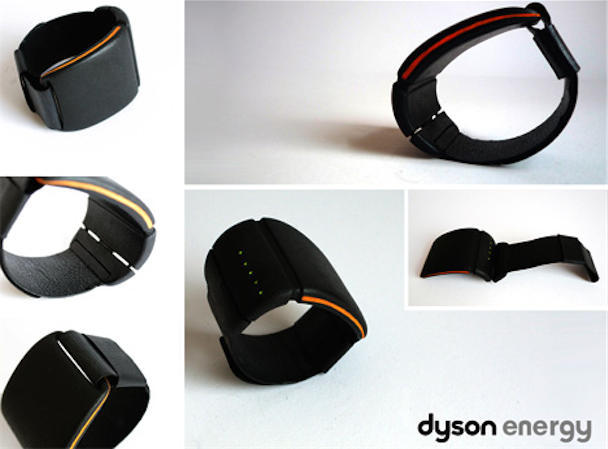
Are you tired of walking, running or otherwise moving to eek a bit of electricity from the numerous gadgets converting kinetic energy into power for your iPhone?
Get ready for extra talk time for just being alive. The Dyson Energy Bracelet converts the temperature difference between your body and the surrounding environment into enough electricity to talk a few more minutes on your favorite Apple communications device.
The bracelet includes a mini USB connection which Apple and other cell phone makers earlier this week approved as a universal standard (at least in Europe) for recharging mobile phones, starting in 2010. A price and distribution date have yet to be announced. More information is available at Yanko Design.
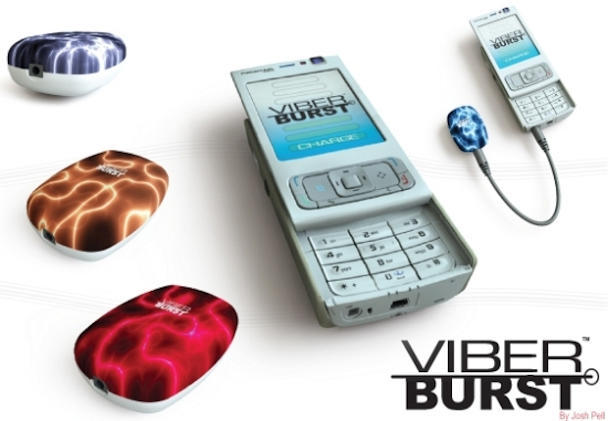
Unlike the Viber Burst kinetic device we talked about recently, the Dyson bracelet employs the thermoelectric effect to convert body temperature into electricity. Although the thermoelectric effect is commonly used in temperature sensors, it can also be used to generate power. (Here’s a fuller explanation of the science behind the gadget.)
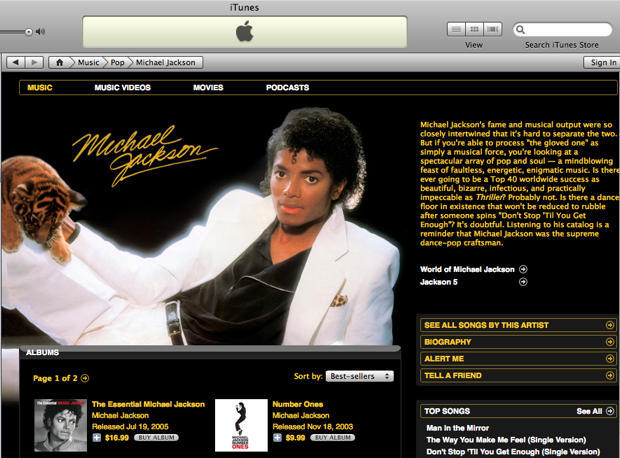
Michael Jackson is likely make more money in death than he ever did in life — the Elvis effect. And it’s already started.
Jackson sold a record 2.6 million digital downloads in just one week, according to preliminary sales numbers from Nielsen SoundScan.
The sales make Jackson the first artist to sell more than one million digital songs in one week. The week before his death, Jackson sold 48,000 songs, illustrating how big a jump this week’s numbers are.
Jackson’s records are dominating the charts. Six of his albums are in the top 10 Top Digital Albums chart, a record, and 25 of his singles are in the top 75 Hot Digital Songs.
Like Elvis, Jackson is likely to bigger earner in death than he was in life. Elvis earned a whopping $52 million in 2007 — $8 million more than living pop stars like Justin Timberlake ($44 million) and Madonna ($40 million), according to Forbes.com.

Counterfeit iPhones have come a long way. They’re now almost identical to original iPhones, fooling bargain hunters on sites like eBay.
Look at the video below from Dana Stibolt, founder of MacMedics, who was given a fake iPhone bought on the auction site.
At first glance, it’s almost identical to current models, from the touchscreen to the volume switches on the side and the dock connector on the bottom.
“It looks EXACTLY like an iPhone,” says Stibolt. “But it does not work very well, and when it does work, it is very slow.”
Last year, knockoff iPhones were easy to spot. They were thicker, bulkier and often had extra buttons or keyboards.

Mozilla’s new Firefox 3.5 browser, released on Tuesday, adds porn mode, big speed improvements and location services.
But one feature for MacBook users has been removed from previous beta releases — the multitouch twist gesture for navigating between tabs.
It’s a handy gesture. With a twist of your fingers, you can whiz through open tabs just like using Control-Tab.
Here’s how to re-enable it.

What it is: Archon Classic is an iPhone app that brings my favorite-ever Mac game to the iPhone — perfectly. It’s basically like extraordinarily Manichean version of chess — the battle between not just white and black pieces, but light and dark forces. And instead of merely taking other pieces as you do in chess or checkers, you must battle for each square you try to claim, with action and heated attacks. Whether you’re a phoenix, a shapeshifter, a golem, or a troll, you need quick reflexes to win.
Why it’s cool: Way back when my family got its first Mac Plus, one of the very first games we installed on it was Battle Chess, a title that had chess pieces actually fight each other instead of claiming their squares. Here’s the problem. It was actually completely lame. It was exactly like chess, except that it had slow-loading and highly repetitive animation sequences. I wanted real battle chess. I wanted to fight for each inch of precious territory. Needless to say, I stopped playing.
My frustrations were quickly remedied when my cousin introduced me to Archon for the NES. It was exactly what I had been looking for but better. We had a fierce, almost bitter rivalry. He was inevitably Light forces, I was Dark. And we would play again and again for hours. Eventually, I found Archon for Mac, and enjoyed it in its keyboard-driven black-and-white glory. Every once in a while when we get together, we still play it.
All of which is why I’m so geeked to play Archon Classic for iPhone. The $4 game has updated graphics sharper than any previous version, an intuitive touch interface, and the smoothest emulated D-Pad I have ever experienced on the platform. I played one game, and it was just like old times. Anyone who has ever enjoyed the original Archon will love this. I haven’t tried the multiplayer over WIFI yet, but I’m looking for challengers, if you’re interested.
Where to get it: You can find the App Store link here.

In a move that’s a bit like thumbing his brush at the lawyers who sent a nastygram when we mistakenly reported David Hockney’s gallery artworks were created on his iPhone, the artist is offering free downloads of three wallpapers made on his device.
The unsigned trio of flower paintings from the 72-year-old pop artist maestro — painted with the Brushes app on his iPhone (it’s revealed for certain this time) — do sort of look like something you could do yourself.
The iPhone 3.1 beta has been released to developers, and includes some cool features, including Voice Control over Bluetooth.
Baseband has been updated to 5.08.o1, so don’t install the beta if your iPhone has been unlocked with the ultrasnow hack — it will permantly lock it.
The beta also allows edited videos to be saved as a copy, preserving the original. And MMS is on by default, but doesn’t work for AT&T subscribers.
The full list, via the QuickPwn website, after the jump.
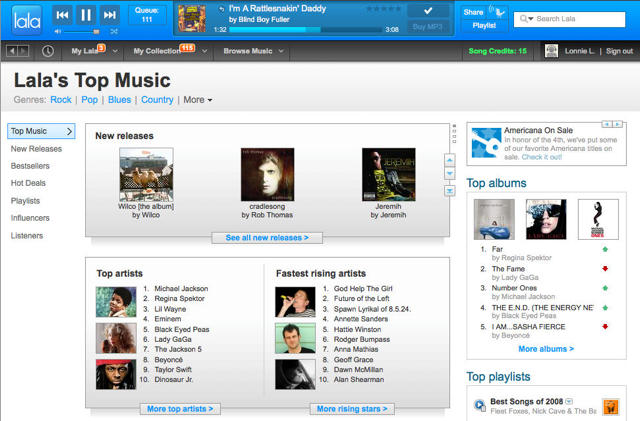
What it is: Lala is a newish (about a year old) web-based music marketplace, but to brand it as simply that does an extreme disservice to an interesting, innovative Internet destination that, given enough publicity, strong management and bit of good fortune could become the first online music store to give iTunes a real run for its money as a music distributor.
Why it’s cool: When I was a kid growing up in Memphis, Tennessee, I spent uncounted hours in the music listening rooms at the back of Pop Tunes on Summer Avenue, where I discovered the heritage of the city they call the Home of the Blues, and learned about the ground-breaking artists who gave birth to the Blues’ baby, Rock & Roll.
Pop Tunes was a great spot to get in out of the hot summer sun or the cold winter rain, where I could browse the racks, amassing a stack of LPs and 45s, both old and new, and head for one of the four or five sound-proof listening rooms at the back of the store, where I’d listen to my heart’s content before deciding which of the albums or singles my meager allowance or paper route money would buy me any given week.
By the time I left home for college in another of the great music cities in the US – New Orleans – I had a music collection numbering over 1000 lp records and another few hundred 45rpm singles.
What does my ancient music-buying experience have to do with Lala and this review?
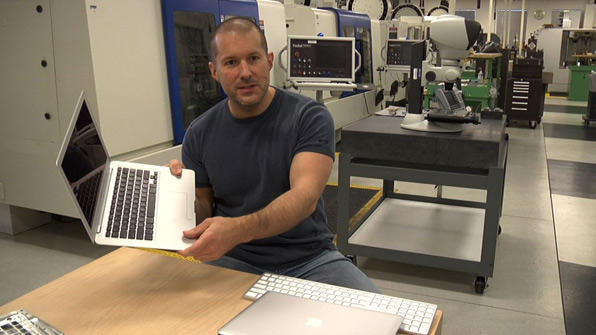
Apple is advertising a rare job in its storied design department — and it’s a cool one.
Apple is looking for a computer modeling expert to make 3D renderings of concept products.
“CAD sculptor/digital 3D modeler needed to create high quality CAD models used in the industrial design and development of new products,” says the job posting on the Dezeenjobs website.
Headed by Jonny Ive, Apple’s design department is one of the most famous industrial design groups in the world. Employing about a dozen world-class designers, the studio is responsible for a string of trendsetting products, starting with the original iMac (which launched an industry see-through electronics) to the iPod and it’s iconic white earbuds.
Whoever gets the job will be one of the first people in the world to get a peek at whatever Apple is working on. Only CEO Steve Jobs and a handful of top executives get to see products in development.
The vast majority of Apple employees don’t see a final product until the day it is launched, even if they helped build it. Software programmers never see the actual hardware, and hardware engineers work on bulky prototypes housed in big polypropylene boxes.
Only the design department gets to see the final shape of the new product, and the studio is ultra-secretive. Housed in a nondescript building off Apple’s main campus, entry is limited to a chosen few. Even Apple’s previous CEO, John Sculley, was denied entrance. His electronic badge wouldn’t let him (he threw a fit).
The job sounds cool, but the job posting warns it is not a design job, nor a stepping-stone to a design job. Too bad.
The full job posting after the jump:
Congratulations are in order to the winners announced Tuesday among the more than 2500 entrants to Fuze Meeting‘s recent “Tell a Story” contest for designers and other creative users of Fuze and the web-based presentation sharing site Slide Share.
The $5,000 Grand Prize went to SlideShare user “slides2407” for the presentation “Drunkenomics – The Story of Bar Stool Economics”, while four additional category winners, including the makers of “Super Cool Dudes” (embedded above), who won for Best Design, collected iPhones and $100 iTunes Gift Cards.
SlideShare supports Keynote, PowerPoint, OpenOffice and PDF presentation formats and is one of the fastest-growing communities of presentation-sharing ideas on the web.
The contest was judged by a panel of business and technology luminaries including
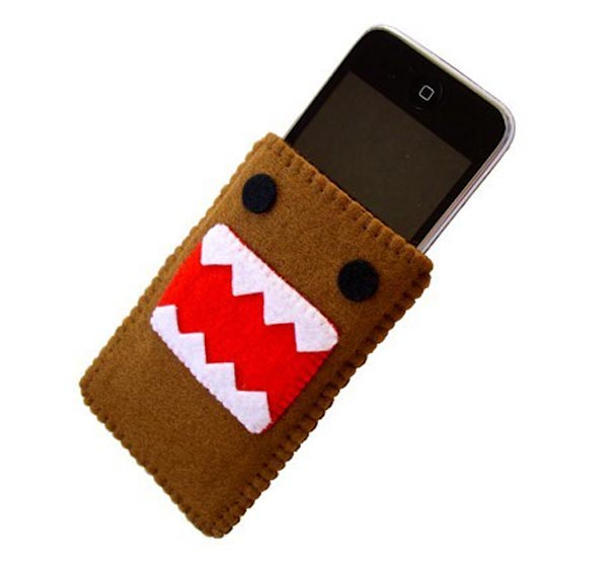
If you’re looking for a “green” way to protect your new iPhone, felted cases appear the latest fad for eco-conscious Apple fans. The latest example: the Domo Kun iPhone case. The felt case, designed for the iPhone, iPod Touch and iPod Classic, is emblazoned with Domo Jun, the monster serving as a Japanese TV mascot.
The felt monster measures 4.7-inch x 3.1-inch, but the Etsy artist announced Tuesday the hand-made item was sold-out, just a day after putting the iPhone/iPod holder on the site. A similar fate met another iPhone case, a felt version of an old-style rotary phone.
