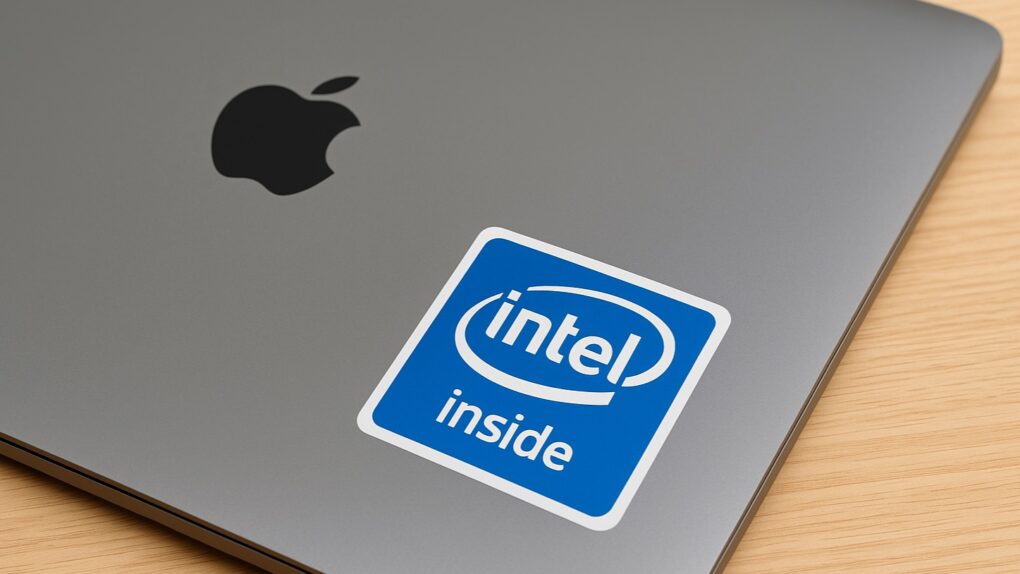
Your next Mac might run on an Intel processor, which is a gigantic surprise, considering Apple dropped the chipmaker years ago in favor of Taiwan Semiconductor Manufacturing Company.
But there’s a standout reason why Apple needs Intel — and it might not be what you think.
Apple and Intel: A rekindled relationship
Starting in 2005, Intel supplied the processors that powered every Mac, giving Apple access to industry-leading x86 performance while Cupertino focused on its computers’ design and software.
That partnership ended in 2020 when the Mac lineup transitioned to Apple silicon chips, with Apple citing the efficiency and performance advantages of its in-house processors. (Apple designs these processors, which are then produced by TSMC.)
Much of the Apple/Intel breakup can be laid at Intel’s door. The chipmaker repeatedly missed deadlines shifting from 14nm and then 10nm process nodes. The company was simply slower to innovate for many years, depending instead on its historical industry dominance to compete.
But Apple is now reportedly returning to Intel. To be clear, that doesn’t mean future Macs will include Intel Core processors. Instead, Intel might fabricate M-series Apple silicon processors. It will essentially take on some of the foundry role that TSMC currently holds.
Why Apple is returning to Intel
If this unconfirmed report pans out, Apple’s move will undoubtedly please President Donald Trump. His administration arranged to acquire a roughly 10% equity stake in Intel, and Trump backs the chipmaker as a “vital American company.”
But that’s not the primary reason for the change. It’s about Apple’s overdependence on TSMC.
The partnership between Apple and the Taiwanese foundry works brilliantly for both companies. Apple gets the most advanced processors, while TSMC gets billions of dollars. Apple is TSMC’s largest customer, making up about 25% of its total revenue.
Nevertheless, an important part of Apple’s strategy when sourcing components for Mac, iPhone, etc., is to not depend on a single supplier. The current TSMC setup breaks that rule, since the chipmaker is the sole supplier of CPUs for all Apple’s computers. That’s by necessity — it’s the only company with the technology to make Apple’s most advanced chips.
But Intel is finally getting its act together. It’s promising to have the tech needed to make low-end M-series processors in 2027.
Apple’s overdependence on TSMC
Adding Intel to its supplier list would mean Apple would no longer be 100% dependent on TSMC chips. That would undoubtedly affect negotiations on how much Apple must pay for TSMC processors. As it stands now, Apple can’t threaten to take its business elsewhere if TSMC charges too much — there’s nowhere else to go.
Plus, any problem for TSMC is inescapably a problem for Apple, too. For example, if TSMC’s foundries in Taiwan were hit with a natural disaster, Apple would have no alternative source of chips.
And don’t forget that Trump threatened computer makers with a 100% tariff on chips and semiconductors imported into the United States. That hefty import tax remains in limbo, but the threat hangs over TSMC. If worst comes to worst, Intel chips made in the United States could be Apple’s salvation.
In short, Apple’s overdependence on another company — even one as skilled as TSMC — is bad business. It needs an alternative source of CPUs, and Intel seems perfect for that role. Assuming it can fulfill its promises, of course.
No matter what happens with Apple/Intel, don’t worry about TSMC — it’s got more companies knocking on its door than it can handle. Most notably, the foundry might produce enough chips for Nvidia this year to match the revenue currently coming from Apple.

Ed Hardy has been writing full-time about tech for 26 years, and using it for much longer than that. His intro to Apple was a Macintosh SE/30 (which he still has), but now he uses a 13-inch iPad Pro as his primary computer.
That’s because he’s a “tablet first” type of guy. Rather than use a Macbook, he connects a keyboard case to the iPad. And instead of a desktop Mac, he connects his tablet to a 27-inch display and full-size keyboard. (So don’t try to tell him that everyone has to use a Mac to be productive.)
Before coming to Cult of Mac, Ed wrote for NotebookReview, TabletPCReview and Brighthand, as well as other sites.