Nearly every high-end chip powering Apple devices is manufactured in Taiwan, a small island democracy over which China claims ownership. U.S. officials have warned Apple and the rest of Silicon Valley for years that a Chinese blockade, invasion or prolonged military standoff — possibly coming by 2027, according to intelligence sources — could cut off the chip supply.
And with a too little, too late response by tech giants grinding forward, a chip shortage could crush the tech industry, hobble the U.S. economy and keep your next iPhone out of reach for a long time, according to a new report.
Why Apple users should care about a potential Taiwan chip disaster
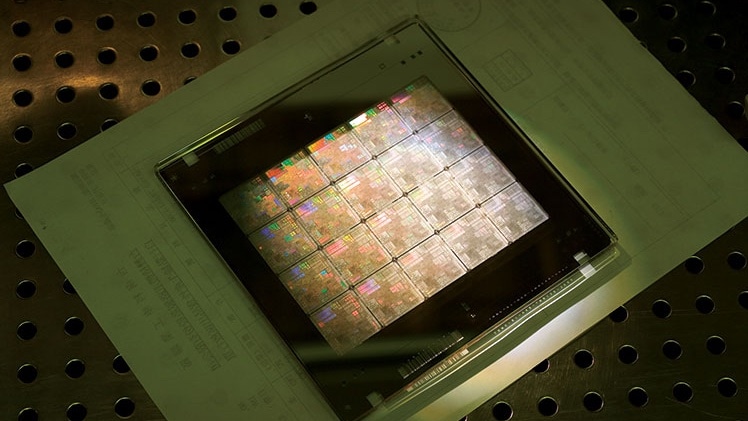
The Taiwan Semiconductor Manufacturing Company, known as TSMC, manufactures chips that go into virtually every Apple device — iPhones, iPads, Macs, Apple Watches. Apple doesn’t make its own chips in a factory. It designs items like A-series and M-series chips and then hands those designs to TSMC to build. TSMC does this better than almost anyone else on the planet, and it does it overwhelmingly from facilities on Taiwan.
That arrangement has worked beautifully for decades. But it has also left Apple — and by extension, every one of its customers — dangerously exposed to a single geopolitical flashpoint, according to The New York Times in its new report, “The Looming Taiwan Chip Disaster That Silicon Valley Has Long Ignored.”
The intelligence briefing that made Tim Cook sleep ‘with one eye open’

AI image: Midjourney/Cult of Mac
For years, U.S. national security officials have sounded the alarm. They summoned executives from Apple, Nvidia, Qualcomm and AMD to a classified CIA briefing in Silicon Valley in July 2023. CIA Director William Burns and Director of National Intelligence Avril Haines told the group that China’s military buildup suggested a potential move on Taiwan as early as 2027.
In response, Apple CEO Tim Cook reportedly told officials afterward that he slept “with one eye open.”
And yet, according to the Times investigation, Apple and its peers still didn’t place significant new orders for chips made on U.S. soil. The economics simply didn’t pencil out. American-made chips cost more than 25% more than their Taiwanese equivalents. Taiwan’s government also has an unofficial policy requiring TSMC to keep its most cutting-edge manufacturing on the island first. That means U.S. plants would always be running a generation behind.
For a company as profit-conscious and product-quality-driven as Apple, those were hard obstacles to look past.
What a disruption would actually mean for Apple users
A confidential 2022 report commissioned by the Semiconductor Industry Association painted a stark picture of what chip supply disruption would do to the U.S. economy: an 11% drop in economic output. That’s twice the damage of the 2008 financial crisis. Most major tech companies, Apple included, would have enough chips stockpiled to keep operating for only a few months before things fell apart.
For Apple users, that translates into something very concrete. New iPhones, Macs and iPads would stop being released on their familiar annual cycles. Existing devices would become harder and harder to replace. Prices on available devices would skyrocket as supply dried up and demand stayed constant. The ecosystem of apps, services and hardware updates that Apple users depend on would stall.
Apple’s services business — the App Store, iCloud, Apple TV, Apple Music — relies on data centers full of Apple silicon chips. A prolonged chip shortage wouldn’t just affect the devices in your pocket. It would ripple across the entire Apple experience.
What Apple and the U.S. government are doing about it

Photo: TSMC/Cult of mac
Despite the dire warnings, progress comes — though slowly. After sustained pressure from both the Biden and Trump administrations — through financial subsidies in the first case and tariff threats in the second — TSMC has committed to building multiple chip factories in Arizona. Nvidia struck a deal to buy chips from those U.S. plants.
And Tim Cook visited the White House last summer and pledged $100 billion in new U.S. investments, a commitment that includes support for domestic chip manufacturing. And by the way, the day before the Times published its report, The Wall Street Journal offered an in-depth look at Apple’s effort to jump-start U.S. chipmaking.
TSMC has now agreed to build at least 10 factories in Arizona, and Taiwanese semiconductor companies have committed to investing an additional $150 billion in the United States. Plus, the United States is on track to spend $200 billion on chip plants through 2030, which would increase domestic production capacity by 50%.
Those are real numbers, but in a sobering context. Even with all that investment, the U.S. would still account for only around 10% of global semiconductor production by 2030. That’s roughly the same share it held in 2020 when these alarm bells started ringing.
The road ahead
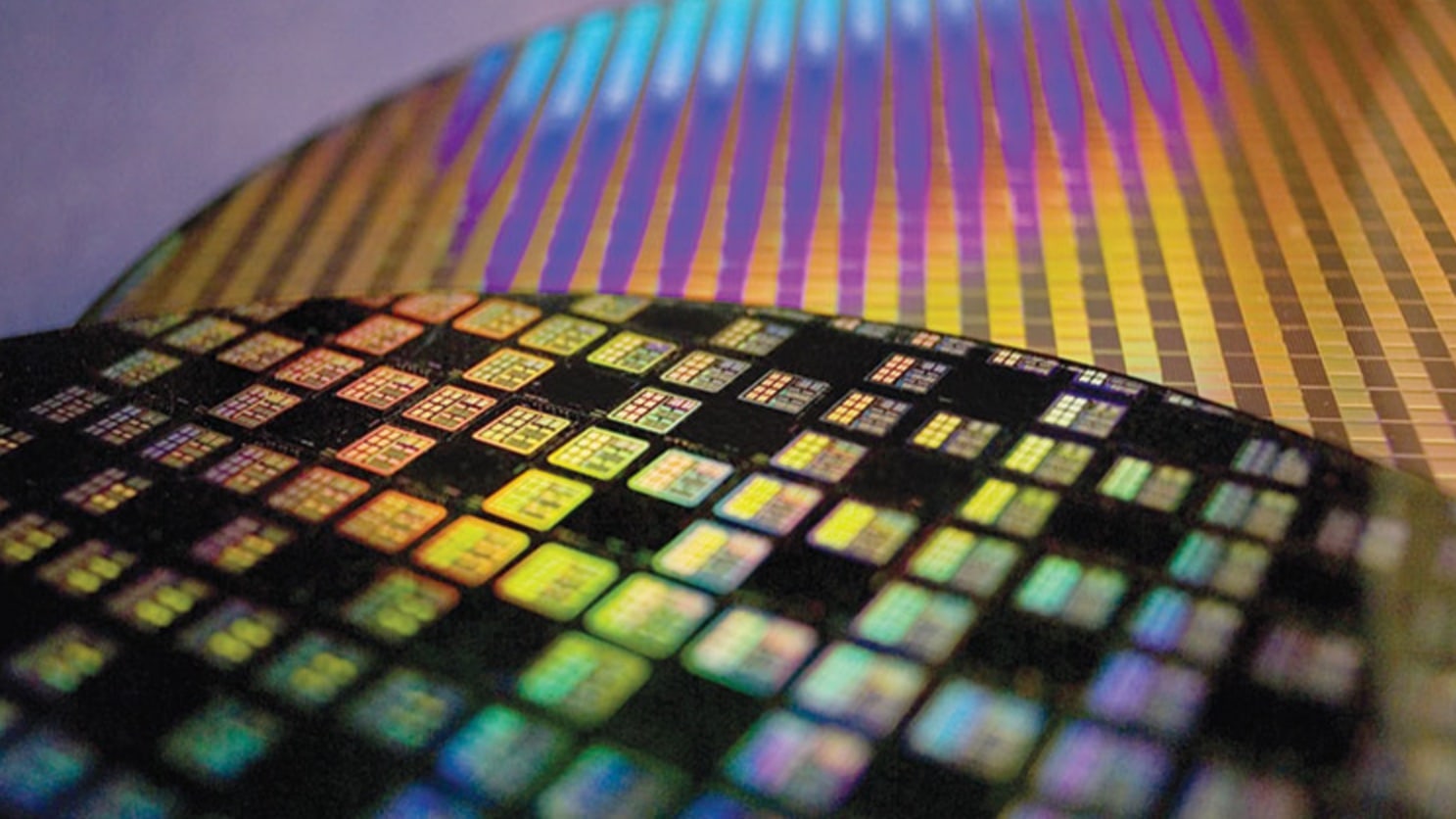
Photo: TSMC
A practical wrinkle illustrates just how far things have to go. When Nvidia celebrated its first AI chip made at TSMC’s Arizona plant last fall, the milestone was real — but incomplete. The company still had to ship the chip to Taiwan for “packaging.” That’s the final assembly process that connects it to other chips and makes it functional. Even a chip “made in America” isn’t fully made in America yet.
Apple held engineering meetings with Intel to evaluate its U.S. manufacturing capabilities, a sign that the company is at least taking the domestic chip question more seriously. But the gap between studying a problem and solving it is wide.
Apple users should note the main takeaway. The devices you rely on every day are bound up in a geopolitical risk that the industry has been slow to confront and will take years to reduce meaningfully. The steps now being taken are necessary and long overdue. Whether they’ll be enough — and whether they’ll come fast enough — remains an open question.

David Snow, an expert on Apple hardware and software, writes on a variety of technological and cultural topics for Cult of Mac. They include Apple news, technology buying guides, and features about computer setups and Apple TV shows and movies.
With 30 years of experience covering technology and other subjects, he has written and edited for numerous print and online publications, including CMP Media, TechTV.com, CNET, Wired News, Red Herring magazine, Law.com, The National Law Journal and Law Technology News magazine. Among other roles, he served as executive editor of the Law.com network of websites and editorial director, technology, for ALM Media.
Snow graduated with a B.A. from Syracuse University with majors in magazine journalism and psychology. While there, he worked as a reporter for The Daily Orange newspaper and associate editor of Equal Time magazine.
Founder of the blog At the Waterline, he can be reached on X (formerly Twitter) via @atthewaterline and on Mastodon via @dsnow.