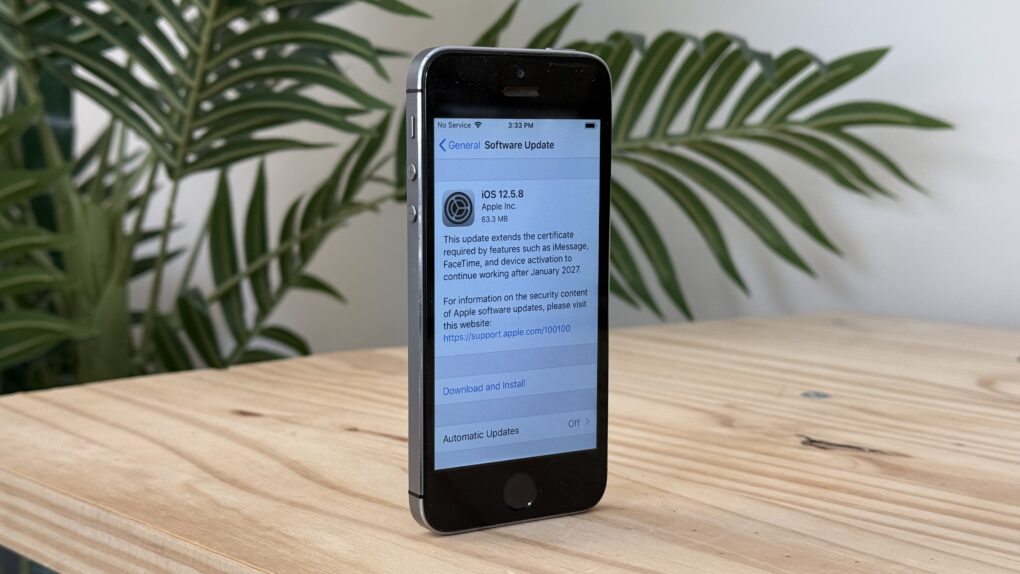
A conspiracy theory argues that Apple does everything it can to force people to buy new iPhones. That’s Grade A certified bullplop, and I can prove it. How? Apple recently released iOS updates for every single iPhone going back to 2013.
If you still own a 12-year-old iPhone 5s, it just got an upgrade to iOS 12.5.8, so you can continue to use it for years to come. So tell us again how Apple hates old iPhones?
iPhone updates are a middle finger to forced obsolescence conspiracy theorists
With every major iOS release, online forums and social media fill with anecdotal reports of lagging iPhone performance, apps taking longer to open, or batteries draining more quickly. This happens because the software updates take days to fully install, with a temporary impact on performance and battery life.
But some people don’t understand what’s happening, and jump to the worst possible conclusion. They accuse Apple of deliberately using software updates to reduce the performance of older iPhones to force people to buy new ones.
Screenshot: D. Griffin Jones/Cult of Mac
If that’s true, then why did Apple just release iOS software updates for every iPhone introduced since 2013?
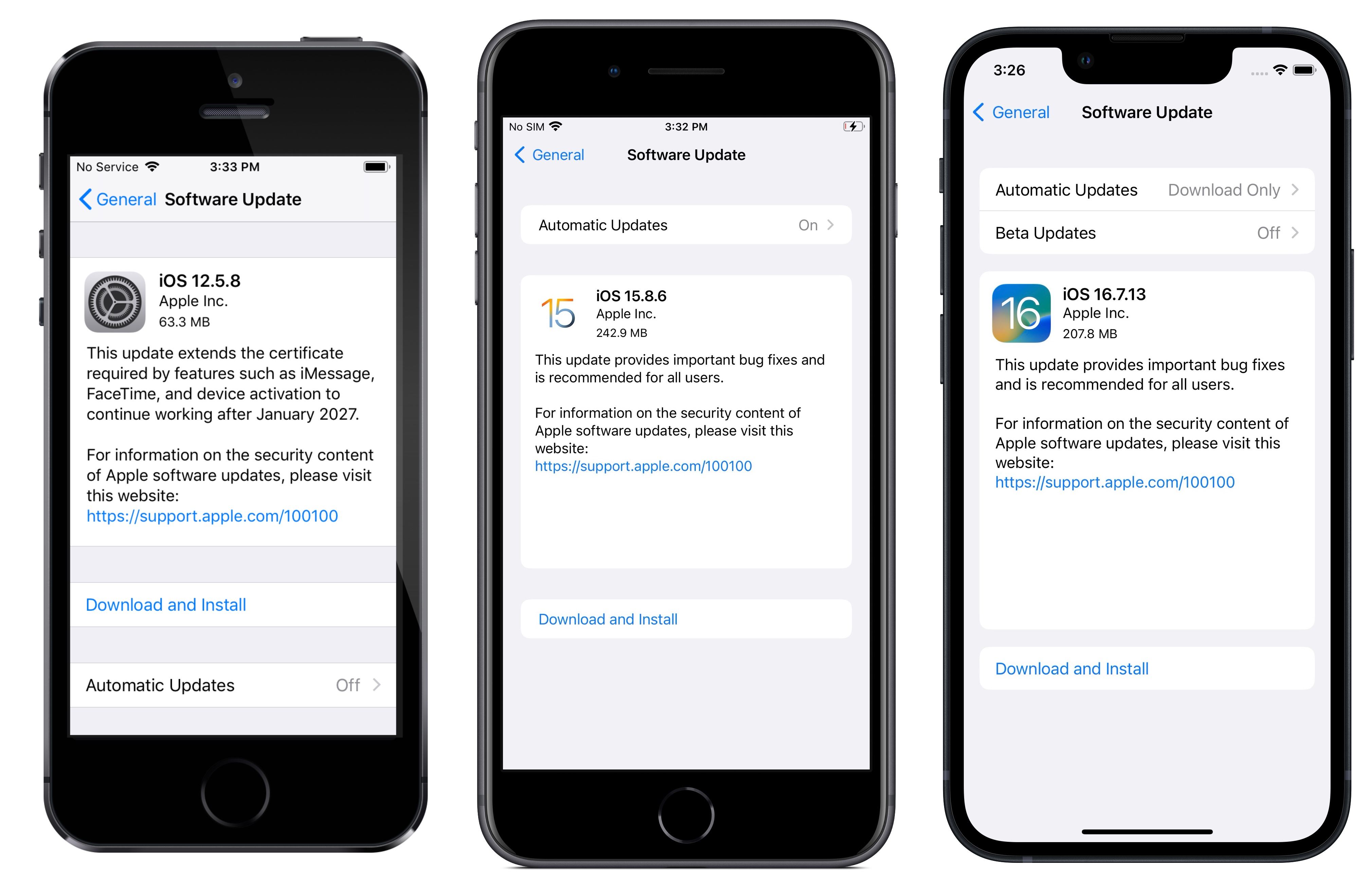
We’re on iOS 26, but last week brought iOS 12.5.8, iOS 15.8.6, iOS 16.7.13 and iOS 18.7.4. These update the iPhone 5s, iPhone 6, iPhone 6 Plus, iPhone 6s (all models), iPhone 7 (all models), iPhone SE (1st generation), iPhone 8, iPhone 8 Plus, iPhone X, iPhone XS, iPhone XS Max and iPhone XR.
Apple also released iOS 26.2.1, the current version, which runs on every handset since 2019’s iPhone 11.
To be clear, the updates to iOS 12 through iOS 18 don’t include new features. But they do make a change needed to keep legacy models functional. As Apple says of all of them, “This update extends the certificate required by features such as iMessage, FaceTime, and device activation to continue working after January 2027.”
Without that certificate, all those older iPhones still in use would have become almost useless. Apple could have let it happen, but it didn’t.
iPhone 5s is only the extreme example
To be clear, while it’s amazing that Apple just gave iPhone 5s users the option to install iOS 12.5.8, that can’t make it act like an iPhone 17. While the software update means most of its built-in apps won’t catastrophically fail on January 2027, it’s still a 12-year-old handset, with all the limitations of a very obsolete device.
But Apple doing what it can to keep alive the iPhone 5s — plus the iPhone 6, iPhone 7 etc. — demolishes the argument that the whole point of iOS 26 is to ruin the iPhone 14, iPhone 15, etc., so their users are forced to buy new devices. Apple just went out of its way to keep devices much older than those functional.
Apple makes billions off older iPhones
The conspiracy theory that Apple loves iPhone forced obsolescence, and schemes to require users of older iPhones to buy new ones, comes from the mistaken belief that Apple makes no money off those legacy devices. In reality, it rakes in billions from them.
In 2025, Apple’s revenue from services reached $109 billion. “Services” is the group name for the App Store, iCloud, Apple Music, etc. And it brings in more revenue than sales of Mac, iPad, Apple Watch and AirPods combined. Some of these services are fantastically profitable: The estimated gross margin on the App Store is 75% to 80%, and it’s 60% to 70% on iCloud.
Legacy iPhones contribute to the services revenue. That’s why Apple wants to keep them running — hence all those recent iOS upgrades for them.
Far from forcing people to trash their old iPhones, Apple keeps them going and going. When you’re ready for the newest model, you can give your old one to your children. Or sell it to a service that’ll resell it. That happens to millions of them.
Based on current market data for 2025 and projections for 2026, roughly 20% to 25% of all smartphones sold in developing countries around the world are refurbished iPhones. That’s why there are more than a billion iPhones in active use, something Apple is very proud of.
In short, Apple does not need to sell new iPhones to make money — it makes billions off older iPhones. That means deliberately ruining the devices with bad software updates would cost the company billions. So Apple doesn’t do that. Instead, it releases iOS updates to keep iPhones running for more than a decade.

Ed Hardy has been writing full-time about tech for 26 years, and using it for much longer than that. His intro to Apple was a Macintosh SE/30 (which he still has), but now he uses a 13-inch iPad Pro as his primary computer.
That’s because he’s a “tablet first” type of guy. Rather than use a Macbook, he connects a keyboard case to the iPad. And instead of a desktop Mac, he connects his tablet to a 27-inch display and full-size keyboard. (So don’t try to tell him that everyone has to use a Mac to be productive.)
Before coming to Cult of Mac, Ed wrote for NotebookReview, TabletPCReview and Brighthand, as well as other sites.

5 responses to “Apple just killed the myth of iPhone forced obsolescence”
I believe your report, but what bothers me is when I pay $1,000 for a new iPad, then a few years later they only offer me $20 as a trade-in on another one.
I agree… After dropping $1,000+ for an iPhone and a year later its worthless as a trade in.
Sorry, but they DO become obsolete because Safari is old and not usable for any newer sites. Only webkit based browsers can be installed so all the other browsers don’t work either. That IS sneaky planned obsolescence. You also need convoluted workarounds to install older versions of apps: install them on a newer iOS device with the same account, then the appstore will let you install an older version. Apple’s walled garden – for your “security”. But judging by your post they fooled you at least…
If so, then iOS26 is clearly designed to make ALL iPhones obsolete, including the iPhone 17s
If you’re speaking from experience, I’d like to see you get iOS 17 on my iPhone 8