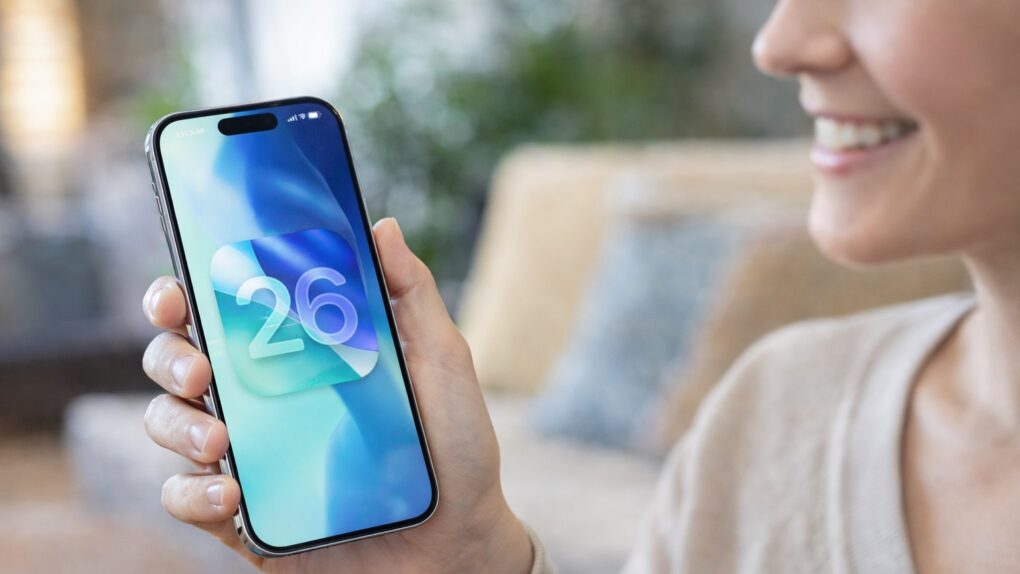
Apple’s attempt to keep online advertisers from tracking Safari users had the unintended effect of completely throwing off reporting on iOS 26 adoption.
Rather than only a small percentage of iPhone users installing some version of Apple’s latest operating system, iOS 26 adoption is only a bit below average.
iOS 26 adoption is just below overage
Finding criticism of iOS 26 on social media isn’t difficult, and comments are frequently laced with swearing. “This is seriously the worst ugliest _____ interface update i’ve ever seen,” is typical. And is “This new iOS update is straight garbage.”
So it wasn’t surprising when the web analytics firm StatCounter reported that iOS 26 adoption by iPhone users was at historic lows, as Cult of Mac reported earlier this month.
However, StatCounter recently realized that it had been dramatically undercounting iOS 26 users. This week, it updated its system, and its count of iOS 26 adoption quickly shot up to 52.6%. (We updated our original post to correct the inaccurate numbers.)
After the earlier miscount, being suspicious about StatCounter’s new numbers isn’t unreasonable. But TelemetryDeck reports that iOS 26 adoption is at 54.8% — close enough to count as confirmation.
For comparison, in January 2025, about 63% of iPhone users had some iOS 18 version installed, according to StatCounter. In January 2024, some iOS 17 version was on 54% of iPhones. A year earlier, the iOS 16 adoption rate was 62%.
What went wrong? Blame Apple.
StatCounter laid the reason for the miscount on Apple. Aodhan Cullen on the StatCounter Team told Cult of Mac that “iOS 26 does not correctly identify itself.”
There’s actually a good reason. Apple deliberately misidentifies devices that run iOS 26 as running iOS 16 to make it more difficult to “fingerprint” iPhone users. This advertising-tracking technique identifies a device by quietly collecting a combination of technical signals — such as screen size, fonts, operating system version, IP address patterns and other configuration details — rather than relying on traditional identifiers like cookies, which can be blocked.
If an advertising company can fingerprint devices, it can track users and serve them targeted ads, defeating the purpose of Apple’s App Tracking Transparency. And users can’t opt out of fingerprinting.
“Apple’s Safari anti-fingerprinting changes misreported iOS 26.2 as 18.7 and iOS 26.1 as 18.6,” said StatCounter.
The analytics firm applied a patch on January 19 to change the way it tracks iOS 26 adoption. After that, it reports that 45.5% of iPhone users are on iOS 26.2 and 6.2% are on iOS 26.1.
Note that StatCounter’s fix isn’t retroactive. Its data on iOS 26 adoption from before January 19, going back months, remains incorrect.
Install iOS 26.2 if you haven’t already
Apple makes updating iOS remarkably simple and widely accessible for iPhone users. The company delivers updates directly over the air through the Settings app, requiring only a few taps. And iOS 26 has fans as well as detractors.
Crucially, iOS updates bring more than new features: They’re also how Apple distributes security patches. Those who refuse to update the operating system leave their handsets open to hackers.
If you’re hesitant about iOS 26 because you’re trying to avoid Apple’s new translucent and fluid user interface, you can turn Liquid Glass off.

Ed Hardy has been writing full-time about tech for 26 years, and using it for much longer than that. His intro to Apple was a Macintosh SE/30 (which he still has), but now he uses a 13-inch iPad Pro as his primary computer.
That’s because he’s a “tablet first” type of guy. Rather than use a Macbook, he connects a keyboard case to the iPad. And instead of a desktop Mac, he connects his tablet to a 27-inch display and full-size keyboard. (So don’t try to tell him that everyone has to use a Mac to be productive.)
Before coming to Cult of Mac, Ed wrote for NotebookReview, TabletPCReview and Brighthand, as well as other sites.