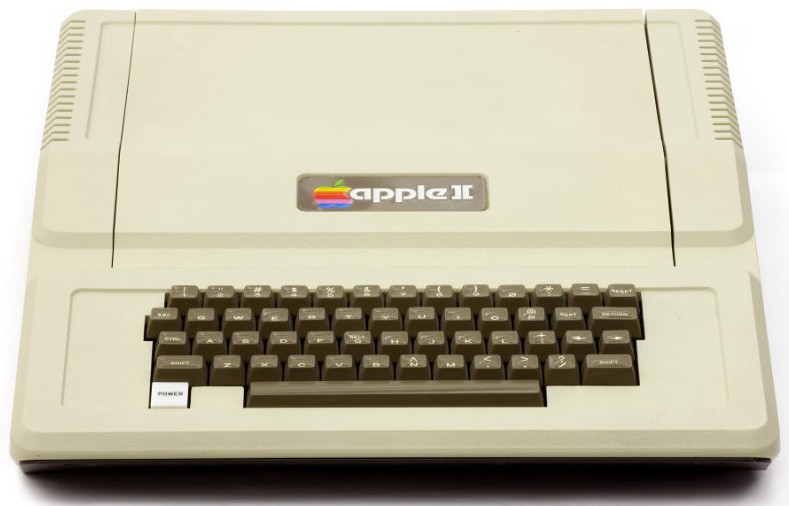
A midrange model of Apple’s new iMac Pro comes with a massive 11 times as many bytes of electronic memory as the Apple II, the company’s first breakthrough computer.
Doesn’t sound all that impressive? We’re not just talking about a single Apple II unit. Instead, that figure refers to the sum total of all electronic memory ever installed on all 6 million Apple II computers ever built!
An amazing statistic about iMac Pro memory
The astonishing stat got dropped on Twitter by Bruce “Tog” Tognazzini, the legendary computer interface expert. Apple’s first applications software engineer, he worked at the company from 1978 through 1992.
My new iMac Pro, with 64 GB RAM and 4TB SSD has 11 times as many bytes of electronic memory as the Apple II, and by “Apple II,” I mean the total of all electronic memory ever installed in all six million Apple II computers ever made
— Bruce Tog Tognazzini (@asktog) January 4, 2018
Incidentally, those years coincide almost exactly with the time Apple manufactured Apple II computers, its third-longest-lasting product line (after the Macintosh and iPod). As we’ve written before in “Today in Apple history,” Apple debuted the first Apple II in 1977 and produced its last model in 1993, with several iterations in between.
Tog’s new iMac Pro boasts 64GB of RAM and a 4TB SSD, positioning it midway up the iMac Pro rankings. The base model features 32GB RAM. A fully kitted-out iMac Pro (which can cost up to $13,926.98) packs 128GB of 2666MHz DDR4 ECC memory.
The fact that decades of Moore’s law means that today’s top-end computers are a whole lot more powerful than the models of yesteryear is no great shock. What’s more shocking is how much the Apple II actually managed to do on between 4KB and 64KB of memory.
Nonetheless, Tog’s observation really hammers home just how far things have come!

Luke Dormehl is a U.K.-based journalist and author, with a background working in documentary film for Channel 4 and the BBC. He is the author of The Apple Revolution and The Formula: How Algorithms Solve All Our Problems … and Create More, both published by Penguin/Random House. His tech writing has also appeared in Wired, Fast Company, Techmeme and other publications.


One response to “iMac Pro packs more memory than every Apple II computer ever built”
“What’s more shocking is how much the Apple II actually managed to do on between 4KB and 64KB of memory.”
As someone who developed for the Apple ][ back in the day, it’s even more impressive when you realize that much of that memory was reserved for other things. You had input buffers, low-res / text screen buffers. If you did anything with “hi-res” graphics, that occupied two 8K buffers. Basic was stored in ROM and was addressable as the upper 16K of the 64K stack. You had to resort to bank switching techniques to use the upper 16K of ram, etc. To code any sort of game that needed reasonable animation performance, you needed to code in 6502 assembly. Yeah… good times!