When Apple entered the artificial intelligence race, the company faced a fundamental challenge: how to deliver powerful AI capabilities while maintaining its long-standing commitment to user privacy. The result is Apple Intelligence, a system designed around a simple but revolutionary premise — your personal data should work for you without leaving your control. Basically, that’s how privacy shapes Apple Intelligence features on “the edge,” meaning the furthest reaches of a computer network, where user devices dwell.
How privacy shapes Apple Intelligence features
Unlike traditional AI systems that funnel user data to remote servers for processing, Apple Intelligence primarily operates through on-device processing. That allows it to understand personal information without collecting it. This approach represents Apple’s attempt to reconcile two seemingly incompatible goals: sophisticated AI that understands your personal context, and ironclad privacy protection.
The foundation: On-device intelligence

Image: Apple
The cornerstone of Apple Intelligence is processing that happens directly on your iPhone, iPad or Mac. Apple integrated the technology deep into devices and apps, making it aware of personal data without collecting it. This results from years of investment in specialized silicon designed specifically for on-device AI tasks
When you use features like email summaries, notification previews or Writing Tools, the on-device models generate these outputs locally without data leaving your device. The on-device model uses about 3 billion parameters, optimized specifically for Apple Silicon processors to balance capability with efficiency.
This architecture means that when Siri searches through your Messages or Notes, or when Apple Intelligence provides suggestions through widgets, all personal information stays on your device rather than going to Apple servers. The processing happens in real-time, locally, with no external servers involved.
When the cloud becomes necessary: Private Cloud Compute

Photo: Apple
Not every AI task can run on a phone or tablet. Complex requests requiring greater computational power need more resources than even the most advanced smartphone can provide. For these situations, Apple developed Private Cloud Compute (PCC). It’s what the company calls a groundbreaking approach to cloud-based AI processing.
When Apple Intelligence determines a request needs cloud processing, it uses Private Cloud Compute. It runs larger server-based models powered by Apple silicon. These servers are built with the same security architecture as your iPhone. So it includes Secure Enclave technology for protecting encryption keys and Secure Boot to ensure only verified code runs.
The privacy promise of Private Cloud Compute is straightforward but technically complex. Data sent to these servers never gets stored or made accessible to Apple. And it’s used exclusively to fulfill user requests. Once your request is completed, the data is immediately deleted from the server.
The system runs through stateless computation, meaning PCC nodes cannot retain user data after completing their task. No debugging interfaces let Apple engineers access user data, even during system outages.
Five pillars of cloud privacy

Photo: Cult of Mac Deals
Apple’s approach to Private Cloud Compute rests on five core technical requirements, as detailed in the company’s security research blog:
Stateless computation: User devices send data to PCC solely for fulfilling inference requests. Technical enforcement prevents data retention after the duty cycle completes.
Enforceable guarantees: The security promises aren’t just policies. They’re technically enforced through the system architecture. That makes it impossible to bypass them without fundamentally breaking the system.
No privileged access: PCC contains no privileged interfaces that would let Apple staff bypass privacy protections, even during critical incidents.
Non-targetability: In this system, attackers cannot specifically target individual users’ data. Any breach would need to compromise the entire PCC infrastructure, making targeted surveillance impractical.
Verifiable transparency: Perhaps most remarkably, Apple allows independent security researchers to verify these claims. The company has published comprehensive technical documentation and even created a Virtual Research Environment that lets researchers test PCC software on their own Macs.
Trust, but verify
Apple’s commitment to verification sets it apart from other AI providers. The company released a Virtual Research Environment that enables security researchers to perform independent analysis of Private Cloud Compute directly from a Mac. The VRE includes a virtual Secure Enclave Processor. That allows security research into components never before accessible on any Apple platform.
Researchers can access published software binaries and source code for key PCC components. Before sending requests to the cloud, devices can cryptographically verify the identity and configuration of PCC servers. And they can refuse to communicate with any server whose software hasn’t been publicly logged for inspection.
This approach addresses a fundamental challenge in cloud computing. How do users know their data is actually being handled as promised? By making the system verifiable by independent experts, Apple transforms privacy from a marketing claim into a technically auditable reality.
Transparency in practice
For users who want visibility into how their data is processed, Apple provides practical transparency tools. You can generate reports showing which requests your device sent to Private Cloud Compute over the past 15 minutes or 7 days. These reports are accessible through Settings > Privacy & Security > Apple Intelligence Report, where you can export detailed logs for review.
Apple has also committed that the company does not use users’ private personal data or interactions when training its foundation models. The training data comes from licensed sources and publicly available web content collected by AppleBot, with filters to remove personally identifiable information.
The ChatGPT integration caveat
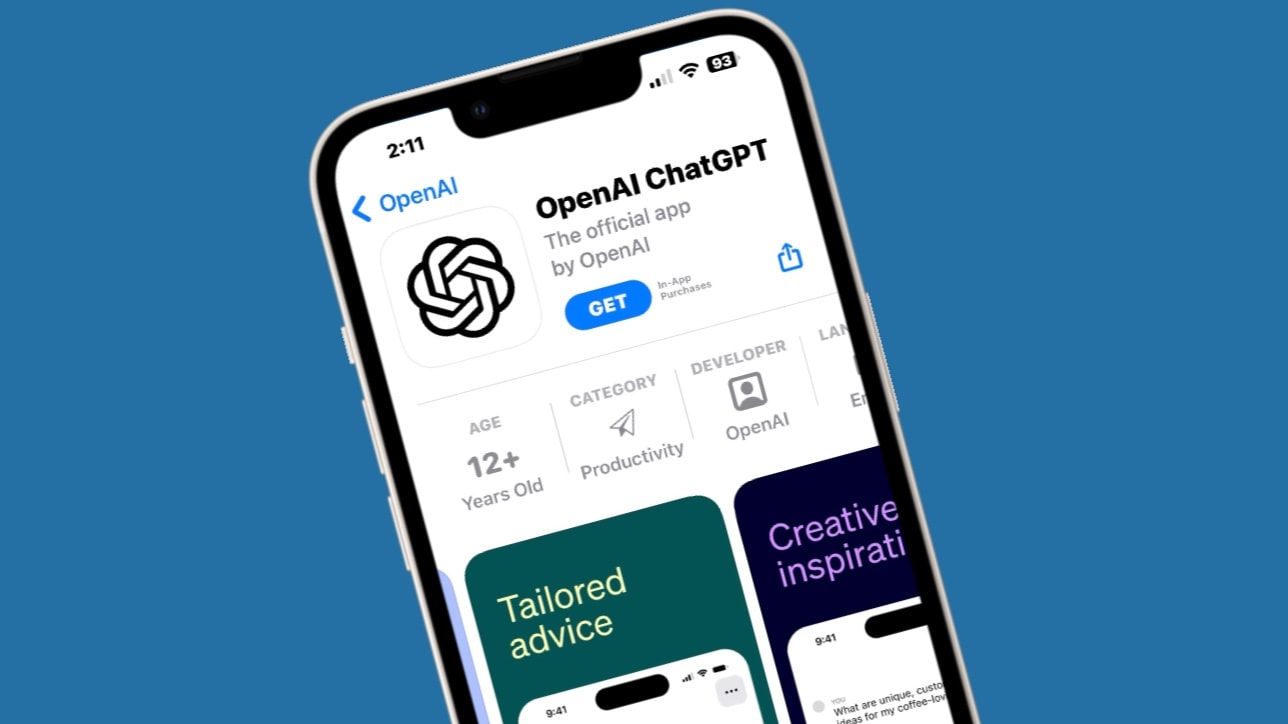
Photo: Cult of Mac
Apple Intelligence can integrate with ChatGPT from OpenAI for certain requests, but this comes with important privacy distinctions. Users control when ChatGPT is used and will be asked before any information is shared.
Note that when you use ChatGPT through Apple Intelligence, data gtets handled according to OpenAI’s privacy policies, not Apple’s Private Cloud Compute protections.
How privacy shapes Apple Intelligence features: What this means for users
Apple Intelligence bets that users will choose privacy-preserving AI over more powerful but privacy-invasive alternatives. The system demonstrates that local processing can handle many everyday AI tasks, from writing assistance to photo organization, without cloud involvement.
For tasks requiring cloud processing, Private Cloud Compute extends device-level privacy protections into the data center in ways no other major AI provider currently matches. The combination of stateless computation, enforceable guarantees, no privileged access, non-targetability and verifiable transparency creates what Apple believes is the most advanced security architecture ever deployed for cloud AI at scale.
Some limitations
The approach has limitations. On-device models are necessarily smaller and less capable than frontier AI systems running in traditional cloud environments. Some users may find these tradeoffs frustrating when Apple Intelligence can’t handle requests that ChatGPT or other services manage easily.
But for users who prioritize privacy, Apple Intelligence offers something genuinely different. That would be AI that understands your personal context while keeping that context under your control. Whether this privacy-first approach will define the future of personal AI or remain a premium alternative depends on whether users value privacy enough to accept the tradeoffs it requires.

David Snow, an expert on Apple hardware and software, writes on a variety of technological and cultural topics for Cult of Mac. They include Apple news, technology buying guides, and features about computer setups and Apple TV shows and movies.
With 30 years of experience covering technology and other subjects, he has written and edited for numerous print and online publications, including CMP Media, TechTV.com, CNET, Wired News, Red Herring magazine, Law.com, The National Law Journal and Law Technology News magazine. Among other roles, he served as executive editor of the Law.com network of websites and editorial director, technology, for ALM Media.
Snow graduated with a B.A. from Syracuse University with majors in magazine journalism and psychology. While there, he worked as a reporter for The Daily Orange newspaper and associate editor of Equal Time magazine.
Founder of the blog At the Waterline, he can be reached on X (formerly Twitter) via @atthewaterline and on Mastodon via @dsnow.