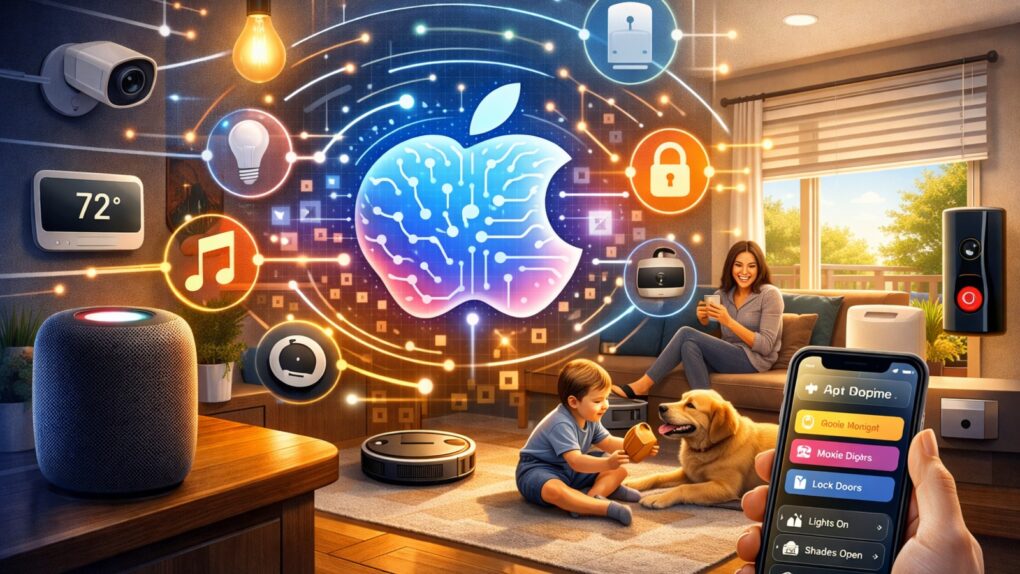
Apple’s smart-home platform has long trailed competitors like Amazon Alexa and Google Home in automation capabilities and intelligent features. But with further development of Apple Intelligence — the company’s suite of AI-powered tools — that gap may finally close, and Apple Intelligence truly could empower Apple Home.
While Apple hasn’t officially announced AI-driven Home automations, the groundwork is clearly being laid for a future where your smart home anticipates your needs rather than simply responding to commands.
How Apple Intelligence could empower Apple Home automations
Today’s Apple Home app allows users to create basic automations triggered by time, location, sensor readings or when specific accessories change state. You can set lights to turn on at sunset or have your thermostat adjust when you leave home. But these automations require manual configuration and lack the contextual awareness that makes smart homes truly intelligent. Apple Intelligence could soon change that.
According to Apple’s support documentation, current automations are rule-based and relatively rigid. They don’t learn from your behavior or adapt to changing circumstances without explicit reprogramming.
What Apple Intelligence brings to the table

Photo: Apple/Cult of Mac
Apple Intelligence, introduced with the iOS 18 cycle of updates, represents Apple’s approach to on-device AI processing. The technology powers features like enhanced Siri capabilities, intelligent writing tools and contextual suggestions throughout the operating system. Even as we’re still waiting for it to reach higher potential, the same underlying technology could revolutionize home automation.
The key advantage of Apple Intelligence is its privacy-first architecture. Unlike cloud-dependent AI systems, Apple processes most intelligence tasks directly on your devices using the company’s Neural Engine. This means your home automation data — including patterns about when you’re home, your daily routines and your preferences — could remain private while still enabling sophisticated AI features.
Potential AI-powered automation scenarios
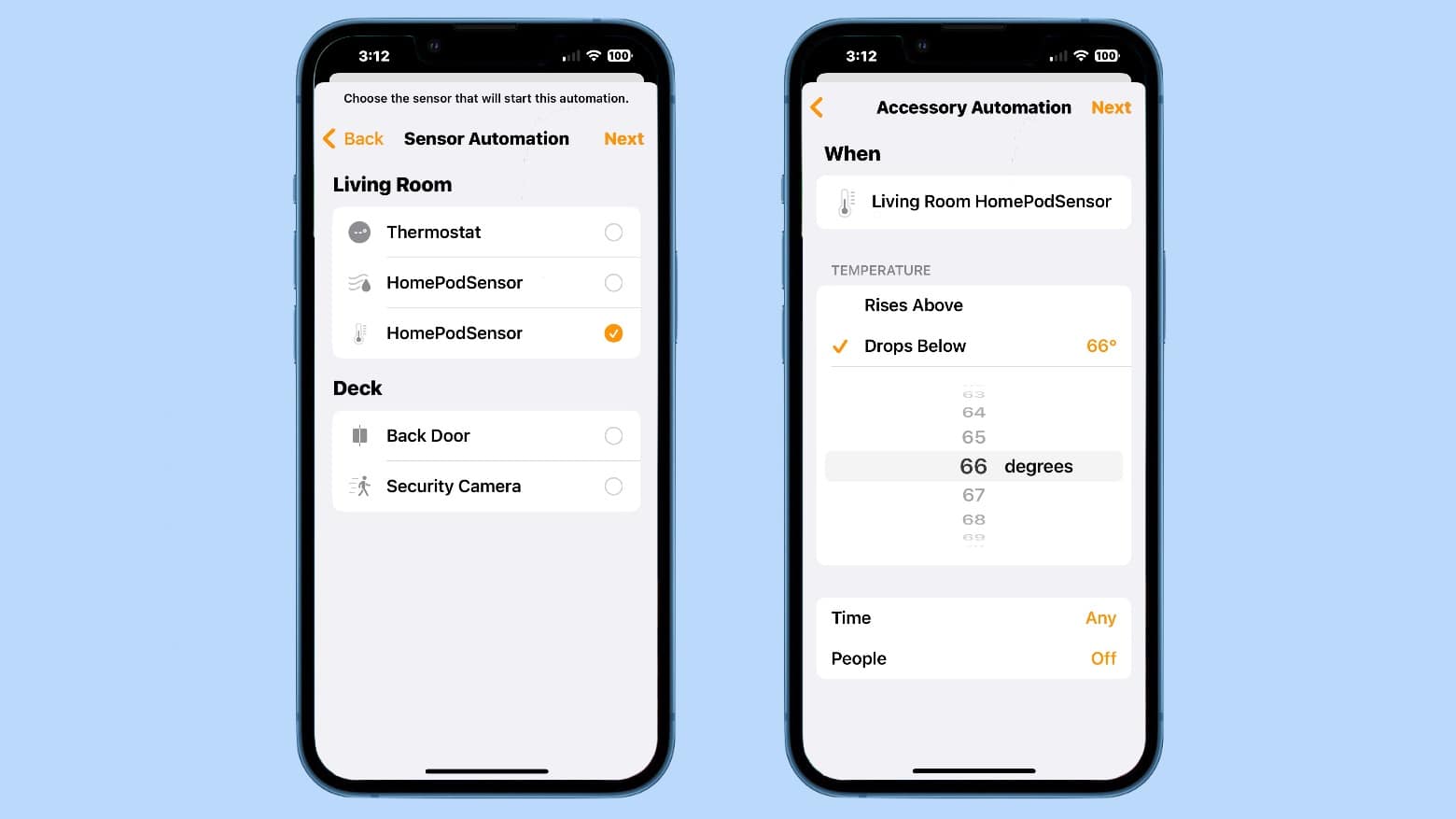
Photo: Ed Hardy/Cult of Mac
Imagine a smart home that learns your routines without explicit programming. Apple Intelligence could analyze patterns in your Home data to automatically create helpful automations. For example, if you consistently dim the living room lights and lower the thermostat around 10 p.m. on weeknights, the system could suggest — or even automatically implement — that as a recurring automation.
More sophisticated applications become possible when Apple Intelligence connects multiple data points. The system could monitor weather forecasts, your calendar appointments and historical usage patterns to make proactive decisions. On a day when you have an early meeting on your calendar, your smart home might start your morning routine 30 minutes earlier than usual. When outdoor temperatures are forecast to drop significantly, it could preemptively adjust your heating schedule.
Natural language processing could transform how users interact with Home. Apple now works to make Siri significantly more capable through Apple Intelligence. Rather than memorizing specific command phrases, you could speak naturally, like “Make the bedroom comfortable for sleeping.” And then the system interprets that based on learned preferences about your ideal sleeping temperature, lighting and sound levels.
Context-aware automation

Photo: Nanoleaf
The real power of AI-driven home automation lies in contextual awareness. Apple Intelligence already demonstrates this capability in other areas. It knows when to surface relevant information based on what you’re doing, where you are and what time it is.
In a smart-home context, this means automations that respond to nuance rather than rigid rules. Your “arrive home” automation could behave differently on a Tuesday evening versus a Saturday afternoon. The system might recognize that you typically arrive home from work tired and wanting relaxation, but weekend arrivals often precede social gatherings requiring different lighting and climate settings.
Apple’s Health app data could provide additional context. If your Apple Watch detects elevated stress levels or poor sleep quality, your home environment could automatically adjust to promote relaxation. That could include dimmer lighting, lower temperatures and maybe a white-noise machine.
Integration with existing Apple Intelligence features
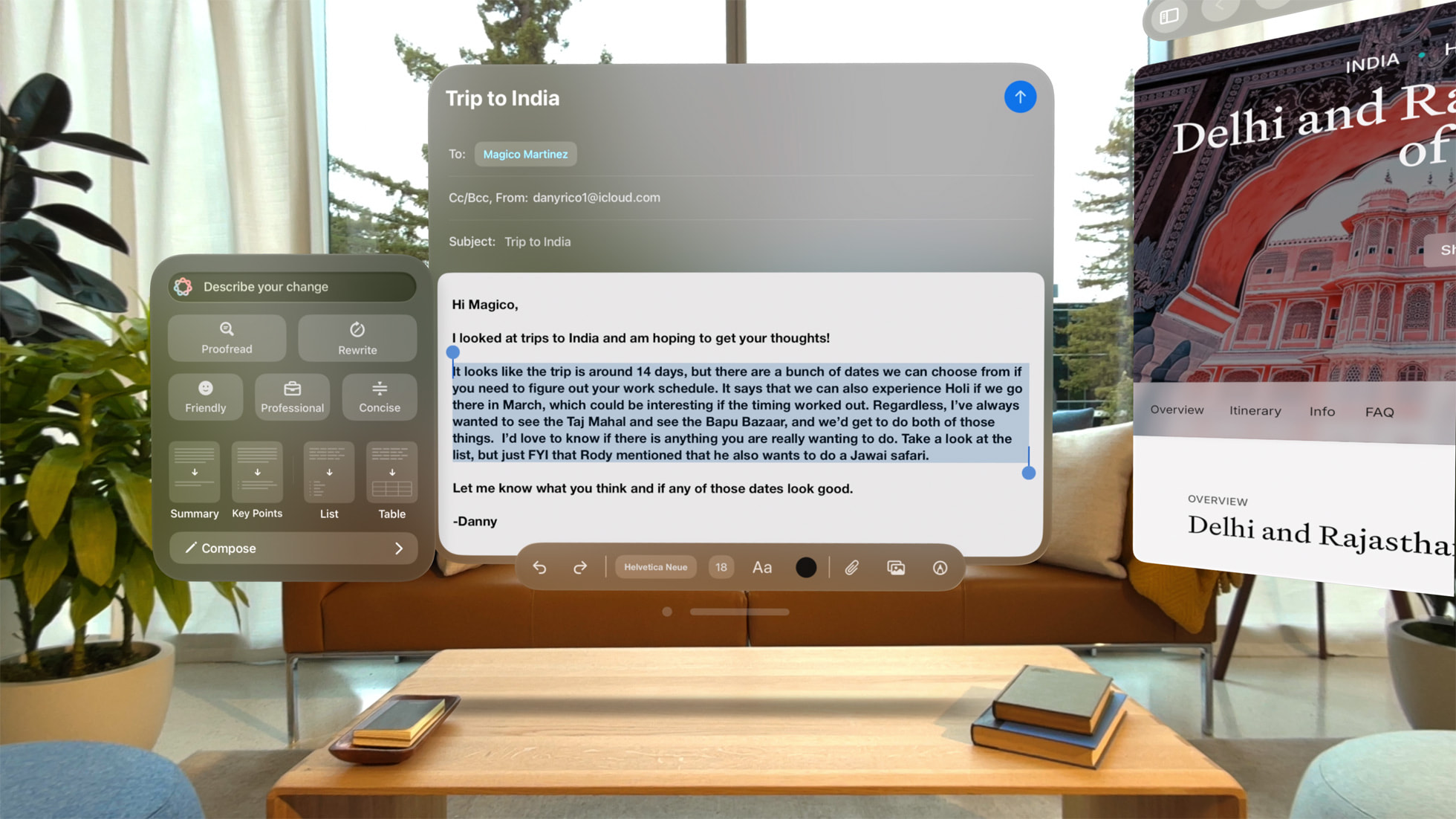
Photo: Apple
Apple Intelligence’s writing tools and summarization capabilities could extend to home automation management. The system might generate plain-English summaries of your home’s energy usage, suggesting optimizations based on detected patterns. It could draft automation routines in response to vague requests, then explain exactly what the automation will do before you approve it.
The Focus modes introduced in recent iOS versions provide another integration point. These modes already adjust notification settings and app availability based on context like work, sleep or personal time. Extending Focus modes to control Home-enabled devices would create a unified system where your entire digital and physical environment adapts to your current activity.
Challenges and considerations
Privacy concerns loom large for any AI-powered home system. Apple’s on-device processing approach addresses many worries, but home automation inevitably requires some data sharing — at minimum with Home app accessories themselves. Apple would need to ensure that third-party device manufacturers couldn’t access AI-generated insights about user behavior.
Reliability is another critical factor. Rule-based automations are predictable. AI-driven automations inherently involve uncertainty. Users need confidence that their heating won’t shut off unexpectedly or that doors will lock reliably. Apple would likely implement AI suggestions gradually, requiring user approval before automations become fully autonomous.
The road ahead

Photo: Apple
While Apple hasn’t confirmed plans for AI-powered Home automations, the pieces are clearly falling into place. The company’s investment in on-device AI combined with its privacy-focused approach positions it uniquely to deliver smart home intelligence that users can trust.
As Apple Intelligence continues evolving across iPhone, iPad and Mac, extending these capabilities to the home seems like a natural next step. And it could finally make Apple’s smart-home platform as intelligent as its name suggests.

David Snow, an expert on Apple hardware and software, writes on a variety of technological and cultural topics for Cult of Mac. They include Apple news, technology buying guides, and features about computer setups and Apple TV shows and movies.
With 30 years of experience covering technology and other subjects, he has written and edited for numerous print and online publications, including CMP Media, TechTV.com, CNET, Wired News, Red Herring magazine, Law.com, The National Law Journal and Law Technology News magazine. Among other roles, he served as executive editor of the Law.com network of websites and editorial director, technology, for ALM Media.
Snow graduated with a B.A. from Syracuse University with majors in magazine journalism and psychology. While there, he worked as a reporter for The Daily Orange newspaper and associate editor of Equal Time magazine.
Founder of the blog At the Waterline, he can be reached on X (formerly Twitter) via @atthewaterline and on Mastodon via @dsnow.

