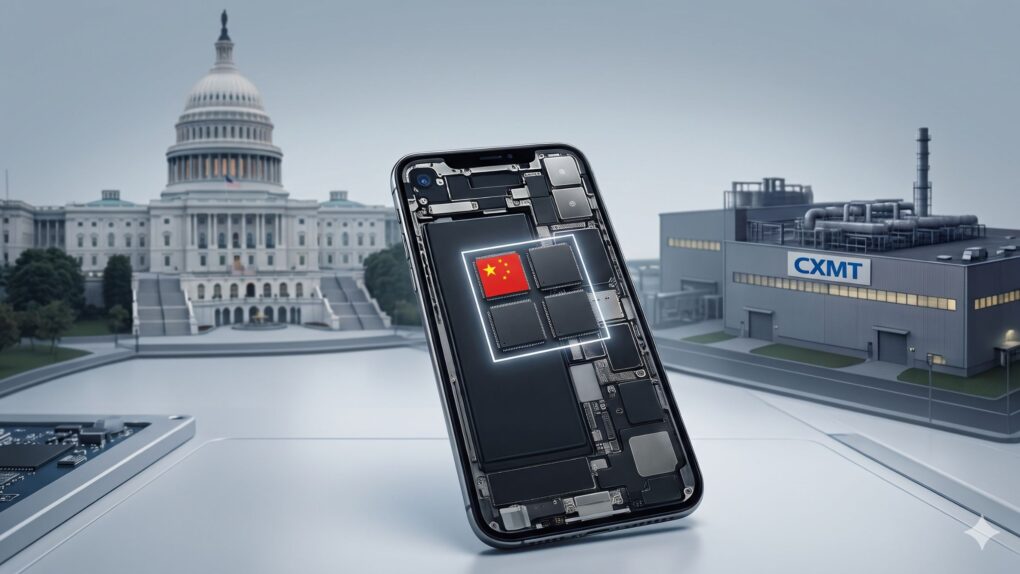
RAM has gotten so expensive that Apple is reportedly willing to stir up a political storm just to secure its supply. The solution may involve buying RAM from a Chinese chipmaker that the Pentagon says has ties to the Chinese military.
It wouldn’t be illegal. But that doesn’t mean there wouldn’t be consequences for the Mac maker.
The Chinese memory maker Apple wants is on a blacklist
Apple just raised MacBook and iPad prices by as much as 20%, blaming “unsustainable” memory costs. That memory squeeze is the same one you’re already paying for, but a cheaper, steadier supply might mean smaller price hikes.
A new report by the Financial Times claims Apple has spent more than a month convincing the Trump administration to allow it to buy memory chips from the Chinese DRAM maker CXMT. This is the same company the Pentagon has added to the 1260H list, which is a roster of companies it believes have connections to the Chinese military.
But here’s the thing — buying memory chips from CXMT wouldn’t be illegal. Being on the 1260H list creates reputational risk, not legal restrictions. Still, “technically legal” and “politically safe” are very different things in Washington, especially for a company as huge as Apple.
AI boom is to blame
Outside of China, the memory business is dominated by just three companies — Micron, Samsung and SK Hynix. For years, a supply glut enabled Apple to stock up on cheap memory chips.
But, in the last few years, the AI boom has completely flipped that script. Tech giants have been purchasing a large share of advanced memory chips for their AI data centers, causing a real shortage of chips that go into your phone, laptop and tablet.
And CXMT — China’s homegrown memory chip maker — could provide Apple the extra capacity it needs to fill that gap.
Congress would probably hate this
Apple’s timing isn’t a coincidence. Since Trump’s meeting with Xi Jinping last month, the White House has been holding back on new restrictions on Chinese tech companies to avoid upsetting trade talks. But that doesn’t mean the sailing will be smooth.
John Moolenaar, the Republican chair of the House Committee on China, warned Apple that partnering up with a Chinese military-linked company “would be a grave mistake.”
Also, this isn’t the first time Apple has waded into this exact mess. Back in 2022, the company faced similar backlash when it considered YMTC for supplying iPhone chips sold in China.
What happens next?
There’s no way to know if the Trump administration would grant Apple’s request. Even if it does, there’s nothing stopping Washington from formally blacklisting CXMT.
For now, Apple seems to be caught between squeezed suppliers, an AI-fueled memory shortage and a Congress that’s closely watching its every move. How this plays out will affect more than just Apple’s margins — it could shape how much you pay for your next iPhone.

Anurag Chawake is a tech-focused writer specializing in smartphones, apps and consumer technology. His interest in computers began during the Windows 98 era, eventually leading him to explore everything from operating systems to mobile devices and PC hardware. Anurag previously contributed to The Indian Express, covering Apple, Android, gaming and the broader technology landscape.

