RIM's former boss was planning to bring BlackBerry Messenger to low-cost non-RIM smartphones
According to a new report RIM’s former co-CEO Jim Balsillie was attempting to reinvent the company as a network services provider before he and RIM’s other former co-CEO Mike Lazaridis were forced to step down earlier this year. Balsillie envisioned RIM partnering with mobile carriers to offer basic smartphone messaging and social network service plans at a fraction of the cost of traditional data plans. The most surprising part of this revelation is that Balsillie planned to offer these services on devices made by other manufacturers.
As with many of RIM’s moves over the past couple of years, this highlights the identity crisis that developed within the company as its market share dwindled after the release of the iPhone and Android.
Mega-popular Android and iOS app Draw Something has received a significant update that brings several new features and improvements. The ‘pull to refresh’ gesture has been implemented for loading new game updates, and you can now swipe with your finger to undo the last line you drew.
Drawings can now be shared directly with friends on Facebook and Twitter. You can also save your drawings locally to your smartphone.
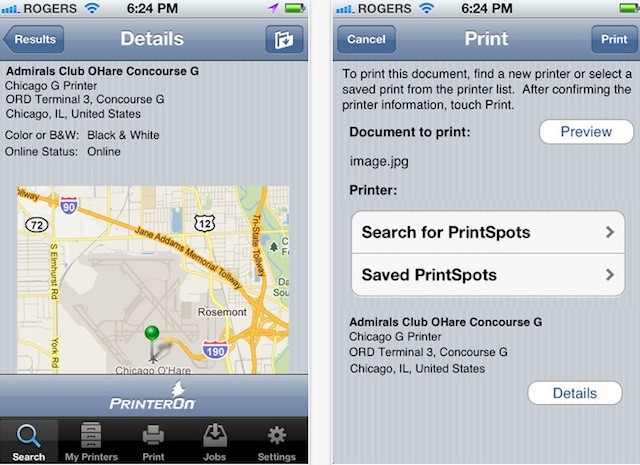
PrinterOn's iPhone app offers mobile printing to 10,000+ public printers
The AirPrint feature in iOS let’s you print from your iPhone or iPad to your home printer – directly if you have one of the handful of AirPrint-capable printers on the market or using a print server device or utility on your Mac like Printopia or FingerPrint.
AirPrint addresses the basic need to print, but it isn’t really a mobile solution. What if you’re on a business trip or vacation and need to print? What if you’re headed to a meeting and forgot to print out brochures ahead of time?
You’re either going to love Opuss, or you’re going to really hate it. It’s a social network for word lovers. It’s Instagram for poetry. It’s Twitter for wannabe comedians. It’s beautifully and thoughtfully designed, but, still in its early days, isn’t as compelling as it could be.
Cydia on iOS 5.1 could soon become a reality, but there's still a long way to go.
Regret upgrading to iOS 5.1 and losing your jailbreak? Yeah, me too. But thankfully, Pod2g and his team of iOS hackers have now discovered all of the exploits required for the iOS 5.1 jailbreak.
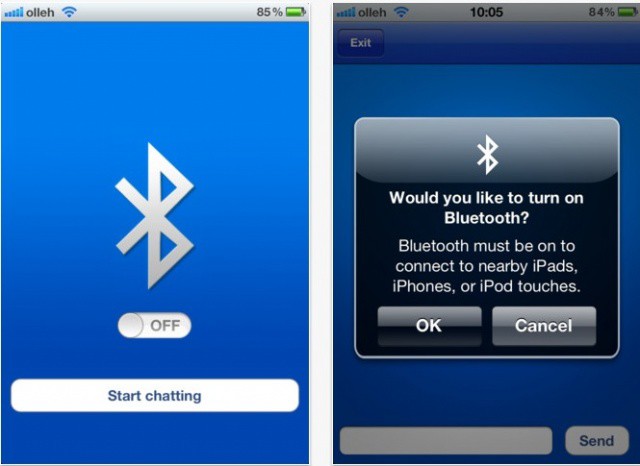
One of the most annoying things about Apple’s Bluetooth implementation in iOS is that turning it on or off is a four-step process involving digging deep into Settings. Considering the battery drain associated with just leaving Bluetooth on and the wide variety of devices you can connect via Bluetooth to your device, it’s a constant irritation for many.
Jailbreak utilities like SBSettings make turning bluetooth on/off on the fly a fairly simple proposition, but unfortunately, Apple hasn’t borrowed inspiration from any of them when it comes to baking better Bluetooth toggling into iOS. A new $0.99 app on the App Store, though, makes it much easier to toggle Bluetooth on the fly on your device even without a jailbreak. Launch the app once to toggle Bluetooth on, launch again to toggle off. Simple.
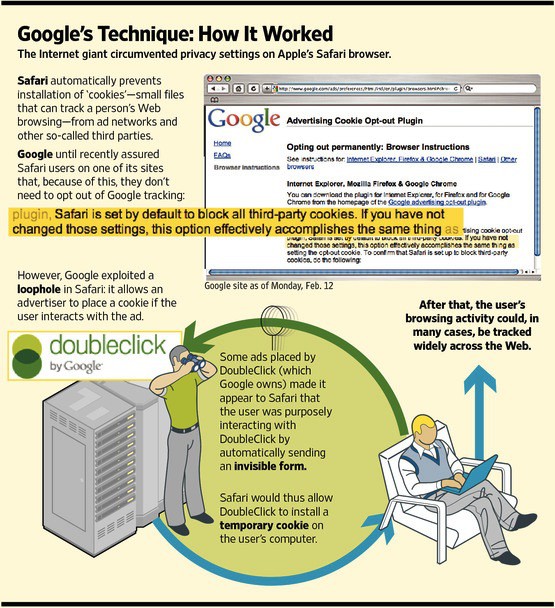
Google on its parts always said it had done nothing wrong, and used known functionality in Safari to make sure their advertising cookies were always stored locally on users’ machines, even if their cookie settings were set to private. Looks like that might not have been enough for the FTC, though, who are now looking to start doling out fines to Google over the issue.
BYOD programs often mean IT can track your iPhone/iPad and restrict access to features and apps
BYOD programs are popping in workplaces of virtually every shape and size. One of the big advantages of these programs is that you can decide what kind of mobile device (iPhone, iPad, or other device) and what apps make the most sense for your job and how you work. Some companies even offer reimbursement of some of the expenses associated with using your personal tech in the office – an example being your iPhone or iPad’s data plan (or a portion of it).
That sense of freedom is very empowering, but it often comes with the tradeoff of your company’s IT department enrolling your device in a mobile management system. This means that certain features of your device are likely to be restricted for security purposes. It also means that your company will be able to monitor and track how you use your iPhone or iPad and can wipe data remotely at any point.
With Windows 8, Windows RT, and Windows Phone, Microsoft seems to be copying Apple strategies
Yesterday, Microsoft announced its Windows 8 product lineup. The lineup includes just three editions as opposed to Windows 7 and Vista, which offered twice as many options though some were targeted at developing and niche markets. In addition to streamlining the overall offerings, Microsoft also drew a sharper line between Windows 8 for desktop, notebook, and tablet PCs with x86/64 processors and Windows for ARM-based tablets.
If the dividing line between a full-fledged version of Windows and a version designed for low cost tablets seems vaguely familiar to you, it’s because the strategy is pretty similar to the distinction between Apple’s OS X for Macs and iOS for iPhones, iPads, and iPod touches.
In fact, the entire desktop and mobile lineup that Microsoft is developing seems to borrow pretty heavily from Apple’s playbook.
If you liked Read It Later, you'll love Pocket. And so will your wallet.
Read It Later, the most popular way for users to save content they find on the web, has just received a new name, stacks of new features, and lost its price tag in a major update released today. Now called Pocket, the new app is free across Android and iOS devices, and delivers a new user interface, video and image filters, favorites, and much, much more.
This unique string of alphanumeric text attached to every iPhone and iPad is the source of a lot of privacy concerns.
Many of us feel a deep personal connection with our iPhones, and small wonder: the average person’s smartphone knows more about them than their spouse or significant other. Our iPhones hold our contacts, photos, videos, music, banking data, texts, emails, voicemails, web logins, apps and more. We use our phones to pay our bills, send texts to our girlfriends, check-in to our favorite club, play games with friends, and much more besides.
That makes our iOS devices a juicy target for tracking, and what most people aren’t aware of is that, historically, Apple has made it very easy to anyone to tell what you do with your iPhone. It’s called a Unique Device Identifier or UDID. Every iOS device has one, and using it, third-parties have been able to put together vast databases tracking almost everything you do with your iPhone, iPod touch or iPad.
The good news for privacy advocates is that the days of UDID are numbered. Following the recent stink the U.S. Congress raised over how iOS apps handle a user’s personal information without permission, Apple has given an ultimatum to third-party App Store developers: either stop tracking UDIDs or get kicked out of the App Store. Now ad networks and developers are scrambling to agree on a way to track your device in the future.
But are these replacements any good, or do they pose even bigger privacy concerns than UDIDs did?
Future iOS devices could offer glasses-free 3D technology that's better than anything else you've already seen.
Apple has filed for all sorts of patents related to 3D technologies over the years, sparking speculation that the company will one day bring us 3D-capable Macs and iOS devices. But evidence that it’s about to get serious about 3D technology for iOS devices comes from a recent job listing on its website for a “Computer Vision specialist to strengthen its multi-view stereo research group.”
Quickoffice announced its new cloud service known as Connect at the end of last month. The service is designed to sync Microsoft Office documents between your iOS devices, Android devices, Macs, and PCs. It’s an extension to the Quickoffice apps for iOS and other mobile platforms that offer the ability to create, edit, and view Word, Excel, and PowerPoint files on the go.
Connect by Quickoffice is now available from the App Store and it’s a very slick app and a great addition for any iOS user or mobile professional.
Watch out for the cuboid shadow of the 4D object later on
If, like many people, you find Mondays just too much to cope with, you might want to avoid today’s app. It’s not the sort of thing that’s going to make your Monday feel any better, and in some cases it will just fry your brain until next Monday. Which would be a shame, because you’d miss out on a whole weekend.
Be forewarned, then: The Fourth Dimension is an app which will mess with your head. Deliberately. Even though the aim is education and expansion of knowledge, it will still mess with your head. You will emerge from the experience only fractionally the wiser, and quite a lot more confused than you were at the beginning. Don’t worry, this is perfectly normal.
JAMF offers up ways to integrate its MDM suite with Apple Configurator
Recently, we’ve been highlighting some of the major partnerships that are beginning to form between mobile management and mobile/cloud services vendors. These partnerships are strategic and aim to enable IT workflows that better secure, support, and monitor iPhones, iPads, and other mobile devices than what any one company could offer. So far, these partnerships and the integration of solutions that they offer haven’t included Apple or the basic management tools that Apple makes available for free – until now.
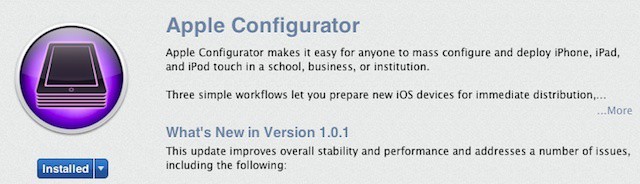
Mac and iOS management provider JAMF has posted a guide to integrating the company’s signature solution with Apple’s free Configurator tool to streamline iOS deployment.
SoulCalibur finally allows you to compete with friends over Bluetooth.
We were hugely exited for SoulCalibur when the classic fighter made its debut on iOS back January. And while we were very impressed by Namco Bandai’s efforts, like many reviewers, we were disappointed by the lack of any multiplayer modes. After all, that’s what fighting games are all about, right?
Thankfully, Namco has now rectified that with an update that brings local multiplayer over Bluetooth… except for the iPod touch.
Is there a need for iOS/mobile certification or is the market evolving too fast for one?
One of the traditional ways for IT professionals to highlight their knowledge of specific technologies and technical concepts is through the acquisition of certifications. There are a number of vendor-crafted certifications available as well as vendor-neutral certifications that illustrate competence in various technical disciplines like troubleshooting and repair, security, healthcare, and overall network management. Certifications have never guaranteed a job in and of themselves, but they do help candidates sell themselves to recruiters and IT managers.
One of the many challenges with the consumerization of IT, mobility, and cloud services trends is that they are dramatically shifting the skill sets required to succeed in the IT field. As a result, the perceived value of certifications has fluctuated as softer skills like business integration and project management have become more desirable. The need for professionals that have extremely specialized skills is being surpassed by the need for IT generalists.
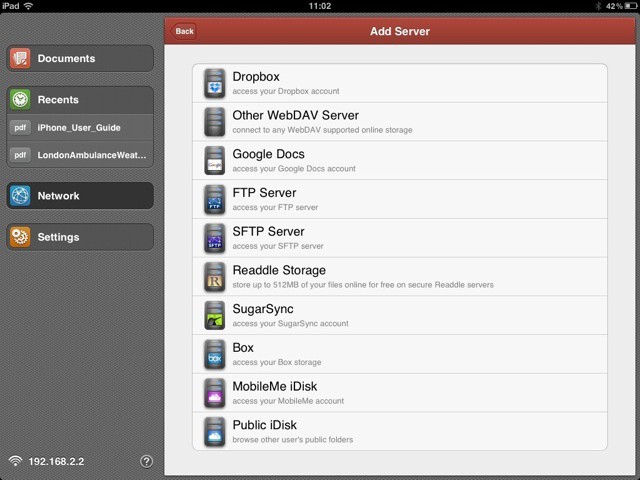
Could/developer partnerships fill the file management void in iOS
It seems that every week for the past few months, there’s been at least one or two announcements of app developers, cloud service providers, and mobile management vendors developing strategic partnerships to create or integrate their products into a single unified workflow.
Box’s OneCloud initiative, in which the storage provider teamed up with more than two dozen app developers to create seamless workflows for several different business and productivity tasks, is probably the biggest example of this trend. Others include Quickoffice launching its own cloud service as well as integrating with Accellion’s kitedrive, LogMeIn’s new Cubby service, and CloudOn’s virtualized version of Microsoft Office that integrates with Box and Dropbox for storage.
Apple CEO Tim Cook was reportedly spotted at the headquarters of PC gaming platform Valve this morning. The Washington-based company boasts the most robust and established desktop gaming network in existence. Think of Valve as the iTunes of PC gaming. Is a Valve/Apple partnership in the works?
Best suited to very creative people with LOTS of ideas
Ideas is an iOS app for managing, organising and sorting your ideas and thoughts. It stands out from the crowd thanks to a refreshingly different interface that does the job very well. It usually costs two bucks, but right now it’s on sale for one dollar.
A new CompTIA survey shows one 22% of companies have a mobile use policy
Mobile technology is playing an ever bigger role in the workplace. According to a recent study by IT training and certification giant CompTIA, 84% of knowledge workers use an iPhone or other smartphone for at least some work tasks on a daily basis – unsurprisingly email and using web-based services ranked as the most common and universal uses.
Despite that level of use, the survey – which didn’t break out numbers for corporate-owned versus employee-owned devices – found that only 22% of businesses have an official policy regarding the use of mobile technology. An additional 20% indicated that they are exploring options for mobility policies but haven’t yet completed them.
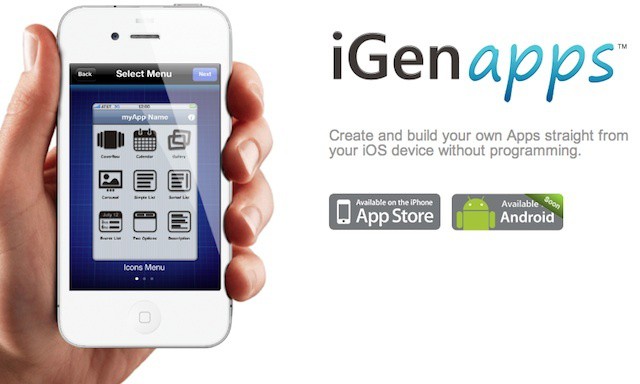
iOS development could be as easy as selecting a template and filling in the blanks.
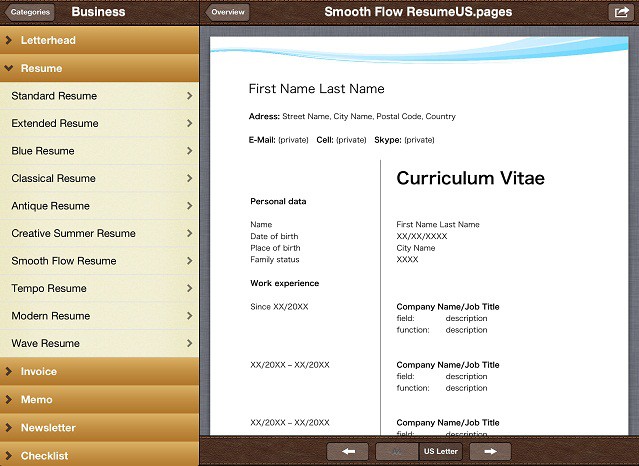
With its iBooks Author software, Apple has made it incredibly easy for almost anyone to write and publish their own e-book. And it hopes to make it just as easy to create iOS apps. One patent application shows the Cupertino company has been working on a tool that would allow users without any programming knowledge at all to build their own iPhone, iPad, and iPod touch software.
Apple wants you to set a number of security questions that will help identify you in the future.
In an effort to increase security for your Apple ID, Apple is forcing users to set a number of security questions and answers that will help “verify your identity in the future.” If you forget your password or your account is compromised, you will be asked to answer these questions to prove who you are.