Have an old iPod Nano? Want to spruce up its interface and software a bit? You’re in luck! This post is going to tell you how to really Pimp Your Pod! It’s rather straightfoward, and shouldn’t take more than 10-15 minutes to complete from start to finish. Please be aware that the iPodWizard portion is using software that’s Windows only, so you should get that virtual machine or Boot Camp install cookin’ for a little while. Read the rest of the post for more information.
When you buy an external Hard Drive for use with Time Machine, Apple’s backup software, you will most likely need to format it before you can use it, since chances are that it is formatted for a Windows based computer. You could always spend the extra money to get a Mac formatted Hard Drive, but what’s the sense in that? You can format your own external Hard Drive right from Mac OS X. This video will show you how.
Sometimes Dashboard can seem like a hassle. While it can be very handy for quick tasks, having to open a specific application to access these widgets can become cumbersome. It is also impossible to perform other tasks while using these widgets. Well, a simple command can fix all of that, and let you enjoy widgets alongside Mac OS X applications. Find out what to do in this video.
Have you ever needed to insert a special character while typing a document in Mac OS X, but didn’t know how? Apple doesn’t provide an easily accessible way to view which keys generate which characters. Buried in System Preferences though, is a keyboard viewer which will let you figure out which keys give which symbols. This video will show you how to enable this function and use it to discover helpful key combinations.
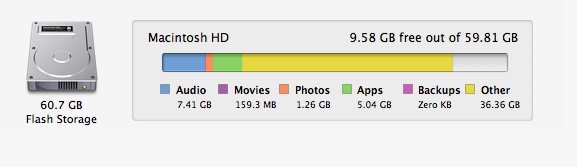
It happens to everyone. Over time, large files will build up on your hard drive and take up space needed for important files, such as photos, music, and the like. It can be frustrating trying to find these files to see if they are of any importance. Enter OmniDiskSweeper, a free utility that solves all those problems. As you’ll see in this video, it’s a handy tool that can help you free up a lot of space.
It happens to everyone. After time, your Mac will start to slow down. This can get awfully frustrating, but it’s not the end of the world. The free application OnyX can help your Mac run just like it did the day you bought. With some simple maintenance, your Mac will be just like new! In this video, you can find out how to get Onyx and use it to tune up your system.
Uninstalling software under Mac OS X is generally a straightforward procedure — just delete the program from the Applications folder. Few vendors offer uninstallers on the Mac, and generally they’re not necessary. Most programs don’t run background components or alter system settings files (like the Registry on Windows), and leaving old preferences and support files on the hard drive generally doesn’t do much harm.
But if you are trying to remove an old or corrupt component, reinstall software to change a serial number, or just free up disk space, removing all components of the old application can be important. These components include the application itself, preferences and support items, and sometimes hidden files or kernel extensions. Anyone who’s had problems installing an Adobe CS application or removing Symantec AntiVirus will appreciate how hard it can be to fully remove old software.
As a parent, it is always important to keep tabs on what your children are doing on the computer. Whether it’s the sites they are visiting, the amount of time they spend online, or even what applications they are using, Mac OS X can cover it. OS X includes a set of parental controls that can be tweaked to anyone’s liking. In this video, you will see how to set up parental controls and use the features that work best for you.
If you are a recent Mac switcher, there is a good chance that there are some Windows applications that you still may want to use. If so, Virtual Box is a great application to let you do this. In this video, you will se how to get virtual box, install an operating system, and run Windows apps side by side with your OS X apps.
You want your computer to be as secure as possible, right? Here’s one thing that newcomers to OS X might want to change pretty soon after getting their hands on their first Mac.
The OS X web browser, Safari, is a pretty good browser in almost every respect. But it has one default option that, personally speaking, I’ve never felt very comfortable about leaving switched on.
Have you ever needed to move Microsoft Word documents between your Mac at home and your PC at work, but you just didn’t know how, or if it was even possible? Once you know what to do, it is a relatively simple and straightforward process that requires nearly no effort. Find out what to do in this video.
Jason Bradbury, the self-proclaimed Apple Expert, has discovered a simple hack that allows owners of the iPad 2 to take X-Ray style photographs through clothes. By applying a filter after blasting a subject with infrared light, the iPad 2’s camera can see through clothing. The best part of the hack is that you don’t need any type of training in radiology as it is incredibly simple and utilizes everyday household objects (infrared light and cellophane) to make it work.
The steps are quite simple:
1: Flood a subject with infrared light. Bradbury recommends using a digital camera with a night vision mode, or a children’s toy that uses infrared light. The infrared light penetrates the clothing and will be able to be picked up with the right filter.
2: Cover the camera on your iPad 2 with two layers of cellophane. The cellophane acts filters out the natural light enough to wear the infrared light comes in stronger and is picked up by the iPad 2’s camera lens.
3. Start snapping pictures. With your infrared source in place and your filter setup you are now ready to start taking some amazingly cool photos.
Have you ever found yourself thinking that your Mac takes too much power or that your MacBook battery is draining too quickly? If you have, you’ll want to check out this video. In it, I’ll show you some of the best, yet most overlooked options for saving energy on your Mac.
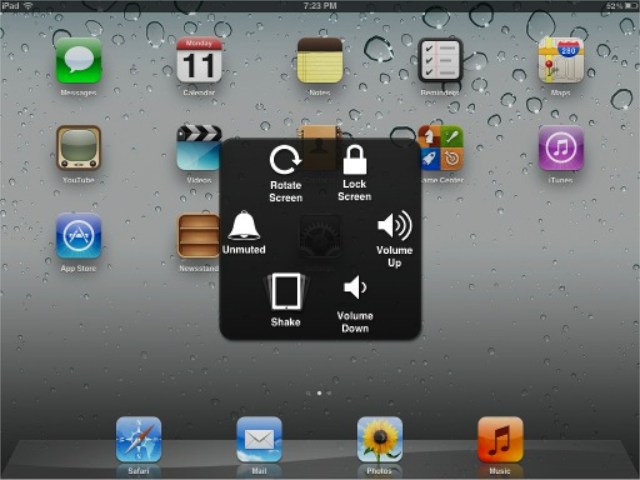
So you just got your iPad, and have loaded it up apps. Now what? It may seem like a hassle to hunt around for the apps you want and to page through all of those home screens. Well, there is an easier way. In this video, you’ll find out the best way to arrange your apps on your iPad.
It’s true: sometimes Macs do crash. More often than not, though, crashes will be limited to a single application, rather than the entire system.
You’ll know an app has crashed because it simply stops doing anything. Clicking on controls has no effect, scrolling gets you nowhere; the app simply doesn’t respond to your usual commands. So what do you do next?
First, don’t panic. OS X is designed to keep crashes under control. Even if an application has crashed, in most cases you’ll still be able to carry on just fine with work you’re doing in other applications. All you have to worry about is the one that’s crashed, and any unsaved work you had inside it.
Every once and awhile, your Mac will decide not to eject a CD or DVD, for various reasons. It could be that it can’t detect the disk, it’s in an incompatible format, or that the disk itself is locking up the computer. But, no matter the reason, here are some quick fixes for ejecting stuck CDs and DVDs.
In the System Preferences application, you’ll see an icon called “Language and Text”. If you open this, and select the Text tab, you’ll see a list titled “Symbol and Text Substitution”, which provides some useful text shortcuts. You can use these to auto-correct common typos as you make them, or to replace short text mnemonics with longer words or phrases.
If you are a recent Mac switcher and were a fan of Aero Peek on Windows 7, you way be concerned that you are going to be missing out on some handy features in OS X. Well, fear not. Mac OS X has a easy to use feature as well, called Exposé. Exposé brings many of the features you may know from Aero Peek, and integrates them with Mac OS X. In this video, I’ll show you how to use Exposé.
If you have an iPad (any model) running iOS 4.3 then you can easily add additional four or five-finger multi-touch gestures to your iPad. It will take only a few minutes and you don’t have to jailbreak your iPad to get them.
The only requirement is that you’ll need a copy of Xcode 4 and if you don’t already have a copy you can purchase it for $4.99 in the Mac OS X App Store. Registered Mac OS X or iOS developers in the paid development programs for either operating system can download a copy of Xcode 4 at developer.apple.com after logging in with their developer credentials.
However, you don’t need a developer account to activate these gestures either — at least for the time being. I wouldn’t be surprised if Apple changes this later.
If you are using Windows you are out of luck that is unless you can find a friend with a Mac to help you out. Xcode doesn’t run on Windows.
Keyboard shortcuts are a handy thing to know when working on your Mac. They can save a ton of time and make your workflow much smoother. If you are used to using a PC and have recently switched to a Mac, you will have probably noticed that none of the keyboard shortcuts are the same. If you are confused, look no further. In this video, I show you the top Mac OS X keyboard shortcuts.
Applejack is a command-line application for rescuing your computer when disaster strikes, or threatens to strike.
Don’t let the “command-line” bit frighten you off. Applejack is probably the easiest-to-use command-line application I’ve ever seen. It was built for ordinary people to use, and won’t bamboozle you with geekspeak.
When friends or family come to stay, they might want to borrow your computer for a while. That’s fine, but sometimes you want to keep your stuff private, and you want your personal settings to stay as they are.
That’s when it’s a good idea to make use of the built-in Guest Account, which you’ll find inside the Accounts pane of System Preferences, as long as you’re running OS X 10.5 (Leopard) or later.
Not being able to get online can be a frustrating problem. It can cost hours of time and test your patience. See, Mac OS X doesn’t always work properly all of the time, and will occasionally assign itself an IP address, which will result in you being unable to connect to the internet. Luckily, there is an easy solution. You can use System Preferences to set a new Network Location, as well as renew your DHCP lease to fix the problem. This video will show you how to quickly fix the problem of self assigned IP addresses through System Preferences.
Creating your own personal website can be a fun way to share pictures, videos, and more with friends, family, and the world. Apple includes an Application on every Mac for this very purpose called iWeb. In this video you will learn how to create a basic website in iWeb.