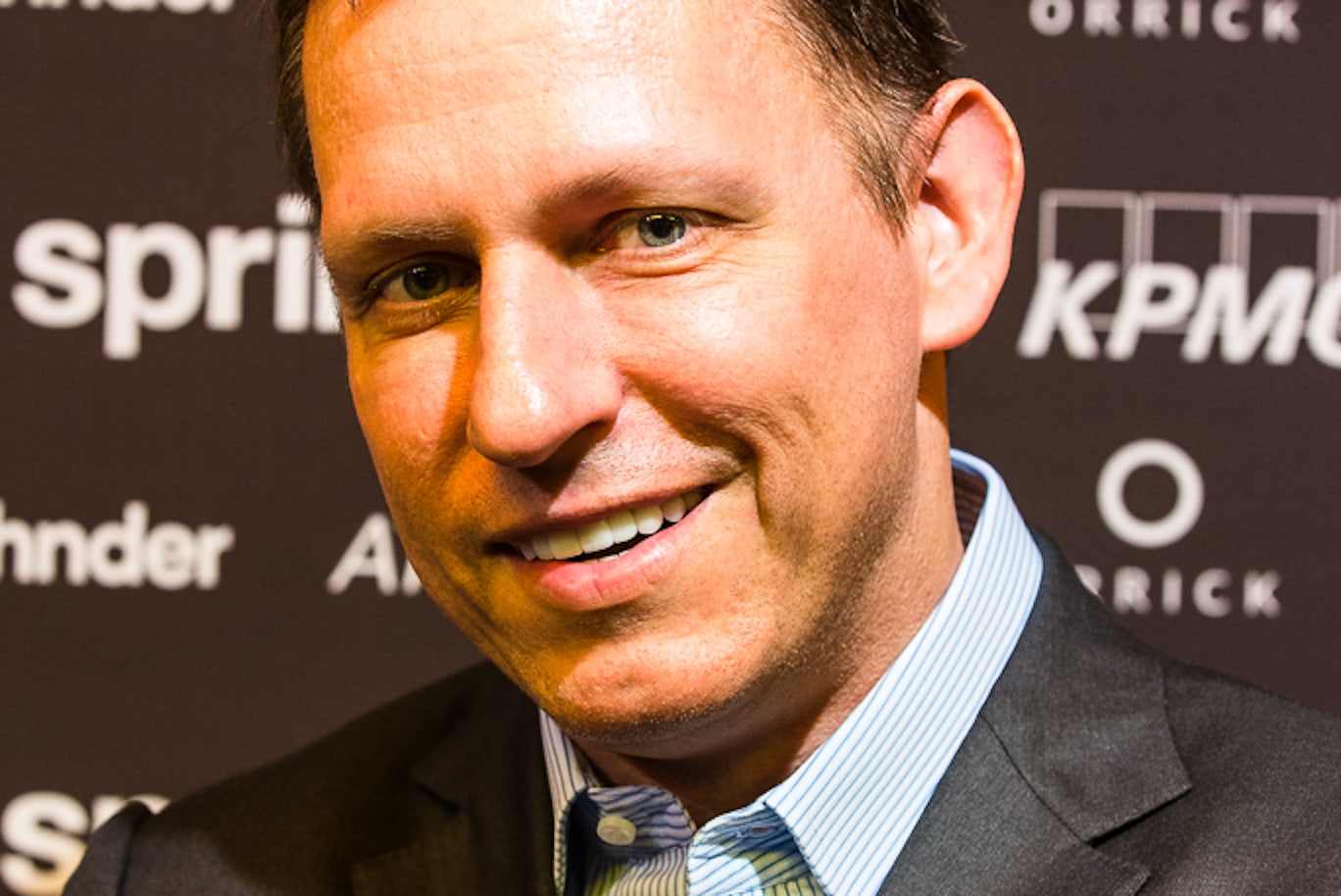
A-list venture capitalist Peter Thiel thinks Apple relies on China too much. Photo: Dan Taylor/Wikipedia CC
Venture capitalist, early Facebook investor and PayPal co-founder Peter Thiel criticized Apple for being too close to China.
At a virtual event held Tuesday by California nonprofit Richard Nixon Foundation, Thiel said the United States should put a “lot of pressure” on Apple because of its links to the Asian country.
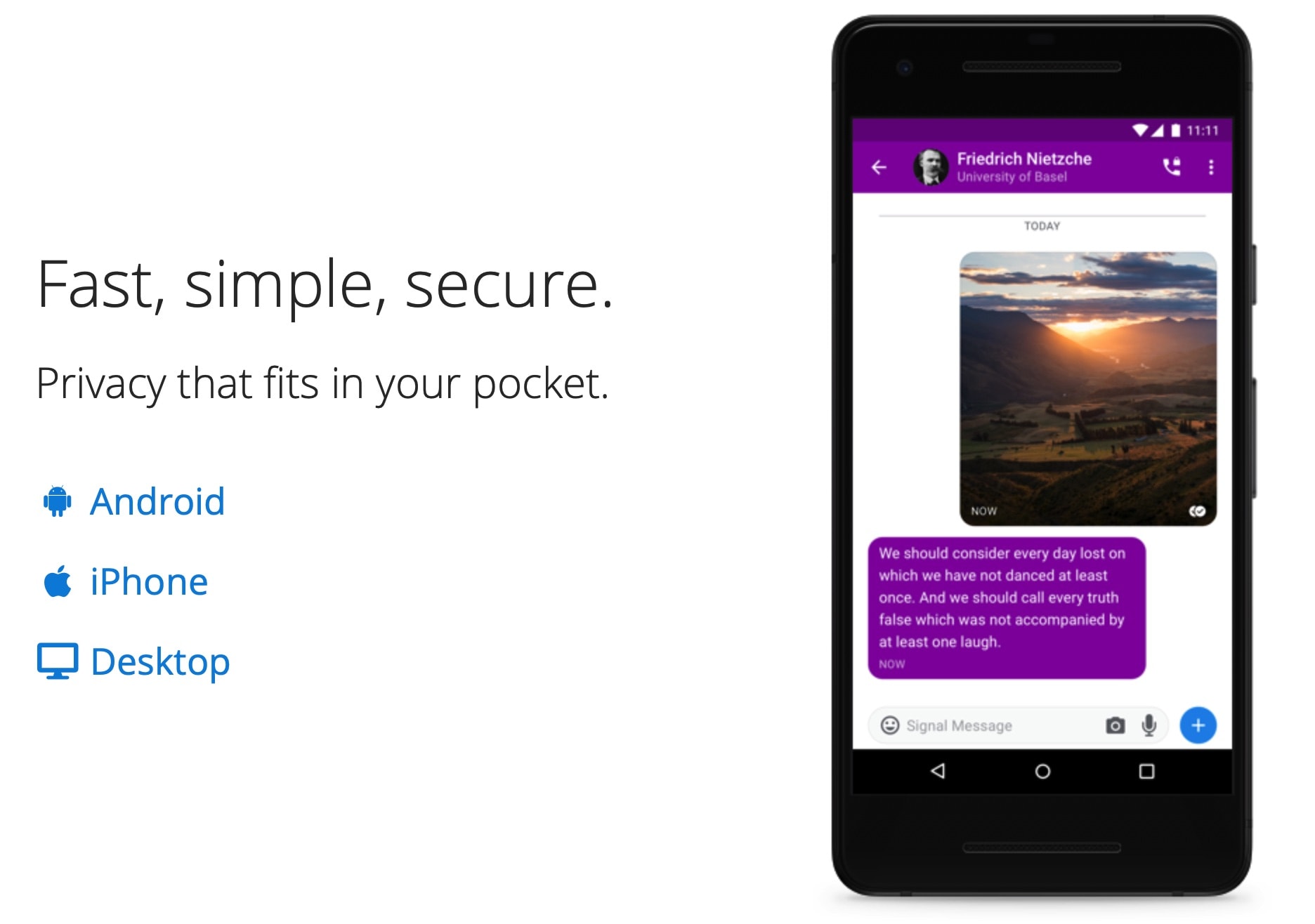
Signal app offers strong encryption. Photo: Signal
End-to-end-encrypted messaging app Signal is secure. So secure, in fact, that it’s the European Union’s encrypted messaging app of choice.
Unfortunately, it’s also secure enough that it’s gotten on the wrong side of the Chinese government. China has reportedly banned the app in mainland China as of March 16, TechCrunch reports. This is one day after its website was blocked in the country.
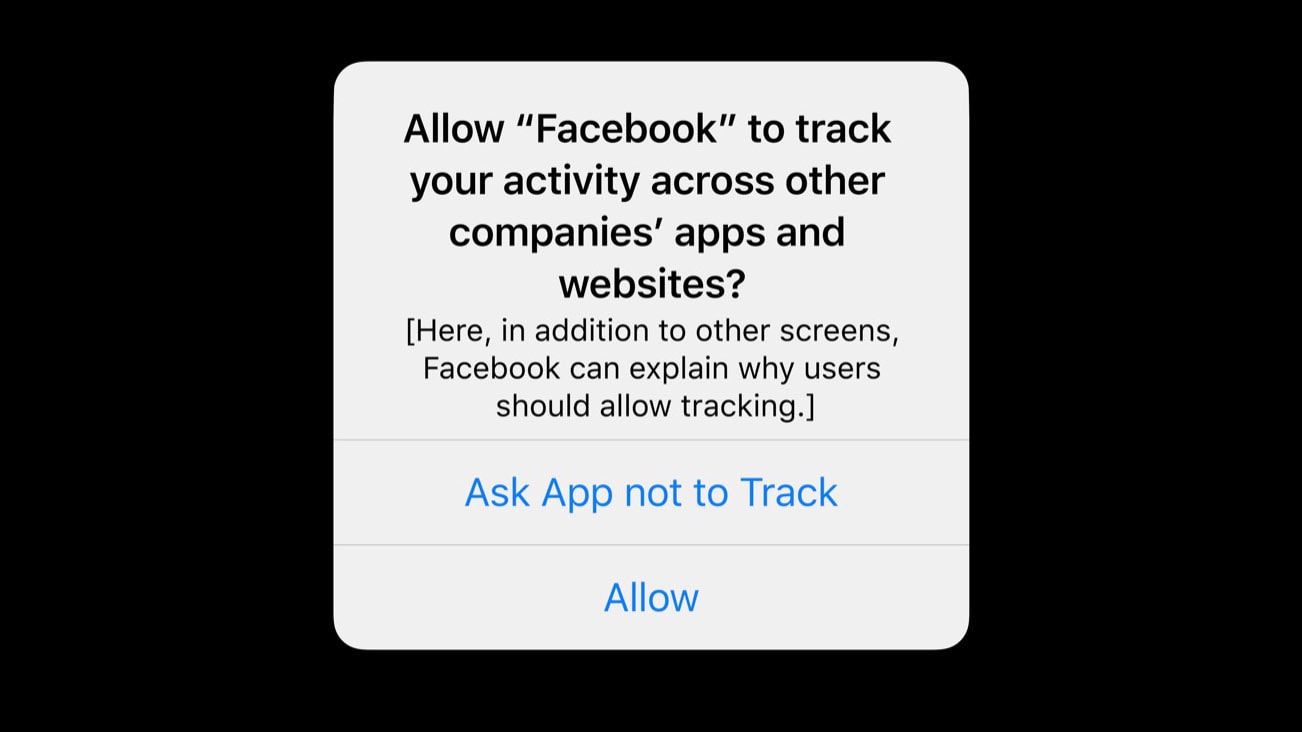
Apple is making it tougher for apps to track users. Graphic: Apple
China’s state-backed China Advertising Association is already looking for ways to get around Apple’s upcoming App Tracking Transparency feature, the Financial Times reported Tuesday.
The organization’s approach reportedly involves something called a “CAID.” This can supposedly act as an alternative means of tracking users to the iPhone’s ad identifier, or IDFA. TikTok parent company ByteDance issued a guide for app developers that describes how marketers “can use CAID as a substitute if the user’s IDFA is unavailable.”
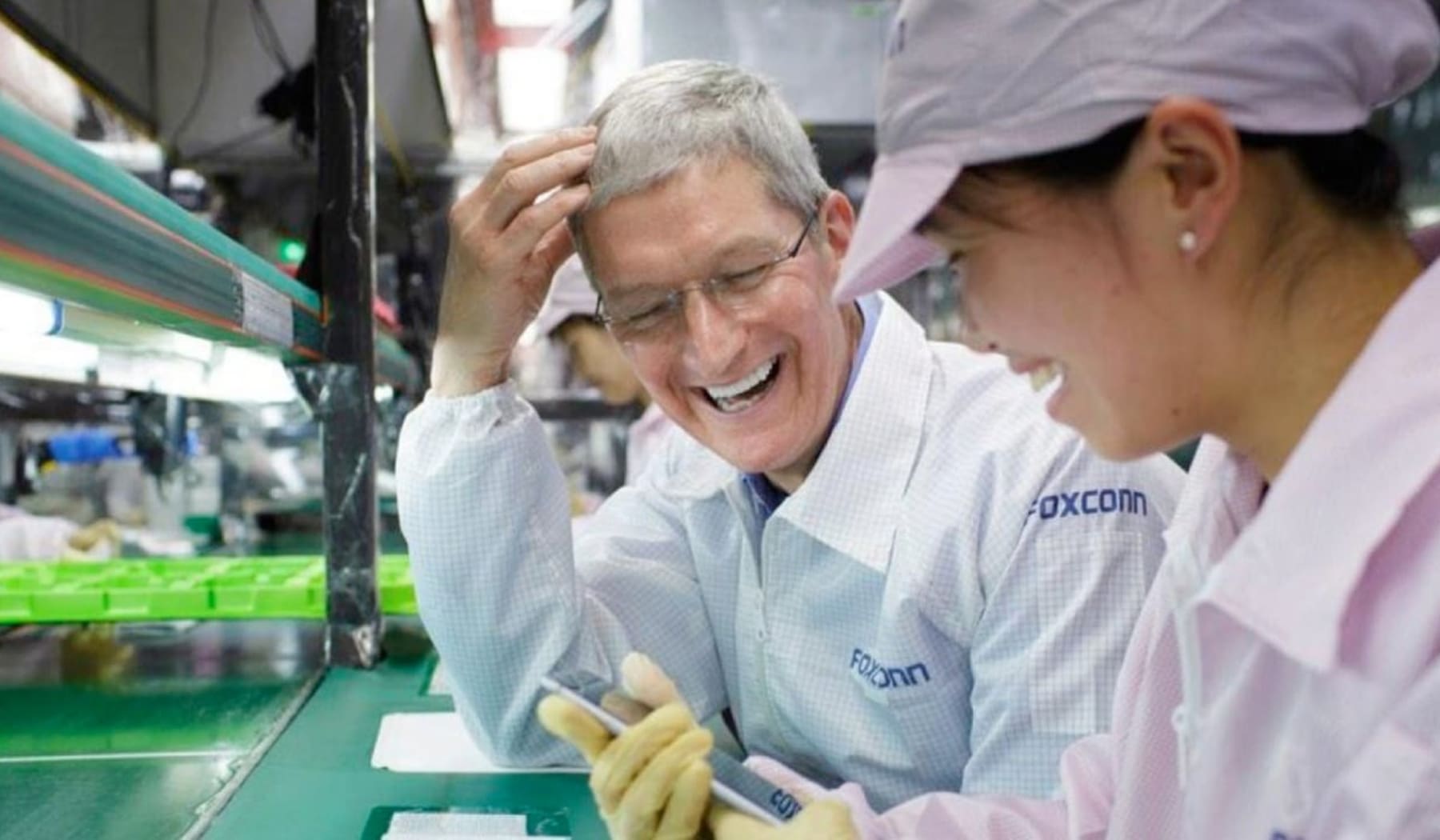
Tim Cook meeting a worker on the iPhone production line. Photo: Apple
For years, China has been Apple’s biggest manufacturing hub for building its devices. But that’s now changing, with a report Wednesday claiming that Apple is “ramping up” production of iPhones, iPads, Macs, and other products in other parts of the world.
This is an attempt by Apple to diversify manufacturing beyond China, following trade tensions between the U.S. and China in recent years.
The App Store in China had its biggest single-day removal of apps ever — with a massive 39,000 games given the boot by Apple on Thursday alone. This is as a result of Chinese laws stating that all game publishers must obtain a special license in order to distribute their titles.
According to research firm Qimai, only 74 of the top 1,500 games in the App Store survived the massive app bloodbath. Major titles that vanished included the likes of Assassin’s Creed Identity and NBA 2K20.
The challenges of doing business in China. Photo: AllOfUs
Apple removed approximately 94,000 games from the App Store in China during 2020, The Wall Street Journal reports. This is a significantly larger number than last year’s tally of 25,000 games removed.
The escalation comes as China works harder to clamp down on illegal content on mobile platforms. The WSJ says the larger number illustrates Apple’s “vulnerability to state pressure” on its business.
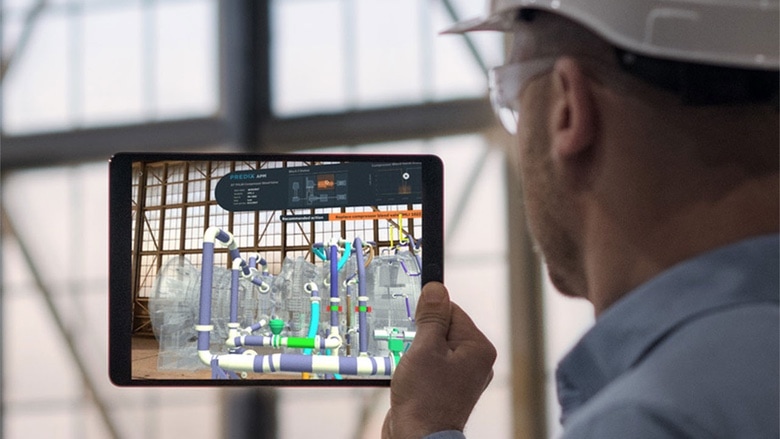
Apple engineers used remote control robots and iPads equipped with custom augmented reality software to guide technicians in overseas factories, due to the coronavirus lockdown.
Usually Apple engineers make frequent visits to places like China, where Apple carries out manufacturing. However, this year’s coronavirus lockdown has made this impossible — leading to Apple having to make some tech-savvy adjustments.
Won't someone think of the children!? Photo: Tripadvisor
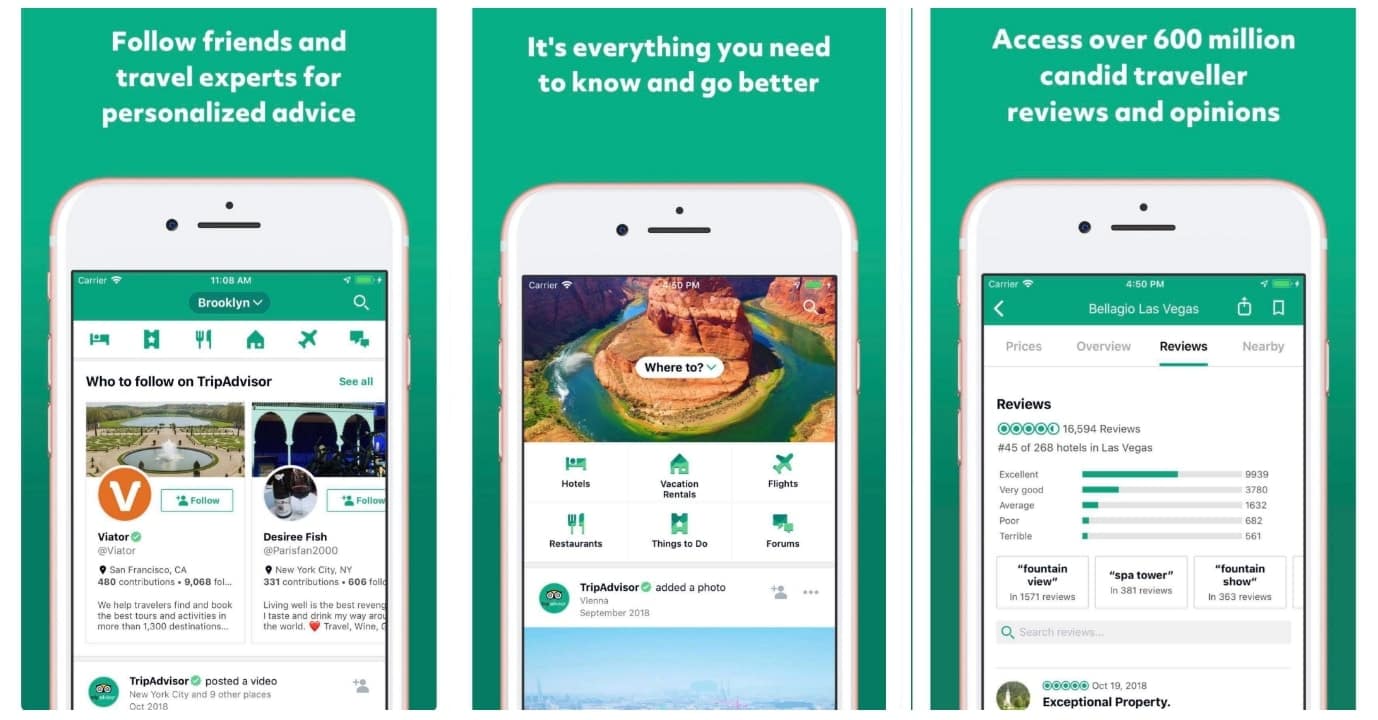
Apple has pulled the Tripadvisor app from its China App Store on the orders of the Chinese government as it works to “clean up” the internet, CNN reports.
The Tripadvisor app, which somehow ran afoul of the government, was one of 105 apps deemed to be illegal. Since the Tripadvisor app is mainly concerned with hotel reviews, its removal seems more than a little surprising. However, it’s far from the first app to get the boot from the localized China App Store.
Apple does lots of business in China. Photo: AllOfUs
Apple was one of several large companies that reportedly lobbied to weaken a bill that sought to bar U.S. companies from making products in China with the aid of forced Uighur labor, according to The New York Times.
The Uyghur Forced Labor Prevention Act passed the House with a 406-3 margin in September, and has the necessary support to pass the Senate. It aims to ban U.S. companies from importing products made in the Xinjiang region unless the manufacturers can prove they do not use forced labor.
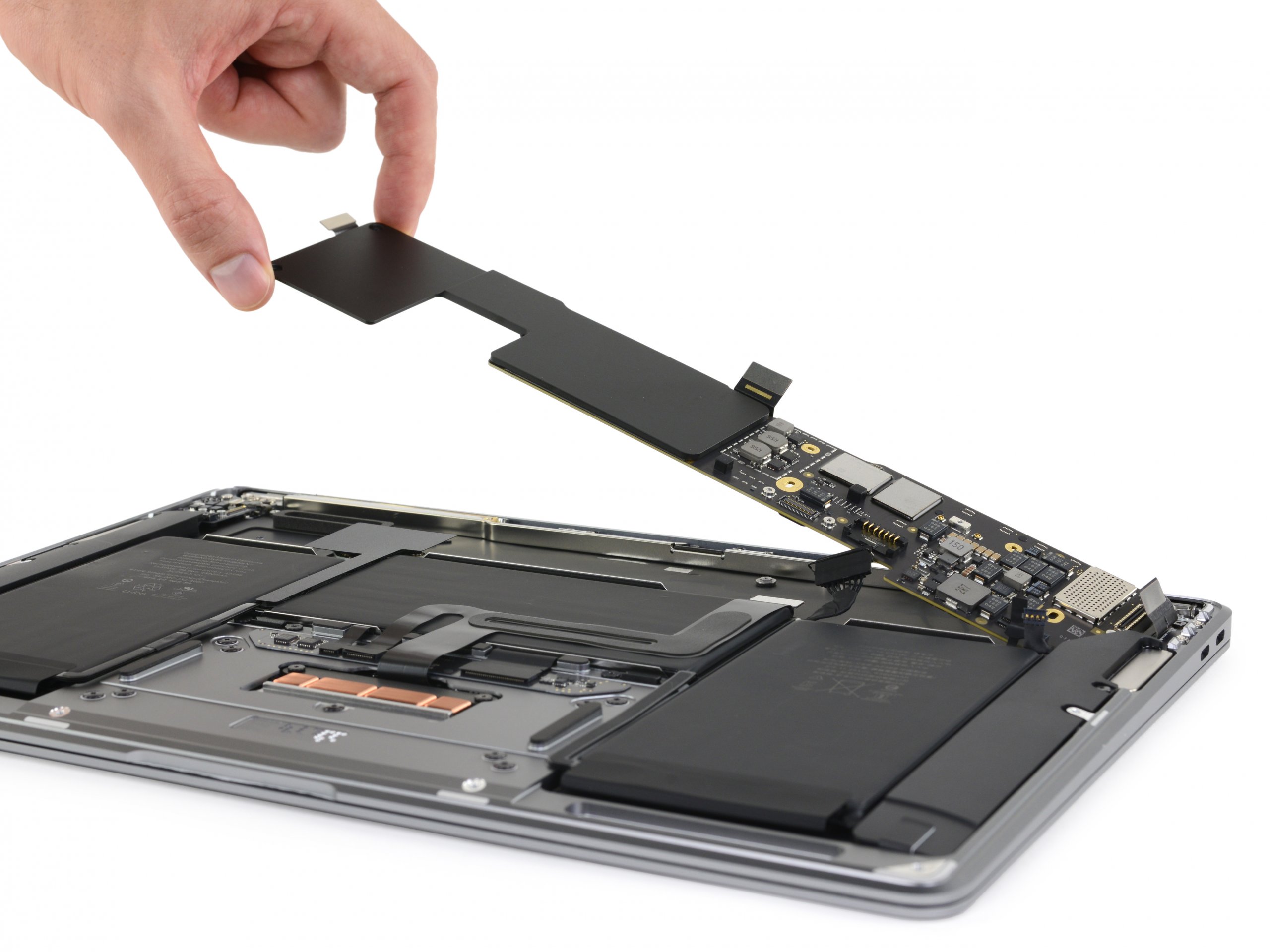
Apple needs to reduce its reliance on China. Photo: iFixit
Apple has reportedly asked Foxconn to shift some iPad and MacBook production from China to Vietnam. The move is said to be a precautionary measure designed to minimize any impact of ongoing trade tensions between the U.S. and China, sources say.
Tim Cook meets with a Foxconn worker in China. Photo: Apple
A class action lawsuit against Apple claims that the company hid news of declining iPhone demand in China, thereby triggering billions of dollars lost on the part of investors.
The case, brought against Apple by a UK pension fund, has been given the go-ahead by U.S. District Judge Yvonne Gonzalez Rogers. It concerns comments made by Tim Cook during an investor call back in 2018.
Locking China out of the supply chain. Photo: AllOfUs
It’s not just Apple that’s piling on the pressure when it comes to getting Taiwanese tech companies to move their manufacturing out of China.
According to a report published Thursday, the American Institute in Taiwan, the “de facto U.S. embassy,” is visiting companies and asking why they’re not moving more quickly in exporting their production capacity outside China.
Apple faces a tough situation in China. Photo: AllOfUs
Apple has reportedly removed a pair of RSS reader apps, Reeder and Fiery Feeds, from the App Store in China due to their ability to allow users to access information the country would rather they not see.
It’s not clear exactly what prompted this particular banning, but China has been cracking down on RSS feeds since 2007. That year, it initiated a blanket ban on all web-based RSS feed aggregators. In 2017, Apple removed RSS reader app Inoreader from the App Store in China.
In other words, this may be less a case of “What did Reeder and Fiery Feeds do wrong?” than “how did they manage to survive as long as they did?”
Tim Cook speaking with a person on the iPhone production line. Photo: Apple
Apple’s division of its supply chain into one part aimed at the China market and the other aimed at the rest of the world continues apace. The goal? Helping Apple get around rumbling trade tensions between the United States and China.
According to a Friday report from Digitimes, Apple is giving more orders to Chinese firms Luxshare Precision and BYD for the Apple Watch Series 6 and Wi-Fi iPad series, respectively.
According to the publication, the Trump administration is “privately seeking to reassure” American companies like Apple that they can still do business with WeChat in China. Two weeks ago, Trump ordered a U.S. ban on WeChat, although the details were not clarified.
WeChat is threatened by Trump's executive order. Photo: WeChat
A WeChat ban imposed by President Donald Trump could cost Apple more than $25 billion per year, claims a report published Monday.
Those numbers are based on the idea that 75% of iPhone and iPad sales could dry up in China. Apple would lose money not just from the missing device sales, but also from the resulting decline in its subscription services.
WeChat is threatened by Trump's executive order. Photo: WeChat
Downloads of encrypted messaging apps Signal and QQ reportedly spiked following President Donald Trump’s executive order targeting Tencent’s WeChat.
WeChat, while not particularly widely used in the United States, is an essential app in China. Many people who use it in the United States do so to keep in touch with friends and family in China, where WhatsApp has been banned since 2017.
Tim Cook meets with a person working on the production line building iPhones. Photo: Apple
Apple manufacturer Foxconn said Wednesday that it plans to split its supply chain in two. One segment will service the China market, while the other will focus on the United States.
Foxconn chairman Young Liu said the manufacturing giant now operates 30% of its capacity outside China, up from 25% last June. In recent years, the company began moving manufacturing to other regions such as Southeast Asia to avoid possible tariffs on Chinese goods headed to the United States.
Apple staffers' uniforms may have been partly manufactured by an accused company. Photo: Apple
A Chinese company facing U.S. sanctions for using forced labor provided clothing or raw materials to Apple, possibly in the form of uniforms for its retail employees, claims The Guardian.
Changji Esquel Textile is one of a group of 11 companies that reportedly violated human rights in China’s western Xinjiang region. The company denies using forced labor “anywhere” in its business and says it will appeal its inclusion on the sanctions list.
Despite the controversy surrounding it, 15-second video creation and sharing app TikTok remained the world’s most downloaded non-gaming app in July, according to a new report by Sensor Tower.
TikTok ranked as the No. 1 app on both iOS and the Google Play app stores, with more than 65.3 million installs in the month. This represents a 21.4% increase from July last year. In the first quarter of 2020, TikTok registered the best three months of any app ever when it comes to downloads.
TikTok may only be the first app targeted. Photo: Apple
The Trump administration wants to eliminate “untrusted” Chinese apps from the App Store as part of a multiphase “Clean Network” plan to cut down on potential security risks from China.
Secretary of State Mike Pompeo says the United States will crack down on apps with parent companies based in China. The two specific apps mentioned are TikTok and WeChat. However, Pompeo simply used these to illustrate the kinds of apps that could get the boot.
Apple is rethinking its supply chain. Photo: Apple
Apple is reportedly putting together a supply chain consisting of exclusively Chinese manufacturers to build iPhones for the China market.
This is at the same time that Apple is trying to expand its supply chain. That is partly so as to lessen its reliance on China. Apple has also been building iPhones in India which are aimed at the local market there.
Apple has been battling with the company for years. Photo: Apple
A company based in Shanghai has filed a patent-infringement lawsuit that could stop Apple from offering products with its Siri voice assistant in China, according to The Wall Street Journal.
Apple celebrates National Fitness Day for the third year in a row. Photo: Apple
Apple is celebrating China’s National Fitness Day for the third year in a row with a new Apple Watch Activity Challenge. The National Fitness Day challenge can be completed by recording a half hour or longer workout on August 8.
China designated August 8 as National Fitness day in 2009, marking the anniversary of the 2008 Beijing Olympics opening ceremony.
This is located close to the site of Apple's first ever China Apple Store. Photo: Apple
Apple opened its first store in China back in 2008 at Beijing’s Taikoo Li Sanlitun mall. Now, more than a decade later, it has opened a spectacular new Apple Sanlitun store adjacent to the now-shuttered location of the original.
Apple Sanlitun is twice the size of the original Beijing store, and includes a viewing gallery, boardroom (for users to get advice from Apple experts), and a forum for future live events. Check out the pictures below.