Leander has been reporting about Apple and technology for nearly 30 years.
Before founding Cult of Mac as an independent publication, Leander was news editor at Wired.com, where he was responsible for the day-to-day running of the Wired.com website. He headed up a team of six section editors, a dozen reporters and a large pool of freelancers. Together the team produced a daily digest of stories about the impact of science and technology, and won several awards, including several Webby Awards, 2X Knight-Batten Awards for Innovation in Journalism and the 2010 MIN (Magazine Industry Newsletter) award for best blog, among others.
Before being promoted to news editor, Leander was Wired.com's senior reporter, primarily covering Apple. During that time, Leander published a ton of scoops, including the first in-depth report about the development of the iPod. Leander attended almost every keynote speech and special product launch presented by Steve Jobs, including the historic launches of the iPhone and iPad. He also reported from almost every Macworld Expo in the late '90s and early '2000s, including, sadly, the last shows in Boston, San Francisco and Tokyo. His reporting for Wired.com formed the basis of the first Cult of Mac book, and subsequently this website.
Before joining Wired, Leander was a senior reporter at the legendary MacWeek, the storied and long-running weekly that documented Apple and its community in the 1980s and '90s.
Leander has written for Wired magazine (including the Issue 16.04 cover story about Steve Jobs' leadership at Apple, entitled Evil/Genius), Scientific American, The Guardian, The Observer, The San Francisco Chronicle and many other publications.
He has a diploma in journalism from the UK's National Council for the Training of Journalists.
Leander lives in San Francisco, California, and is married with four children. He's an avid biker and has ridden in many long-distance bike events, including California's legendary Death Ride.
Apple's giant new retail store in Beijing. Rendering by architect Ben Wood.
Apple is preparing to open a huge new retail store in China’s capitol just steps from the historic Tiananmen Square.
Renderings of the giant, three-story store have been published on the website of U.S. architect Ben Wood, who is based in Shanghai.
The store will be built on Qianmen Street, an up-and-coming shopping strip just blocks from the great square, which has seen huge military parades as well as student protests.
Expected to open as soon as the fall, the store will be Apple’s second in Beijing and its ninth in Asia.
The design mixes traditional Chinese architecture with Apple’s signature glass and steel. It will feature a glass staircase spiraling through all three stories, plus a huge white Apple logo above the front door.
The first round of Palm Pre reviews are in — and they are generally very positive. The iPhone has a real contender, especially if the Pre comes to Verizon in a few months — a good smartphone on a good network.
The big three gadget reviewers — Walt Mossberg, David Pogue and Ed Baig — all give the Pre very positive reviews, with a few reservations.
Pogue is the most excited. “One of the world’s best phones,” Pogue says in his enthusiastic New York Times review. Pogue is very positive about the Pre, saying it’s a worthy iPhone contender, despite noting drawbacks like the lack of apps and poor battery life.
Ed Baig of USA Today also gives the Pre a thumbs up, but also notes the lack of apps and battery life. Nonetheless, he says the Pre “stacks up well against Apple’s blockbuster device, and in some ways even surpasses it… Palm has delivered a device that will keep it in the game and give it a chance to star in it.”
“The Pre is a smart, sophisticated product that will have particular appeal for those who want a physical keyboard,” says Mossberg. “It is thoughtfully designed, works well and could give the iPhone and BlackBerry strong competition — but only if it fixes its app store and can attract third-party developers.”
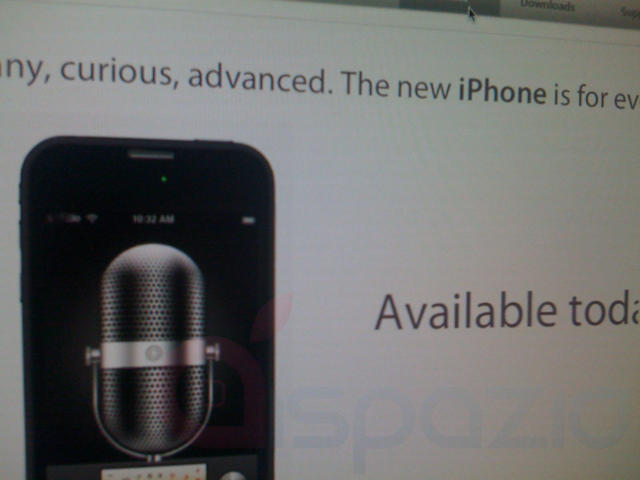
A new spy shot claiming to show the next-generation iPhone has emerged, and it appears to show a forward-facing camera.
If the spyshot does indeed show the new iPhone, a forward-facing camera would be a cool but surprising feature. Although high on many iPhone users’ wishlists — it would enable iChat videoconferencing from anywhere — the feature seems too Dick Tracy to be true, especially with AT&T’s bandwidth-challenged 3G network.
A forward-facing camera was mentioned in a recent Apple patent granted April 16 — although this doesn’t mean much. Apple patents everything, and a ton of patented features never see the light of day.
Hacker Nathan Seidle has rigged his car so that his Nike+iPod pedometer unlocks the doors wirelessly as he walks up to it.
“I hate keys,” he writes. “I am on a mission to dispose of them all.”
Seidle already uses keypads and wireless RFID cards to get into his home and office — the last key in his pocket is for his car.
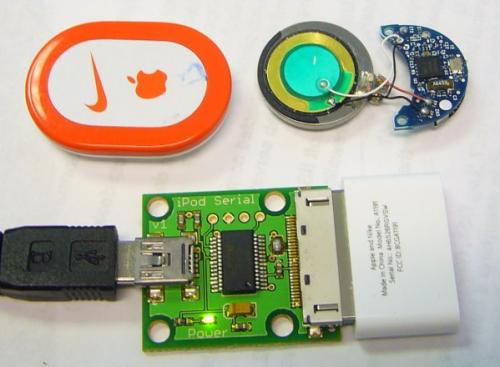
So Seidle took a Nike+iPod sensor — the pedometer/transmitter that normally goes into your running shoe — and rigged up a simple proximity sensor inside the car to detect when it approaches. The Nike+iPod sensor is constantly transmitting a unique ID, which the car uses to identify Seidle and unlock the doors. He keeps the Nike+iPod in his pocket.
Seidle made the proximity detector inside the car from the Nike+iPod receiver (the part that normally plugs into the iPod) and an Arduino Pro Mini microcontroller board, made by his company, SparkFun Electronics, plus a few other bits and pieces.
The system, which Seidle calls the iFob, is an intermediate hacking project. He’s posted a detailed tutorial on the SparkFun website.
Unfortunately, the iFob doesn’t start the car; it just unlocks the doors.
“The system now works great!” Seidle writes. “When you’ve got a handful of stuff, it’s great to know the doors will automatically unlock as you approach. However, I still have use a key to start the car. The next step is get a big red button wired up for button start so that I don’t have to carry my key. Someday.”
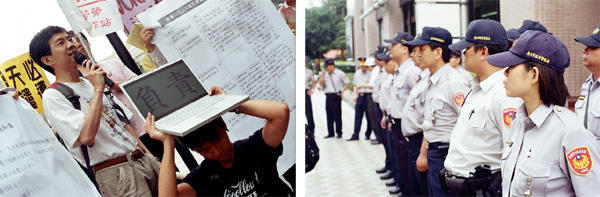
Labor protesters demonstrating outside Apple’s Taiwan offices in May. The Apple laptop says “Responsibility.” Images: Global Post.
Asian labor unions will be putting more pressure on Apple on Tuesday with a protest at Computex Taipei, Asia’s largest electronics show.
The unions are hoping to force Apple to intervene in a labor dispute with one of the company’s major suppliers, Wintek, which makes LCD screens and is rumored to be working on the upcoming Mac/iPod tablet.
Wintek has been accused of unfairly laying-off workers and poor and exploitative working conditions in factories in Taiwan and mainland China. Wintek denies the charges.
The protest will “expose the reality to the public, and request Apple Inc. to execute its Code of Conduct, to end the exploitation of labors in Taiwan and China,” one of the unions said in a news release.
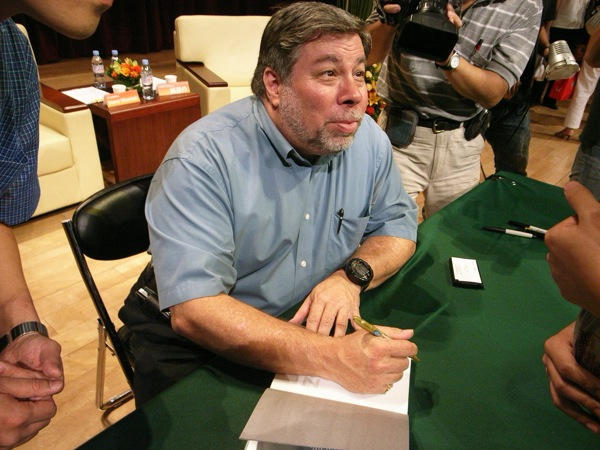
However, Woz said he’s never asked Jobs directly about his health.
Jobs is expected to return to Apple at the end of next months after taking six months medical leave to concentrate on his health. In a January letter to Apple’s employees, Jobs said his health issues “are more complex than I originally thought.” He lost an alarming amount of weight in 2008, leading to speculation his cancer had returned. Jobs was treated for pancreatic cancer in 2004.
The rollout will begin later this year, AT&T says. The company also promises it will “introduce multiple HSPA 7.2-compatible laptop cards and smartphones beginning later this year.”
One of the smartphones is likely Apple’s next-generation iPhone. Apple is expected to introduce a faster iPhone that will support HSPA 7.2. The new iPhone will also likely have a faster processor, which will be better able to handle the faster data stream, quickly updating content like web pages and maps.
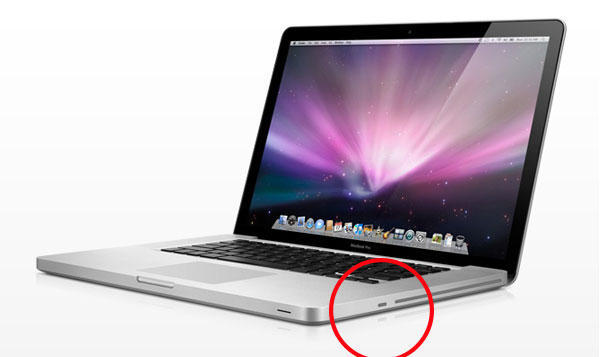
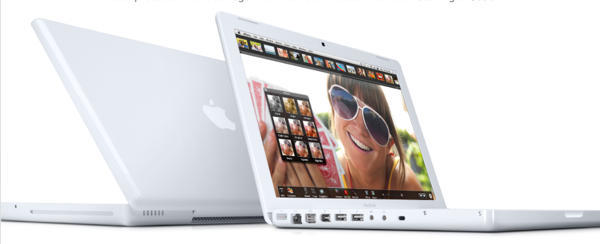
Apple’s entry-level white MacBook received a hardware update on Wednesday, possibly foreshadowing revisions to the aluminum unibody MacBooks.
For the same $999 base price, the WhiteBook now gets:
* CPU bump from 2.0 GHz to 2.13 GHz.
* Hard drive from 120 GB to 160 GB.
* RAM boost from 667 MHz to 800 MHz.
*Battery life upped from 4.5 hours of “wireless productivity” to 5 hours. And now rated Energy Star EPEAT Gold, up from EPEAT Silver.
Thanks to the updates, the WhiteBook now has a faster processor than the entry-level aluminum MacBook, and a bigger build-to-order hard drive (500GB). And it still has a FireWire port. Updates to the unibody soon?
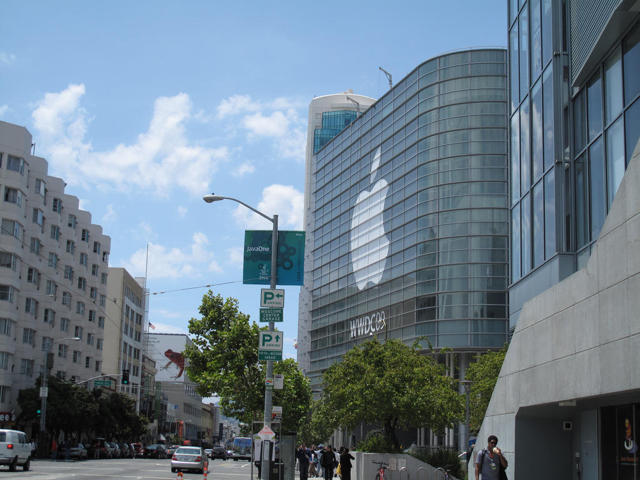
Apple is rumored to be offering similar upgrades to the aluminum MacBooks at WWDC, and rebranding the machines as MacBook Pros to further distinguish them from the white plastic MacBook.
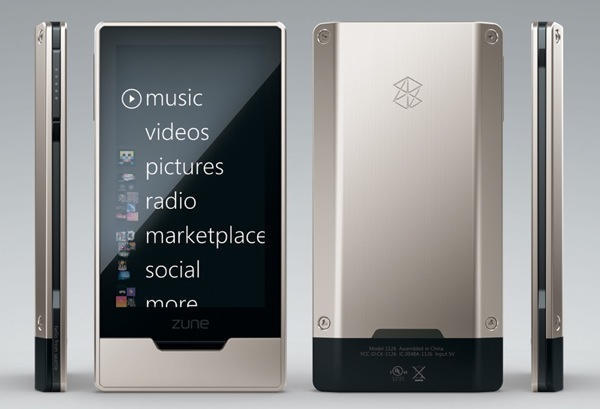
Microsoft will release a Web-surfing, HD-video-playing, multitouch Zune in the fall to compete with the iPod touch — and the hardware actually looks pretty cool. But as Apple well knows, the gadget is one thing, the software and services are another.
Sporting a sexy metal case, the Zune HD will have a 3.3-inch, 480 x 272 OLED capacitive touchscreen display (16:9 widescreen); a built-in HD Radio receiver, and WiFi. The “HD” refers not to the touchscreen, but the HD radio and HD out (720p), though that’s only available with an optional cradle. Pricing was not released, and release is “early fall.”
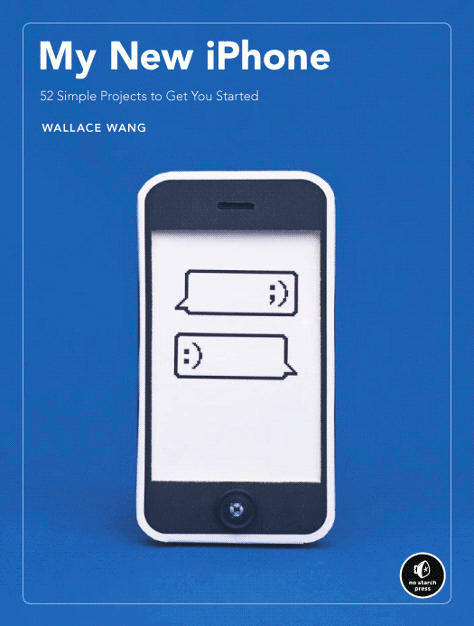
San Francisco’s No Starch Press has posted a big chunk of it’s popular My New iPhone book on Scribd for free, plus is selling it cheap as a PDF.
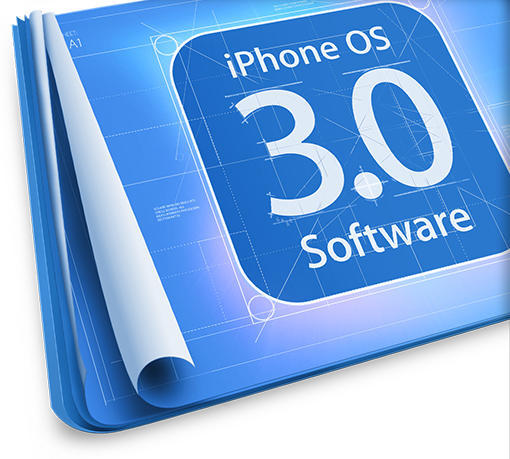
No Starch has a new version of Wang’s iPhone book coming out with the release of iPhone OS 3.0 this summer. In the meantime, the publisher is making about 50% of the current version of the book available for free.
“We have this content ready to go, but with the OS 3.0 release looming, it didn’t make sense to print and ship a book just to have it go out of date in a month,” said Leigh Poehler, No Starch’s sales manager. “It also didn’t make sense to hoard this information. So we’re making the content available to people via Scribd.”
More recently, No Starch has posted several samples of its books on Scribd, including an excerpt from its “Manga Guide to Databases,” which has been read over 9,600 times). But this is the first time it has given away such a large chunk of a book and let Scribd sell the full PDF (for $9.95).
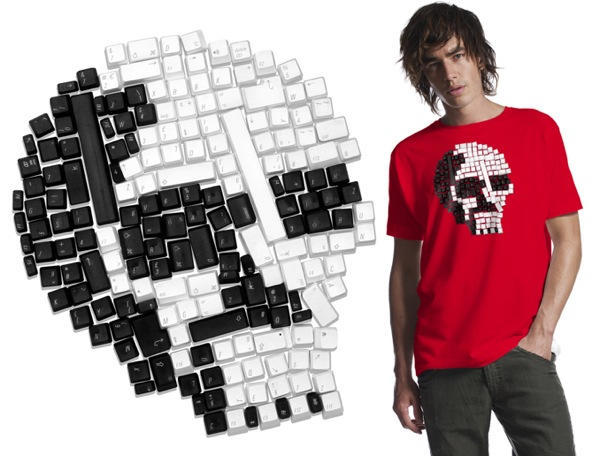
It’s a classic skull design, made with the keys from a pair of Apple keyboards. The white keys come from an extended white Mac keyboard; the black keys were taken from the original iMac (the one with the half sized F keys). Says Roger:
“I could say it depicts the obsolescence that all computer equipment faces, but really it’s just skulls make great tees! What Mac geek wouldn’t like to see a design featuring Mac keys, and only only closer inspection can you find the classic Apple command key.”
Hit the jump for a bigger picture of the skull — and the elusive command key.
Apple’s Safari 4 browser is a pig. It’s a resource hog that doesn’t clean up after itself — and it remembers every site you visit, even in “porn mode.”
Safari records every site you visit, even if you turn on the “Private Browsing” feature or clear the browser history. And the files it generates can consume gigabytes of disk space.
“This is a huge privacy concern,” writes designer and musician C. Harwick, from Chapel Hill, NC, who did some snooping in Safari’s hidden system folders. “With no good way of getting rid of them except manually (clearing the history doesn’t do it, and I don’t think resetting Safari does either), these hidden files are strewn all over the user’s hard drive unbeknownst to him waiting for snooping relatives (or more pertinently, law enforcement) to dig them up. I really like Safari, but I’m going to have to seriously consider using Firefox now (ack).”
Who says Apple doesn’t listen to customers? Thanks to a public outcry, Apple has reversed course and accepted the Eucalyptus eBook reader into the iPhone App Store.
The web erupted in outrage last week when developer Jamie Montgomerie’s eBook reader was rejected by Apple because it allowed readers to download the Kama Sutra from Project Gutenberg — which Apple deemed “inappropriate sexual content.”
But on Sunday Montgomerie received a call from Apple. The Apple representative chatted with the developer about his app and invited him to resubmit it.
“We talked about the confusion surrounding its App Store rejections, which I am happy to say is now fully resolved,” Montgomerie wrote on his blog.
David Leibowitz is a veteran fine art photographer who’s lately been making some pretty amazing art using his iPhone.
Based in NYC, Leibowitz’s pictures of the city look like a French Impressionist painted the scenes (hit the jump for more pictures). There’s nothing to indicate they were made using his iPhone and about $40 worth of apps from the App Store.
Leibowitz has a long history of using digital tools to make art. He started in the ’80s with a Polaroid camera. He’d hand manipulate the emulsion to create photographs that look also look like Imrpessionist paintings. But now he’s discovered the iPhone, and the results are not your typical iPhone art.
Hit the jump for some of Leibowitz’s latest pictures and an interview explaining how he makes iPhone art.
A big crowd turned out for the opening of Apple’s latest flagship store in Zurich on Friday.
There’s no official numbers, but pictures at MacPrime, a Swiss Mac magazine, suggest the line snaked several blocks.
Opened at noon, the new Bahnhofstrasse store was mobbed. Several fans camped out overnight, waiting 16 hours to be the first inside.
The Bahnhofstrasse store is the second in Zurich.
It has an unusual design, accoring to Gary Allen of IFOApplestore. It’s only the second Apple store (after 5th Ave.) to have an underground space. A glass staircase leads down to a large Genius Bar for service and training at the “Pro Labs.” More details about the Bahnhofstrasse store at Allen’s site.
Swiss insurance company Mobiliar gave knockoff iPods to guests at the Swiss Economic Forum. Pic: Berner Zeitung.
The head of Apple Switzerland has threatened legal action after a Swiss Insurance company gave 1,200 iPods to bigwigs at the tony Swiss Economic Forum. Trouble is, the iPods were cheap Chinese knockoffs.
At the Swiss Economic Forum last week, the insurance company Mobiliar surprised guests with an MP3 player that looked very much like a second-generation iPod shuffle.
But when Adrian Schmucki, the head of Apple Switzerland, received his, he threatened legal action against Mobiliar.
Add insult to injury, several of the guests asked Schmucki if the knockoffs would work with iTunes.
The Swiss Economic Forum is a two-day gathering of Switzerland’s leading companies, politicians and academics.
My friend Jeffy picked up this pack of stickers at a Macworld past. Do Mac users have a sense of humor ? Should they be printed up as stickers for MacBooks?
What it is: An iTunes add-on for cleaning mislabeled tracks, downloading art and finding music videos, concert info and artist bios.
Why it’s good: After years of downloading weird crap off the internet, my iTunes library is a swamp of mislabeled and unidentified tracks, and I’m sick of it. So I downloaded TuneUp — and I’m in love. TuneUp handily cleaned up a bunch of mislabeled tracks using the Gracenote database (which uses the track’s “audio fingerprint” to identify it). Cleaning takes a few seconds per track and was about 70-80 percent effective on my odd library (British punk, post-punk and lots of electronica). Previous track cleaners I’ve tried have been useless. But it’s the extra artist info via the Net that I’m really digging. TuneUp sits to the side of the iTunes window and displays all kinds of artist info: Wikipedia bios, Google News stories, music recommendations, upcoming concerts and YouTube videos, which I’ve wasted hours watching. The information is truly useful, fascinating, appropriate and timely. Apple thinks so too. TuneUp was added to the shelves of Apple’s retail stores this week — a rare honor granted only to tip top software.
Where to get it:TuneUp is available as a free download with 100 cleans and 50 album covers. Full version costs $29.95 (or $19.95 for an annual subscription),
NOTE: Use CULTOFMAC activation code to get a 15% discount.
The Mounties in British Columbia just busted their biggest counterfeiting operation ever — and the brains of the operation were a very sinister and criminal-looking iMac and MacBook.
The Royal Canadian Mounted Police in British Columbia raided a counterfeit “currency lab” in Surrey, B.C. last week, seizing more than $220,000 in American and Canadian notes and arresting four people.
They also seized a new iMac, a MacBook, and what look like a pair of inket printers and a laser printer. HP is the ink of choice for funny money, looks like.
(I’ve always suspect Macs were the machine of choice for counterfeiters, given their graphics history. I’ll look into it).
Labor protestors outside Apple’s Taiwan Office on Thursday. The Apple laptop says “Responsibility.” Images: Global Post.
Apple’s office in Taiwan drew protesters on Thursday complaining about layoffs and unfair working conditions at one of Apple’s main contractors.
A group of 30 to 45 workers complained of exploitation at Wintek, one of Apple’s major suppliers of LCD panels. The company is rumored to be supplying screens for the long-awaited Apple tablet. The workers chanted slogans and held signs saying “black-heart business” and “responsibility” outside Apple’s office in Taipei.
The 3D NYC iPhone App from UpNext is unbelievably cool. It renders Manhattan in 3D, allowing you to zoom up and down the city streets, in-between buildings, finding places to eat and things to do. The rendering is amazing — see the video above.
It overlays the subway map and crowdsources popular destinations. All this for only $2.99 from the iTunes App Store. Worth buying even if you don’t live in NYC.
Apple will launch a $700 touchscreen tablet with a new operating system and optimized apps in 2010, new research claims.
Apple’s response to the fast-growing netbook market will a touchscreen tablet like an outsized iPod touch. It will have a touchscreen measuring 7- and 10-inches; will cost between $500 to $700; and may have built-in 3G wireless, claims Wall Street analyst Gene Munster of investment bank Piper Jaffrey.
But thanks to the complexity of the tablet’s hardware and, more importantly, the new version of OS X and the apps it will run — it will not be ready until early 2010, Munster said i.
In a long and detailed research note to clients, Munster cited “mounting evidence” for his claims:
“With the success of the iPhone, the touch panel market has entered a dramatic new growth phase.,” the DisplaySearch report said.
The report predicted big growth in projected capacitive touchscreens — the technology used in the iPhone and iPod touch.
“Projected capacitive touch screens have increased substantially and become the second biggest touch technology following closely behind resistive touch,” the report said. “About 27 touch screen suppliers manufacture it. Not only have more resistive touch screen manufacturers moved to produce projected capacitive, but projected capacitive technology has evolved to single layer or film type, and can serve sizes larger than 100-inches.”
Whoa — a 100-inch iPhone in 2015.
Mobile phones and smartphones will be the most popular application of touchscreens, but they will also be the primary interface for media players, navigation devices, and games. More than 40 percent of mobile phones will have touchscreen interfaces by 2015, the report predicts, up from 16 percent now.
Touchscreens will also become popular in applications like retail, ticketing, information kiosks, and education and training terminals, the report said.
Rumors that the new iPhone will feature a glowing Apple logo on the back of the handset have generally been met with derision. The idea that Apple’s designer’s would waste precious battery life with a glowing logo is so abhorrent, many have used it to dismiss the rumors altogether.
But a group of Russian hackers in August last year hacked an iPhone to make the logo glow. The hack — as seen in the video below — involved a Dremel tool and about $300 in parts, according to reports.
And it had no effect on the battery life whatsoever, the Ruskies said.
But why would Apple add a frivolous glowing logo?
To make the Apple logo more visible, of course. Just like glowing lighthouse on the lid of a MacBook, or the iPod’s white headphones, Apple is not shy of using us to advertise its wares.
Nerdy Norwegian Petter Roisland helped police find a fugitive drug dealer, thanks to his stolen MacBook.
Roisland, a 23-year-old who lives near the southern Norwegian town of Stavanger, lost a computer in a burglary last year.
Determined not to get ripped off twice, Roisland installed Orbicle’s Undercover recovery software on two MacBooks he bought as replacement machines. And then in February, they too were stolen.