Leander has been reporting about Apple and technology for nearly 30 years.
Before founding Cult of Mac as an independent publication, Leander was news editor at Wired.com, where he was responsible for the day-to-day running of the Wired.com website. He headed up a team of six section editors, a dozen reporters and a large pool of freelancers. Together the team produced a daily digest of stories about the impact of science and technology, and won several awards, including several Webby Awards, 2X Knight-Batten Awards for Innovation in Journalism and the 2010 MIN (Magazine Industry Newsletter) award for best blog, among others.
Before being promoted to news editor, Leander was Wired.com's senior reporter, primarily covering Apple. During that time, Leander published a ton of scoops, including the first in-depth report about the development of the iPod. Leander attended almost every keynote speech and special product launch presented by Steve Jobs, including the historic launches of the iPhone and iPad. He also reported from almost every Macworld Expo in the late '90s and early '2000s, including, sadly, the last shows in Boston, San Francisco and Tokyo. His reporting for Wired.com formed the basis of the first Cult of Mac book, and subsequently this website.
Before joining Wired, Leander was a senior reporter at the legendary MacWeek, the storied and long-running weekly that documented Apple and its community in the 1980s and '90s.
Leander has written for Wired magazine (including the Issue 16.04 cover story about Steve Jobs' leadership at Apple, entitled Evil/Genius), Scientific American, The Guardian, The Observer, The San Francisco Chronicle and many other publications.
He has a diploma in journalism from the UK's National Council for the Training of Journalists.
Leander lives in San Francisco, California, and is married with four children. He's an avid biker and has ridden in many long-distance bike events, including California's legendary Death Ride.
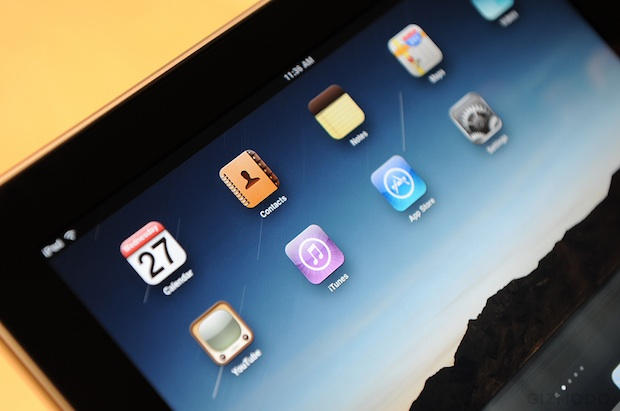
The iPad is a runaway hit and is going mainstream fast. CC-licensed photo by Mat Buchanan.
The iPad is a runaway hit and it’s going mainstream faster than anything they’ve seen, Apple execs are saying.
“It is not following a typical early adopter curve and taking a while to cross over into the mainstream,” said Apple COO Tim Cook during an analyst conference call.
The iPhone 4 is Apple’s fastest-selling device to date and there’s no sign whatsoever that the antenna issue is impacting sales or returns, Apple executives said.
“The demand for iPhone 4 is stunning,” said Apple COO Tim Cook during a conference call with Wall St. analysts. “Let me be very clear on this: We are selling every unit we are making.”
Cook said the antenna issue has had no impact on sales.
“My phone is ringing off the hook with people who want more supply,” he said.
He also said there is not a significant number of returns of the iPhone 4. In fact, there are fewer returns than iPhone 3GS.
“The ones for this specific (antenna) issue are extremely small,” Cook said.
Apple has settled claims with state regulators who allege the company mishandled electronic waste. Photo: Thomas Dohmke
Apple reported another blockbuster quarter thanks to record sales of iPhones and Macs, making the most money ever in company history: $15.7 billion.
Even more unbelievable, Apple is projecting $18 billion in revenue next quarter—and the company is known for lowballing estimates.
Apple is likely to equal Microsoft in annual revenues this year, and may even pass it’s long-time rival. Apple is on track to make more than $60 billion in revenue this year, which is almost equal to Microsoft’s $61.5 billion. Apple already surpassed Microsoft two months ago as the world’s most highly-valued tech company.
Apple sold boatloads of Macs and iPhones. The iPad is also a big hit: Apple has shifted 3.27 million iPads since launch. The only downside was iPod sales.
Here are the key numbers:
Macs: 3.47 million Macs sold, the most ever in a single quarter, and 33% more than last year.
iPhones: 8.4 million sold, up 61% year-over-year.
iPods: 9.41 million sold, down 8% from the year-ago quarter.
In addition, Steve Jobs hinted at even more new products this year:
“It was a phenomenal quarter that exceeded our expectations all around, including the most successful product launch in Apple’s history with iPhone 4,” Steve Jobs said in a statement. “iPad is off to a terrific start, more people are buying Macs than ever before, and we have amazing new products still to come this year.”
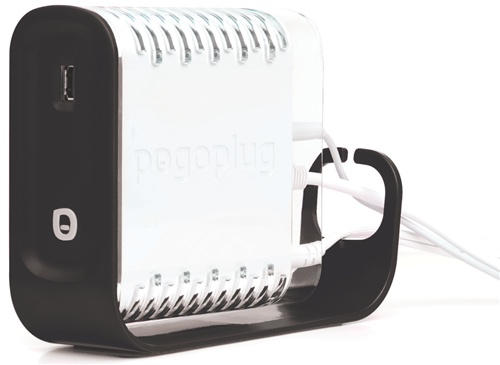
The Pogoplug is a great little gadget that connects up to four hard drives to the Internet. It’s very handy for serving up files, music and movies to anyone, anywhere. We reviewed it very favorably.
Now there’s about to be a business version, the Pogoplug Biz, which adds a bunch of features for small and medium business (SMB) users. It’s like Dropbox, except the data is not on some other company’s servers. The Pogoplug Biz is available for pre-order for $299 and includes lifetime Pogoplug service.
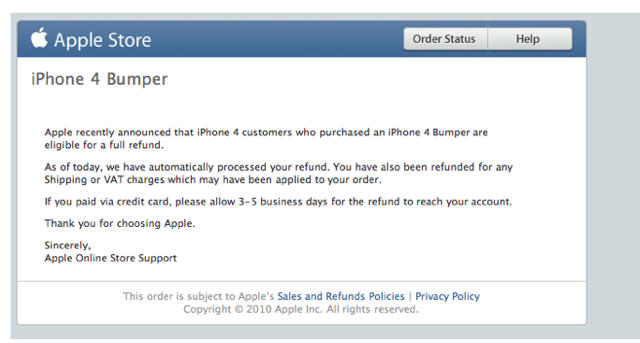
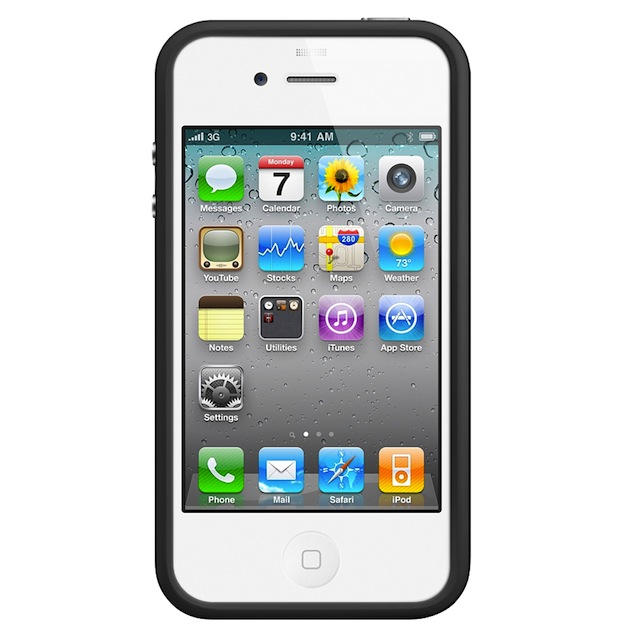
PR expert Matt Seeger said Apple did issue a recall last Friday by providing iPhone 4 customers with free Bumper cases.
“From my perspective, this was a classic case of a recall,” said Seeger, who is chair of the Department of Communication at Wayne State University in Detroit. “They said, ‘Bring the product in, we’ll retrofit it.’ It’s not what most people think of as a recall, which is a safety issue. But this was a recall.”
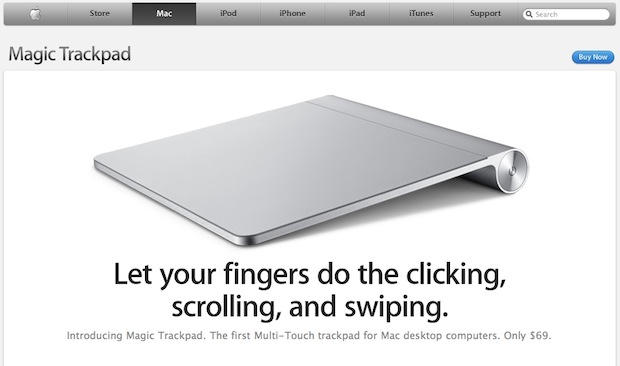
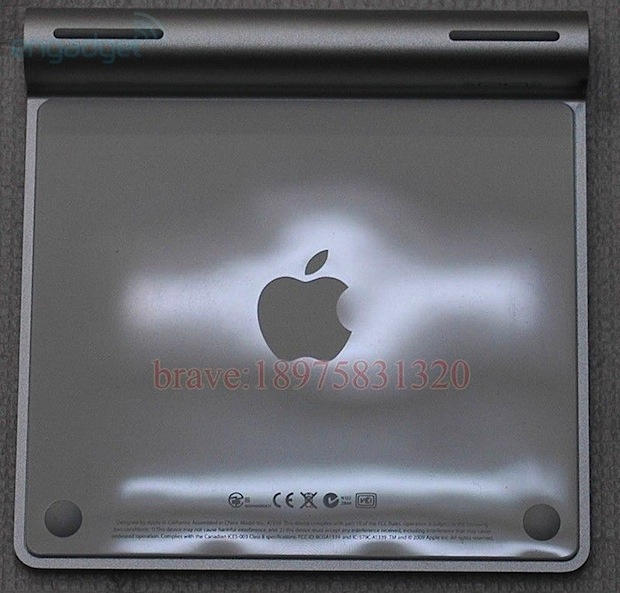
The FCC has approved Apple’s Magic Trackpad, which means the device could be announced as early as this week.
A device known by the model number A1339 and described as a “Bluetooth Device” has just shown up in the FCC’s database. Given how quickly Apple has in the past announced devices that have just approved by the FCC, the Magic Trackpad could be officially launched within days.
The device would act as a big touch-sensitive trackpad for desktop computers, such as an iMac. It looks as though the device supports handwriting recognition, as well as the swipes and gestures found on the Magic Mouse and MacBook Pro trackpads.
That hilarious animated Taiwanese news segment on Steve Jobs and the iPhone 4 we posted earlier now has English subtitles, thanks to reader Michael Chang.
It shows Jobs defeating Bill Gates in a lightsaber battle and donning a Darth Vader mask; cops breaking down the door of Gizmodo editor Jason Chen’s apartment; and Jobs cutting of the fingers of customers who complain about iPhone reception issues. “Just get rid of those fingers,” Jobs tells the customer. “Then there’s no problems.”
This is a guest column by Dan Burcaw, founder and CEO of Double Encore, which develops apps for iPhone (and now iPad). Dan is extremely passionate about why developers should work on iPhone apps instead of Android. Here he explains why Android developers don’t make money, and why Android apps will always be secondary to iPhone/iPad apps.
A few years ago, apps were novelties – a cute idea. Now there are over 250,000 of those cute ideas in the App Store alone – and the Android Market is catching up quickly.
Apps are like the Wild Wild West – and from a developer’s perspective, there’s definitely a shoot-out coming. Google vs. Apple. iPhone and iPad vs. Android. Who should you code for, and why? For that matter, as a consumer, which phone and apps should you choose?
On one hand, you’ve got Apple with the newly released iPad and iPhone – a well-established if tightly controlled platform. On the other, there’s the Shiny New Android platform, with its open-ended promise of apps and plenty of freedom – freedom of handset, freedom of carriers. It sounds like a developer’s paradise … which is in fact how Google markets it. But I predict that a year from now, developers and consumers alike are going to find the Android platform really disappointing.
Apple has posted video of this morning’s press conference about the iPhone 4’s antenna. You can watch it here. However, it does not include the juicy Q&A session, where Jobs rips the tech press for creating Antennagate.
This is Apple’s $100 million state-of-the-art antenna test lab. It has 17 different antenna characterization chambers (or anechoic chambers) for measuring antenna performance.
Our anechoic chambers are connected to sophisticated equipment that simulates cellular base stations, Wi-Fi networks, Bluetooth devices — even GPS satellites. These chambers measure performance in free space, in the presence of materials simulating human tissue (“phantom” heads and hands, for example), and in use by human subjects. Over a one- to two-year development cycle, Apple engineers spend thousands of hours performing antenna and wireless testing in the lab.
Apple just released iOS 4.0.1 — the day before its big iPhone 4 press conference. The update fixes the signal dislay algorithm, which Apple has said is behind iPhone 4 reception issues.
So it seems likely that the 4.0.1 update — and this alone — will be the subject of tomorrow’s press conference. Steve Jobs will use the event to explain (slowly and carefully) how this bug update fixes the problem.
No recall, no free bumpers, no admission of a hardware issue.
Who do you guys think? Will the 4.0.1 update be the subject of tomorrow’s press conference?
Hot on the heels of the iOS 4.0.1 bug fix update, Apple has released a 3.2.1 update for the iPad.
The update fixes several issues, including Wi-Fi connectivity problems. It also adds Microsoft’s Bing to Safari’s search box.
– Improved Wi-Fi connectivity
– Fixed an issue that could prevent copy and paste of single-page PDF attachments in Mail
– Addressed an issue that could cause video playback to freeze
– Improved reliability of video-out when using iPad Dock Connector to VGA Adapter
– Added Bing as an option for Safari’s search field
The update is available through iTunes (plug in your iPad via USB) or can be downloaded here: iPad iOS 3.2.1.
Apple has just issued the 4.0.1 iOS update, which includes a new formula for displaying reception bars.
The update includes a new signal strength algorithm, which is Apple’s answer to the iPhone 4 death grip issue. It doesn’t appear to improve reception strength, just the way it is displayed. According to Apple, the iOS used an old, outdated algorithm that incorrectly calculated signal strength, a problem that was exacerbated when user’s cover the external antenna.
The update fixes this problem, and is available for iPhone 4, iPhone 3GS, and iPhone 3G. It can be downloaded through iTunes when the device is connected via USB. (Hit the “Check for Updates” button).
A wireless expert with ties to Apple’s senior antenna engineer says the company is in a pickle. It cannot fix the iPhone 4 antenna issue without completely redesigning the hardware.
Earl McCune, a leading RF expert — and former colleague of Apple’s Sr. Director of iPhone/iPod engineering, Ruben Caballero (who is in the news today) — says the iPhone’s antenna will have to be moved.
“The only way to solve the problem is to not have your hand within a wavelength of the phone — about a foot and a half away,” said McCune, a RF/wireless consultant, author and entrepreneur. “It’s the law of physics.”
McCune is the former boss of Apple’s top antenna engineer, Ruben Caballero. Last year, Caballero tried to warn Steve Jobs that the iPhone 4’s external antenna may drop calls.
Apple has settled claims with state regulators who allege the company mishandled electronic waste. Photo: Thomas Dohmke
Apple has invited a select group of journalists to a press conference about the iPhone 4 on Friday.
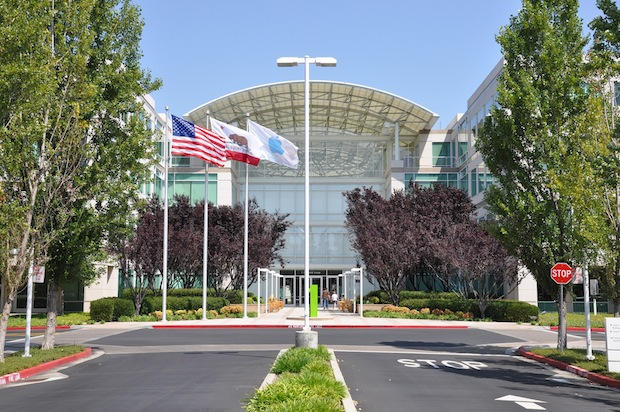
The press conference will be held at 10AM at Apple’s Cupertino campus. It will likely address controversy surrounding the device’s antenna performance, which degrades if the phone is held in the so-called death grip.
It’s not clear if Steve Jobs will host the press conference.
No other information about the conference is available. According got Macworld, the invite simply says it’s a “press conference about iPhone 4,” nothing more.
The iPhone 4 Antennagate went into overdrive this week after Consumer Reports tests showed the issue is hardware related, and not a software problem as Apple had claimed earlier this month.
In a statement published on its website, Apple blamed a faulty reception algorithm for displaying incorrect signal strength. The company has promised a software fix.
This is a guest commentary by Bryan J. Ball, a stand up comedian and long-time Apple fanboy.
My relationship with Steve used to be such a happy one. He would create beautiful bits of electronic amazement and I would buy them, show them off and feel generally superior to my non-Apple friends and family. That’s still mostly true but I’m starting to have my doubts.
My life is pretty Apple-centric. I have an iMac, an iPad, all manner of iPods and I was literally first in line to get an iPhone 4. I’ve been pretty happy with everything I’ve had so far. My area has excellent AT&T coverage so I’m not even plagued by the death grip reception issue on my iPhone.
Yes… I’ve been called a fanboy on more than one occasion. I used to categorically deny this but after watching Steve Jobs’ behavior and listening to myself defend it over the last couple of weeks, I’m starting to wonder.
Apple’s antennagate issue has been in the news for weeks now. It’s the dominant story about the iPhone 4. This is why PR experts have compared Apple to Toyota. Not because the two problems are equivalent — they aren’t — but because the media equates Prius with dodgy brake pedals, and the iPhone 4 with dodgy reception issues. Note: No one said it’s a Prius-style problem; they said it’s a Prius-style PR problem.
Apple’s stock is taking a pounding today after Consumer Reports‘ negative iPhone review, and our story that the company may have to issue a hardware recall.
Apple’s share price fell 3-4% in heavy trading today, reports VentureBeat:
Apple’s stock price fell 3 percent on Tuesday after Consumer Reports gave a negative review of the iPhone 4 because of its reception problems.
… In the wake of the Consumer Reports review, experts speculated that Apple would have to recall the units it has sold to fix the antenna problem, which may be more complicated than the software fix that Apple talked about on July 2.
The iPhone 4 "Death Grip" will force Apple to issue a hardware recall, crisis management experts told CultofMac.com.
Apple will be forced to recall the iPhone 4 following Consumer Reports tests proving the “Death Grip” antenna issue is not software related, but a hardware flaw, PR experts say.
“Apple will be forced to do a recall of this product,” said Professor Matthew Seeger, an expert in crisis communication. “It’s critically important. The brand image is the most important thing Apple has. This is potentially devastating.”