Here’s a mockup of the iPhone 5 spy pic posted to the MacRumors forums, courtesy of another forum member.
As you can see, it looks just like the iPhone 4, but thinner. There’s also no tapering or plastic back, as previous rumors have suggested.

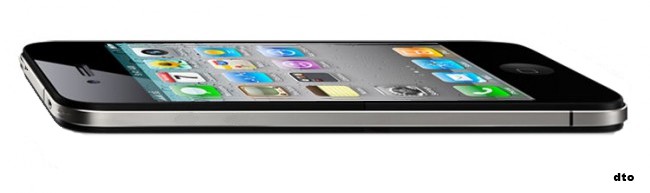
Here’s a mockup of the iPhone 5 spy pic posted to the MacRumors forums, courtesy of another forum member.
As you can see, it looks just like the iPhone 4, but thinner. There’s also no tapering or plastic back, as previous rumors have suggested.

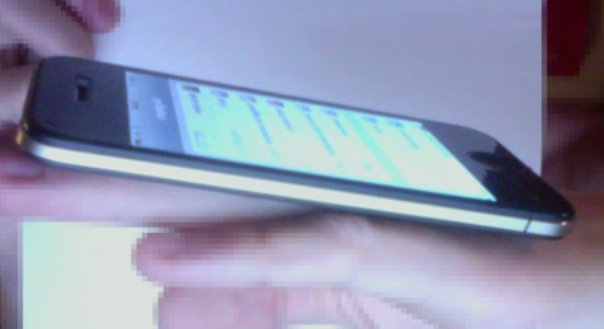
Could this be the iPhone 5? The picture was posted to MacRumors’s forums, and was snapped at the office of a French cell phone company, according to the forum member who posted it.

Just as we exclusively reported last year (and no one believed us), Apple will build one of its biggest retail stores yet in New York City’s Grand Central Terminal.
Apple signed a 10-year lease with New York’s Metropolitan Transportation Authority to build a whopping 23,000-square-foot store on the upper balcony of the iconic train station, the New York Post reports.
The store will fill Grand Central’s north and northeastern balconies, displacing Charlie Palmer’s Metrazur restaurant. It will be among Apple’s largest stores, about 3,000 to 5,000 square feet larger smaller than Apple’s biggest stores in London and on New York’s West 14th Street.
The MTA is offering Apple a special move-in rent of $800,000 (a cool half-mill more than Charlie Palmer’s restaurant is currently paying). Then it will up the rent to $1 million annually. Apple will pay to refurbish the space, and the MTA estimates it will make $5 million profit on the deal, and revitalize retail at the popular station.

Editor’s Note: This post has been stickied to top of the front page. If you scroll down there is probably new content below it.
OS X Lion is the eighth major release of Mac OS X, and it brings to the table several ideas from iOS, like Launchpad (a matrix display of installed applications, similar to the iOS Home Screen — and the Mac App Store) which is being used to deliver the new OS.
Despite the iOS inspiration, Lion’s not a huge shift from previous versions, and it won’t turn your Mac into a faux iOS device. Rather, it borrows some of iOS’s best ideas and uses them to polish the core Mac experience, making Lion the most attractive, cohesive, user-friendly and idiot-proof OS X yet.
It’s a big accomplishment overall. Lion not only looks cleaner and nicer, it fixes a surprising number of long-time niggles. But it also adds some nice new features, and while there are some changes that will cause consternation, like reverse scrolling, almost everything added is for the better.
The question isn’t whether you should spend $29 on Lion, because that’s just a no-brainer. No, the real question is: now that we’re in the post-PC age, how will Lion change the way you use your Mac, and how does it set the stage for the Mac of the future?
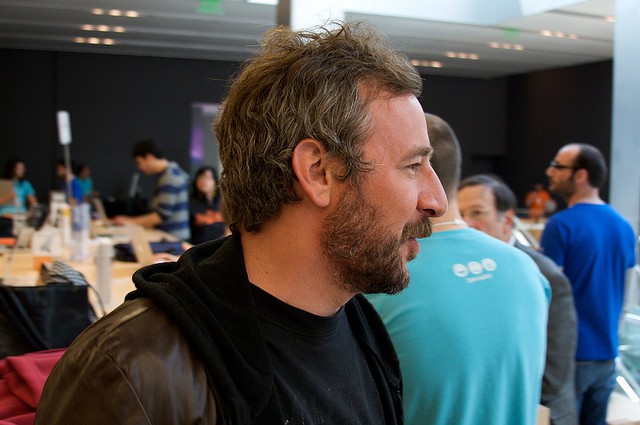
TuneUp is the #1 add-on for iTunes. It cleans up song metadata like missing album info or misspelled names. It also delivers related music videos, and alerts you when favorite artists are playing in town.
It’s easy to use and can do a quick job of cleaning up the messiest library. But it’s not perfect: songs can be mislabeled and there’s been complaints of bugs and crashes. TuneUp costs $39.95/yr or $49.95 one time fee for a bundle. TuneUp also offers a la carte pricing for individual products. A free demo cleans up to 50 songs and removes 25 duplicates.
Yesterday I got a chance to talk to Gabe Adiv, founder and CEO of TuneUp Media,company behind the plug-in.
He gave me some interesting statistics about iTunes and listening habits, as well as thoughts about Apple moving music into the cloud.
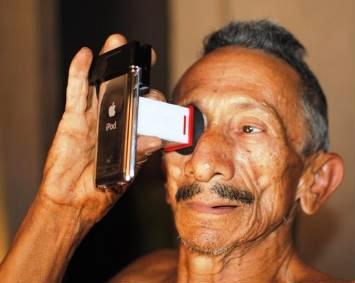
Here’s another way the iPhone is revolutionizing medicine — it’s now a cheap, portable tool for detecting cataracts, the leading cause of blindness worldwide.
Researchers at the Massachusetts Institute of Technology have developed Catra, a cheap plastic lens that clips onto the iPhone’s screen. Using a simple vision test, the Catra software creates a map of cloudy areas that may indicate the onset of cataracts.
The Catra software can provide a diagnosis within minutes and requires no training. It also works on the iPod touch and other smartphones. It’ll be a boon for use in developing nations, the researchers say.
Below is a video explaining how it works. Catra will be shown off at Siggraph in Vancouver next month.

As my colleague Mike Elgan points out, the iPhone has changed the world in profound ways.
Now an ex-colleague, Brian Chen of Wired.com, has just published one of the first books to take an in-depth look at how, exactly, the smartphone world is shaping up.
Always On: How the iPhone Unlocked the Anything-Anytime-Anywhere Future — and Locked Us In is an excellent overview of how the iPhone is changing the computing landscape.
I follow Apple closely, yet I was surprised at how much I learned about the world of mobile from Chen’s well-reported book (Full disclosure: I provided a blurb).
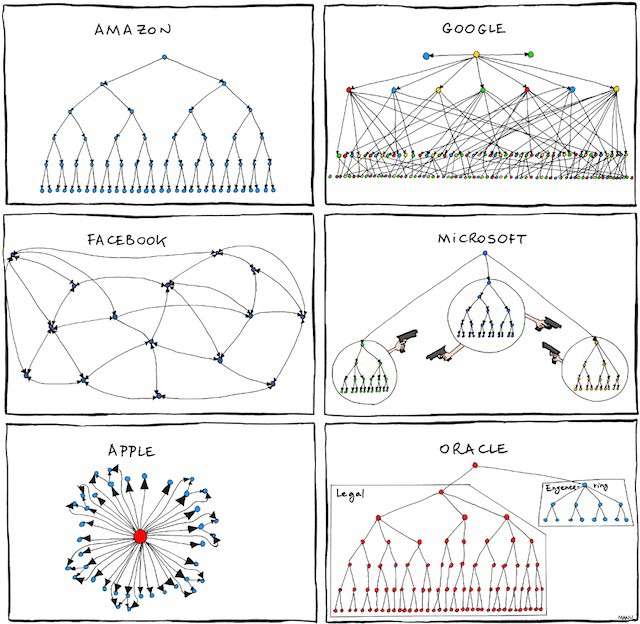
There’s a lot of truth in these Organizational Charts for various tech companies from Bonkers World.
Via Laughing Squid
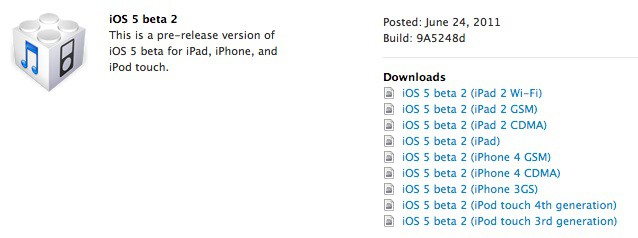
Late on a Friday summer afternoon when everyone’s about to get early cocktails, Apple goes and releases the new iOS 5 beta we’ve been waiting all week for.
iOS 5 Beta 2 is now available to registered developers. The build is 9A5248d.
As usual, there’s skimpy release notes; but it looks like WiFi syncing has been turned on.

Here’s some good news for fans of retro arcade games on the iPad.
A Software Development Kit for the fantastic iCade iPad cabinet is now available free of charge, Ion Audio has just announced.
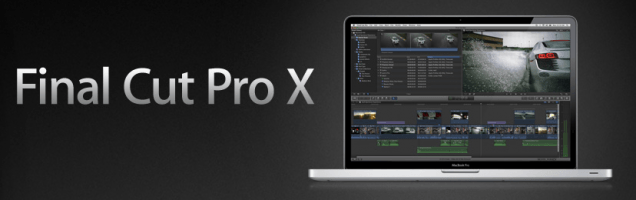
Macworld magazine has given Apple’s controversial update of Final Cut Pro X a cautious thumbs up.
The new version of Final Cut Pro rocked the video editing world with its ruthless embrace of the new at the expense of the old. Lots of veteran FCP editors are outraged by the update, which has a whole new code base and workflow. The new software can’t even open old FCP projects!
But Macworld says that’s the price to pay for progress. The new software has been rewritten for a tapeless, metadata-based video workflow, and though incomplete, it’s a huge imporvement:
With Final Cut Pro X, Apple is once again out to completely re-invent the video industry. This is a truly groundbreaking release for a 1.0 software version, and I hope that the professional features that many video editors currently use will be made available soon.
Macworld: Review: Final Cut Pro X

I have a personal request: I’d like to ask for your support for a charity bike ride I’m doing in July.
I’m riding the Tour of the California Alps, better known as the Death Ride, to raise money for the Leukemia & Lymphoma Society’s Team in Training program.
I’m $1,000 dollars short of my fundraising minimum ($3,500). I’d like to ask for your support.
If you can help in the fight against blood cancer, please make a pledge using this link (use the “Make a Donation” widget at the right). It’s fast, easy and totally secure. I only need 20 people to make a $50 donation (or one person to make a $1,000 pledge). The deadline is Monday June 27 — just three days away.
The Death Ride is a very challenging 130-mile route that goes up and over five mountain passes in the awesome Sierra Nevada. It features 15,000 feet of climbing in one day, most of it between 6,000- and 9,000-feet above sea level, where the air is pretty thin. Here’s the elevation map. For an idea of how high that is, see this amazing infographic. It’s a masochistic ordeal.
Many thanks for reading this — and for your support. I’d appreciate you sharing this post via email, Facebook or Twitter. Every penny counts, and it’s for a very good cause.
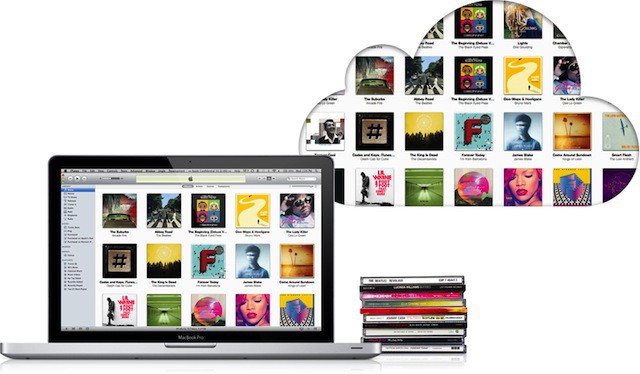
UPDATE: I totally screwed this one up. When my contact, TuneUp founder Raza Zaidi, told me iTunes in the cloud has only 20% of the all the music listed in Gracenote’s big database of music, I interpreted it to mean that the upcoming iTunes Match service would mirror only a fraction of most music libraries. What I failed to realize was that 20% of music in iTunes represents the most popular 20%. The remaining 80% is all the music in the long tail. So when Apple rolls out iTunes Match in the fall, it will indeed likely mirror most music libraries, just as Apple claims. In a clarifying note, Zaidi says matches will likely be 95% or higher. In addition, the Get Album Artwork feature in iTunes isn’t powered by Gracenote, as the post implies. Sorry for the mistakes. Teach me to post before my morning coffee.
When iTunes Match goes live in September, Apple promises to instantaneously match any of the tracks in your iTunes library to the iCloud… as long as it already has your music in its mega music library. What Apple hasn’t said is that as much of 80% of your music might not be recognized by iTunes Match… and the only way to get that music into the iCloud will be to spend days manually uploading gigabytes at a time.
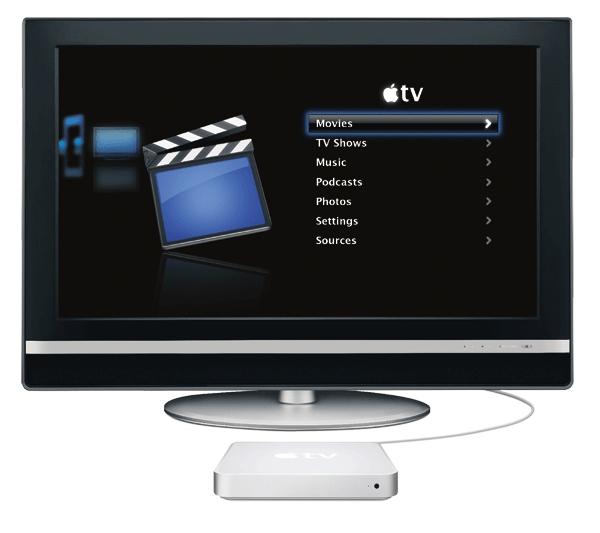
Apple is rumored to be teaming up with a major TV maker to sell Apple-branded TVs in the fall.
According to DailyTech, citing a former Apple executive, Apple’s TVs will be sold through Apple’s retail stores and will “blow Netflix and all those other guys away.”
We’ve heard this one before. So often, in fact, I’m inclined to roll my eyes. The TV business is hyper-competitive and hard.
But Apple has a big new technology that might make all the difference:
One of the big questions about Apple’s upcoming iTunes Match is how the online music service will handle songs acquired from non-standard sources, like analog LPs, or yes, file-sharing networks.
Coming this fall, iTunes Match will scan your iTunes library and make available in the cloud all the songs you’ve purchased online or ripped from CDs.
But Apple hasn’t explained what will happen with songs encoded from sources like tapes or LPs; or those couple of tracks you accidentally downloaded from a file-sharing network and forgot to delete. Will iTunes Match reject these songs or make them available?
In theory, the system should recognize most digitzed music. Apple has explicitly said it will not discriminate based on source, and someone likely ripped the songs from CD before sharing them with the world.
We’ve found a way for you to check how iTunes Match will treat your music library before Apple makes it public.

https://www.youtube.com/watch?v=TFFkK2SmPg4&feature=player_embedded
Here’s Apple’s latest TV ad for the iPad, entitled, ‘Now.’
Now, we can watch a newspaper. Listen to a magazine. Curl up with a movie, and see a phone call.
Now, we can take a classroom anywhere. Hold an entire bookstore. And touch the stars.
Because now, there’s this… [cue iPad 2].
Whose voice is that?
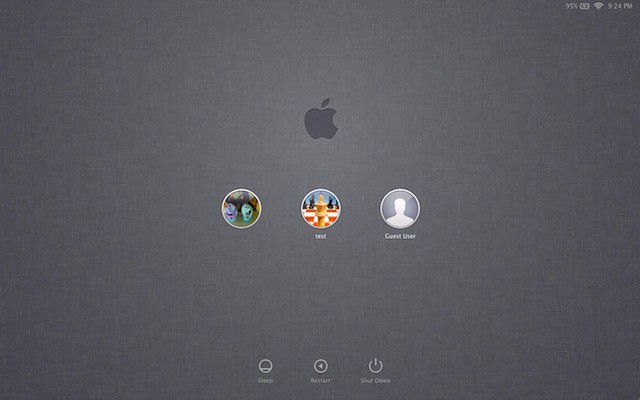
Here’s the handsome new login screen in the update to OS X Lion Developer Preview 4, that Apple released on Wednesday afternoon.
It’s a dark linen motif, and it’s used in several places in the Lion and iOS 5. We got sneak peek of this color scheme during Steve Jobs’ presentation at WWDC. Now it has been rolled out to developers, and soon to the public. Who’s excited?
Here’s screenshots of some other new stuff in the update (Build number 11A494A). Lion is shaping up nicely:
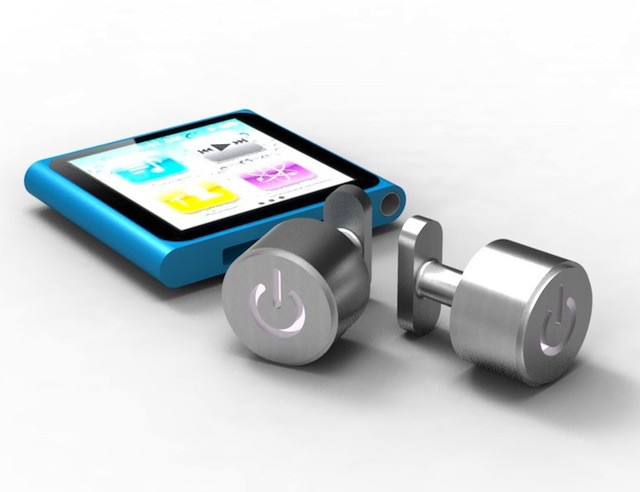
Our friends at Adafruit Industries in New York have just released glowing Mac-inspired cufflinks in time for Father’s Day this weekend.
The $128 iCufflinks pulse with the same “breathing” pattern on Apple’s Macs, MacBooks and iMacs. In fact, Adafruit’s Philip Torrone and his crew reverse engineered Apple’s LED pulse pattern.
Here’s some video:
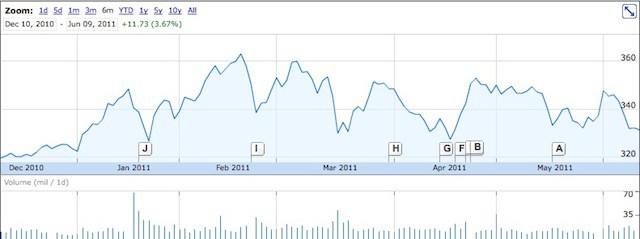
The nattering nabobs of negativism on Wall Street think Apple’s runaway success is over.
Apple’s stock has been in the doldrums for the last six months, and the reason is that analysts don’t think Apple can keep it up. Here’s what they’re saying:

Ron Johnson, Apple’s VP of retail, is quitting to take the job as president of J.C. Penney, The Wall Street Journal reports.
The company is expected to announce Johnson’s appointment later today. It’s a surprising move.
Update: It’s official. J.C. Penney has confirmed that Johnson will become CEO on November 1. Plus, Johnson is investing $50 million of his own money!

Steve Jobs wanted to build his futuristic spaceship campus thirty years ago, reports the San Jose Mercury News.
Jobs wanted a “shimmery glass structure” surrounded by trees in rural San Jose. He had purchased the land and had lined up world-class architect I.M. Pei to design it.
“To me, it’s as if time hasn’t shifted — 30 years, same vision, same scope, same dream,” said real estate consultant Bob Feld, who worked with Jobs at the time.
So what happened?

To celebrate IBM’s centenary next week, the world’s leading financial magazine, The Economist, took a look at what high-tech companies might survive 100 years.
Apple made the cut, but Microsoft didn’t. And Google is looking sketchy. Why?

A pair of iPhone 4s running an experimental science app are heading for the International Space Station next month, it was just announced at Apple’s WWDC.

This is the size of Steve Jobs’ new Apple spaceship campus — compared to the massive Pentagon building. You can imagine the scale of the complex Steve Jobs is planning to build.
The Pentagon building, btw, is the world’s largest office building (by floor size). It houses about 26,000 people. Steve Jobs’ new HQ will house 13,000 — but it’s parkland in the middle. We imagine it’ll have similar security though.
Thanks Se Mo!
Don’t Miss: Pictures of Apple’s New Mega Mothership Campus

At Apple’s HQ there’s a shop that sells t-shirts, pens, mugs and other logo goods. One is a t-shirt that says, “I visited the mothership.”
Here’s the new mothership: a mega campus that Steve Jobs is proposing to build in the heart of Cupertino, the town he went to school in as a boy. It’s also where he and Wozniak founded Apple in the mid-70s.
Here are some pictures of the massive new building to house 13,000 Apple employees: