An Apple store at New York’s Grand Central Terminal is back on.
Apple Store In Grand Central Terminal Is Back On



An Apple store at New York’s Grand Central Terminal is back on.
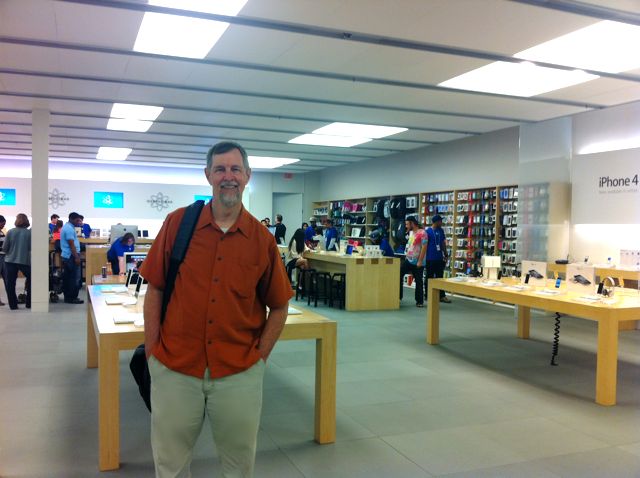
To celebrate Apple Retail’s tenth anniversary, Gary Allen just drove 3,200 miles, crossed 12 states, and burned 100 gallons of gas.
His destination?

Although the Third Man theme will quickly drive you crazy, this clever video makes inventive use of three iPhone screens.
written/choreographed by Ronen Verbit and Vanya Polunin
Written/choreographed by Ronen Verbit and Vanya Polunin.

Party planner Stephanie Gordon was flying from New York to Palm Beach when the caption told passengers they might witness the final launch of the Space Shuttle Endeavour this morning.
As the plane descended, Gordon pulled out her iPhone and snapped some incredible pictures of Endeavour as it punched through the clouds:

Here are the new wallpapers in OS X Lion Developer Preview 3, released this afternoon. There are poppies, ducks, and an actual lion.
They come courtesy of it’s all tech, who bundled them up into a downloadable zip file (26.1MB).
Check them out:
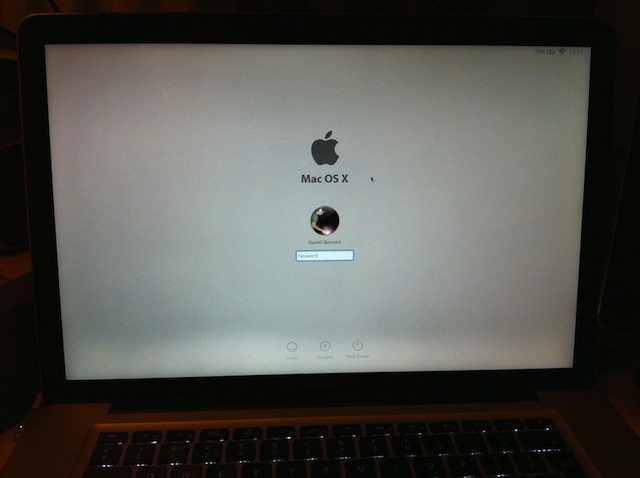
This is new the login screen in Lion Developer Preview 3, which was just released this afternoon. And we also have a list of some of the biggest changes.
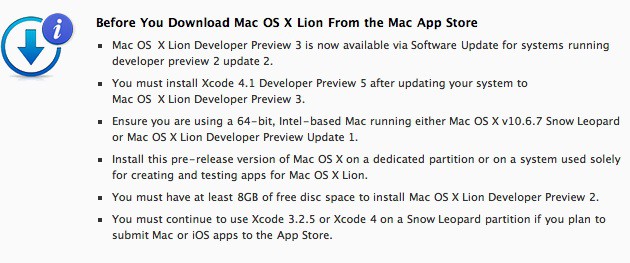
Apple has just released the third major Developer Preview of Lion, the upcoming update of Mac OS X.
The 1.07GB update is avaliable to registered Mac developers running developer preview 2 update 2.
There’s also an update to Xcode, which is now version 4.1. Developers must upgrade Xcode to 4.1 after installing Lion Preview 3.
We’ll have more details soon…
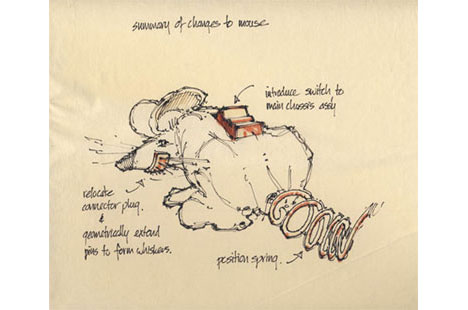
UPDATE: Gladwell debunks the old story that Jobs “stole” the Mac from Xerox PARC. See below.
In the latest edition of The New Yorker, preeminent business writer Malcolm Gladwell takes on Steve Jobs and the creation of the mouse.
The piece is called “Creation Myth: Xerox PARC, Apple, and the truth about innovation.”

Apple’s giant datacenter in North Carolina may bring advanced voice controls to the iPhone and iPad, reports Techcrunch.
The function of Apple’s massive datacenter — one of the biggest in the world — has been kept firmly under wraps. The North Carolina facility is like Area 51: everyone knows it exists, but few know its true purpose. Observers believe it is primarily for iTunes in the cloud, but Techcrunch suggests it is already set up to bring voice recognition to iOS 5.
According to Techcrunch reporter MG Siegler, Apple is already running advanced voice-recognition software from Nuance Communications – the company behind the Dragon Dictation applications for the iPhone and iPad — at the massive datacenter. The two companies will announce a deal at WWDC in early June.
And that likely means that iOS 5 will feature a plethora of advanced voice controls when it also is unveiled at the programmers’ conference.

One of the most interesting revelations of the Fortune piece “Inside Apple” that’s making headlines this weekend is how Steve Jobs thinks Apple will be OK without him.
Fortune reporter Adam Lashinsky writes:
“Jobs himself believes he has set Apple on a course to survive in his absence. He has created a culture that, while not particularly jolly, has internalized his ways.”

The iPad 2 came to China this morning and sold out in less than 4 hours, according to our friends at M.I.C. Gadget.
Apple’s flagship store in Beijing attracted a massive crowd of customers and scalpers, who started lining up at 5 p.m. on Thursday. Overnight customers were treated well: there was a special waiting room for them to sleep in, and everyone got a wristband, allowing them to leave the line for an hour and return to their place in line.
There was even a special section for scalpers, who set up shop behind a barrier. Here’s the details:
Review: Early 2011 Apple iMac (27-inch screen, 3.1GHz quad-core Intel Core i5)
Apple updated its venerable iMac this week with new machines that are fast, sleek, and beautifully packaged.
Sporting Intel’s Sandy Bridge processors, powerful new graphics cards and Thunderbolt ports that can support two external monitors, the new iMac is the undisputed champion of all-in-one machines. Plus, it’s the only one out there that’s not butt ugly.
As well as being the most attractive desktop computer available, it offers just about everything modern computer users might need in a self-contained package, from a HD webcam to a gesture-sensitive trackpad.
I’ve been testing a 27-inch model with a 3.1Ghz Core i5 chip (the biggest, fastest stock model currently available at the Apple Store), and it may sound silly, but it’s almost too much machine for my needs. The screen is so big, I have to sit back lest I get motion sickness. And the i5 chip has power to spare for someone like me, who doesn’t do high-end video or graphics work.
Still, I’ll take it. If the chip is too powerful now, it sure won’t be in a couple of years.
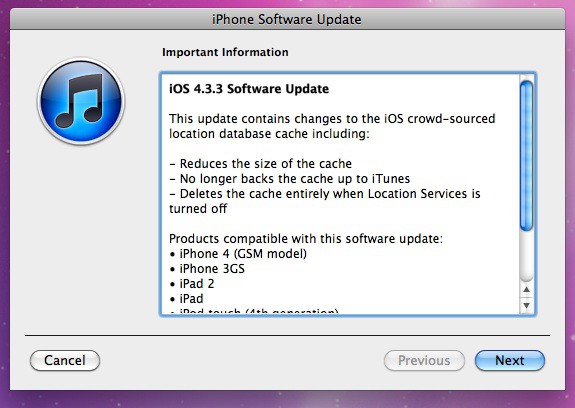
Just seven days after Steve Jobs promised to fix the location tracking bugs in iOS, an update is available now for download through iTunes.
A free download, iOS 4.3.3 fixes three bugs related to location tracking:
The data isn’t encrypted, but Apple says that will be fixed in the next major update, likely iOS 5, which is expected at WWDC in early June.
The 4.3.3 update applies to the iPhone (4 and 3GS, but not the iPhone 3G); iPad (1 and 2); and iPod touch (3rd and 4th gen, but not 1st or 2nd gen).
There’s a separate 4.2.8 update for the Verizon iPhone 4 (the CDMA phone is still on a different fork of iOS).
Update or no, Apple is still expected to testify at a May 10 Congressional hearing about mobile tracking.

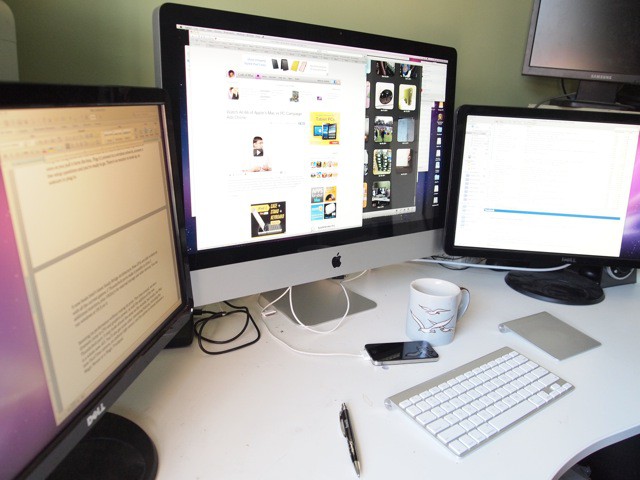
Here’s the new 2011 Thunderbolt iMac playing HD movies on three screens simultaneously — without a hiccup.
It’s a 27-inch model with an Intel Core i5 chip and AMD’s Radeon HD 6970 graphics card (1GB of GDDR5 memory).
The two 21-inch Dell monitors either side are connected via the iMac’s pair of Thunderbolt/Mini DisplayPort jacks on the back (with a pair of pricey $30 Mini-DisplayPort-to-DVI adapters).
The main 27-inch display’s resolution is 2,560-by-1,440; while the external monitors are at 1,920 by 1,080 (true 1080p HD).
Pretty impressive.

Look what just arrived at CultofMac towers here in San Francisco. Yes, it’s one of Apple’s awesome new Core i5 iMacs.
It’s a $1,999 27-inch i5 model (It’s stock — no build-to-order options. Couldn’t wait a month).
As you can see, it can handily power another 27-inch iMac as an external monitor. (It’s hooked to a 2010 iMac, reviewed here last year). This is going to replace an aging Mac Pro I use for work. It just radiates awesomeness.
I’ll get started on the review as soon as deal with a major plumbing emergency here at home.

A pair of Italian Apple fans visiting The Mothership had the good luck to spot Steve Jobs as he arrived for work recently.
They were snapping pictures out front of Apple’s Cupertino HQ when a big black luxury car pulled up. Out steps Dear Leader himself. The gobsmacked Italians asked for autographs and a commemorative picture, but Jobs shooed them away saying he was late to a meeting. He strode right by them into the building. This was a week ago: April 25th.
Good to see the miserable bastard is still hard at work.
Esclusiva iPhoneItalia: Steve Jobs fotografato al campus di Cupertino!
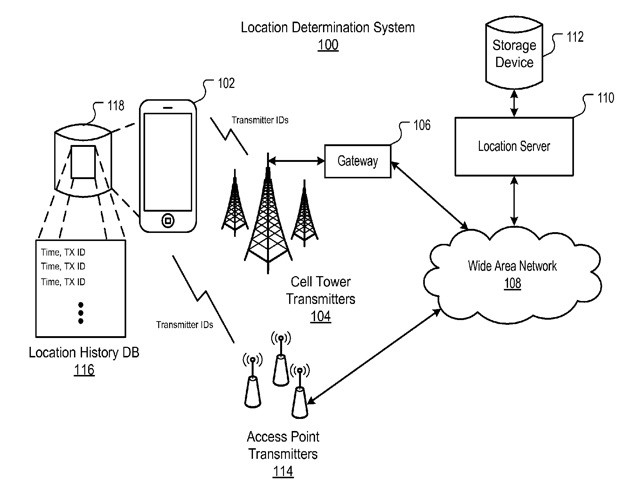
Apple applied for a broad patent on location tracking services back in September 2009 — the kind of location tracking that is now causing a storm of controversy.
The patent application, entitled “Location Histories for Location Aware Devices,” throws some light on the iPhone tracking issue, which is soon to be the subject of a Senate hearing.

Earlier this week, I was interviewed by a Russian TV crew about Apple. They were a bit surly and aggressive, not like polished, ingratiating TV people here in the U.S.
They kept asking strange questions about Steve Jobs, as is if he were a crooked oligarch. “Vy does Steve Joybs vant to be dictator? Vy does he vant to dominate ze vorld?”
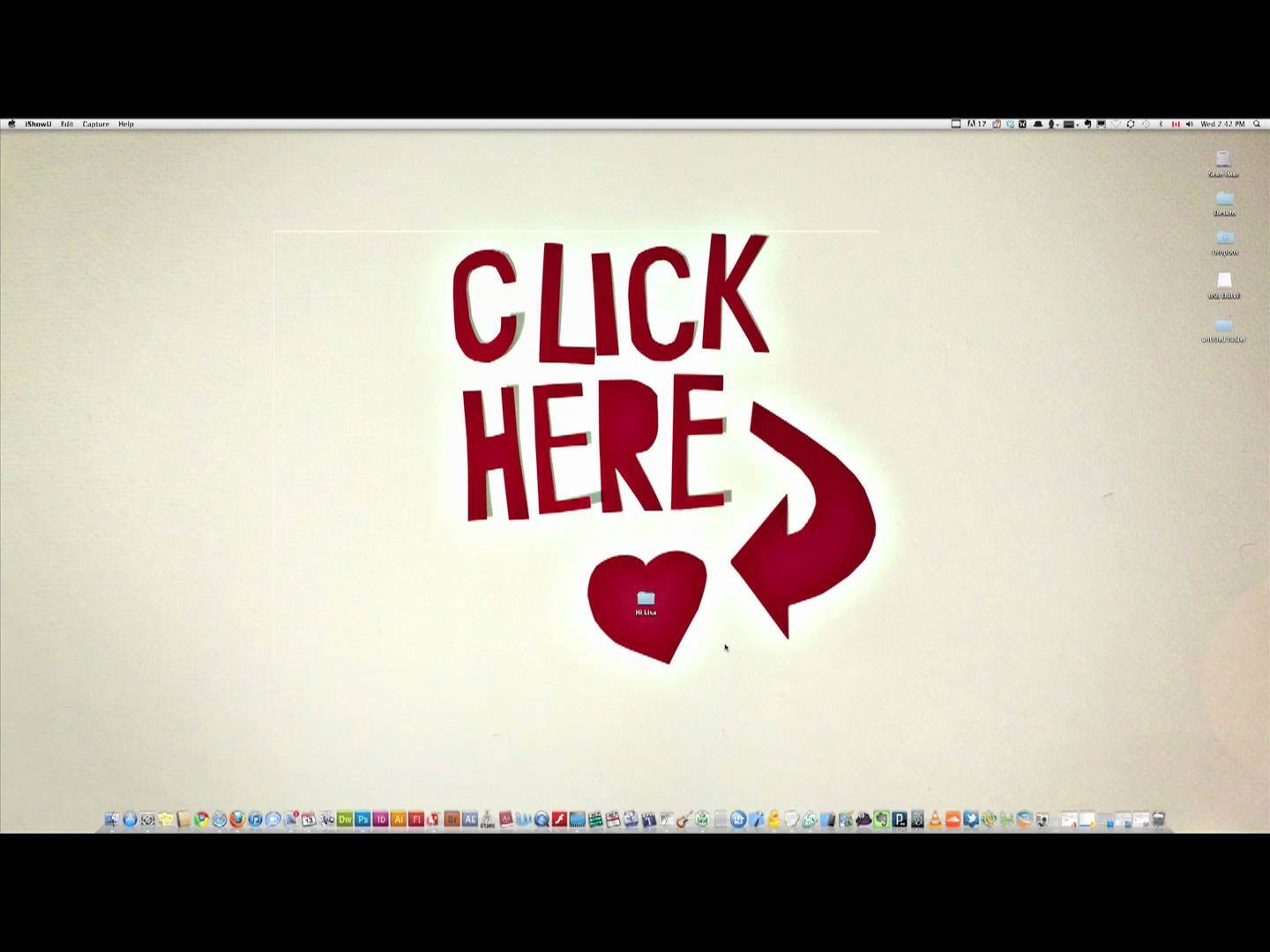
To celebrate his third wedding anniversary, Sean Ohlenkamp of Toronto, Canada, placed a folder on his wife’s desktop.
When she clicked “Click Here,” she discovered a message written using folders nested within folders. See for yourself. It’s charming and clever:
How did she react?
“She liked it. Wasn’t too happy about me clearing all her icons off her desktop but she liked it. :) We enjoy doing things with or for each other instead of buying gifts.” Ohlenkamp wrote in the comments on YouTube.
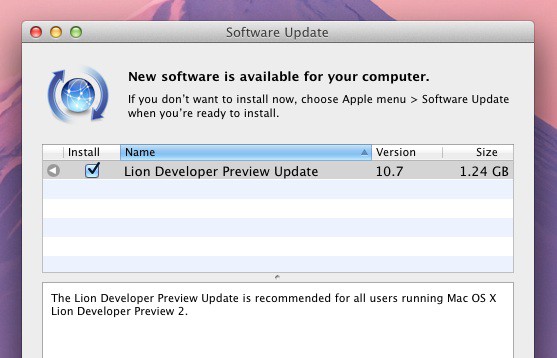
Apple has released an update to its Mac OS X 10.7 Lion beta. The 1.24 GB update is third build of the new operating system, which is expected to be shown off at WWDC in June and released to the public in the summer or fall.
The update is available to registered Mac developers running Lion Developer Preview 2. It can be downloaded through Software Update. The release contains no release notes and appears to contain only minor UI tweaks, according to tweets crossing the wire. It’s unlikely to be a big update. That will come with Developer Preview 3.
Steven Levy‘s new book about Google In The Plex revealed a few juicy nuggets about the relationship between Apple and Google.
At first, Larry and Sergey wanted Steve Jobs as their CEO. Then the two companies had a long honeymoon, sharing board members and collaborating on groundbreaking software. But then it all soured when Google released Android, and Steve Jobs hid the iPad from Eric Schmidt, even though he was sitting on Apple’s board.
We had a chance to ask Levy for more detail and insight into the relationship between Apple and Google. Here is our exclusive Q&A:
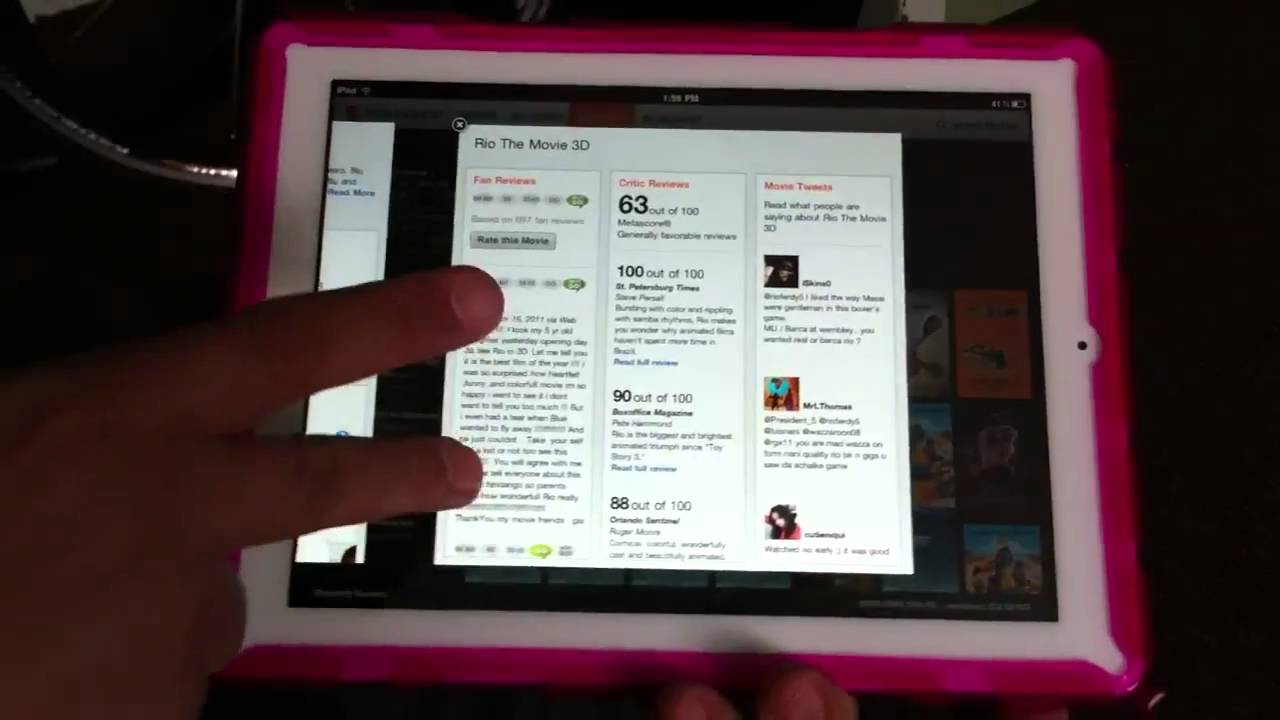
Seeing the latest installment of the Fast & Furious franchise, Fast Five, this weekend? You may want to check Fandango’s iPad app before you try to book your tickets.
A feature called “The Pulse” shows realtime ticket sales (more or less), indicating what movies are going to be hot over the weekend — and which screens will be empty.
Bad news for Fast Five fans: It looks like the movie, which opens on Friday, is going to be sold out. It’s already shaping up to be the biggest pre-sold movie of the year to date, says Fandango’s Harry Medved, who shows us how The Pulse works:
For more fun, see The Onion: Today Now! Interviews The 5-Year-Old Screenwriter Of “Fast Five”
Here’s a peek at Al Gore’s new book, “Our Choice: A Plan to Solve the Climate Crisis,” which has been turned into a very cool interactive iPad app.
The former vice president’s book features text, images, interactive infographics, documentary video and audio commentary.
It looks like a great, immersive experience (and probably pretty scary, given the subject matter) — the climate change equivalent of the beautiful The Elements app.
Check it out:
The app ($4.99 on the App Store) was designed by Push Pop Press, a San Francisco startup by a pair of ex-Apple engineers, including Mike Matas, who helped design Delicious Monster. Push Pop Press is working on a Mac desktop application to create similar eBooks, which will be “very affordable” when it eventually ships. Reporter Brian Chen has more detail at Wired.com: Gore, Ex-Apple Engineers Team Up to Blow Up the Book
Here’s another video showing Gore’s app/book in more detail:
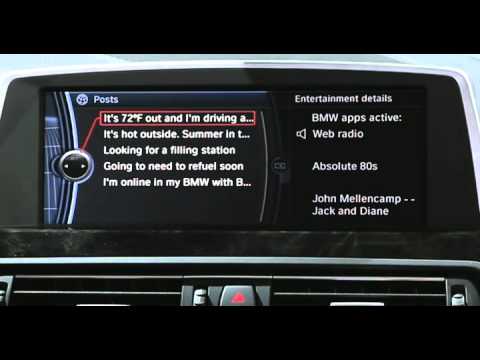
Car manufacturers are finally developing better ways to hook your iPhone into your car.
Check out this video demo showing how BMW is integrating the iPhone into car entertainment systems.
Patched in through BMW’s iDrive system, the iPhone can can be used to play music, web radio, or send updates and messages to Facebook and Twitter.
“This suite of technologies allows smartphone features — the things people really love on their smartphone — to be integrated in a safe, easy-to-use way in your BMW,” says BMW Technology Group senior engineer Rob Passaro in the video.
“The great thing about this is, as Apple updates new features on its iPod, we get it automatically. You don’t have to go to the dealership to get these functions in your car as soon as they are available.”
Check it out:

Dancing at Apple’s retail stores is becoming quite a trend. First there was iJustine, followed by the lip-syncing kid iTr3vor, and now the cast of a Disney TV movie.
Over the Easter weekend, the cast of Disney’s new made-for-television movie, “Lemonade Mouth,” invaded the Apple retail store at The Grove in Los Angeles to dance a number in front of amused shoppers.
Staff eventually gently shoed them out, but unfortunately not before the movie’s title song “Determinate” drives you absolutely f–king crazy.
Via TUAW and IFOAppleStore.