Mobile menu toggle

Apple - page 52

WWDC 2009 Dates Announced

By

post-9809-image-871e9f0dcdb1ba2a6ddd4ccfdbbe2aaf-jpg

Grab your parka, hat and gloves and book your tickets early for WWDC 2009, June 8 – 12 at San Francisco’s Moscone Center West.

Apple announced the dates Thursday via its Developers Connection website for the annual conference that provides developers and IT professionals with in-depth technical information and hands-on learning about iPhone OS and Mac OS X technologies from over 1000 Apple engineers who created them.

Easily one of the most eagerly anticipated Geek festivals on the calendar, this year’s conference should draw even more interest than usual due to the impending arrival of iPhone 3.0 and Mac OS X 10.6, known as Snow Leopard.

Early-bird registration for the conference is $1,295 until April 24th, after which the entrance fee goes up $300. Current ADC Student Members and student Team Members in the iPhone Developer University Program can apply for a WWDC Student Scholarship for free admission to the conference.

UPDATED: AppStore Refund Policy Won’t Bankrupt Developers

By

post-9789-image-ff03c99af40864a00025ccfda255be68-jpg

Apple must have the sweetest distribution deal in the entire retail universe, if a report published Wednesday at TechCrunch is to be believed.

The AppStore refund policy allows purchasers a full refund up to 90 days from the date of download of any application purchased in the iTunes AppStore. Which seems questionable enough in the light of, say, the Android Market’s 24 hour return policy.

But a clause in the developer’s contract all iPhone developers must sign in order to have their apps sold in the AppStore indicates that in addition to a three month return policy, “Apple will have the right to retain its commission on the sale of that Licensed Application, notwithstanding the refund of the price to the end user.”

In effect this means Apple will charge 100% of the sale price to a developer for every refund given, even though the developer only got 70% of the price of the sale in the first place.

Many iPhone app developers are on the record as having no problem with Apple’s 30% sales commission for applications sold through the iTunes AppStore. The thinking goes that independent developers gain access to many more potential customers by having their products in the widely visited venue, save tons of money on marketing and transaction costs and generally benefit from being associated with the legitimacy of the Apple brand.

When consumers get wind of this policy, which may be a new development, according to the TechCrunch report, developers of some widely purchased though basically useless apps could be in for a rude awakening.

UPDATE: No developer is likely to go bankrupt in the real world, according to a level-headed explanation posted Thursday by Erica Sadun, a developer/blogger for ArsTechnica.

The reason, which makes perfect sense when you think about it, is that Apple never gives refunds, except in extreme circumstances and then, only after causing the customer many headaches.

All the Fart app people can rest easy now.

Apple Provides Firmware Fix for 17″ MBP Graphics Issues

By

cult_logo_featured_image_missing_default1920x1080

Apple released a firmware update Wednesday for owners of 2009 unibody 17″ MacBook Pros meant to resolve issues with Nvidia graphics processors that have been causing display anomalies for some users.

Reports on March 6 described complaints related to the Nvidia GeForce 9600 graphics processor in new 17″ MacBook Pros that were causing lines to appear all over some users’ notebook displays, as reported in Apple support threads and in comments to Cult of Mac’s original post.

The firmware update released Wednesday applies only to 2009 model 17″ MacBook Pros. Users wishing to apply the firmware fix should consult Apple documentation for information on how to apply the update.

Let us know in comments whether the firmware solves the problem.

Opinion: Apple Still Drives the Technology Innovation Bus

By

cult_logo_featured_image_missing_default1920x1080

After a decade of being the clear leader driving market trends in computing, Apple’s influence could wane in the post-Steve Jobs era, according to a thoughtful piece posted Tuesday at TG Daily.

Industry analyst Rob Enderle describes Apple’s amazingly diverse impact on wider market trends:

* The iPhone immediately became the gold standard for mobile phone manufacturers, resulting in an explosion of new devices and innovation across every mobile software platform;

* Apple created integration between power and graphics in computer processors that would not have been possible without the company’s commitment to OpenCL, a framework for writing programs that execute across CPUs and GPUs;

* Apple’s focus on design and higher margins resulted in the introduction of products such as the recently released Dell Adamo, a PC notebook designed and marketed to emulate Apple’s attention to every detail from the packaging inward, down to the absence of stickers promoting Microsoft Windows and Intel;

* The elegance of the user experience in Mac OS X virtually doomed OEMs’ embrace of Linux to a competition not with Apple but with Windows, an outcome which will affect the introduction of Google’s Android when it comes to market next year as well.

In short, Enderle writes, “Apple is at the core” of all recent change in the computer industry, that “as a result Apple’s efforts, the products we will see from a variety of vendors will be vastly more amazing than they otherwise would have been.”

None of the above is really subject to debate. Enderle goes on to question whether Apple can keep it up in the post-Jobs era, however, and this writer disagrees. Follow the jump to find out why.

Push Notification Remains MIA in iPhone 3.0

By

post-9698-image-d9762387ac1ba5bc7523df23dff943f6-jpg

UPDATE: This post corrects a post written and originally published on 4/18 that contained incorrectly attributed information.

The single most talked about and demonstrated feature of iPhone 3.0 software at Tuesday’s launch event — push notification — remains absent from the beta release distributed to developers, with no indication thus far forthcoming from Apple when it will become available.

Scott Forstall, Apple’s Senior VP for iPhone software spent over half an hour Tuesday extolling the virtues of push notification and explaining why — although promised by the company over a year ago — it has taken so long to roll out. Developer “demand we didn’t anticipate” caused Apple to “completely re-architect the server infrastructure for push notification,” he said.

Developer representatives from a half dozen companies were trotted out for a dog and pony show to demonstrate how amazing push notification is going to be in the next version of iPhone software, and yet, despite distributing documentation of how the service is intended to work, Apple has yet to provide developers a method for implementing and testing push notification in their apps.

Forstall spoke plainly in his presentation Tuesday (see 26:45 into the video) “It is now really scalable, and we’re ready to go.”

Apparently not.

Calls to Apple for explanation were not returned as of press time, but we’ll be sure to keep readers apprised as this story develops.

Hardware DRM: Has Apple Joined the Dark Side?

By

post-9575-image-4022534bafd07c59770ca33438ba9121-jpg

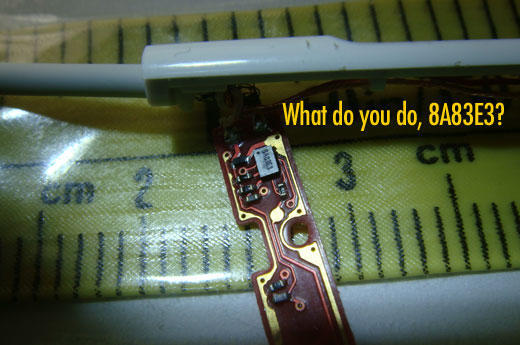
A tiny authentication chip in the headset with on-cord control shipped with the just-released iPod shuffle is raising concerns among some that Apple will extort licensing fees from third-party headset manufacturers who wish to make headsets compatible with Apple’s new music playing devices.

First reported Friday in a review of the new shuffle at iLounge, the authentication chip was then derided by the Electronic Frontier Foundation as Apple’s attempt to invoke the Digital Millennium Copyright Act not to stop piracy, but to impede competition and innovation.

Saturday night, Boing Boing Gadgets posted pictures of the curious chip, along with a thoughtful piece pondering whether Apple’s engineering really amounts to DRM: “For all we know, it could be something the FCC made them put in so that it doesn’t interfere with whalesong.”

The EFF raises a great point, actually, wondering why more reviewers have not seized on Apple’s proliferating instances of hardware DRM: “If it were Microsoft demanding that computer peripherals all include Microsoft “authentication chips” in order to work with Windows (or Toyota or Ford doing the same for replacement parts), … reviewers would be screaming about it.”

In the final analysis, however, if Apple is in fact, as Boing Boing put it, “attempting to eat the headphone industry whole,” the company will lose. Consumers have the last vote and to the extent it may seem Apple products are stifling competition, raising prices and limiting choice, Apple’s tiny devices will go unsold.

There are already many many alternative music players on the market for consumers to choose from – some of the best even made by Apple itself – making the new shuffle a stillborn product if consumers perceive an inability to use it as they see fit.

Welcome to the 1980s—App Store game compilation appears

By

post-9475-image-fc5a7aa381f2f2761fb1a183d4662c67-jpg

I grew up with 1980s home-computer gaming: Atari, Commodore, Spectrum, Amstrad. In the UK, we had, comparatively speaking, no money (yuppies aside), and, rather than being lucky enough to follow our disk-happy American chums, had to make do with cassettes. Inevitably, with tapes being cheap, publishers soon realised that affordable games were very saleable games, regardless of quality. Eventually, the number of £1.99 and £2.99 games being churned out was astonishing, as was the ever-diminishing amount of time it would take full-price releases to show up on budget labels.

Towards the end of the 1980s, it got to the point where almost no-one bought full-price games in the UK, because everyone would just wait for a price-drop. Watching apps on the App Store brings back these memories, and so perhaps it was inevitable that the other bastion of 1980s software—the compilation—would at some point make its way to the App Store.

On March 9, the 5 Fingers Games Bundle appeared, mashing together BurnBall, Chopper, Up There, Sneezies and Blackbeard’s Assault. Time will tell if this process works in the present day. It certainly has the potential to give exposure to poor-selling but quality games. However, compilations were the other thing that broke 1980s gaming in the UK, since almost every half-decent game ended up on a compilation eventually. I’m hoping people will continue to buy and support indie devs, rather than wait for a now seemingly inevitable price-drop or compilation entry that will ultimately lead to cheaper entry points and fewer development resources.

Will Apple’s Touchscreen Netbook Look Like This?

By

post-9450-image-dd63d1b365ce85de1cf72a1ad1aa5b12-jpg

Speculation that Apple is poised to release a touchscreen netbook remains persistent as winter snows, with dozens of outlets reporting again today that unnamed “sources” in Taiwan and China “confirm” the new product will be released as early as the 2nd half of this year.

So what the heck, as long as we’re talking about something that may or may not come to pass, why not talk about what it may or may not look like?

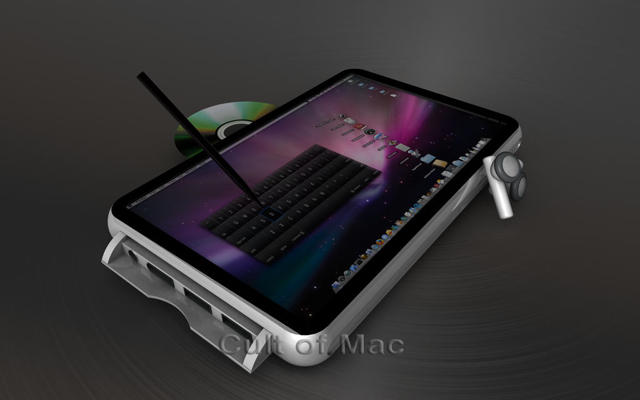
16 year-old German artist Darakas, who also goes by the name Jesse, gets the conversation started with this 3D modeling rendition of his vision for the Apple MacTouch.

Until the badly lit spy photos start showing up, we think this is a pretty good jumping off point. Have you finished your Apple netbook mock-up, or see any others out there? Let us know in comments and we’ll feature them here.

Apple App Store idiocy reaches new low

By

post-9440-image-91d4b89a782a0488276e8f2fffacc875-jpg

Evil Panda says: See me inside Tweetie. I like Tweetie. Apple, stop being stupid, or Evil Panda will get you.

UPDATE: All’s now well in the land of Tweetie. Apple relented and, in double-quick time, posted Tweetie 1.3 to the App Store today. However, this episode highlights that if you’re going to censor things, you really have to censor the ‘right’ ones, and also have some consistently enforced guidelines to work towards. And so Evil Panda is sated for now, but he’s still watching, Apple.

I recently moaned about the App Store on my blog, Revert to Saved, when the South Park app rejection debacle highlighted Apple’s inconsistency regarding application approval. (Short version: South Park app gets rejected for “potentially offensive” content, despite entire South Park episiodes being for sale on iTunes and therefore watchable on an iPhone.)

Today, however, things took a turn for the crazy. Tweetie, an iPhone Twitter client—in fact, the very best and top-selling iPhone Twitter client—just got its latest update rejected. The reason is so staggeringly bonkers that I’m hoping it’s an early April Fool jape. Apple rejected it, according to the developer, because there was an offensive word in the Twitter trends list, which Tweetie provides access to. No, really.

This is so astonishingly stupid that I am still reeling that Apple could be so dumb. Are apps now supposed to police the entire internet? Does Safari filter out rude words? Is Apple suddenly going to wrench Tweetie and every other Twitter client from the App Store? For that matter, maybe Apple should remove the likes of WriteRoom, because, hey, I can write the word “fuck” in it, and I might offend myself.

Sort out your App Store approval process, Apple, because you’re looking stupider by the second. And while competition is currently non-existent, it certainly won’t be that way for long.

Apple Netbook with Touchscreen Coming Soon?

By

cult_logo_featured_image_missing_default1920x1080

Apple plans to launch a netbook computer with a touch screen monitor as early as the second half of this year, Dow Jones reported.

Two Apple unnamed sources told the newswire that the mini laptop computers will likely have monitor screens  between 9.7-inches and 10-inches, other specifications and functions are still under evaluation.

Dow Jones was pessimistic about new netbook:
“Apple’s entry may come in what is expected to be a very tough year for computer sales. Desktop-computer shipments in particular are expected to fall by nearly one-third globally in 2009 as consumers increasingly shift to laptop computers, according to projections released by research firm Gartner Inc. earlier in March.”

A Mac netbook has long been rumored since the success of smaller lighter laptops, typically with a 10″ screen, from companies such as Asus, Acer, Dell, HP and MSI Wind.

Amazing Apple Collection Liquidation Sale

By

post-9421-image-fcf2fe145aadafcf132062619957aa42-jpg

Times are tough for Blair Saldanah.

“My wife needs medical care; and we don’t have health insurance,” he explains on the website he just put up, where he is selling quite a collection of Apple memorabilia, including posters, brochures, cards, stickers, manuals, annual Apple fact books, t-shirts, even a vintage Apple ProMouse that was Steve Jobs’ gift to attendees at the Macworld New York keynote address in 2000.

“Don’t be intimidated by the prices!” Saldanah writes on the portal page. “Most items have some bargaining room built-in, and we’ll do quantity discounts too, so find what you want and let’s talk. You might be suprised!”

That’s a good thing, too, because — for example — he’s got eleven t-shirts from various Apple Store grand openings priced at $200 each.

These economic times are difficult for so many people and one never wishes on anyone the need to sell things near and dear to them in order to raise funds for medical bills. We wish Saldanah and his wife the best.

Apple Gear Gives New Life to Classical Figures

By

post-9349-image-e068d51cc005c34875894698ec0a2b81-jpg

California sculptor Adam Reeder is working on series of neo-classical pieces he calls Socio-technic Evolution, that depict Greco-Roman gods, combined with technological objects to illustrate the concept of how technology changes the way western culture interacts with its world.

He chose figures from the Greco-Roman period because it lies at the root of western civilization; he chose Apple products to depict the influence of technology because, well, they do.

“My work is not about the change [itself] that takes place,” Reeder explained, “but the change in interaction, facilitated by technology.”

Pan with his iPod player is the first in the series. It won first place in the spring show at the San Francisco Academy of Art University, and has been selected for showing at the TEXAS NATIONAL 2009 Exhibition. After that it will go to the “art building” in Los Angeles, and then to SoHo.

“The Greek god Pan played his flute in the woods and danced with nymphs,” says Reeder, adding, “my depiction shows Pan, still dancing as before, but no longer playing his own music. Thus, the technology changes the context, but not the nature” of the classical image.

Reeder explains further that the work is not about consumerism, or commercialism, it is about how technology changes the ways in which Western culture interacts with its world.

Among the images in the gallery below, Reeder’s unfinished Atlas is planned to hold a large-scale iPhone.

panwithipod Nano Sculpture Base
Unfinished Atlas Zeus, Calling Down the Thunder

Poster Girl: Apple-Inspired Art

By

liquid-peril%28Web%29.jpg

Jasper Goodall’s “Poster Girl” series, on show in London, like his “Liquid Peril” work above, takes liberal inspiration from Apple’s iconic iPod ads.

A freelance illustrator, Goodall has worked for MTV, Gucci, Adidas, Coca-Cola and BMW.

Goodall describes his work as: “sexual, fantastical, dreamy. Basically, contemporary fantasy art.”
You can see more of his work from the show here, some are borderline NSFW.

The show’s has been held over until March 12 at the Electric Blue Gallery.

Via The Mirror

The iPod Nano Sculpture ReVisited

By

post-9253-image-4f8973a6a7bd575f5679477483aef466-jpg

We’ve featured the stunning Apple-inspired creativity of artist Kyle Buckner before in these pages, from his woodworked iPhone pedestal to a custom plexiglass Apple clock.

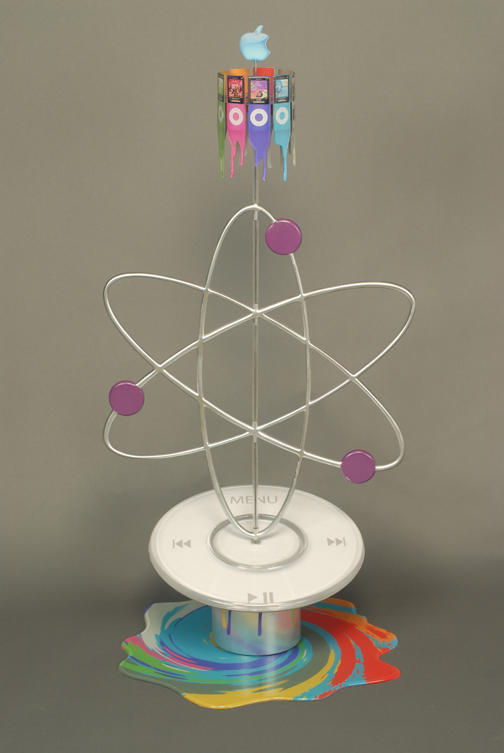
Today the Virgina-based artist is at it again with pics of his inspired iPod Nano-Chromatic sculpture.

Buckner’s newest work is wood and plexiglass and includes a motorized Genius logo, as well some other prety cool things. The iPods at the top are made out of plexi, to which he attached a graphic from behind with transparent, double-stick film.

The iPods are on a seperate piece which spins when the Genius logo does, but they can also be made to remain stationary. The Apple logo at the top stays still. Buckner has also built in a potentiometer to control the speed of the motorized parts.

The artist tells Cult of Mac, “I planned on adding a few things to it, and just never got around to it, and still haven’t… but I really dont know if I’ll ever get time to do so. I’m constantly starting more projects and commissions.”

To which we say, Bravo, Kyle. Keep on creating…

NanoSculptureTop Nano Sculpture Base Nano Sculpture Full View
Nano Sculpture Full Nano Sculpture Base Top Down Nano Sculpture Full Adjust

The Mac mini is Dead? Long Live the Mac mini!

By

post-9176-image-bc1e27407dcbd526f6f94f5ed9137eb8-jpg

If nothing else, Apple’s product refresh announcements Tuesday serve notice that even when the world around them seems to be coming apart at the seams, the product teams in Cupertino can be counted on to refine and improve the company’s product line at regular intervals.

And to, more often than not, prove the Apple commentariat wrong in the process.

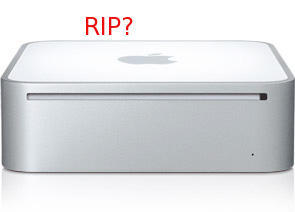
A case in point is the refresh of the Mac mini. Written off almost a full two years ago by AppleInsider as a dead item, Apple has since then made THREE updates to the product line, two of them substantial. AI were originally saying the mini wouldn’t make it to Intel.

And then, just last fall, Gizmodo tried to bury the mini under rumors that European inventories were being allowed to thin.

The truth of the matter is that as much as great thinkers in the press and great dreamers among the consuming public may want Apple to craft product in the image of their hearts desire, the producers and designers inside One Infinite Loop have their own vision and their own timelines to which they prove, again and again, focused and true.

Yes, the era of locked-down secrecy may be at an end, as leaks and (invariably badly lit) spy-shots tend to precede product announcements more these days, but those who would seek to bury an Apple product before the company itself issues an EOL statement are more likely than not digging a hole they might look to crawl into months or even years down the road.

Apple Tops Fortune’s “World’s Most Admired Companies” List

By

54787893_6019c9c8c1.jpg?v=0

Despite a year described by analysts as rocky, Apple moved up from the number two spot to top Fortune magazine’s list of the 50 “World’s Most Admired Companies.”

Apple was given a perfect score for innovation and people management, while it ranked lower in long-term investment, global competitiveness and social responsibility.

“As much of the computer industry struggled, Apple shipped 22.7 million iPods during its first quarter (up 3 percent from last year), 2.5 million Macs (up 9 percent), and 4.4 million iPhones,” noted Forbes writer Alyssa Abkowitz.

Apple was far above Microsoft, which ranked 10, IBM  (17) and Sony (49).

Rounding out the top five: Berkshire Hathaway, Toyota, Google and Johnson & Johnson.

Full list here.

Image used with a CC license, thanks to SheriffMitchell.

iPhone Perhaps Not a Failure in Japan, After All?

By

post-9030-image-172c78c609ba363010d337cfbdb2498b-jpg

Image: Nobuyuki Hayashi

The perception of iPhone as a “failure” in Japan is largely the result of what people read in newspapers, according to Nobuyki Hayashi, the Japanese journalist who was cited as a source in the Wired article we posted on late last night, and who put up a lengthy post of his own Friday to clarify the situation.

“The majority of Japanese … haven’t even touched one,” Hayashi wrote, adding, “So as soon as I give lecture, show it to them and let them play with it, they change their mind and become a fan of iPhone.”

Much of the chatter about the issue in the iPhone blogosphere Friday stemmed from Wired writer Brian X. Chen’s headline, which stated unequivocally that Japanese “hate” the iPhone, but as Hayashi points out in his post, Chen relied on quotes from a conversation Hayashi had with writer Lisa Katayama back in late 2007 to make his case.

Obviously, much has changed in the iPhone ecosystem, a well as in the US and Japanese economies since then.

The reality is likely more that the iPhone has been a relative disappointment in Japan. Many believe the device could do much better in Japan if Apple gave SoftBank more control in how they market / advertise the device, and if Apple would enable feature sets dear to the Japanese consumer, such as a built-in TV tuner and the ability to use it as a mobile payment system.

For a detailed look at Hayashi’s position on the iPhone in Japan, see his blog post.

Apple Goes with New Accountants

By

cult_logo_featured_image_missing_default1920x1080

Apple tapped Ernst&Young Friday to be the company’s independent accounting firm, severing ties with KPMG, which had audited the company’s books since fiscal 1997.

In a filing with the U.S. Securities and Exchange Commission, Apple said there were no disagreements with KPMG “on any matter of accounting principles or practices, financial statement disclosure or auditing scope or procedure” during the past two fiscal years.

The move, according to an Apple spokesperson quoted for a Reuters article, was a result of a recently adopted board “policy to review the appointment of its independent auditor every five years.”

Apple said the decision to change auditors was made after a competitive process, in which several firms including KPMG were invited to participate.

The regulatory filing said KPMG’s audit reports on Apple’s fiscal 2007 and 2008 financial statements contained no adverse opinions.

Via CNN

Apple Balks at Repairing MacBook Air Hinges Under Warranty

By

post-8942-image-d2fa33dde9ab7c7ee05571fd3f0bf8bd-jpg

Apple is apparently refusing to cover the cost of repairs to some MacBook Air notebooks, even though the devices are under warranty, according to a report at Engadget.

Some MacBook Air owners who embraced the device in its original iteration (Rev.A) have found that over time, with normal use, the hinge fitting the screen to the body of the laptop becomes irreparably loose, sometimes even catching and cracking.

Discussion about the problem first hit the Apple Support fourm back in Feb. 2008 and appears to be well documented, though as an official matter Apple says it is not a “known” issue.

The Engadget report relates a case in which “Apple did the repair for free, but only after we escalated the issue to a manager, who let us know how very nice of them that was.” Apple classifies the damage as “accidental,” and thus not covered under the normal warranty. The hinge repair costs around $800.

Let us know in comments below how widespread this problem might be among Cult readers and whether you think you’d have what it takes to get an Apple Repair manager to cover repairs to your broken MacBook Air screen.

Apple Shareholders Re-Elect Board, Sing to Steve at Annual Meeting (UPDATED)

By

post-8890-image-6b1ee3ecec3d57d74070365de20238ed-jpg

Steve Jobs missed leading an Apple shareholders’ meeting on Wednesday for the first time since his return to the company in 1997, but the founder and visionary CEO remains “remains deeply involved in strategic decisions,” according to director Art Levinson, who spoke to reporters at the company’s headquarters in Cupertino, California after the meeting.

Despite his absence from the meeting, shareholders sang Happy Birthday to Jobs, who turned 54 yesterday. Reporters were barred from taking laptops, iPhones or other communication devices into the meeting, but a few attendees were apparently able to sneak in wireless handhelds to post notes during the meeting, according to a report at Fortune.

Details on shareholder actions at the meeting after the jump.

Sometimes a Picture is Just a Picture – Don’t Look for Live Search on Snow Leopard

By

post-2144-image-86caf608c02b03f604d44f888b3241b7-jpg

Microsoft used an image of an ambling snow leopard licking its chops for the backdrop to its Live Search homepage on Thursday, prompting a few in the business and technology press to speculate why.

Among them, Ina Fried at c|net is likely furthest from the mark, with her suggestion Microsoft could have been showing a player’s tell that Live Search will be the default search engine in Safari’s tool bar when the next version of OS X launches.

Fried suggests that because Microsoft has money to spend and because it might be willing to do so in order to get the market share boost for Live Search that such a deal would bring, well, she admits the idea is a “crazy” one, but she put it out there any way.

Why it won’t happen: Apple doesn’t need the money and has almost never made it a practice to co-brand its products with services that suck.

Apple Calls Jailbreaking iPhones a Crime

By

post-8330-image-a0a648b96c7a56c620d3c030c7848836-jpg

Apple has filed a response to an Electronic Frontier Foundation request that the US Copyright Office exempt from the provisions of the Digital Millennium Copyright Act applications for the iPhone and iPod Touch which violate certain term of Apple’s SDK, describing the very act of “jailbreaking” an iPhone a crime.

The EFF wants the Copyright Office to officially exempt “computer programs that enable wireless telephone handsets to execute lawfully obtained software applications, where circumvention is accomplished for the sole purpose of enabling interoperability of such applications with computer programs on the telephone handset.”

The non-profit consumer advocacy organization believes Apple’s efforts to control the software that runs on iPhone is “corporate paternalism” and described them as comparable to an automaker welding shut the hood of its cars to only allow servicing to be done by authorized dealers.

Apple’s extensive response to EFF’s request (available as a PDF) cites, among other things, danger to the device from unauthorized software and increased support costs that result from problems caused by jailbreaking the phone, and asserts that jailbreaking fails all four “nonexclusive statutory fair use factors prescribed in § 107 of the copyright statute,” essentially calling jailbreaking a crime.

The Copyright Office is not expected to rule on EFF’s request until October.

If you’re interested in a detailed rehash of the legal brickbats flying between Apple and EFF over the matter, AppleInsider has a very good discussion of the arguments raised by both sides.