Apple had a gold-plated holiday season. Photo: Apple
It’s been a great, record-busting year for mobile apps — and, unsurprisingly, that translated to a strong Christmas as well.
According to app analytics platform Sensor Tower, customers spent a total of $407.6 million across both the iOS App Store and Google Play over Christmas. This represents a massive 34.5% increase from the $303 million spent this time last year.
Of that, the App Store represented 68.4% of all spending — or $278.6 million in total.
The challenges of doing business in China. Photo: AllOfUs
Apple removed approximately 94,000 games from the App Store in China during 2020, The Wall Street Journal reports. This is a significantly larger number than last year’s tally of 25,000 games removed.
The escalation comes as China works harder to clamp down on illegal content on mobile platforms. The WSJ says the larger number illustrates Apple’s “vulnerability to state pressure” on its business.
At least in some ways, TikTok has had a blinder of a year in 2020 — being one of, if not the, the most consistently popular app in the App Store on a monthly basis, as well as enjoying the best single quarter of any app ever.
According to app analytics platform Sensor Tower, it’s picked up another record, too: That of the top 10 most downloaded iOS app of the year with the highest percentage of positive reviews. It seems that people really, really like their TikTok.
Epic and Facebook have an.enemy they can both agree to dislike. Screenshot: Epic Games
Facebook is supporting Fortnite maker Epic Games in its lawsuit against Apple, marking another low in the relationship between the two tech giants.
According to Steve Satterfield, a director of privacy and public policy at Facebook, the social network company thinks that it is, “really important that the court understand far reaching impact of Apple’s unfair policies.”
PUBG Mobile was the year's big winner. Photo: Tencent Mobile
The world may have struggled in 2020, but life’s been good on the App Store — and especially if you’re the makers of PUBG Mobile, Honor of Kings, Pokémon GO, Coin Master, and Roblox.
Those five mobile games all broke $1 billion in takings in 2020, across both iOS and Android. The first two, both made by Tencent, managed to break through the $2 billion barrier, claims a report from app analytics platform Sensor Tower.
Apple’s own applications will carry privacy labels revealing how they collect and use personal information about users. Photo: Apple
Apple isn’t exempting itself from a new privacy rule requiring App Store software to reveal how users’ information is used. Even the applications that come pre-installed on iPhone and iPad will display their privacy info in the App Store.
Siblings can share an iPad, as well as in-app purchases and subscriptions. Screenshot: Julia M Cameron/Pexels CC
Developers of iPhone applications that include in-app purchases and subscriptions can now make them part of Family Sharing. This allows a family to share an item or subscription — at the developer’s discretion.
This is already a feature of Apple’s own services. A family can share a subscription to Apple Arcade or Apple TV+, for example. With this change for third-party apps, the Family Sharing option should become more widely available.
Genshin Impact is one of the year's most notable new games. Photo: Genshin Impact
Genshin Impact is Apple’s pick for iPhone Game of the Year, despite only landing in the App Store at the end of September. That’s not its only impressive claim to fame, however. According to app analytics platform Sensor Tower, the open-world RPG generated close to $400 million in its first two months alone.
That averages more than $6 million a day across both iOS and Android — with Apple’s platform accounting for the majority of that spending.
For the first time, Apple created a physical award to hand out to winners. Photo: Apple
As 2020 thankfully sputters to its conclusion, Apple has released its list of the year’s best 15 apps and games “notable for their positive cultural impact, helpfulness, and importance.”
The App Store Best of 2020 winners cover a multitude of areas — from the Zoom app that more or less defined the year of lockdown to streaming service Disney+ to a nifty sleep app.
Apple is giving a break to trainers and teachers during the pandemic. Photo: Ed Hardy/Cult of Mac
Companies using their iPhone app to schedule online group events so they can stay in business during the COVID-19 pandemic won‘t be required to share their revenue with Apple for many months.
It’s one of several moves Apple made recently that could soften its image a bit.
Lowering App Store fees will help small businesses without also hurting Apple. Photo: Cult of Mac/Steve Johnson/Pexels CC
Apple will cut App Store fees in half for small-business developers of iPhone applications. But while the change sounds dramatic, it will actually lead to a relatively tiny reduction in Apple’s revenue, according to a market-research firm.
Those who earn less than $1 million a year will pay just 15%. Image: Killian Bell/Cult of Mac
Apple on Wednesday confirmed plans to cut App Store fees to just 15% for many of its developers.
The lower rate, which comes into effect in January as part of the new App Store Small Business Program, applies to those who earn less than $1 million a year in app revenue and in-app purchases.
Fortnite is still blocked from the App Store for now. Photo: Epic Games
Apple’s two theft claims against Epic Games were on Tuesday dismissed by a federal judge in California.
Epic filed the counterclaims filed in September, just weeks after the game-maker sued Apple for alleged anti-competitive actions. Cupertino removed Fortnite, the hugely popular battle royale game, from the App Store after Epic gave players on iOS devices the ability to purchase in-game currency outside of Apple’s ecosystem.
Google and Apple are both friends and rivals. Photo: Apple/Google
Like most tech giants, Apple and Google have a strange “coopetition” relationship, whereby they simultaneously compete and work together.
The latest example? Google, the company that spawned the rival Android mobile operating system, was the top developer in Apple’s iOS App Store last month.
Soon, iOS apps must reveal exactly what they're doing with your data. Photo: Penn State/Flickr CC
What do you do when you pick up some food in the store, and want to quickly check how good or bad it is for you? You glance at the nutrition label, of course.
Throughout the last century, mandated labels on food forced manufacturers to reveal more and more information about the contents of their products — and their effects on people who consume them. Now Apple is bringing that same level of insight to apps in the App Store.
It’s about time!
As apps become ever more central to our lives — with increasing access to our most sensitive personal data — transparency about exactly how developers use that information is becoming more necessary than ever.
Apple makes the admission in new financial report. Photo: Apple
In its latest 10-K annual report, detailing its 2020 financial reports, Apple warns investors that if it’s made to reduce the commission it charges in the App Store, this could have a “materially adverse” affect on Apple’s bottom line.
Apple includes the clause, which seemingly hasn’t been in previous 10-K reports, at a time when Apple’s commission is being challenged. A number of developers and politicians have suggested that Apple’s control of the App Store in unfair, and that it charges too much.
The app economy has done well during the coronavirus pandemic but some categories have done better than others. According to a new report by app analytics platform Sensor Tower, one category of app that has done exceptionally well are home improvement apps.
In the United States, first-time installs of the top home improvement apps doubled year-over-year between the months of March and September. Monthly active users also grew by 35% during that time.
If you live in Brazil, India, Indonesia, Russia, or South Africa, expect App Store prices to most likely increase over the coming days.
This will affect the price of apps and in-app purchases, and possibly other services like Apple Music — although auto-reneweable subscriptions won’t be affected.
The battle over the App Store rages on. Photo: Apple
The Coalition for App Fairness, a group of developers targeting what they claim is Apple’s unfair control of the App Store, has more than doubled in size since its formation last month.
According to a new report, the original group of 13 companies — which included the likes of Epic Games and Spotify — has now increased to 40, with another 400 requests to join.
In general, Apple is good company. But some policies make it look a bit malevolent. These need to go. Composite: Cult of Mac/Mitja Juraja/Pexels CC
Apple must avoid following a path blazed by Google. Years ago, the search giant touted its “don’t be evil” policy. But somewhere along the line, Google lost track of that — and ended up getting sued Tuesday by the Justice Department.
Apple, which faces similar scrutiny by a variety of governmental bodies, has a chance now to drop some of its questionable policies. If it doesn’t, Cupertino could end up facing its own lawsuit(s).
The encouraging news is, Apple is mostly a good company, so a few tweaks now could easily head off much larger adjustments down the line. Court-ordered changes — like a forced sale of the App Store — could prove painful.
Here’s why Apple needs its own “don’t be evil” policy, along with some concrete steps Cupertino can take to prove that it’s actually a force for good in the world.
Apple Arcade gets preferential treatment. Allegedly. Photo: Apple
Ex-App Store review boss Phil Shoemaker told the congressional antitrust subcommittee that Apple creates “arbitrary” rules which it uses as a “weapon” against competitors. One such example is allowing Apple Arcade, while blocking Xbox Game Pass.
The House Judiciary antitrust subcommittee revealed its recommendations for dealing with Big Tech Monday in a 449-page report, following 16 months of investigation.
While the report has recommendations for Amazon, Facebook and Google parent company Alphabet, it also focuses on Apple — and what needs to change to make Cupertino antitrust-compliant.
The App Store is a massive economic engine in its own right. Photo: Apple
Despite far fewer installs than the Google Play app store, Apple’s iOS App Store raked in $19 billion to Google’s $10.3 billion in the third quarter of 2020, according to a new report by Sensor Tower.
Overall spending grew 32 percent in the quarter across both platforms. Meanwhile, overall installs increased 23.3 percent to a total of 36.5 billion. These record-breaking numbers likely had a lot to do with the coronavirus pandemic, which shut down large parts of the economy, but caused a spike in interest for developers while people were stuck home.
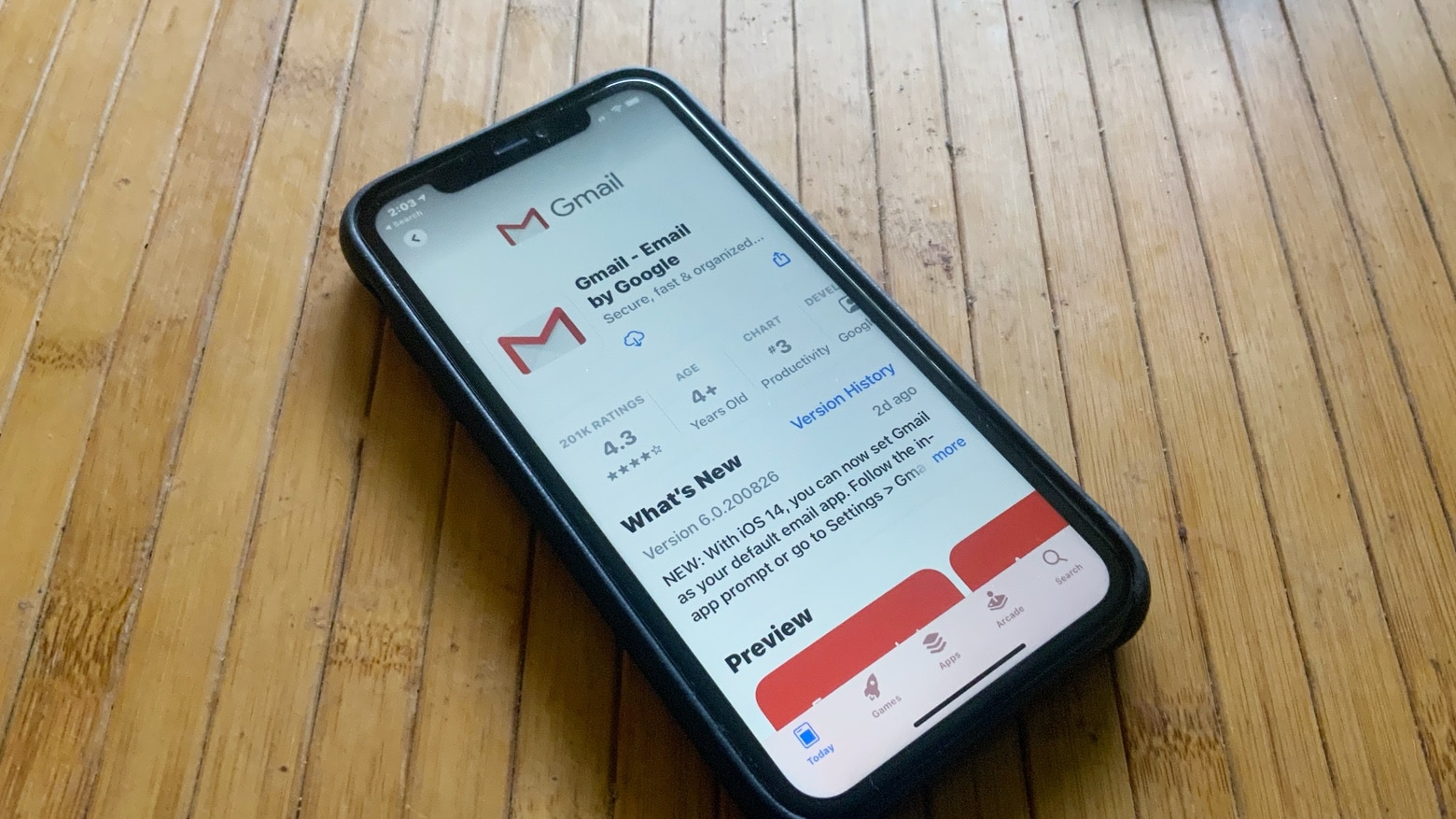
iOS 14.0.1 lets you set Gmail as your default email application, and have it actually stick. Photo: Ed Hardy/Cult of Mac
Apple’s default apps could potentially be banned from coming preinstalled on new iPhone and iPads in Europe, according to draft European Union legislation.
The so-called Digital Services Act is intended to level the playing field for smaller companies wanting to compete with “gatekeeper platforms” (aka tech giants). The EU currently has two investigations into the App Store and one into Apple Pay.
Apple faces a tough situation in China. Photo: AllOfUs
Apple has reportedly removed a pair of RSS reader apps, Reeder and Fiery Feeds, from the App Store in China due to their ability to allow users to access information the country would rather they not see.
It’s not clear exactly what prompted this particular banning, but China has been cracking down on RSS feeds since 2007. That year, it initiated a blanket ban on all web-based RSS feed aggregators. In 2017, Apple removed RSS reader app Inoreader from the App Store in China.
In other words, this may be less a case of “What did Reeder and Fiery Feeds do wrong?” than “how did they manage to survive as long as they did?”