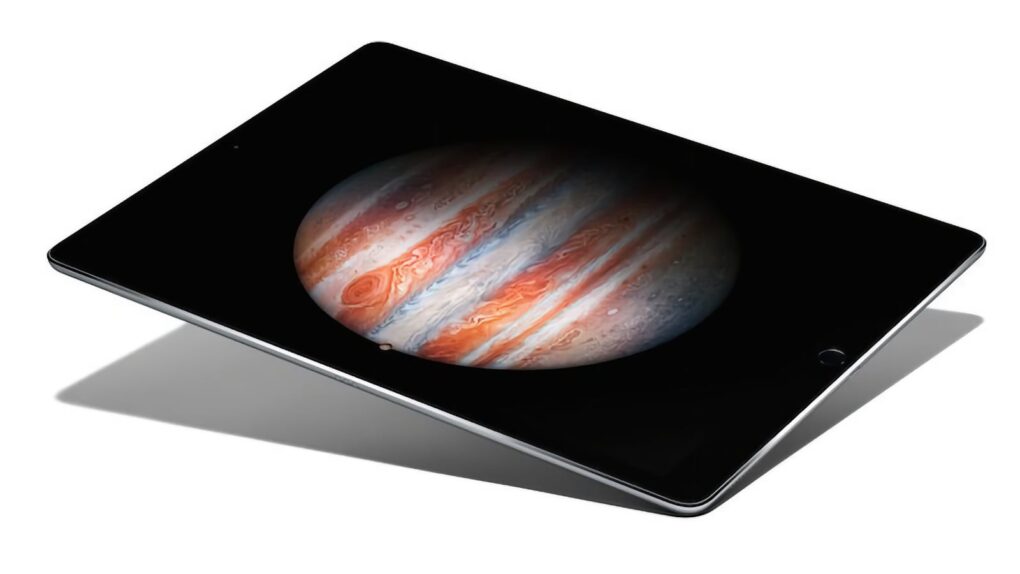
 November 11, 2015: Apple’s first iPad Pro goes on sale after months of speculation about the giant tablet. With its much larger screen, professional-oriented targeting, and dreaded (optional) stylus, the 12.9-inch iPad Pro represents Apple CEO Tim Cook’s cleanest break yet from Steve Jobs’ vision for iOS devices.
And it turned out all the better for it!
iPad Pro launch: Unveiling the ultimate computer
The iPad Pro was Cook’s declaration that Apple’s tablet could be more than a beautiful screen for browsing, reading and watching videos. When the original 12.9-inch model went on sale on this day in 2015, it challenged one of Apple co-founder Steve Jobs‘ most famous convictions by embracing a stylus — the very kind of accessory Jobs once dismissed as a sign of failure.
The Apple Pencil, Smart Keyboard and the iPad Pro’s giant display signaled a new ambition. Cook wanted to turn Apple’s tablet into a serious creative and productivity machine, not just a bigger iPhone. While the Mac definitely wasn’t going away, Cook was betting that the future of personal computing might look very different from the past.
Tim Cook upscales Steve Jobs’ vision for Apple’s tablet
I have a personal theory that the original iPad represented the purest form of Jobs’ ideal for computing. Throughout his career, he distilled personal computers into their most elemental forms.
Speaking with former Apple engineers in the 2000s — before the iPhone existed — one person jokingly remarked that Jobs’ perfect computer would probably be a screen with no keyboard and, at best, one button to turn it on and off.
They were kidding around (or were they?). However, this turned out to be pretty much exactly what the iPad was.
The iPad Pro, then, was Tim Cook‘s revised vision for the iPad, just as the phablet-size iPhone 6 Plus that arrived the year before had been his revised vision of what an iPhone could be. (Remember, Jobs assured users he had found the perfect — much smaller — screen size for a smartphone.)
The iPad Pro was bigger, sure — sized 12.9 inches compared to 9.7 inches for the original iPad. However, unlike the plus-size iPhones, its larger screen made perfect sense for a tablet.
I got a 5.5-inch iPhone as soon as Apple released one and have since moved up to a 6.7-inch model. It’s fine when I’m working in an office. But the moment I take it outside, I’m reminded how unwieldy it is. It proves very challenging to use one-handed. And the Reachability feature seems like a half-assed solution.
The iPad Pro, meanwhile, feels perfect. It’s light enough that the size difference doesn’t matter. And it’s also big enough for productivity tasks.
Apple Pencil: To stylus or not to stylus?
Which brings me to Apple Pencil, the stylus designed for the iPad Pro. At the time of the iPad Pro’s unveiling, many people commented on how the Pencil represented Apple losing sight of one of Jobs’ fundamental rules: Thou shalt never pair a stylus with an Apple touch device.
Some thought this showed Cook — and Apple as a whole — would willingly compromise the user-first excellence that Jobs prided himself on.
I never took it that way. Jobs liked challenging people, especially those who worked under him. Jobs saying that a stylus appearing on the iPad automatically meant failure was no different from popular wisdom in the age of Napster claiming that no users would ever pay money for downloaded music.
In this case, it meant that no currently existing stylus belonged anywhere near Apple’s beautiful iPad — and Apple proved that truism by debuting the most impressive, pressure-sensitive stylus I’ve ever used.
For my money, the Apple Pencil is one of the best products Apple has released under Cook’s leadership. It’s absolutely one of my top five Apple accessories of all time.
12.9-inch iPad Pro: Apple’s best iPad yet
In terms of specs, the first 12.9-inch iPad Pro boasted Apple’s A9X chip and the M9 motion coprocessor. Like the smaller iPads, it came with Touch ID for unlocking the device with a fingerprint. It also boasted a Retina display, which in this case meant a 2,732-by-2,048 resolution and a pixel density of 264 PPI.
It was the first iPad to include Apple’s proprietary Smart Connector and four speakers, as well as 4GB of RAM. In addition to the Apple Pencil, other accessories included a “smart” screen cover and an attachable keyboard. The device itself shipped in gold, silver and space gray colors. (Rose gold did not become available until the first 9.7-inch iPad Pro arrived a few months later.)
While Apple insisted that the iPad would become a PC replacement, it hasn’t exactly done that. However, the iPad Pro succeeded at truly taking the iPad to the next level.
Do you own an iPad Pro? What’s your assessment of it a few years down the line? Leave your comments below.

Luke Dormehl is a U.K.-based journalist and author, with a background working in documentary film for Channel 4 and the BBC. He is the author of The Apple Revolution and The Formula: How Algorithms Solve All Our Problems … and Create More, both published by Penguin/Random House. His tech writing has also appeared in Wired, Fast Company, Techmeme and other publications.

4 responses to “Today in Apple history: iPad Pro makes its big debut”
I have an ipad Pro and generally love it. It has come time to replace it and this time I will opt for the smaller Pro. I am waiting for the face id to appear then will make the move which hopefully will be spring.
The iPad Pro is one of the worst products Apple has ever made. No one wants to work on a tablet. It is too big to hold in one hand and you can’t use it as a laptop because the keyboard just bounces around like crazy just like the surface pro does. There is no replacement for a 27 inch iMac or a 15 inch MacBook Pro when it comes to doing serious work. Anyone who believes otherwise is brainwashed.
“Anyone who believes otherwise is brainwashed.”
That would be most who frequent this site, and all who write for it. Everything Apple does is great, everything is magical, everything is wonderful. This place is more rabid than MacRumors.
I currently have 2 iPad Pros and use them for work and leisure. The only problem is that as usual Apple does not go far enough for prosumer users. A 24″ iMac (useless) an iPad Pro at 12.9″, too small.
If Apple wants professionals to keep or continue buying into the apple ecosystem, it’s time to address the glaring holes Timmy left in their product lineup.
1. A large fairly priced iMac.
2. A large fairly priced external monitor.
3. A larger iPad tablet to compete with Wacom
4. Bet back in the router business