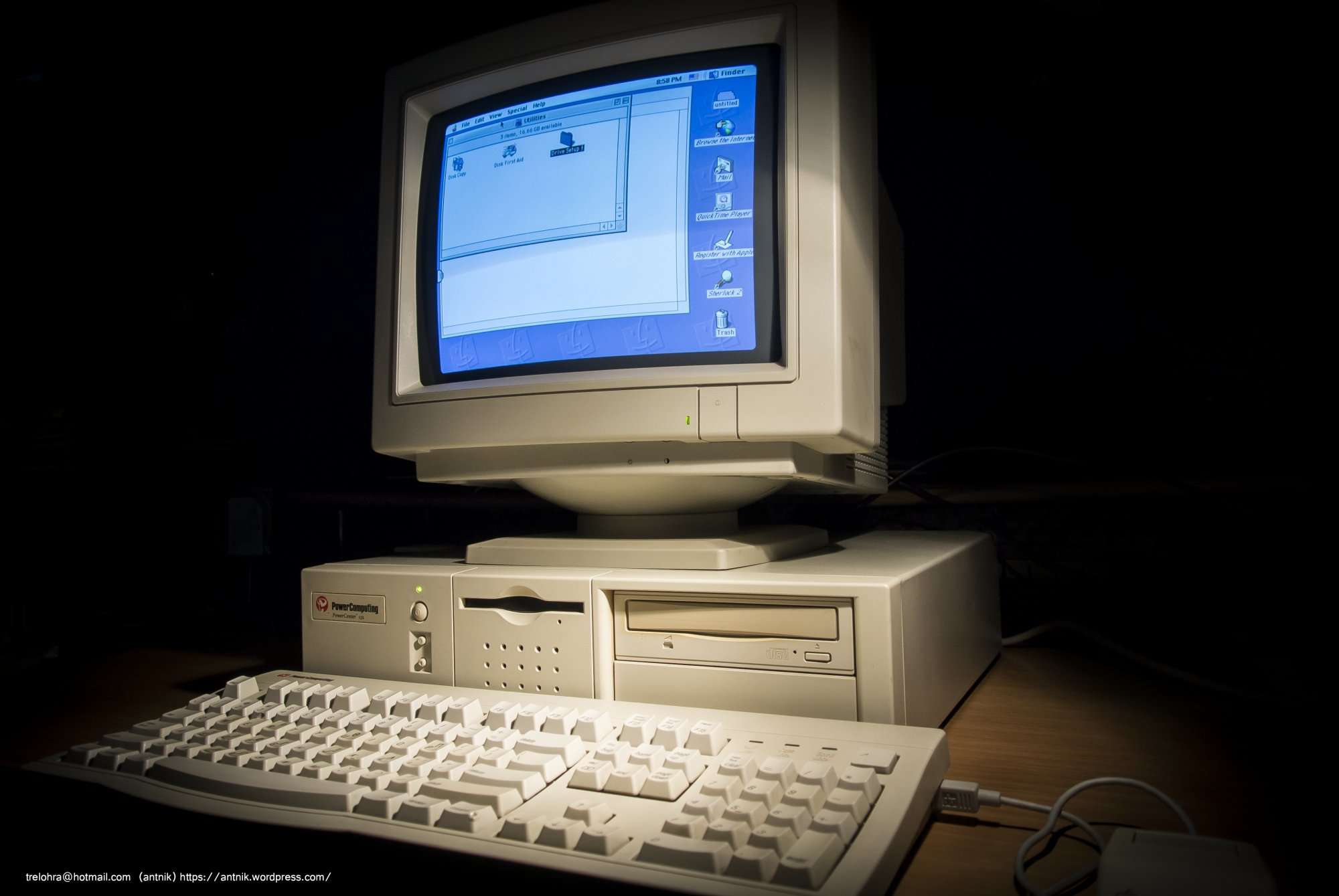
 January 31, 1998: Mac clone-maker Power Computing goes out of business, having auctioned off its office supplies and computers.
Apple bought out Power Computing, once the fastest-growing PC company of the decade, the previous year. As a result, Power Computing shareholders receive Apple stock as a replacement. As it turns out, that may not have been a terrible deal.
Power Computing and the first Mac clones
Founded in November 1993, Texas company Power Computing set out to sell Mac clones by mail. With Dell’s mail-order computer business proving itself in the marketplace, Power Computing founder Stephen Kahng rightly figured a Mac version would do the same.
The company started talks with Apple in April 1994. By the end of that year, Power Computing secured a deal with Cupertino. Apple initially proved skeptical about working with a startup. However, Apple saw Power Computing as the only viable option — and issued the license. Another Mac clone-maker, Radius, later got in on the game.
You can put it down to a fear of Windows 95 if you want, but 1994 was the year Apple began to seriously consider licensing its technology. High-up individuals at Apple, including CEO John Sculley, previously put forward similar ideas. But they had been talked out of pulling the trigger on licensing the Mac operating system to other computer makers.
By 1994, Apple was ready to roll the dice — as can also be seen by its willingness to sign a deal with Bandai, Japan’s largest toymaker, for a games console that would run Mac OS.
Power Computing released several Macintosh clones. My overriding memory is that machines like the 1997 PowerTower and PowerTower Pro were blazingly fast at the time. They certainly were not B-grade computers by any measure. (Readers who remember using them can share their recollections below.)
The downfall of Power Computing and the end of clone Macs

Photo: Kootenaymac
In the end, Apple began to realize the error of its ways with regard to Mac clones. The idea had been to increase the Mac’s market penetration. Instead, rather than more Macs on the market, it just meant cheaper Mac-compatible machines.
Apple CFO Fred Anderson worked out that the licensing strategy actually cost Cupertino money. The $50 fee Apple received for every clone Mac sold did not come close to recouping the revenue lost from people buying third-party Macs instead of pricier official ones.
Ultimately, Apple co-founder Steve Jobs’ return to the company in 1997 sounded the death knell for the clone Mac program. Jobs, who never liked the idea of licensing technology to “lesser” manufacturers, was keen to abandon the strategy.
Apple’s sneaky strategy with Mac OS 8
On August 5, 1997, Apple became locked in a standoff with Power Computing. Apple employed a smart bit of legal jiujitsu by introducing Mac OS 8 and then arguing that the licensing deal for third parties did not extend further than System 7.
In the aftermath, on September 2, Apple agreed to acquire Power Computing’s customer list and Mac OS license for $100 million in AAPL stock and $10 million to cover all outstanding debts and costs.
“Power Computing has pioneered direct marketing and sales in the Macintosh market, successfully building a $400 [million] business,” Jobs said, as quoted in Owen Linzmayer’s excellent (though now outdated) Apple Confidential 2.0. “We look forward to learning from their experience, and welcoming their customers back into the Apple family.”
A new way to market Macs
You can argue the extent to which Power Computing actually influenced Apple’s later work. But the Dell-style focus on selling mail-order Macs directly to customers was an important step in Apple’s recovery.
At the time of the clone-maker’s closure, The New York Times noted that Power Computing’s annual revenue had been headed toward $700 million. The company had “just agreed to purchase 150 acres in nearby Georgetown for a new, $28-million headquarters building.” Construction on this new Texas HQ stopped shortly after it began.
Do you remember Power Computing? Leave your comments below.

Luke Dormehl is a U.K.-based journalist and author, with a background working in documentary film for Channel 4 and the BBC. He is the author of The Apple Revolution and The Formula: How Algorithms Solve All Our Problems … and Create More, both published by Penguin/Random House. His tech writing has also appeared in Wired, Fast Company, Techmeme and other publications.

4 responses to “Today in Apple history: Mac clone-maker closes shop”
I profited 104,000 bucks in last twelve months by freelancing on-line and I was able to do it by working in my own time for several hours on daily basis. I was following a business opportunity I stumbled upon from company that i found online and I am happy that i was able to make such great money. It’s so beginner friendly and I’m so grateful that i learned about it. Check out what I did… SHARE37.COM
They were fantastic machines, but constructed like cheap PCs. At the time of the clone wars we had a Daystar Genesis quad processor – super fast but very buggy, and in a box with so much room for drives and cards that it was almost as tall as your desk. It was quite a leap for a company that up to then had only manufactured cards. The bugginess was too much of a headache so we picked up a top-of-the-line PowerComputing 240 for one of our workstations and it was great.
The reason why PowerComputing was doing so well was not just because they used less expensive stamped metal boxes like other PCs, but because the quantities that they sold were so much lower than Apple, they didn’t have to wait for processor production to ramp up to high six figures before introducing a machine. They could buy the latest and greatest CPUs in quantities of 10,000 or less and maintain a position ahead of Apple as the fastest Macs on the market.
Re: the poster in the illustration, I remember that expo – the booth was set up like a military field camp and all the reps were dressed in OD as revolutionaries. Their marketing approach was pure Steve Jobs – lots of attitude and running full-blast. At the time, Apple’s marketing was totally brain-dead, as it had been for the previous ten years. (Apple examples: back to school – close up a Mac Classic on the salt flats, motorbike shoots past from behind the came, grabs the Mac and vanishes into the distance, overlaid with a cheesy tag line and logo; Christmas ad: bushy haired kid pastes post-it on glass in front of camera with a message asking for a Mac. Terrible.) It would have been cool to see what PowerComputing would have done if they’d ever done a TV spot.
On the subject of clones, readers should check out the history of Intel on the Mac. At one point, motherboards were being tested for the clone market that had both Mac and PC components for running MacOS and Windows in separate worlds on the same machines.
“The reason why PowerComputing was doing so well was not just because they used less expensive stamped metal boxes like other PCs, but because the quantities that they sold were so much lower than Apple, they didn’t have to wait for processor production to ramp up to high six figures before introducing a machine. They could buy the latest and greatest CPUs in quantities of 10,000 or less and maintain a position ahead of Apple as the fastest Macs on the market.”
It was embarrassing to Apple that the top-of-the-line performance machines were Power Computing’s. Of course, it all made sense to flummoxed customers when I told them Power’s business plan was to sell as many computers in a year that Apple sold in one day. Context and perspective is everything.
A PowerCenter 132 tower was my the first “Mac” I purchased and it was great. Still is actually… I can boot it up today and run Mac OS 8 and take a trip down memory lane.
Because it was a tower and was based off of CHRP, I was able to upgrade it for years. Bigger hard drives. CD writer, USB/Firewire card, more RAM. I even upgraded the processor from a 604e to G3 running 266ghz.
I know there was some issues with cheap power supplies failing in them along with other cheaper components, but I never experienced any of that.
From about 1994 to 1999, that time in Apple’s history might of been bleak for them, but for me they were a blast. Power Computing’s ad campaign which made you feel like you were a rebel, along with MacAddict magazine and their CD of freeware/shareware. The internet was just starting to gain traction for the average home user. Good times.