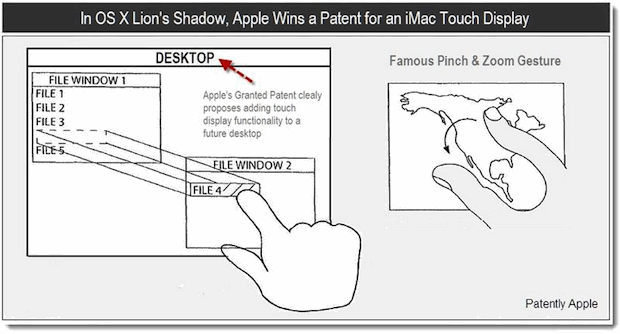
Your iPhone’s touchscreen might look just like a single pane of living glass, but there’s a lot more going on than meets the eye. Every iPhone is comprised of multiple layers: an LCD that actually blasts the pixels out of the Retina Display, a glass substrate laye separating the LCD from the touch layer that translates your finger swipes and prods into input the system can read, and a layer of protective Gorilla Glass on top.
Obviously, Apple’s existing touchscreen tech works well, but having so many different layers has its drawbacks. A big one is that it adds to the iPhone’s thickness. But Apple may already be on the cusp of inking a deal with Sharp and Toshiba to adopt in-cell touch panel displays, which should lead to a slimmer, lighter iPhone 5.