Mobile menu toggle

Search results for: apple tv

Viber Burst Kinetic Phone Charger

By

post-12302-image-5d4250d0723d360b13d6d8bbb28ee0cc-jpg
Recharge your iphone using kinetic energy

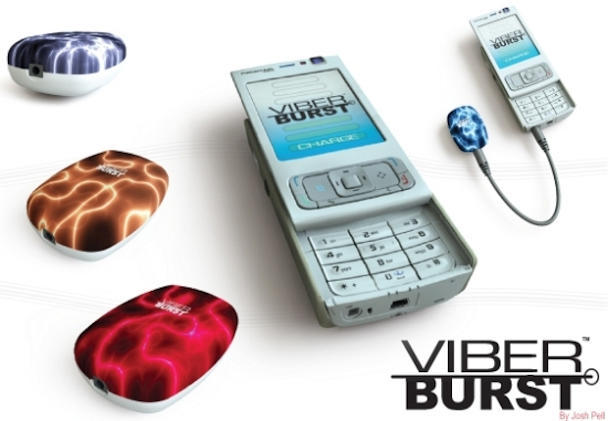
Is your iPhone about to die, and you’ve lost your cell phone charger? An Australian design student now has an answer: just get moving. The Viber Burst design concept will turn walking, jogging or any movement into a cell phone battery recharge in just two seconds.

“Viber Burst can be worn as a feature piece of contemporary jewelry on footwear, it can also be a key ring or kept in a handbag,” designer Josh Pell said. The device includes a variety of designs and colors that “enable the user to connect with the product on an emotive level,” the Swinburne University student told the Australian Design Awards.

Although no production date was announced, the Viber Burst can attach to your shoe, purse or be held in your hand. The device is weather resistant and built to withstand punishment: the components use a flexible circuit board. When a product does appear, look for it in recycled packaging, designer Pell said.


iPhone 3GS Ad: Video, without Jailbreaking

By

post-11709-image-68f25c616c2dafd031a32d276c13d394-jpg

httpv://www.youtube.com/watch?v=f7uhO3bM6jw

Apple hired Academy Award-nominated director David Fincher (Seven, Fight Club and The Curious Case of Benjamin Button) to show off the latest iPhone in its TV ad debut.

Titled “break in,” (a nod to how most folks got iPhone video capability before the 3S?) the 30-second spot highlights the video angle and hints at other “amazing new features.”

Via Slashfilm

Survey: Smartphone Users Love Them Some Apps

By

post-6966-image-833aa6a8dfc7d9e34a00140e2c394f3c-jpg

File image

Smartphone users are spending more time using native applications on their mobile devices to the detriment of other technology and media, but the mere availability of applications is not the primary driver of buying decisions, according to a report by Gravity Tank.

The Chicago-based consulting firm surveyed more than 1,000 iPhone and Android G1 users during April and May and found those users had downloaded an average of nearly 24 apps to their mobile devices, among which they use an average of almost 7 per day.

Nearly half (48 percent) of phone owners report shopping for apps more than once a week, while slightly more (49 percent) report using apps on their phone for more than 30 minutes a day.

Other technologies and media, such as gaming devices, GPS devices, newspapers and TV, all suffer in the light of app-enabled smartphones, as people reported the ability to consolidate multiple devices into one as one of the top two reasons they decided to buy a smartphone in the first place.

Leading the pack of reasons people buy a smartphone is the ability to check email and calendars (74 percent cited this). The availability of new games and applications figured into the buying decision for 67 percent of the survey respondents.

The survey results cast an interesting take on all the pre-launch hoopla and positive reviews garnered for the Palm Pre, which will be available to the public starting tomorrow.

Palm’s highly regarded smartphone entry is coming to market with a decided dearth of 3rd party apps available for it and Palm executives have been somewhat cagey regarding the timeline for development of apps for the Pre.

With Apple gearing up its own hype machine for plenty of noise beginning Monday at WWDC it may be some time before Palm is likely to catch up to iPhone’s lead in both the smartphone device and applications markets.

[New York Times]

Shocking futures—early Alan ‘Watchmen’ Moore work reaches iPhone

By

post-11245-image-4fb26b2adc9972adf4aa7ccf72ce1c69-jpg

Along with being a surprisingly versatile device for gaming, reading eBooks and surfing the web, iPhone is becoming an increasingly useful source of distribution for comics publishers. Late last month, ClickWheel, who’ve been in the comics-on-iPods game for a while, released Future Shocks: Part 1, a 99-cent collection of early Alan Moore stories, which was subsequently followed by part two. We caught up with ClickWheel Editor in Chief Tim Demeter for his thoughts on these apps and the market in general.

Cult of Mac: What are the Future Shocks apps and how do they work?
Tim Demeter: The Future Shocks apps are collections of early work from Alan Moore, digitally restored and formatted specifically for iPhone and iPod touch. The apps are entirely self-contained and once downloaded require no cell or Wi-Fi collection to read—you can access them anytime.

How do these apps sit alongside your ClickWheel app?
These are completely separate from our other app. The ClickWheel app is a reader for a multitude of streaming comics, some of which need to to be purchased from the ClickWheel site first. Each Future Shocks app is a one-time purchase. Once it’s downloaded you can start reading right away. Look for a change in how we handle downloading comics to iPhone once the 3.0 software is out there though.

iphone-shocks-2

What do you think of iPod touch/iPhone as a comics-reading platform?
We love it. ClickWheel began putting comics on iPods with the launch of the iPod video, so to say that these new devices have enabled us to take our vision of mobile comics to new levels would certainly be understatement. The nice thing about mobile comics is they provide the convenience and immediacy of web-comics while retaining the portability of printed comics. I don’t think printed comics will ever go away and I certainly don’t want them too but I wouldn’t be surprised if many monthlies go digital while the collections remain in print.

What advantages does the App Store bring a company like yours?
People know and trust the iTunes store and many people have a credit card stored in their account which makes impulse purchasing very much a reality. It also seems to be going through the same kind of growth that Amazon did. Back in the day, Amazon was just books. Now it’s just about everything. The iTunes store started as just audio but now it’s TV, movies and apps of all kinds. It’s quickly becoming a one-stop-shop for anything and everything digital and there’s a lot of value in that.

iPhone Becoming Experimental Music Instrument of Choice

By

cult_logo_featured_image_missing_default1920x1080

It could be a while before Ge Wang and the Stanford Laptop Orchestra (SLOrk) starts to feel the heat, but the The London Geek Community iPhone OSCestra served notice last week at the City’s Open Hack London that experimental iPhone music performance is alive and well.

Wang, of course, founded Smule, developer of the internationally popular Ocarina app, as well as the recently released Leaf Trombone (App Store link), and conducts SLOrk, the renowned ensemble of student computer scientists and musicians using 20 MacBooks to compose and perform new music.

The London-based iPhone OSCestra is a crew of eight musicians, conducted by a chap using a Wii controller, who opened their lone performance so far with an impressive (and authentically geeky) performance of the “Doctor Who” theme.

Jim Purbrick apparently conjured the idea for the venture just a few hours before the Open Hack event, a one-day symposium sponsored by Yahoo! on May 8 that brought together tech-savvy hackers for a day of coding and communicating.

Purbrick and his music mates downloaded the free app mrmr (App Store link), an app that supports customizable audio controllers and sends data wirelessly to other devices using OSC (Open Sound Control). A controller could be a piano-style keyboard, a bank of faders, or an array of knobs and buttons — essentially interactive widgets that allow users to control sound and music.

The free desktop application OSCulator caught all the data, and sent it to Ableton Live, a powerful performance and production platform.

In this instance, the orchestra performed using a bank of synthesizers running within Live. If you’re interested in going beyond Garage Band and making music on your Mac, it’s worth checking out the Live demo.

[GigaOM]

More App Store Approval Madness – Religious Imagery is ‘Objectionable’

By

cult_logo_featured_image_missing_default1920x1080

An App Store gatekeeper, whose name may or may not be Peter, officially positioned Apple as a ‘Holier Than Thou’ company recently, by rejecting the whimsical photobooth application Me So Holy.

The app would have allowed users to place photographs of themselves or others inside pre-set figure avatars that could let cousin Jim appear to be the face of Jesus, or Joe Bob to be Mohammed, or Mary Jane to be a bodhisattva, or, you get the picture.

Apple rejected the app, saying it “contains objectionable material,” according to Me So Holy developer Benjamin Kahle.

Someone at Apple must have not gotten the Jesus phone memo.

LEGO iMac G4 – Two Cults in One

By

post-10354-image-33a3a8908174149c25fe8709d64979fb-jpg

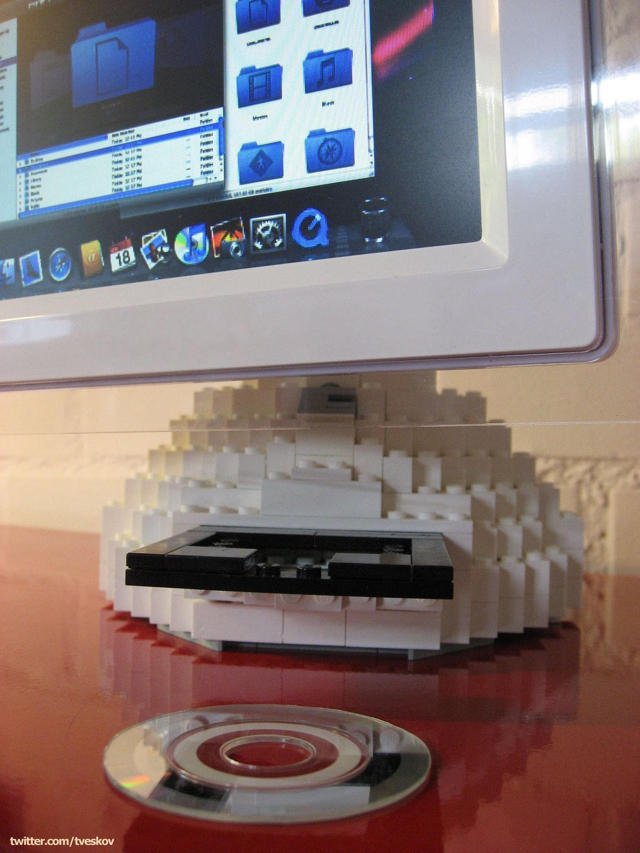
What do you get when you combine the Cult of Mac with the Cult of LEGO?

You could do worse than Bjarne Tveskov, who took the happenstance of a 7″ photoframe that looks quite like the screen from his favorite iMac G4 and decided to create a mini-version of it using LEGO elements.

The model lacks actual computer hardware but the screen can display videos, images and TV (there’s a digital TV tuner built in to the photoframe).

More images at Tveskov’s blog.

[Boing Boing]

Laptop Hunter Parody: Can I Keep the Cash Instead?

By

post-10347-image-f93cf470f4c20ce4faafea24eb1af427-jpg

httpv://www.youtube.com/watch?v=vbJSuduTrPs

To answer Microsoft’s controversial “Laptop Hunter” series, Landline TV parodies the series by sending homeless Frank out to seek a computer. (NB: put your headphones on, some of the language/images are NSFW.)

He loves the Macs (“these are beautiful”), finds the PCs insulting and wants to take the cash instead of getting a PC. Doubt it would ever fly with Apple execs, but it’s a lot more convincing than the latest “Get a Mac” ads.

Via Newton Poetry

Microsoft: Not Cool at Any Price

By

post-10297-image-d84c147549802de65c42519ee3d2bf90-jpg

Number Seven Hundred and Thirty Six on the list of things that really torque me off are people who intentionally and knowingly mislead folks for fun and profit. And to this list of Mortgage Brokers, Right Wing Talk Radio Hosts, and Tobacco Lobbyists, we can now add Roger L. Kay president of Endpoint Technology Associates (aside — people who are ‘president’ of companies employing 50 or less people, are number 977 on the list of things that annoy the crap out of me.)

El Presidente Roger authored a white paper at the behest of Microsoft titled: “What Price Cool” which serves to illuminate us all as to how we all have been paying some imaginary “Hidden Apple Tax” all these years.

Of course, a younger man might shrug this drivel off, yet as I grow older I find my patience for such things eroding. While I’m not quite at the yelling at kids to get off my lawn stage, I am quite crotchety enough to spend my Saturday night debunking this garbage.

Follow me after the jump where we reveal the obviousness with which Le President Kay sold his credibility.

Cult of Mac favorite: Plex Media Center

By

post-10271-image-9b2999ffefa4ddfbf5b66a944aaead8a-jpg

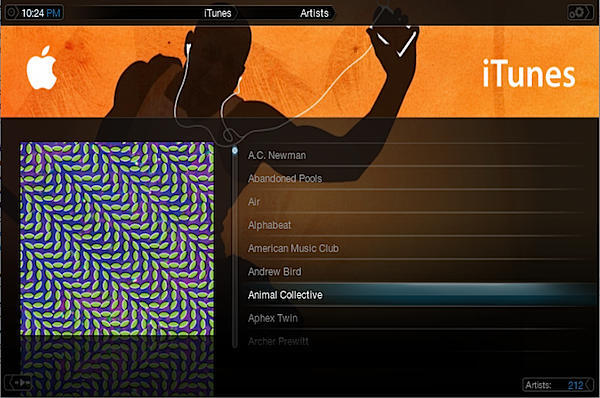
In computer software circles, there’s a lot of discussion about the “10-foot UI,” designed for interactions from across a living room. Now that streaming video has truly come into its own, the space has exploded. Apple’s Front Row is a 10-foot app, as is Boxee.

But if you’re a Mac user, especially a Mac mini owner who keeps it hooked up to an HDTV, there’s only one choice: Plex Media Center, a Mac-only offshoot of the Xbox Media Center software. Basically, Plex pulls all of your content — whether on your hard drive, your network, your Tivo — and blends it with everything on the entire Internet, including Hulu, Pandora, BBC iPlayer, Netflix, and The Daily Show, then wraps it in a stunningly beautiful interface that makes it a snap to navigate all of the world’s video and music with arrow keys are a simple remote control. Better still, it’s an open architecture, and people are adding to it like crazy.

It’s been around as Plex since last July, but many of the best features, like the Netflix plug-in, are recent arriving in the last two weeks. What’s maybe most exciting is that Plex has plug-ins that the original XBMC application lacks. The Mac development community is passionate enough to dramatically improve their offering beyond other versions. Heck, it has its own App Store. And it’s 100 percent free, running on all Intel hardware running Leopard.

This is the media operating system of the future. Now, if they’d just release a companion remote application for iPhone, this thing would really take over the planet.

Thanks for the heads-up, Mike. This thing rocks!