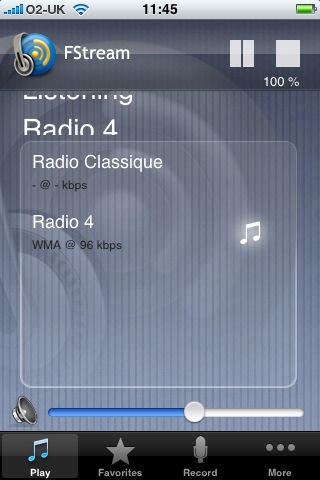
I’m one of those freaks who much prefers listening to radio than watching TV. Consequently, I like to have radios around me. I have one in my office, one in the kitchen, and one in the bedroom. I really need to get hold of one for the bathroom.
This is why we use Macs. Well, it’s one reason, anyway.
There’s always a lot of talk in the blogosphere how one day Macs will no longer be impervious to computer viruses and malware, but every time there’s a real-world example of a computer network going down due to some kind of security issue or DOS attack, it seems PCs are the machines that get hit and Macs are the machines that keep going and going.
A computer virus hit the Vancouver school district on January 7, forcing 10,000 PCs off-line so district IT staff could wipe them clean, an arduous undertaking that, three weeks later, remains unfinished.
An online student forum by Point Grey secondary students identified the virus as Win32.Krap.b trojan, a bug that affects mostly Windows operating systems, shutting down computers as soon as users try to start them. Vancouver School Board spokesman David Weir said each of the district’s Windows machines were shut down, taken off the network and are being individually scanned and repaired as necessary. The project has caused major disruption throughout the school system, and frustration among teachers and students alike.
The report in the Vancouver Sun describing the situation noted that a Macintosh computer lab funded by the Parents Advisory Group at one school in the district was unaffected by the problem. Smart parents of the kids at that school.
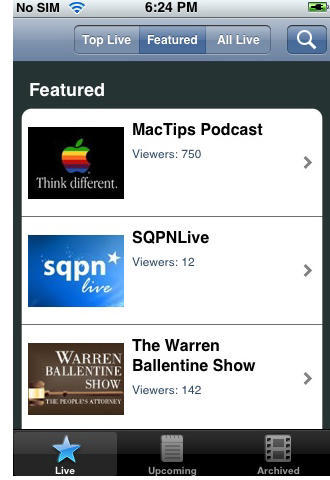
Users downloaded Ustream’s free video viewing app for the iPhone more than 113,000 times in the first 24 hours it was available, according to the live video broadcasting company. In only two days the app has vaulted to the top spot in the AppStore’s Entertainment category and is already the number six most popular free app.
As might be expected with such huge demand over such a short period of time, there have been reports of complaints about the app crashing and users who are unhappy that it works only over WiFi (no support for 3G or EDGE viewing), but the intense interest only serves to underscore pent-up demand for video on the iPhone – even for video of purely user generated content such as that available on ustream.tv.
The company has submitted for approval by Apple a second application that will permit broadcast of live video from the iPhone, though it remains awaiting clearance to the AppStore.
That one is likely to take off even faster than the viewing app.
Handicappers currently make the new Palm Pre the most worthy contender for iPhone’s title as The Coolest Handset, so it’s no surprise there’s an “I’m a Mac” style advertising spoof pitting the two devices against one another. Here’s an installment based on Pre’s “wireless” charging capabilities.
The fun just never ends with Apple products and those who’d be like them.
Apple approved Ustream’s AppStore live video streaming app on iTunes Monday evening, just in time for what is likely to be the most photographed, videoed and broadcast US Presidential Inauguration ever, on Tuesday in Washington, DC.
Get Ustream’s free app on your iPhone, and if you can find yourself an open WiFi connection between 10am and 3pm (EST) Tuesday, you’ll be able to catch live footage of Barack Obama’s inauguration as the 44th president of the US.
Ustream’s TV-in only breakthrough may seem small potatoes to legions of iPhone jailbreakers, who’ll be able to use iPhone’s TV-out capabilities to broadcast Obama’s historic inauguration from their iPhones; it’s also quite something for mainstream iPhone users to now be able to receive live video on their mobile devices.
It figures, then, with up to 5 million people in Washington DC for Tuesday’s pomp and circumstance, a few jailbroken live feeds ought to be accessible to those who know the right people.
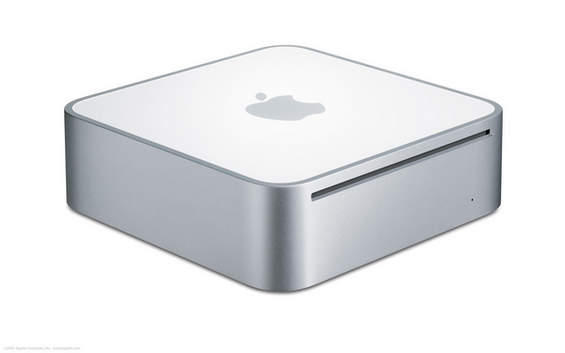
In Apple rumor news having nothing to do with Steve Jobs’ health, a new Mac mini, featuring Intel’s Atom processor and the same Nvidia GeForce graphics processor found in the new MacBooks and MacBook Pros is said to be set for release in March, according to a report at Tom’s Hardware.
Citing an Nvidia partner as the source for the information, Tom’s reports the refreshed mini will pair Nvidia’s GeForce 9400 graphics processor with Intel’s dual-core 1.6 GHz Atom 330 processor and come to market around the time of CeBit, the world’s largest trade show for information and telecommunications technology, held annually in Hanover, Germany.
An update to Tom’s original report cites conflicting rumor talk out of AppleInsider suggesting that Apple may be using Nvidia’s Ion platform for an updated Apple TV, while acknowledging that no one really knows what’s going on for sure.
U.S. News & World Report named the “Get A Mac” campaign one of the best marketing jobs in recent times, putting it up there 13 killer campaigns including “What happens in Vegas Stays in Vegas” and “Will it Blend?”
Here’s why:
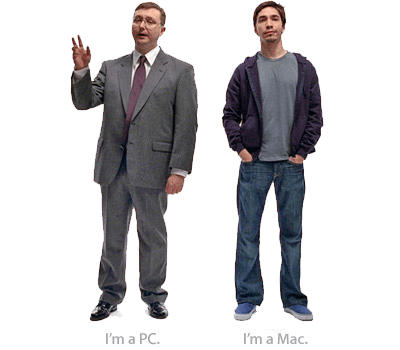
Apple’s “Get a Mac” campaign, which launched in 2006, puts the hip, easygoing Mac against the hapless, problem-prone PC. “The message of these ads is clear,” says communications professor Stephen Marshall, author of Television Advertising That Works.
“Every one of them says, ‘Don’t be this guy.’ You don’t want to be the PC.” The TV ads also appeared online, and the company released a series of web-only ads to capitalize on consumer interest in the characters. People got the message–Mac’s market share grew by 42 percent.
Lesson: Create engaging characters in your online video to help grow an audience that’s receptive to your brand.
Interesting to see some praise outside the community, since the campaign has won several awards but hasn’t always been loved by ad critics.
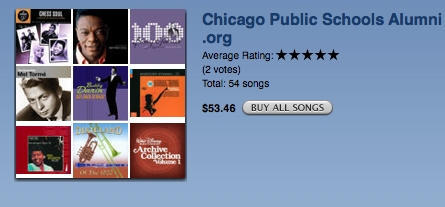
A lot of leading lights in popular music went to public schools in the windy city: Kanye West, Jennifer Hudson, Chaka Khan, Lou Rawls, Bo Diddley, Curtis Mayfield, Quincy Jones and Nat “King” Cole.
54 of these Chicago-themed tracks are on an iMix playlist on iTunes. The playlist was the brainchild of Brad Harbaugh, who runs the Chicago Public Schools (CPS) alumni website. Struck by the number of famous musicians when he was going through the alumni’s honor roll, he drew up a list of Chicago’s best.
CPS doesn’t profit directly from the sale of the $0.99USD tracks, but it is a nice way to promote schools and a cool idea for Chicago lovers in general. You can also see a list of the tracks, as well as exactly where the artists went to school in Chicago and when, on the alumni site.
There are a few unexpected tracks on the Chicago playlist like “A Boy Named Sue” by Shel Silverstein, “City of New Orleans” by Steve Goodman and “Rawhide” by Frankie Laine alongside the Jones’ theme to TV show “Sanford and Son,” “Change Gonna Come” by Sam Cooke and “Chuck E’s in Love” by Rickie Lee Jones.
On the downside, some alums whose lyrics were too deemed too explicit like Rhymefest and DaBrat were kept off the playlist.
More than just hot air, the idea is that music is an important part of the curriculum at Chicago public schools. Students from 50 high schools perform in a solo and ensemble concerts every spring at various high schools and elementary schools. The program, in its 84th year, is said to be the longest-running public-school concert series in the country.
The Chicago playlist is also a work in progress — if you know for sure what school Lupe Fiasco went to, let them know.
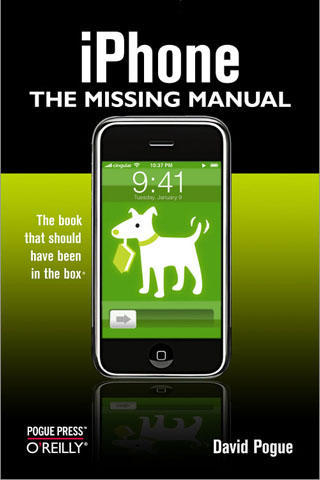
New York Times technology columnist David Pogue and publisher O’Reilly combine to bring those of you who just unwrapped your brand-new iPhone yesterday iPhone: The Missing Manual, a $5 application available at Apple’s iTunes AppStore.
According to the publisher, the app “shows you everything you need to know to get the most out of your iPhone. Full of humor, tips, tricks, and surprises, this book teaches you how to extend iPhone’s usefulness by exploiting its links to the Web as well as its connection to Macs or PCs; how to save money using Internet- based messages instead of phone calls; and how to fill the iPhone with TV shows and DVDs for free.”
The funny thing is if you can purchase and download the app to iTunes and sync your phone so the app gets on there, you probably don’t need the manual in the first place.
Is there any social dynamic the iPhone cannot be leveraged to transform somehow?
Here’s a six minute video from digitalJournal TV detailing a “social taxi service” that San Francisco-based Avego Shared Transport hopes will one day expand the public transit system by enabling every private vehicle to operate as a public transport vehicle.
This free iPhone app has the potential to dramatically reduce wasted seat capacity in cars, reduce the costs of commuting and expand commuting options for riders and drivers alike. This is definitely not your father’s hitchhiking experience.
Using the iPhone 3G’s GPS capabilities and web services, Avego seeks to enable a cross between carpooling, public transport and eBay, by matching a driver’s wasted seat capacity – those seats which are unoccupied – to passengers, reducing commute costs for all participants. Avego automatically apportions the cost of the commute, providing a financial incentive to commuters frustrated by high gasoline prices.
The company is quick to point out that the arrangements it facilitates clearly fall under “carpooling” laws that exist in nearly every jurisdiction in the US since the oil shock of the 1970s, and financial transactions are carefully limited so that participating drivers only recover the expenses associated with providing transport and do not cross the line into making them commericial transport operators.
For the nitty gritty on how Avego works, see the further information page on Avego’s website, but definitely take time to watch the video here and marvel at yet one more example of how Apple technology is changing the ways people interact with each other and with the world around them.