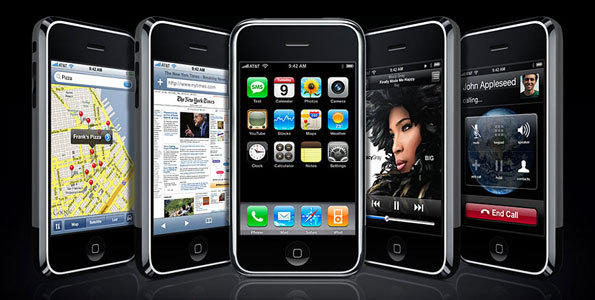
Apple’s iPhone now accounts for 17 percent of global smartphone sales, propelled by a nearly 50 percent growth rate for the third quarter, new research released Thursday indicates. Cupertino’s rising star in worldwide smartphone demand is expected to only increase as the iPhone becomes available in China and more carriers begin offering the popular cell phone.
During the September quarter, Apple shipped an estimated 7.04 million iPhones – a 49.2 percent jump over last year, making the company the third-largest smartphone maker behind Nokia and Research in Motion. Apple had 12.9 percent of the market during the same period in 2008, according to Gartner.
“Red skies in morning; Sailors take warning.” Maybe that old seafaring wisdom should include users of the Microsoft-owned Danger Sidekick. In something akin to an “all is lost” warning, Redmond has told Sidekick owners data stored on the first smartphone “has almost certainly been lost.”
What’s to be done? Not much, except sit tight and hold onto your rebates. “Sidekick customers, during this service disruption, please DO NOT remove your battery, reset your Sidekick, or allow it to lose power,” urged Sidekick carrier T-Mobile, halting sales of the device. In the meantime, T-Mobile reportedly will offer Sidekick owners a free month of data services (not voice), valued at $20. How much is your data worth?
One of the biggest drags of the iPhone – its battery — may one day be supplemented with a wireless charging system that recharges the device in your pocket or bag when you walk in the room.
At the TED Global conference in Oxford on Thursday, Eric Giler, CEO of Witricity, demonstrated an iPhone being recharged wirelessly by his company’s new system.
“You’d never have to worry about plugging these things in again,” he said.
Giler explained the system to the BBC (see the video above). He says the technology could be on the market within 18 months.
Witricity’s wireless charging system is based on the physics of “electromagnetic resonance,†the same principle that makes a wine glass shatter when an opera singer hits the right note.
But instead of sound energy, Witricity’s system transports power over electromagnetic waves. The system has two parts: A transmitter unit, plugged into a wall outlet, which uses a vibrating coil to create a resonant magnetic field. In the target gadget, a matching coil tuned to the same frequency transforms electromagnetic vibrations into juice for the device.
The system works without any physical contact. Other wireless charging systems, like Palm’s Touchstone, require contact between the gadget and the charging base.
The system is claimed to be safe, and will charge gadgets and devices within range, including bigger electronics like flat-screen TVs. Giler demonstrated a TV running on wireless power that is commercially-available.
Giler also showed the system recharging a T-Mobile G1 phone, which had all the components packed inside. The iPhone had to be fitted with a special sled.
“They don’t make it easy at Apple to get inside their phones so we put a little sleeve on the back,” he said.
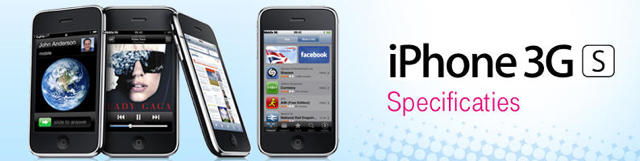
T-Mobile.nl has posted specs for the iPhone 3GS that indicate Apple’s new 16GB and 32GB mobile devices will sport 600 MHz processors and carry 256MB of RAM when they hit the market later this month.
Current iPhones operate with a 412 MHz chip and have but 128 MB of RAM, so it would appear the new models will be equipped to fulfill the promises of a much faster, snappier UI that Apple made in introducing the phones Monday at WWDC in San Francisco.
The company has given developers at WWDC few details about the guts of the new models, but they are believed to run a new PowerVR SGX graphics processing unit which provides support for OpenGL ES 2.0., which is good news for users, though it could cause headaches for developers who want their apps to be backward compatible with original iPhones and 3G models introduced in 2008.
Stay tuned for the inevitable iFixit teardown shortly after the phones are released to find out what’s really underneath that oil-resistant glass.
We’re now less than two weeks away from the keynote of Apple’s annual Worldwide Developers Conference, where Apple is widely expected to demonstrate a next-generation iPhone for the first time. I won’t run down all the anticipated features here, but suffice it to say that we’re looking at largely incremental updates on the hardware side: faster processor, more RAM, more storage, and maybe a programmable magnetometer to enable true turn-by-turn GPS. It will be the iPhone, but better — and almost certainly not a worthwhile upgrade if you already own an iPhone 3G, since it will also benefit from the release of iPhone OS 3.0.
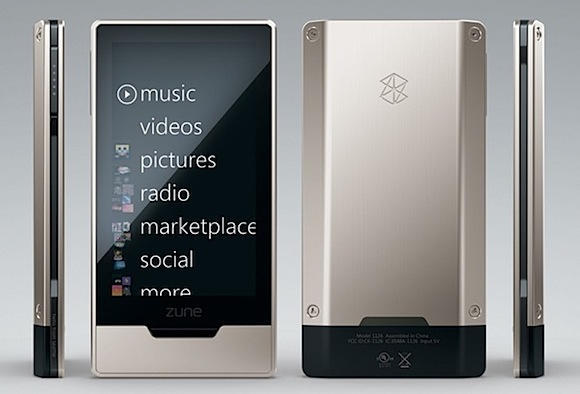
But the world hasn’t stood still. For the first time since the announcement of the original iPhone, there are legitimate competitors all around, many of them even approaching Apple’s thinking in creating a holistic ecosystem of supporting software, third-party development and services. There are three big threats to the rise of the iPhone right now: Palm Pre, mass availability of Android, and the Zune HD platform. Hit the jump to get the full story.
With WWDC09 now just weeks away, rumors and predictions regarding what Apple may reveal at the highly-anticipated, sold-out developers conference in San Francisco are sure to spread like a California wildfire.
Anyone interested in being on the right side of such talk would do well to consider the logic and analysis out Thursday from John Gruber, the well-placed author of the blog Daring Fireball, who isn’t prone to talking about things he doesn’t know a little something about.
Citing “information from informed sources,” Gruber believes the processor in the next-generation iPhone is going to be the kind of upgrade to make people crowd around and go, “ooooh!” He looks for Apple’s processing secret-sauce to better the speed of current iPhones by 1.5 times, similar to the bump in performance experienced when Mac users got hands on machines with the first batch of PowerPCs, or PC users moved from 486 to Pentium machines.
Follow after the jump for more of what Gruber expects and how likely his expectations are to be met.
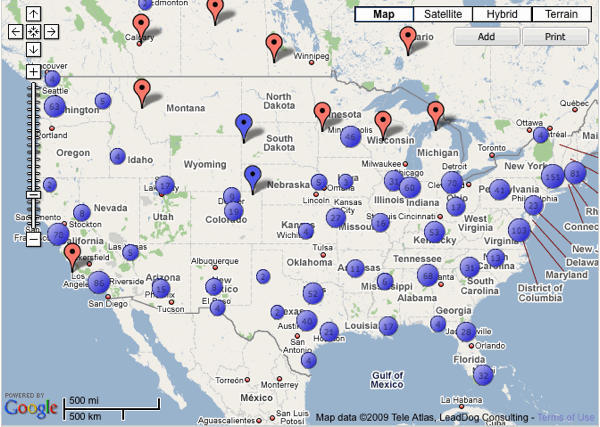
3. The test will run automatically as the page loads. When it’s done loading, tap your carrier (AT&T, Verizon, T-Mobile or Sprint), and your results will appear.
4. Add your details to Wired.com’s results map here: https://www.wired.com/gadgetlab/2009/05/3gstudy
Wired.com’s study follows up on an iPhone-only survey last year, which concluded connection problems were AT&T’s fault, not the iPhone’s.
As Wired.com notes, “A carrier’s network performance is a dealbreaking factor for consumers shopping for a smartphone, whether it’s the iPhone, the HTC G1, or a BlackBerry Storm.”
Randall Stephenson, AT&T’s CEO, has been calling on Apple to see about extending the carrier’s deal as the exclusive US service provider for the iPhone, according to a report in the Wall Street Journal. Having already received a one-year extension of its original two year deal, with its current exclusivity protection set to expire sometime in 2010, AT&T is reportedly seeking to sweeten the pot somehow to keep Apple’s revolutionary mobile device out of competitors’ hands for another year.
Well, of course. AT&T added 4.3 million iPhone subscribers in the second half of 2008 alone — about 40% of whom were new customers, according to the company. In an era when landline customers are dwindling rapidly, anything that brings in new wireless subscribers is a good thing for the phone company.
But is the AT&T exclusivity deal good for anyone other than AT&T?
From Apple’s perspective it’s likely good insofar as it keeps things simple, having only one behemoth service provider to potentially screw up the tightly controlled customer experience around which much of Apple’s mystique has been been built. And to be fair, AT&T appears to have done a reasonably good job of deploying iPhones in the field. As the Apple spokeswoman in the WSJ article was quoted, “We have a great relationship with AT&T.”
But how about the consumer? Even if technical issues cannot be overcome that prevent iPhones, as they are currently manufactured, from working with Sprint and Verizon’s CDMA-based services — and surely they could be overcome in this day and age — having a choice between AT&T and T-Mobile is better than having a choice between AT&T and not using an iPhone at all.
Many people howled furiously about AT&T being the exclusive US provider when the iPhone was introduced in the summer of 2007. Looking back, it’s now easy to see how revolutionary and wildly transformative the device was; it was likely a good strategy for Apple to reduce its integration bandwidth to a single carrier in each market where it deployed the phone because it could have turned out to be more problematic a transformation than it actually was.
But now Apple has many millions of happy iPhone users the world over and it knows how its device performs in the field. It’s time for Apple to reclaim dominion over the user experience with its mobile communication device. And the single biggest change that would add to customer happiness (other than video recording capability and Flash functionality) would be to open it up up and let customers choose whatever service provider they can stand.
Despite the recent introduction of several rivals, Apple’s App Store is “miles ahead of the competition,” according to a study released Monday.
Apple’s store, created in 2008 for iPhone and iPod touch owners, was compared against similar offerings by Google, Microsoft, RIM and others phone developers.
The Apple App Store has succeeded in attracting developers and surpassing the “number, variety and appeal of applications available,” announced the Global Intelligence Group.



 Despite the recent introduction of several rivals, Apple’s App Store is “miles ahead of the competition,” according to a study released Monday.