Sony Ericsson Tuesday joined the Open Handset Alliance, becoming the latest cell phone maker to voice support for Google’s Android operating system.
Sony Ericsson has said it plans to adopt the Android software for several phones during 2009. The phone maker will drop t he Symbian UIQ phone software in favor of Google’s open-source Android platform, reports said Tuesday.
In a statement, Sony Ericsson announced it hoped to use Andriod to develop successful handsets along the lines of its popular Walkman MP3 players and Cyber-shot digital cameras.
AdWords advertisers can now show desktop text and image ads on the iPhone, the T-Mobile G1, and other mobile devices with full (HTML) Internet browsers, Google announced Monday.
Google text and image ads can now point to desktop landing pages without advertisers needing to create mobile landing pages or ads in mobile formats. The ads can deliver mobile-specific calls-to-action and reach mobile users searching with their phones more than ever during the holiday season.
Recently, the Google mobile team launched new results pages formatted specifically for the iPhone, according to the post at Google’s Mobile blog. Now, advertisers will be able to display ads exclusively on these mobile devices, create campaigns for them, and get separate performance reporting. Advertisers who prefer not to show desktop ads on these phones can opt out and show ads only on desktop and laptop computers.
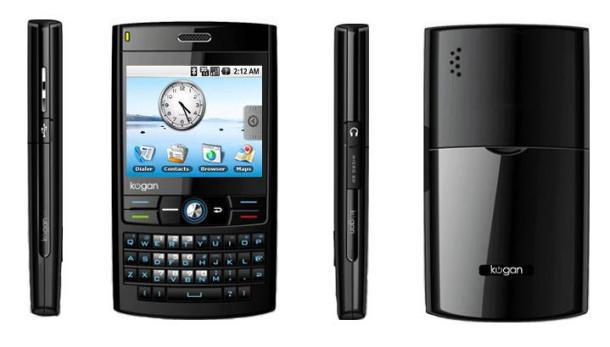
An Australian video electronics maker will enter the cell phone business January, offering the “Agora,” the second handset to use Google’s Android operating system.
The cell phone by Kogan Technologies, will start at $193 and offers a 2.5-inch touch screen, QWERT keyboard, 256MB of memory (expandable with a microSD card) and Bluetooth, Wi-Fi and 3G support. The handset allows 400 minutes of talk time and 300 hours of standby, according to CNET.
The Agora can be only be ordered from Kogan’s Web site begins shipping Jan. 29, 2009.
Handset maker Motorola has reportedly decided to focus on the open-source Android platform, dropping most of its other cell phone designs – as well as more employees.
“They were like a drunk asking for another drink in the software area,” Gartner analyst Ken Dulaney explained to Cult of Mac.
After laying-off 10,000 employees and unsuccessfully attempting to regain its past glory, the Schaumburg, Ill.-based company will cut at least four handset platforms, choosing to concentrate on Android and two other handsets, the Wall Street Journal reported, citing unnamed sources Wednesday.
The T-Mobile G1 has only been out for a couple of days, but new problems with the first generation of Google’s entry into the phone business continue to materialize just about every hour on the hour. Still the most shocking is the lack of corporate e-mail and calendaring support, with Google assuming that a third-party developer will just magically figure out how to do Exchange ActiveSync and Lotus integration.
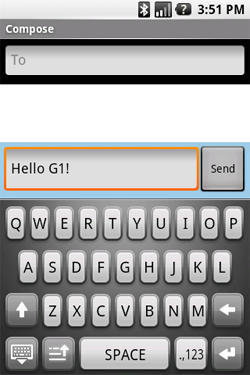
Today, the big news is that Google plans to send out a software update at some point with a touchscreen keyboard so that it becomes possible to enter text while using the phone in vertical portrait orientation. Yes, in case you missed it earlier, it’s impossible to even type in a URL while browsing the web in the preferred one-handed iPhone style orientation. Granted, the G1 has a physical QWERTY and a pretty decent one at that, but it’s incredible that any company could ship a phone this intricate without realizing this could be a deal-breaker in actual human use. It’s like they didn’t even test their ideas out before sending them to final production.
I bring all of this up, because it’s another piece of evidence that even though an open-source model works incredibly well when working on technical feasibility and optimization, it’s pretty poor at making a consumer-facing complex system work well together. It’s the same reason that Linux has incredibly low-level networking and multithreading code, and it’s still impossible to expect a decent graphical user interface.
Apple’s focus on freakishly detailed design and engineering can have its own failings, of course (most specifically in leaving out any features that Steve Jobs can’t understand the value of), but it also tends to lead to solutions that were considered as full experiences instead of a collection of features. It all works together well, instead of working well in spite of contradictory features. The holistic approach Apple takes to product design is the reason we love it. Android’s haphazard approach of fixing things as they become crises. Google will mostly catch up eventually, but I have to pity T-Mobile for being forced to fight back with such an unfinished product. The G1 is so far behind that it’s hard to imagine anyone who isn’t a hobbyist being pleased with the first kludgy Android phone.
Will Motorola’s Android handset pose a greater threat to the iPhone, improving on the G1, the first Google phone from HTC and T-Mobile? That’s the question on many minds as details of Moto’s open-source phone appeared Monday.
Motorola’s Android unit, not expected until late 2009, reportedly sports many features missing from the G1, offering improved specs, according to Monday’s BusinessWeek.
Citing information distributed to carriers, the financial news source said the Motorola device appears to be “a higher-end version” of the G1, produced by Taiwan’s HTC.
Early reviews on Google’s Android smartphone indicate the Mountain View-based company may not knock Apple’s iPhone out of the ring, but Blackberry could soon look like an afterthought.
Walt Mossberg, the Dean of Technology writers, says Android is in the same class as iPhone, but allows the two devices will probably attract different types of users. For him, the physical keyboard is the notable differentiator, but he finds the T-Mobile G1 – Android’s lead-off batter, set to debut October 22nd – “only fair…with keys that are too flat and that can be hard to see in bright light.” Mossberg says the G1’s touch interface is “slick, clever…fast and smooth” and provides “much more flexibility in organizing your desktop than on the iPhone,” and he notes it includes some key features omitted on the Apple phone. The G1’s limited copy and paste functionality, and the ability to send photos via MMS may not convert the Apple faithful, but unlike AT&T, T-Mobile will allow users to legally unlock the phone after 90 days and start using it on another carrier, with a hefty early-termination fee.
Rachel Metz, writing for Associated Press, says the Android is “smart” but it needs work. She found the phone’s built-in support for YouTube “underwhelming” and complains that video and song playback is hampered by “a major hardware shortcoming”: no standard headphone jack. The G1’s earbud headset plugs into the same mini USB port used to charge the phone, which poses several problems for Metz, “as you can’t use your favorite headphones without an adapter and it’s impossible to charge the G1 while listening to music or watching videos, unless you want to use the included speaker.”
Tech Radar notes the G1 has a “kill switch” similar to the iPhone and is impressed that it is explained openly in the terms and conditions. They also like the fact that if you don’t like an app you’ve downloaded, “Google kindly lets you refund your money within 24 hours of purchase, which means you can try all the probably rubbish location based ‘find your friend’ apps without worry.”
T-Mobile has reportedly sold 1.5 million of the Android G1’s by pre-order, but buyers may be surprised that when they open up their boxes they will be getting what BusinessWeek writer Stephen H. Wildstrom calls “a developers’ release: a preliminary, unfinished version of a program that lets engineers kick the tires and gauge its potential.”
Nearly a third of iPhone users switched carriers in order to buy the Apple touch-screen phone, researchers said Monday. The news comes as the iPhone leads smartphone sales between July and August.
Some thirty percent of U.S. smartphone buyers switched carriers to AT&T in order to purchase an iPhone in that period, market research firm NPD Group announced.
That compares to the 24 percent industry average for smartphone buyers.
The Android-based G1 handset now shares with the iPhone the status of a goal-setter for mobile phones, researcher Gartner said Thursday.
“You won’t beat Apple in the short term, but being worse than both Apple and Android is likely to end in disaster,” Gartner analysts Roberta Cozza and Carolina Milanesi write.
The two said the Android-based G1 will probably ship between 600,000 to 700,000 devices this year and comprise 10 percent of smartphone sales by 2011.
Apple should not be concerned about Google’s new phone knocking its stellar iPhone sales projections off stride, Piper Jaffray’s industry analyst said Tuesday.
Using a baseball analogy, Gene Munster wrote in a research note that the T-Mobile G1 was only an incremental change in the mobile landscape.
“When Apple comes out with a product, they try to hit homeruns, but Google’s Android strategy is swinging for base hits,” Munster wrote.