Charlie Miller, the same man who hacked the iPhone in 2007 has successfully hacked a MacBook Air running OSX 10.5.2. He won a free Air and $10,000. Competitors were unable to hack the system on day one, as organizers allowed only attacks over a network. Day two allowed organizers to visit web pages or open messages in e-mail clients. Apple is working on the problem.
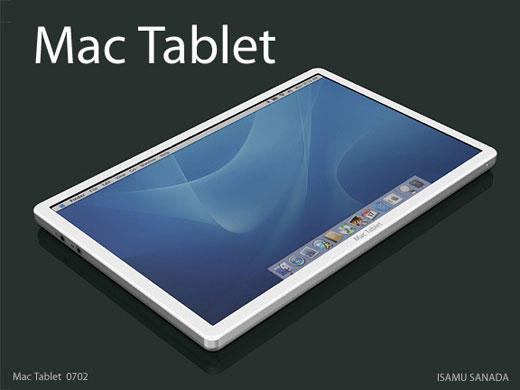
The last Tuesday of the month is come and gone, and yet again my dreams of a Mac Tablet are dashed. I know it’s improper to lust after equipment this much, but perhaps that’s just where I am in life. I’ve reached a point (no matter how sad), that were I to see an attractive member of the opposite sex in a park with a Nikon D3 and Macbook Pro, I’m just as likely to think “Man, nice gear!” as any other potentially litigious thoughts. Now I know Apple doesn’t ask consumers about product design, but if they asked me about my oft-dreamed-of-tablet, here’s what I’d say:
#1. It’s an Accessory, not a Computer.
You could say the same thing about the MacBook Air, but the MBA isn’t priced like an accessory, it’s priced like a computer. The “Dream-Tablet” should be an $800 accessory to my existing collection of Macs.
#2 Because of #1, it doesn’t need to be powerful
We’ve already got “Back to My Mac,“ so if Apple beefed up this service a bit to run better over public networks, the Tablet simply becomes a “Cloud Computing” device; allowing me access back to my primary machine, whose power I can harness (alternatively, Apple if you’re listening: work with VMWare and make a “Mac Cloud” that these Tablets could tap into. You could do it if you wanted to, read Nick Carr if you want to know why you should).
Disconnected, if I’m on an airplane, or a cave in Bosnia, I should still be able to read a book, play music, drive iWork, Aperture or (Lord help me) Office. That said: I don’t need to be able to produce HDR images in CS3 un-tethered.
What I’m saying is: “Dream tablet” doesn’t need the latest lap scorching chipset from Intel.
#3 It doesn’t need a big hard drive. Really. Solid state, instant-on OS is way better than storage for the sake of storage. If I had 16 Gigs to hold documents or photos that I needed to work on (or books I wanted to read) while contemplating the fate of the kid who keeps kicking the back of my seat, that would be plenty.
But lets make it expandable, here’s a novel idea: give me a slot, where I can “dock” my 160gig iPod classic. Just slide the whole sucker in there like some kind of removable drive, and we’re good to go; storage, music, movies whatever, making 2 accessories work together seamlessly, now that’s something uniquely Apple.
#4 Remember, it’s an Accessory.
Really, so when I’m back home, I don’t want to just put it on the shelf until my next trip (which is all too often). Lets make it into an active accessory I can use in my main computing environment. Watcom digitizing tablet anyone? Apple TV remote Control? Portable media hub? (I can totally see hooking this thing up to my TV and streaming video and audio), even just as an extra monitor, whatever, lets be flexible with it.
#5 It does not need to be:
An iPod, iPhone, iTypewriter, or a super-computer capable of composing a sountrack in Logic Pro and cutting a film short in Final Cut while waiting I’m for the First Class lavatory to become available. Nor does it need to use that goofy fake electronic paper stuff from Sony (which is cool for eBooks, but nothing else). None of that, just world-class “Back to my Mac”, and the ability to run regular OS X applications with a reasonable (say Mac Mini) level of performance. That and simply OUTSTANDING battery life.
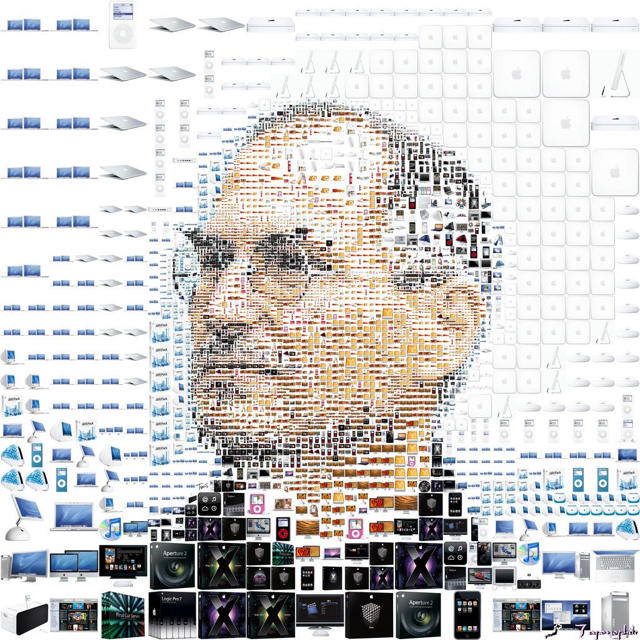
Hey, remember the late 1990s? It was a heady time of rap-rock records, resurgent sci-fi epics, and, most importantly, the photo mosaic, an art form where computer artists take hundreds of tiny images and make a vaguely unsettling and blurry bigger picture.
Now we can take a trip back courtesy of Charis Tevis, a graphic artist commissioned by Fortune for its recent cover story on the iCEO. The rad image (click through to see it in all its glory) basically builds Steve Jobs out of the full portfolio of Apple products.
He’s got a lot of others on his Flickr account, including another image of Steve and one of Barack Obama.
How soon the bloom fades from the fruit. Apple’s controversial distribution method for delivering Safari 3.1 to Windows users is inciting flames of discontent among customers and critics alike, who now accuse the company of unfair practices. The problem stems from Apple’s iTunes Software Update client for Windows, which some claim dupes users into downloading the latest version of Safari by leaving the install option checked by default, whether the browser was previously installed or not, which users then mistake to be a necessary update rather than an option.
Not surprisingly, rivals are jumping on the Safari-gate bandwagon like hungry wolves feeding on a wounded fawn, with angry words flung like cannon balls. Mozilla Chief John Lilly has gone on the offensive, alleging that Apple’s software delivery method “borders on malware distribution practices. What Apple is doing now with their Apple Software Update on Windows is wrong.”
Harsh words. Next will come the accusation that Apple illegally ties its browser with the operating system. Sorry, Microsoft beat them to it.
Though the Financial Times is without question a vastly more reliable source than most places that spawn rumors of Apple’s impending moves, I just can’t convince myself to buy into reports that Apple wants to create a monthly iTunes subscription plan or all-you-can eat music business model with the purchase of an iPod or iPhone. It isn’t their style
While denials from Steve Jobs are usually a good way to spot what he’s working on, this is an area where he has remained steadfast. He believes that people want to own their music, and I believe that he’s right. Sure, I love to sample music as much as anyone else, but the songs that I keep are really personal to me. Renting music just doesn’t work out. Even if Nokia is doing it, too.
Moreover, the monthly subscription business model is one that Apple hasn’t ever offered before to anyone. Not for movies, TV, or software. In fact, Apple’s only experience of recurring payments are with the iPhone’s service fees, which the company gets just a small slice of. There are far too many accounting headaches to resolve to make it worthwhile, and the record companies are angry at Apple. At Apple’s restaurant, they dine ala carte.
As if we needed another piece of evidence that the MacBook Air is the ultimate lust object of the style-conscious intelligentsia, consider this: Charlie Rose, the PBS talk show host known for his deep, probing and often ponderous conversations with celebrities and authors, appeared on his show the other night with a bandage on his eye that he earned diving to the pavement headfirst to protect his Air. Sooner his face – a TV host’s most important asset – than his computer.
I stand corrected. Without any question, Apple has completely reframed the value of a computer. It’s worth more than a career on PBS.
UPDATE: The survey has concluded. Thanks to everyone who took part.We’d like to ask you — the readers — for a favor.We’re trying to get a better idea of who you are and what you like to do — more than your thoughtfully-written comments can tell us.So, we’ve crafted a little questionnaire. Click here to take our Cult of Mac reader survey. We’ve kept it as painless as possible. It’s just two pages and it takes about a minute or so to complete. Everything is totally anonymous.Most of it is the standard reader survey stuff (did we mention it’s fast and anonymous?), but when you’re done, we’ll have a better understanding of each other. And really, isn’t that reason enough?
The drama caused by lithium-ion batteries just continues to snap, crackle and pop along, according to our friends at Epicenter, as an old-school iPod nano reportedly began shooting sparks out while recharging at a home in Japan.
Overall, details remain spotty about the case, but the problem supposedly surfaced in January in Kanagawa Prefecture southwest of Tokyo. Once again, officials are blaming those occasionally unstable lithium-ion batteries. While no one was injured during the mini fireworks show, Japanese officials have publicly chastised Apple for failing to report the incident earlier (the company submitted its report on March 7). In the meantime, Apple has been ordered to look into the matter further and report back to the Ministry.
This could be a major black eye for Apple is it turns out to be a widespread problem. A recall on the previous generation iPod nano would be extraordinarily costly. Has anyone ever had problems with older nano batteries?
Back in January, I was fairly effusive in my disappointment in the MacBook Air. I still think it’s a product that has a long way to go before it fulfills its promise as a thin, light, road warrior’s machine (the fact that it isn’t standard with an SSD is a pretty poor statement about its long-term reliability), but I’m now willing to admit that it hits the mark with at least some people, including people I really respect, like BusinessWeek’s Reena Jana, their innovation editor.
I’ve had a lot of conversations with Reena in the past, and she’s a constantly on-the-go kind of person, meeting with design and innovation leaders around the country. She probably travels for business more than I do. And she loves her MacBook Air:
OK, so I personally don’t have the need for many USB ports, nor for a huge, huge hard drive. And I don’t even feel that bad that there’s no Ethernet port, although I could get an attachment for it, which to me isn’t such a big deal (I rarely use the Ethernet jack). I’m reminded of when MacBook’s stopped having a floppy drive, or a dial-up jack. People were upset. But other laptops followed, because these features became obsolete. I see a parallel here, and my laptop lifestyle was starting to reflect the phasing out of DVDs and Ethernet jacks before the Air was released.
Fair points all, though I think I’d be more comfortable with the Air’s lack of a DVD drive if Apple distributed its own software, such as iWork, on USB key instead of DVD… Still, this is another reminder that a lot of people don’t need anywhere near the file storage capacity that I do. Just this weekend, I learned that my sister-in-law is desperate for an Air, as well. I’ll be very interested to hear how the Air performs in the market. I still think it will meet a fate similar to the G4 Cube, but there are some people who are incredibly excited by it.
For me, I think I’m stuck in Steven Levy’s camp: If I even had one, I think I’d probably throw it out with the newspapers by accident.
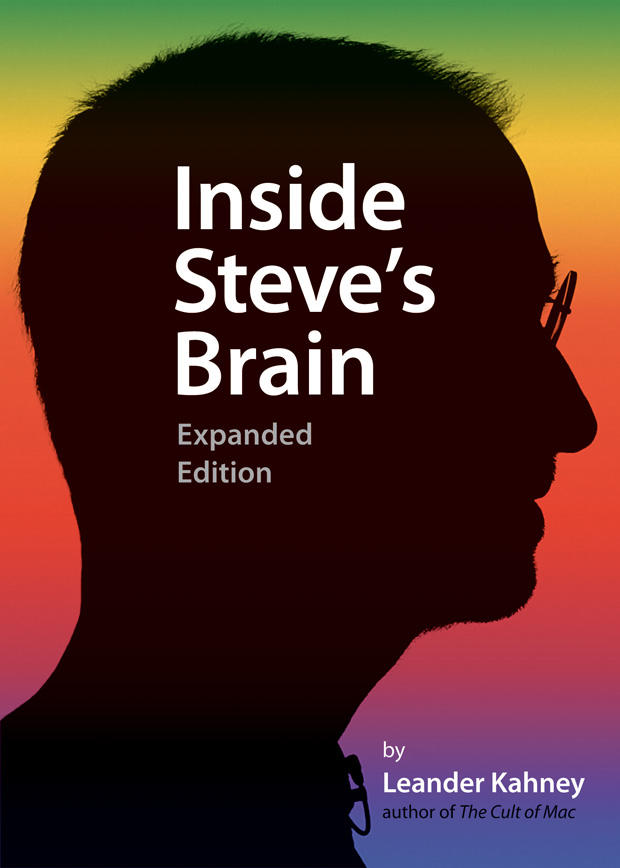
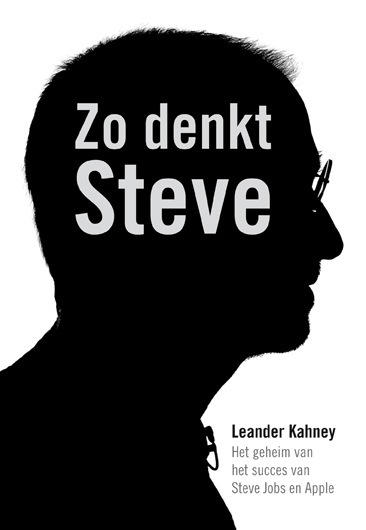
Inside Steve’s Brain is the bestselling business biography of Apple’s unique CEO, Steve Jobs. An international hit, a New York Times bestseller and one of USA Today’s best books of 2008, Inside Steve’s Brain has been translated into 17 languages, and is now available in an expanded second edition.
“… enjoyable, well-written, very informative and, most important, up to date…” — CNet
Most of what is written about Apple CEO Steve Jobs is negative. Recent biographies are catalogs of tantrums and abuse. They paint a portrait of a sociopath who does little but scream and shout. There’s very little coverage of what Steve Jobs does right, and clearly, he’s doing everything right.
It’s hard to believe that one man revolutionized computers in the 1970s and ’80s (with the Apple II and the Mac), animated movies in the 1990s (with Pixar), digital music in the 2000s (with the iPod and iTunes), and now communications (the iPhone). No wonder some people worship him like a god. On the other hand, stories of his epic tantrums and general bad behavior are legendary.
Inside Steve’s Brain cuts through the cult of personality that surrounds Jobs to unearth the secrets of his unbelievable results. It reveals the real Steve Jobs, not his heart or his famous temper, but his mind. So what’s really inside Steve’s brain? According to Leander Kahney, who has covered Jobs since the early ’90s, it’s a fascinating bundle of contradictions.
Jobs is an elitist who thinks most people are bozos — but he makes gadgets so easy to use, a bozo can master them.
He’s a mercurial obsessive with a filthy temper — but he forges deep partnerships with creative geniuses like Steve Wozniak, Jonathan Ive, and John Lasseter.
He’s a Buddhist and an anti-materialist — but he produces mass-market products in Asian factories, and he promotes them with absolute mastery of the crassest medium, advertising.
In short, Jobs has embraced the traits that some consider flaws — narcissism, perfectionism, the desire for total control — to lead Apple and Pixar to triumph against steep odds. And in the process, he has become a self-made billionaire.
In Inside Steve’s Brain, Kahney distills the principles that guide Jobs as he launches killer products, attracts fanatically loyal customers, and manages some of the world’s most powerful brands.
The result is a unique book about Steve Jobs that is part biography and part leadership guide, and is impossible to put down. It gives you a peek inside Steve’s brain, and it might even teach you something about how to build your own culture of innovation.
The new Expanded Edition includes a new chapter about Apple after Steve Jobs.
Reviews
New York Times Best Seller, Hardcover Nonfiction – New York Times
“… a rich, essential read for (fans) to get inside Jobs’ head and discover what makes Apple insanely great.” — USA Today
“… to my delight it was very fact, quote and anecdote dense.” — Gizmodo
“… enjoyable, well-written, very informative and, most important, up to date… a treat to get a volume like this, with a unique approach, about him, from someone as steeped in Apple’s culture and history as Kahney.” — CNet
“… a fascinating look at the thought processes and inspiration behind Apple’s products and branding… I highly recommend it, even if you’re not an Apple user.” — ReadWriteWeb
“… a detailed, concept-oriented, blow-by-blow look at Apple CEO and what makes him tick.” — Macworld
“… a compelling sketch of the elitist, churlish visionary.” — U.S. News
“… a lively, enthralling look into the people and processes behind the success at Apple, and a glimpse into the motivations of the man who guides the company like no other CEO in business today.” — MacLife
“… from an avid fan, journalist, and author of two other Apple-related books.” — American Library Association’s Booklist
“… great idea for a book. Who wouldn’t want to get inside the head of Steve Jobs?” — BusinessWeek
Sample Chapter
Download a sample chapter of Inside Steve’s Brain — 300KB PDF.
About the Author
I’m the editor of Cultofmac.com and author of two award-winning books about technology culture: Cult of Mac and Cult of iPod. Until May 2009, I was the editor of Wired.com. I’ve covered computers and technology for more than a dozen years. I was a senior reporter at MacWeek, and have written for Wired magazine, Scientific American, The Guardian and The Observer in London and many other publications. I worked as a newspaper reporter in Great Britain for several years, covering, among other things, the war in former Yugoslavia.
I live in San Francisco with my wife, Tracy, and our four children. I’m originally from the U.K., and have lived in London; Brighton, England; and Barcelona. I like to ride my road bike, and I commute to work by bicycle.
Inside Steve’s Brain has been published in U.S and U.K editions, and has been translated into 17 languages, including:
Chinese
Japanese Portuguese (Inside Steve’s Brain was one of Brazil’s best-selling business books in 2008, and is still in the Top 10) Spanish
German
Russian
Thai
Arabic
Lituanian Turkish
Italian (Inside Steve’s Brain was a bestseller in Italy)
Czech
Bulgarian
Polish
Indonesian








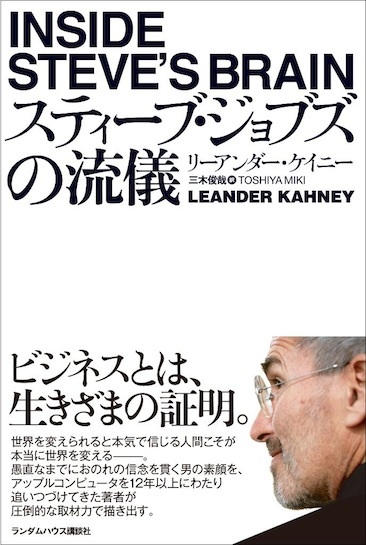 Inside Steve’s Brain is the bestselling business biography of Apple’s unique CEO, Steve Jobs. An international hit, a New York Times bestseller and one of USA Today’s best books of 2008, Inside Steve’s Brain has been translated into 17 languages, and is now available in an expanded second edition.